|
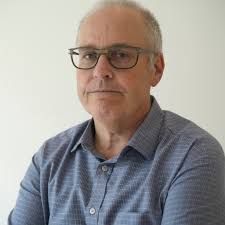
Bauder announced his decision Tuesday in a Facebook post that said:
“So…remember the story I wrote about The Associated Press offering buyouts to many of its employees? Well, I decided to raise my hand to volunteer and Thursday is my last day after nearly 40 years. Truthfully, the time to do something else was approaching, the offer was generous and if it clears a path for a younger colleague, so much the better.
“Through the AP, I had countless memorable moments and spent time with fascinating people I’d never otherwise meet (interview three Beatles? Come on). I worked with the industry’s best — hard-working people dedicated to a mission that gets more important by the day. The media beat has made me an evangelist for journalism, and I don’t expect that to end.”
Bauder’s editor and a close friend, Ted Anthony, told Connecting:
"I've known and worked with Dave for 30 years and I'm fortunate to count him as a friend. As the primary window into the media industry for AP's readers and customers for many years, he has been a sharp reporter, an incisive analyst and a talented observer of one of the most important sectors of our culture.
“Our media coverage in this very busy information age will continue to follow his excellent example and aggressively explore all the ways that media on all platforms affects society."
It is not immediately known the AP’s succession plan for reporting of the news media.
Bauder, a graduate of Syracuse University, worked at the Stamford (Conn.) Advocate before joining the AP in Albany, N.Y., in January 1987, hired by Chief of Bureau Lew Wheaton. He moved to New York as a television writer in 1996, a position, he said, “that kind of morphed into media writer the past 10 years, mostly because of my interests.”
Dan Sewell, retired AP Cincinnati correspondent who alerted Connecting to Bauder’s Facebook post, said “Dave is undoubtedly the best in the business at covering the news media. He's a must-read anytime there are significant trends or breaking news, such as the White House Correspondents Dinner shooting or the Trumps' calls for Jimmy Kimmel's firing. Another major loss to The AP and readers. Best wishes, Dave!”
Dick Lawyer - most influential in my development as a writer
Ted Anthony – AP director of new storytelling and newsroom innovation - It wouldn’t have occurred to me until I learned of his death Tuesday morning, but Dick Lawyer was likely one of the people who was most influential in my development as a writer.
While I was in the Philadelphia bureau, Dick — with his gentle and cheerful demeanor and his fierce dedication to the Pennsylvania broadcast report — patiently made sure I kept getting better at “broadcast splits.” He’d critique my NewsWatches and NewsMinutes and tell me what I could do better without any sense of criticism or sharpness. He taught me to read all my writing aloud before sending it anywhere. He taught me that each passing hour’s expression of the same news story needed to be clear, compelling and distinct. He often said to me something like, “For folks at these small radio stations, we are literally putting words in their mouths. They rely on us to do well in their jobs.”
Dick was a foundational pillar of the Philadelphia bureau during my time there in the mid-90s. No matter how early you got there for your shift, he was always there already. With his warmth and his morning energy, he was coffee personified.
My favorite Dick story occurred on my final day in the bureau in late 1994, before I was shipped off to the International Desk. I had always joked with Dick about his hair, which never, ever moved. Every hair was always perfectly in place. On my final morning, I came in for a supe shift and looked across the desk pod at Dick. He was smiling, as usual, but there was something mischievous about it. Then I noticed: A couple inches above his eyebrows, a single lock of stray hair hung down. “That,” he said, “is for you.” Then he hastily moved it back into place before anyone else could notice.
My father used to say about men he liked: “He’s a gentleman and a scholar.” That describes Dick Lawyer perfectly. Today, every time I rewrite something multiple times, each time (hopefully) clearer than the last, I hope Dick is hovering somewhere behind me, nodding in approval.
The future through the eyes of dedicated student journalists
Peggy Walsh - The author, Jennifer Nehrer, began this piece in Laura Castaneda's magazine class at USC last spring. Jennifer is a senior, graduating in May.
It begins:
Ryan Monke, a senior at Hofstra University, is a managing editor at his school newspaper. When he isn’t in class pursuing degrees in media studies and political science, he’s overseeing section editors, tackling important coverage at the paper and looking to expand The Hofstra Chronicle’s audience.
He’s also trying to figure out how to protect his reporters from possible deportation by the U.S. government.
Monke is one of thousands of students around the country training to become professional journalists while the president of the United States attacks their profession and sics federal officers on their fellow residents.
Laura is a Professor of Professional Practice and Associate Dean for Community and Culture at the University of Southern California Annenberg School for Communication and Journalism. I worked with her in San Francisco; she was with the AP from 1985-1991.
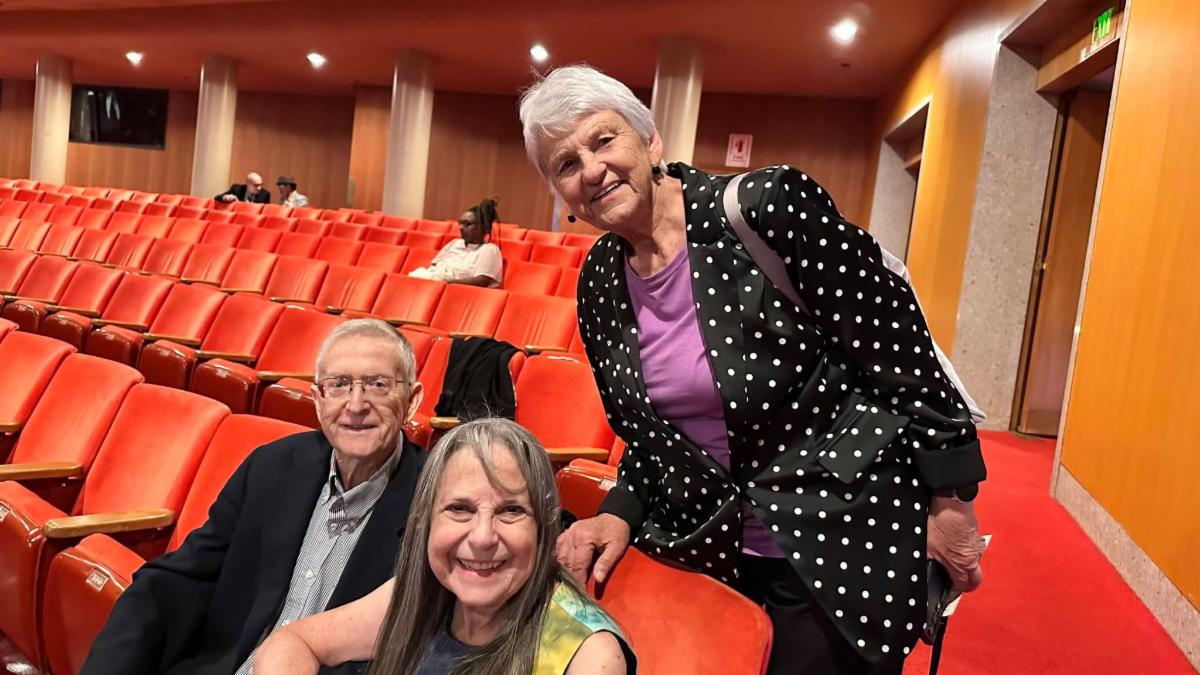
Meet-up at LA Opera
|