|
B"H
Its Time to Close the Cheder’s, the Yeshivos, and the Seminaries!
What really goes on behind the scenes with educational institution principals? What is the "ABC" of Chinuch? What is the secret of success for certain principals, and where have we truly failed?
A fascinating and stormy journey into the foundations of school management – on one foot.
By: Mottel Wechter
A.
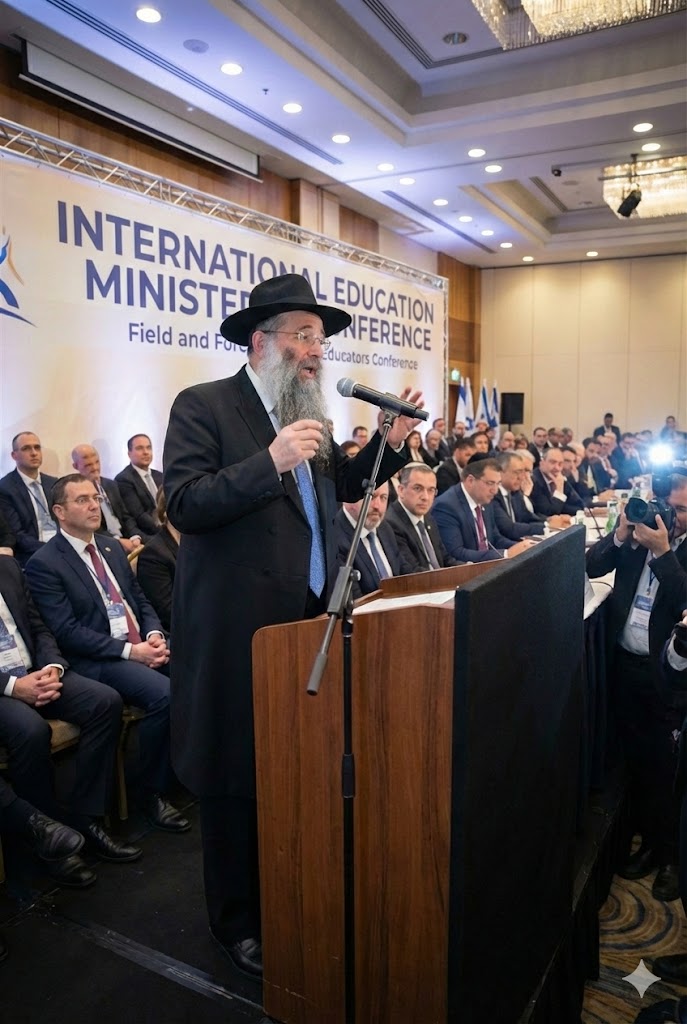
A short while ago, I was invited by a group of school principals in the greater New York area. This was a small, exclusive group of heads of educational institutions who gather occasionally to discuss key issues, to strengthen one another, to exchange information, or just to "refresh." This wonderful group has no official organization, yet they asked me to participate in their unofficial seminar days in the quiet region of the Hunter Mountains in the famous Catskills.
"What do you want me to speak about?" I asked.
"What is the Roots of the generation's problems? What are the ways to fix them? And... as soon as possible," they answered.
Okay. Not a simple task, but I agreed to speak, on the clear condition that I could say exactly what I think without fear of stones—or even eggs—being thrown at me...
I received written and signed consent from these men of Mesiras Nefesh, and I set out without preparing a lecture or even bullet points.
The problems and challenges of our generation are revealed and known, even to those who try to sweep them under the rug:
· The number of divorces and broken homes only multiplies year after year. The destruction and devastation in general, and regarding the level of Chinuch of the next generation in particular, are well known!
· The phenomenon of "Noar Nosher" (children at-risk and dropout youth) has broken countless pens and hearts alike.
· Suicide cases in our circles have become, to our great pain, a routine occurrence, and the system has yet to be shaken!
· The abundance of Machlokes (strife/disputes) among "Anash" (our community) has existed from time immemorial, but today it cannot even be called "L'shem Shamayim" (for the sake of Heaven). The negative effect this has on the youth—there is no need to elaborate!
The youth see the fire of Machlokes and draw their own conclusions, not only regarding Ahavas Yisroel but also developing a negative view of religion and Torah!
Worse yet: Fighting among children in school and outside of it, hatred of fellow Jews, and bullying are a known and widespread diseases among children. The destruction and havoc these children sow in the classroom cannot even be described. There is no doubt that this is a direct result of the abundance of Machlokes that children see in their parents and in the community! A direct effect!
There is no need to quote the sharp expressions of the Rambam, regarding the destructive consequences of controversy. In HaYom Yom (8th of Menachem Av) it is stated: “What is the effect of Chassidus and Yiras Shamayim (fear of Heaven), if the main thing is missing—Ahavas Yisroel, and furthermore, causing, G-d forbid, pain to another?"
Wow! It is not worth learning Chassidus and conducting oneself with Yiras Shamayim when there is no Ahavas Yisroel!
· It is a known fact that in the generation of Ikvesa d'Meshicha, religion, Torah, and Mitzvos have become a "successful business." One could write endless books on this topic! But there is no doubt that the two pillars of the world's stability in general, and the future of Klal Yisroel in particular—the world of Askanus (communal activism) and educational institutions ("Cheder," "School," "Seminary," etc.)—have turned into a business rolling in billions!
If these two pillars have lost Truth, Justice, and Honesty, and we have reached a situation where "The Rich"—meaning the heads of institutions and charity organizations—get richer day by day while the charity barely reaches the field for which the money was intended—then the Jewish people are in total bankruptcy, and this is a scandal like no other!
The scandal is double and reinforced:
1. The fact that heads of organizations and institutions are getting rich from public coffers is moral bankruptcy. Read: Daylight robbery!
2. And furthermore, and this is the main point: Without the flow of funds to the general public, both in a community framework and especially in educational institutions, nothing serious and significant can be advanced! The bottom line is that the generation and the world are suffering dramatically and are in a low state due to the inability to advance things that require financial investment. And what doesn't require funding?
· Tuition scandals, especially when it comes to destitute parents, and the exorbitant costs of Seminaries, are a prime example of the transformation of the world of education into a thriving business against which no one opens their mouth to chirp!
· Discrimination against Sephardim in educational frameworks and the stubborn refusal of some principals to listen to the opinion of Gedolei HaTorah—clearly indicate that the system, as a system, has failed!
· Problems and difficulties of livelihood (to put it mildly), or more precisely, "The Economic Crisis and the Consumption Habits of the Generation," are also a plague not written in the Torah, which has sown destruction and ruin in hundreds of thousands of homes, and mainly led to destructive Chinuch.
Ostensibly, this is not related to Chinuch, but only "ostensibly." Because if the youth were educated to a life of modesty—half or most of the charity organizations and "Tomchei Shabbos" would be completely unnecessary.
· A generation that supports psychiatrists and psychologists has replaced the Mashpia (mentor) of old, who brought much better fruits (and for free). The percentage of students requiring special therapy says "Darsheni". If high percentages of students regularly visit psychologists and this is their existence—, then why do we need schools at all? What is the logic in pushing students to be "Gedolei Yisroel" when most of them, or certainly a significant percentage of them, are dealing with a mental war for survival? Is it not clear that the system is dysfunctional and the time has come for dramatic change?
· Looking deeper, it can be said that the liberal methods of psychologists, "to be a free people," "everything is permitted"—have only sown devastation and destroyed many families (this topic is explained at length in Volume Seven – Foundations of Education).
"Nu... what is the root of the problem?" I was asked again and again.
"Dear friends! To get a real answer, we will need to say a little 'L'chaim' and rise for a few hours above nature," I answered naturally.
You will be surprised to hear: Not the smartphone, not the AI that is conquering the world, not the Israeli army, and not the Sheitel (wig) from India are the root of the generation's problems. The root of the generation's problem lies in two foundations that the leaders of the generation are not aware of at all. Or to be more precise—, perhaps they are aware, but they definitely do not want the public to be aware of them. In business slogan: "The information and commissions that the banks hide from you"...
Each topic is a fundamental principle and a great rule, the details and minutiae of which are explained at length and in breadth in the project "The Key to the World of Education – Encyclopedia for Heads of Educational Institutions." In this framework, we will focus only on general lines and explain how these two topics are the Yesod HaYesodos (Foundation of Foundations) and the pillar of wisdom, upon which the entire school system depends—starting from the "Head" and ending with the last detail, and as a result—the future of our children and the coming generations!
The two topics are:
1. Educational Plan (Tochnit Chinuchit): It is mandatory that every school has a professional curriculum and educational plan. Not just a study curriculum, but mainly an Educational (Chinuch) Plan!
2. Public Management: There must be a clear consensus, backed by the Gedolim and leaders of the generation, that an educational institution is not a private business belonging to the institution's heads. An educational institution is a "Public Company" whose goal is to serve the general public, and primarily—the students who enter its gates!
B.
Let us start with the first topic “on the tip of the fork”:
We are accustomed to every self-respecting school (and there are those who don't even have this) having a written and edited curriculum, setting clear goals for every class and student, from Grade 1 to Grade 8 (the end of Cheder). The aspiration of the teachers and educators is to teach the children material, and the more the better. Furthermore: The greatness of every school, on one hand, and student on the other, is measured by the ability to turn into something "Gadol" (Big/Great). A Gadol in Torah or a Gadol in business.
But must one be "Gadol"? The greatness of the greatest of prophets and the Rebbe of Klal Yisroel, Moshe Rabbeinu, a.h., was expressed in that "The man Moshe was very humble, more than any man on the face of the earth." The Baal Shem Tov, a.h., prayed before his passing, "Do not bring me to the foot of pride." Today, times have changed, and every man who respects himself aspires to greatness.
In order to reach the coveted goal, to standards equal to "those sitting first in the kingdom," one must learn, and a lot. And in order to achieve the coveted goal, the principal applies pressure on the staff to cover ground, the teachers apply pressure on the students to work hard, and the impression received is that this method is the fulfillment of the commandment "And you shall teach them diligently to your children."
But the truth must be said: With a light examination of Jewish history and what is happening on the ground as a result of this aspiration and outlook, we will reach a clear and unequivocal conclusion—the opposite is true: The eagerness to reach academic achievements and "Greatness" is not the great achievement of the school, but rather it is the root of all the problems of the generation and the generations to come!
Schools designed to educate students are built in a way that causes more harm than good! In other words: The madness for greatness may have created a few "Gedolim," but without a doubt, it buried hundreds of thousands of souls who were ejected from the system to the city streets!
Someone once said at a principals' conference: "The time has come to close all the Chedarim and Yeshivos," and left the audience with their mouths open. After a minute of shock, the lecturer finished the sentence: "...and to open them anew!"
Out of eagerness for imaginary achievements, we have forgotten the pure truth—the purpose of the school is first and foremost to EDUCATE the student! Sharp and clear! Nothing less and nothing more.
"To educate the student" means (examples only):
A) To educate the child to be a human being. Simply "A Mensch"!
B) To educate the child to refinement ("Edelkeit") and good character traits (Middos).
C) To educate the child how to get along among people and with people, and for simple Ahavas Yisroel. It is easy to describe how the world would look if Klal Yisroel adopted the "Great Rule of the Torah" simply—"Love your fellow as yourself”!
D) To educate the child to know how to get along with "Alma d'Nukba" (The Female World), meaning married life in peace and brotherhood, and the main thing—true love in simplicity and also as it is explained in Pnimiyus HaTorah.
E) To educate the child to self-confidence. Lack of self-confidence is a root for many problems and the counsel of the Yetzer. Has anyone thought about the urgent need to build the student's self-confidence as a top priority?
F) To educate the child to lead a clean and organized life. Ask any principal what percentage of "problematic" students come from homes that are not organized? Meaning: An unclean and dysfunctional home is a root for many educational problems. So why not educate the student in such a fundamental subject?
G) To educate the child on the supreme value of money and budget management. "What is necessary—is necessary, and the rest for Tzedakah!". If all the wealthy people lived by this directive—there would be far fewer poor people!
H) To educate the child to the value of a life of giving, kindness, and charity, not in order to receive a reward and imaginary honor, but as something taken for granted. To educate to the belief that every dollar a person has belongs to Hashem.
I) To educate the child "to order the head" and think in a straight way ("Wisdom of Life"). Most problems begin when a person does not think practically.
J) To educate the child to work with emotion—"The mind rules the heart," and how to control extreme moods.
K) To educate the student to simple Yiras Shamayim. "The beginning of wisdom is the fear of Hashem." Human attributes without Yiras Shamayim stand in doubt and depend on personal ego.
L) To instill in students strong Emunah (faith) in the Creator and Divine Providence (Hashgacha Pratis). One can assume what happy students we would have if they were "Believers sons of Believers" truly and internally!
M) Absolute trust (Bitachon) in the Hashem. This is not easy work, especially in challenges, but it is the root to everything!. It seems that a person must go through "seven levels of Gehenom" to understand what Bitachon is. These torments of the soul could have been spared him, had they instilled in him the true concept of Bitachon (see quote from the letter of the Lubavitcher Rebbe ZT"L in Igros Kodesh Vol. 6).
N) Last but not least: We must learn Pnimiyus HaTorah (Inner Dimension of Torah - Chassidus) with the children and penetrate their hearts, for this study is the foundation for the entire Torah!
On the face of it, it seems that learning Pnimiyus HaTorah is "just another subject" in the curriculum. But looking deeper, we discover that it is the central foundation in Chinuch!
It is an "open secret" that the subject of learning Pnimiyus HaTorah, precisely because it is the Yesod HaYesodos in man's connection to hashem, is a subject that to this day frightens certain people, or arouses opposition. True, the opposition has lessened, but the study has not yet received the appreciation it deserves!
The strongest support is the answer of Moshiach to the Baal Shem Tov: "When will the Master come? When your wellsprings spread outward!". If we are still in Galus (exile), it means that there remain more souls who have not yet merited to learn Pnimiyus HaTorah.
Reb Chaim Vital ZT"L writes frightening words (Introduction to Etz Chaim): "All the punishments and because of all the troubles and this long exile—is because Jews did not engage in this wisdom... and thus the end of the Redemption was delayed." These expressions were written by the Gedolei Yisroel from all circles.
Without learning Chassidus "as required" (k'debaye), it is very difficult to survive the double and redoubled darkness of the Galus. It is mandatory to set times for learning Pnimiyus HaTorah with the students every day—not as "another subject," but as the top priority!
To be clear without doubt: We are raising a generation suffering from anxiety and mental illness. Those not aware of the suffering—suffer subconsciously. The answer was written a generation ago: "Pnimiyus HaTorah is the wonder drug for all illnesses!"
O) The list is long and there is more to come.
P) In summary: The proper way to educate the student is to learn in order to be educated! "To know the deed that they shall do." The learning will give the student the tools for a happy Jewish life. The intention of learning in "Tinokos Shel Beis Raban" (school children) is first and foremost to EDUCATE the child. The difference between learning for the sake of academics and learning for the sake of Chinuch (character building) is vast!
C.
At the Purim Farbrengen of 5735 (1975), the Lubavitcher Rebbe ZT"L elaborated on this topic. The words are brought word-for-word in the "Min HaMa'ayan" section at the end of the article.
D.
The Second Foundation – Managing the Institution as a Private Business!
This painful subject is the root of the problem: Those standing at the head of the institution behave as if the institution is their own private business, and do with the institution and the students whatever arises in their spirit.
E.
From the General to the Specific – Examples and Testimonies:
We will present to the respected reader a series of examples and testimonies of how a seemingly marginal issue is the very root of all the institution's problems and the destructive results for the entire generation and the generations to come.
A) The Foundation of Foundations – Money and Investment:
Every professional educator can testify that in order to reach the truth and solve the generation's problems, and to place educational institutions (including charity organizations and community centers) on a firm basis—those standing at the head of the institutions need to invest not only Mesiras Nefesh and precious time, but also capital in the literal sense.
While a significant portion of educational institutions operate with Mesiras Nefesh despite material distress, a significant portion of the heads of institutions in our generation are exceedingly wealthy, and this is an open secret!
And here lies the dog (the crux of the problem): Instead of investing public funds and charity for the purpose for which they were given, the money flows to real estate investments and the private wealth of the institution's heads! As long as this "human crime" is not fixed—we are in existential danger!
B) Organizing the Institution's Board – "Ein Dan Yechidi":
1) Every institution, without exception, must be managed by a Board of Directors (Hanhallah), and under no circumstances by one man alone. "None judges alone but One (Hashem)."
2) The institution's management must be a Spiritual Management (Hanhallah Ruchanit), which is the true owner of the institution in every matter, even in material matters (for in an educational institution "everything is spiritual").
3) Criteria for a Board Member:
To be a board member and make fateful decisions, the candidate must be worthy of this sublime role and meet the following conditions:
· Educational background.
· Experience in management and connection with the community.
· Experience in managing educational institutions.
· Professional training and a certificate from a recognized and veteran institution testifying to this.
4) The principal of the institution is not a "worker" operated by the board without an opinion; he is an integral part of the board and has a decisive opinion.
5) However, the highest authority must be in the hands of the Rabbi of the community or the city.
6) Financial Transparency and Preventing Conflict of Interest: The institution's management cannot collect tuition from parents arbitrarily. For this purpose, an external and professional committee must be appointed to decide on this in a respectful manner.
7) In most institutions, the coffers are managed in absolute secrecy. The fundamental rule in proper management is: Account books must be open and transparent down to the last dollar, and audited by an external accountant according to law and custom. The report must be submitted to all board members and the community Rabbi.
The Painful Reality – Management as a "Private Business": To our sorrow, many institutions are not managed this way, but rather with the goal that control remains in the hands of an individual or a limited group of cronies ("a gang"). The results are destructive:
C) Blocking Educational Initiatives:
When a spiritual principal requests a budget for a project, he encounters refusal from "The CEO" who controls the cash, claiming "there is no money" or "it's not urgent". The economic consideration overrides the educational one.
D) Rejecting Students:
The head of the institution refuses to accept challenging students. The official reason is "educational," but the real reason is purely economic (Special Education costs a fortune!). Thus, precious souls are thrown into the street, and the numbers are frightening.
E) Inconceivable Gaps:
Teachers and educators receive minimum wage, but when the heads of institutions marry off their children—money flows like water and they do not need "Hachnasas Kallah" funds.
Is there a clearer example of running a private business that sows destruction and ruin in the institution most holy to the Jewish people?
F.
In the book "Askanut Tziburit" (Public Activism, p. 60), it is brought in the name of the Lubavitcher Rebbe ZT"L: "...It is simple that there is no contracting – for this touches upon all institutions: their existence, or that each and every one of them will turn into the asset of an individual who will do with it as he wishes – and none judges alone but Hashem, and flesh and blood who behaves this way – ultimately destroys the institution, Hashem should save us."
In another letter (Igros Kodesh Vol. 5, p. 291), the Rebbe writes sharply against boards that sit with folded hands while the institution collapses, and defines this as a "crime."
In light of the above, one can justly verify the saying of the aforementioned wise man that the time has come to close the Yeshivos and educational institutions and... reopen them. Only refreshing the system and cleansing it of personal interests will sprout magnificent institutions.
There must be a consensus: Educational institutions are not a private business! Only people of Mesiras Nefesh, who are worthy of it, shall stand at the head of institutions. Just as we would not entrust open-heart surgery to an amateur, so too we will not entrust the souls of our children to one who does not meet the highest standards.
G.
In Summary:
From my personal experience of 33 years in the field, these two foundations (Educational Plan and Proper Public Management) are the key to a successful institution.
The responsibility lies upon the Gedolei HaDor, the Admorim, and the Rabbis. They must declare in a clear voice that in the era of Ikvesa d'Meshicha, it is mandatory to ensure that educational institutions operate L'shem Shamayim and for the benefit of the children alone!
This is the only way to prepare the world and the Tinokos Shel Beis Raban for the true and complete Redemption, and to say with pride: "See the crops we have raised."
***
About the Author:
The Author of the Article is the editor of the book series "Chinuch b'Daka" (Education in a Minute) – an educational encyclopedia for parents, teachers, and educators; and the series "The Key to the World of Education" – an encyclopedia and research for heads of educational institutions and the Ministry of Education.
The author has rich experience of 33 years in the field of establishing and founding educational institutions, and serves as a senior consultant to principals and heads of educational institutions around the world.
|