|
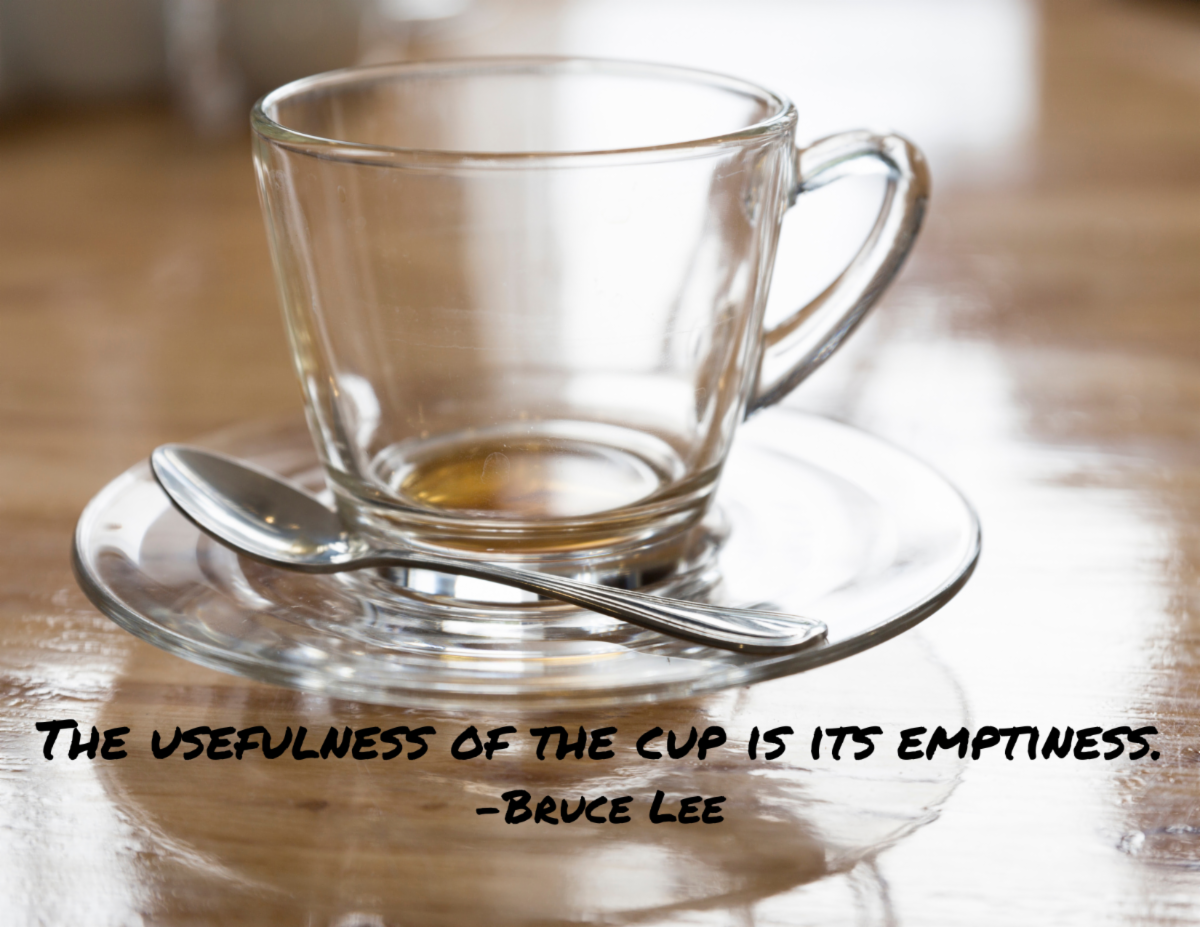
One day, a scholar came to visit a Zen master. It soon became obvious that the scholar was full of opinions and knowledge, interrupting repeatedly and failing to listen to what the master had to say. The master calmly suggested they have tea. Filling the scholar's cup, the master let it reach the brim and continued to pour as the tea overflowed onto the table, the floor and finally the scholar's robes. The scholar burst out: "Stop! The cup is already full. Can't you see?" “Exactly,” the Zen master replied with a smile. “You are like this cup — so full of ideas that nothing more will fit in. Come back to me with an empty cup.”
This ancient Chinese parable is packed with strategy that is as useful now as it was then.
Too often, we let the tea pour onto the floor because we come with a cup full of our own knowledge, experience, or expertise. We forget to make room for curiosity, observations and new learning.
Do you tend to incompletely hear others because you are too busy or eager to offer your own opinions, knowledge or experience?
How often do you already believe you know the answer or think, "It's not my first rodeo."?
Do you fill every physical, mental and emotional space up to the brim?
Many of us want to know more things, learn more things and do everything at once. Soon, with all this filling, we reach a point where not only is there no space, indeed, we may think we don't need any more space. We may be perfectly happy with our full cup. However, as wisdom and reality demonstrate - there is always more to learn - about ourselves, others and our world. If we don't empty our cup, we run the risk of getting stuck or becoming stagnant. We miss out on being filled with new experiences and inputs from ourselves and others.
I Invite You to Empty Your Cup.
For those of us who love abundance or fear scarcity, an empty cup may seem threatening. Consider this... When we empty our cup, we do not lose all our past learning and experience. The good is not gone. We simply empty our current focus and awareness to benefit from the present moment.
I like what's in my cup! Yes, AND - even brimming with good things, you can't add to a container that is already full.
But How?
Take a lesson from children
Adopt a "right here, right now" mindset.
If your cup is full of good, DRINK it!
Take time to consume, savor and absorb what is there. You get to benefit fully and retain the good. Now, even if you go back for more of the same, you can take in a full serving. This will expand and deepen your knowledge and experience.
Conversely, if you don't like what's in your cup, it's easier to pour it out to make room for something better.
Practice Listening
Listening is a cornerstone of emptying your cup. When you enter a conversation, visualize the empty cup. Breathe and focus on listening to understand rather than respond. This practice fosters empathy, understanding, and a deeper connection with those around you.
Cultivate Mindfulness
Quieting your mind facilitates emptying your cup by creating awareness and focus on the present moment. Being mindful can look like curiosity, openness, humility and gratitude.
Clean your cup
Many opportunities can only be taken when we are clean, clear and ready for them. A clean cup allows us to take in, evaluate and decide the content's worth on its own merits.
Cleaning your cup helps prevent poor mixtures.
You may have something good in your cup and want to fill it with something else that is good, but mixing the two might not create the result you want. Picture coffee and orange juice. If your cup isn't clean from the coffee, the oj may taste strange, causing you to think there's something wrong with the orange juice. Or painting. You may attempt to paint with watercolors in the way you paint with oils and become quickly frustrated with the speed at which watercolors dry. If we try to do something new in the way we do something else or try to interpret new information based on pre-existing ideas, it may not work or make sense. This creates a false assumption that there is something defective or less desirable with the new option which leads to rejecting something that could be beneficial.
Once you've tasted the new on its own, feel free to experiment with mixing!
Let go
Learning and unlearning are often intertwined. When we empty our cup and take in something new, be it knowledge or experience, we may realize that our previous understanding was limited or flawed. We find ourselves unlearning. We may shed thought patterns or beliefs that are outdated or no longer serve us. We may discard and replace habits that weren't effective.
Remember the cup: its value is in the space, the emptiness, it holds.
Look for other areas of empty
- Explore the practice of Not Adding.
- Put space between finishing one thing and starting another.
- Try subtracting. This can take the form of delegating, outsourcing or automating.
- Enjoy emptiness in the ways that bring you peace. Maybe it's the quiet at night, the moments when you just awaken, a clean counter or a blank journal page.
Emptying your cup is not a one-time endeavor but a lifelong journey of growth and discovery. It requires openness and a certain amount of courage to explore and engage with whatever life has to offer. And life has much to offer!
|