Weekly Digest Number 11 - March 15, 2022 |
|
Welcome to the RWU Rail & Labor News! This news bulletin is produced and emailed out each Tuesday morning. We hope you find each week's news and information useful. If so, please share with co-workers, friends, and colleagues. If you like, you can sign them up to get all the news from RWU HERE. Or forward them the link. Note: If you read over this news bulletin each week, you will be sure to never miss the important news of what is going on in the railroad world from a worker's perspective!
|
|
(Editor's Note: The Surface Transportation Board is not happy with the Class One carriers. Neither is the House Transportation and Infrastructure Committee Railroad Subcommittee. Shippers are furious with the levels of service under PSR. The rail unions and their members are ready to strike. News of the rail industry's profiteering, together with its manpower, maintenance, and infrastructure cuts is bubbling to the surface. And now this: a report from a corporate oversight thinktank on the Class Ones' runaway greed. The pressure is on. Let's keep the momentum going!) |
|
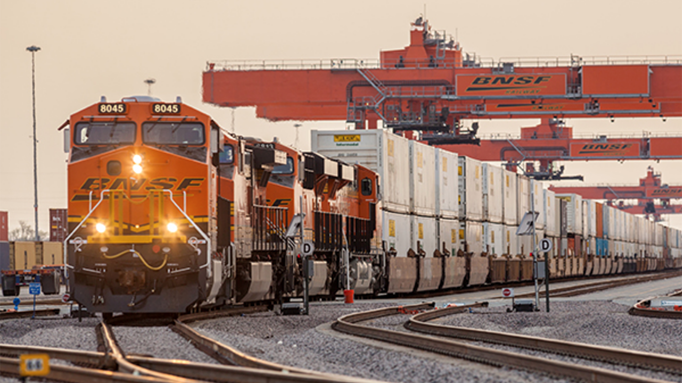
The Biggest Railroads are Profiting From the Supply Chain Crisis after Cutting Costs, Spending Billions on Shareholder Handouts, and Lobbying on Competition Issues in 2021 |
|
SUMMARY: The rail industry, which carries about 40% of U.S. freight, is dominated by just seven major railways which collected a record $1.18 billion in fees for freight stuck in supply chain bottlenecks in the first nine months of 2021 and has seen "a flurry of lawsuits" over these charges. Yet before the rail industry's fees set a record during the pandemic, they had already increased by over 30% since 2000, all while railroads' costs have only increased by 3%. A key culprit for railroad profiteering has been the industry's power to limit competition on the nation's privately-owned freight railroads while enjoying a unique exemption from antitrust laws. A July 2021 executive order from President Biden sought to confront the industry's "aggressive pricing" and anticompetitive behavior, enabled by its "monopoly power over sections of the country." One of the most notable criticisms of railroads abusing their market power at the expense of American consumers and shippers has come from a key federal rail regulator, Surface Transportation Board Chairman Martin Oberman. In September 2021, Oberman condemned the industry's "'pursuit of the almighty OR'"— referring to railroads' efforts to slash their operating ratios by cutting costs. Oberman estimated that since 2010, industry spent $46 billion more on stock buybacks and dividends than on maintenance and equipment investments, which would have increased the rail system's resilience against the kind of supply chain shocks that are currently straining consumers' wallets and access to everyday necessities. An Accountable.US review has found that nearly all of the seven Class I railroads have enjoyed high profits amid the supply chain crisis while cutting costs, increasing shareholder handouts, and disclosing at least $9.37 million on lobbying related to competition, mergers, and Biden's July 2021 executive order: • BNSF—Which Raised Its Freight Rates And Cut Its Operating Ratio In Q3 2021—Saw Its Net Income Jump By Double Digits As It Spent $80,000 Lobbying On "Rail Competition Issues" In 2021 While Its Parent Company Spent $12.6 Billion On Stock Buybacks In The First Six Months Of 2021. • Union Pacific—Whose Increased Fees "More Than Offset" Lower Freight Volume And Which Touted "Records" For Cutting Operating Ratio In 2021—Had Its "'Most Profitable Year Ever'" In 2021 Due In Part To Price Increases, Spent Over $10 Billion On Shareholder Handouts, And Nearly $3.8 Million Lobbying On Competition issues That Year, Including Biden's Executive Order. • Canadian National—Which Touted Gains From Demurrage Fees And A Record Low For Its Operating Ratio In Q4 2021—Increased Its Net Income By 37%, Boosted Its Stock Buybacks By 317%, And Spent Over $1 Million While Lobbying On Merger Issues In 2021.
|
|
(Editor's Note: Amtrak hires "off the street" and also hires what they refer to as "re-entries". A re-entry is a worker who has worked for a railroad previously and is moving on from that job to Amtrak. Some re-entry jobs allow for workers to bring some of their accrued vacation and pay progression with them. Read the article below and/or contact RWU for more info.) |
|
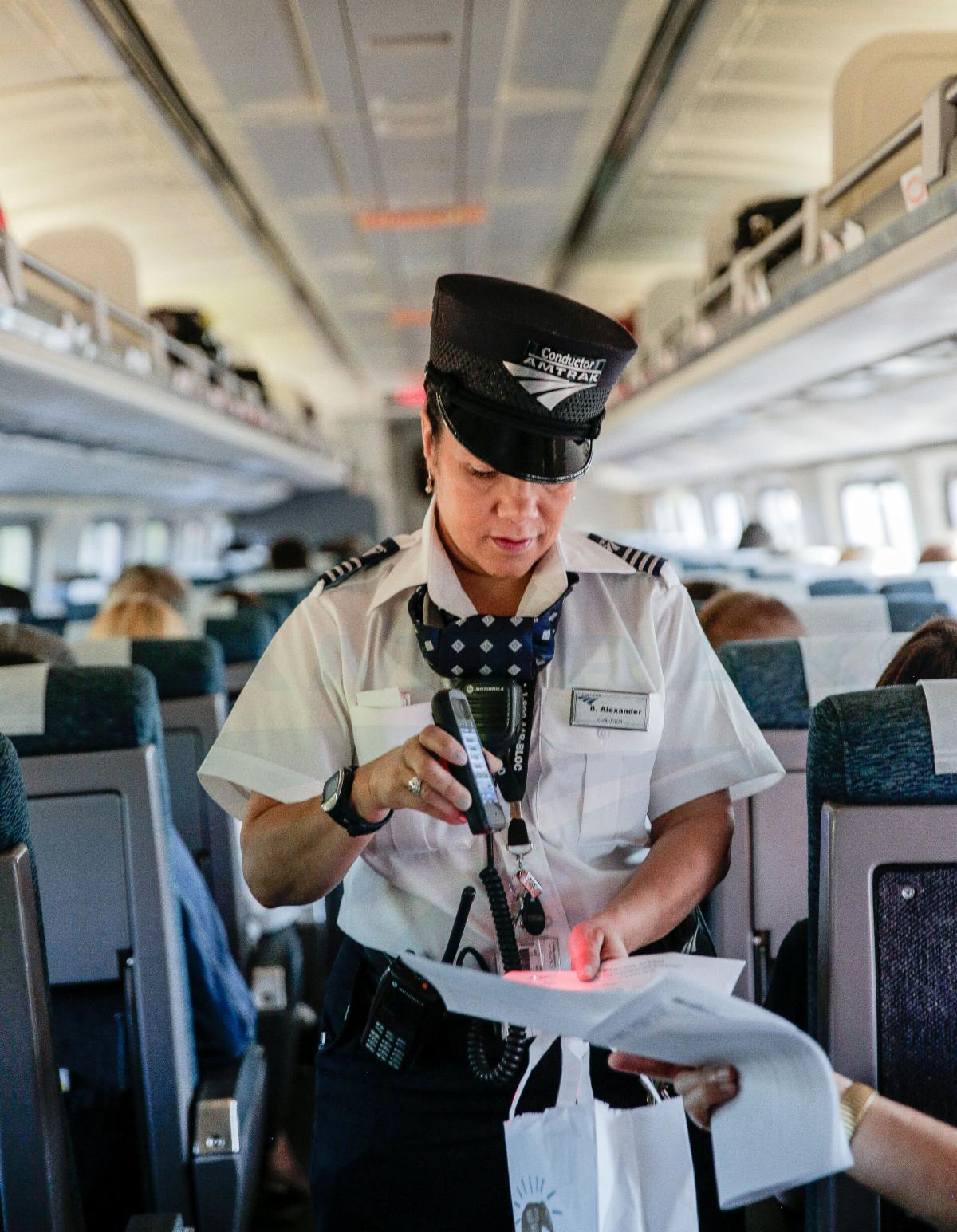
Amtrak Is Hiring Employees in Numerous Crafts and Terminals Across the USA |
|
For those of you working for a Class One freight carrier who have had it up to here with the harassment, the spying, the discipline, the lack of time off work, chronic fatigue, destruction of home and family life. constant threats of furlough and force assignment, givebacks in work rules and all the rest, before you give up on the rail industry, maybe it is time to try a job at Amtrak!
RWU is not in the business of playing job recruiter for any rail carrier, but we are interested in seeing talented, hard working union brothers and sisters staying on in the rail industry, being relatively satisfied, and making it through to retirement. And the last 20 years or more speak for themselves. There are hundreds of employees at Amtrak who formerly worked for Class One freight carriers. How many people do you know at your freight railroad who formerly worked for Amtrak? Probably none. The numbers speak for themselves.
If you jump ship from the railroad you currently work for and come to Amtrak, in many crafts, you would come over as a brand spanking new employee. But if you are a locomotive engineer who holds a current certification, Amtrak will hire you in at your current pay progression. So for example, if you have achieved 100% of the pay progression at your current employer, you would start with Amtrak at 100% (note, this is after your training period is concluded.) In addition, you would carry your vacation weeks with you as well. So for example, if you were up to 4 weeks of vacation with your current employer, then you would start at Amtrak with 4 weeks of vacation.
Amtrak is far from perfect, and you have to put up with some of the same BS as in freight service. But while UP, NS and CSX all have all been ranked in the top 5 worst employers in the nation in recent years, Forbes just recognized Amtrak as a good employer. Amtrak just received the largest funding in its history. The company is hiring in numerous crafts at terminals across the country. So before you just up and quit the railroad, put in your application today! For hundreds of former freight railroad workers, it is the best move they ever made!
|
|
(Editor's Note: For what it is worth, RWU submitted our two cents worth to the discussion. It is crucial for Amtrak and the future of passenger trains in the USA that we win this fight before the STB. If we lose here, it is unlikely that the plan for a passenger train renaissance in the U.S. can move forward. Surprisingly, TRAINS Magazine picked up our Public Statement from the STB website. See article below.) |
|
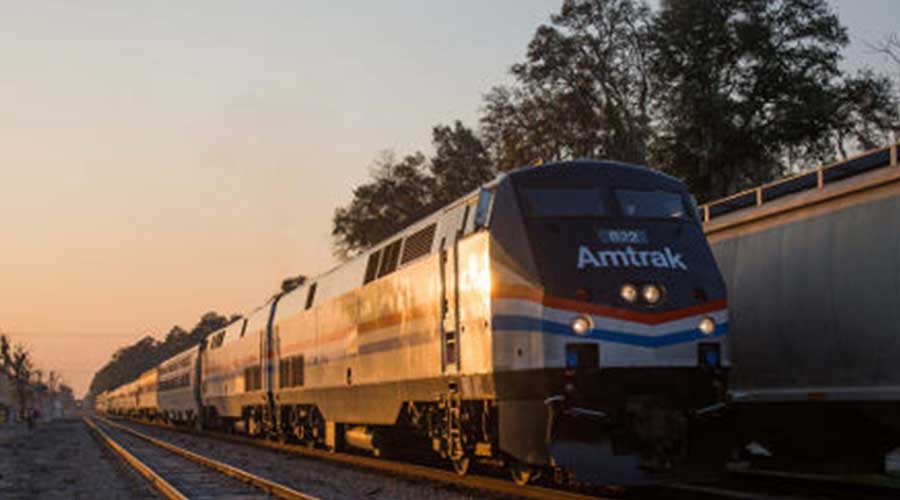
Rail Employee Group Voices Support for Amtrak Gulf Coast Service |
|
Railroad Workers United, which describes itself as “an inter-union, cross-craft solidarity caucus of railroad workers and their supporters,” has expressed its support for Amtrak’s efforts to launch service on the Gulf Coast — while taking more than a few shots at CSX and other Class I railroads.
RWU says its members have seen “a serious decline in customer service, eroding safety conditions, a lack of maintenance, and poor on-time performance of both passenger and freight trains” from Class I railroads, blaming the Precision Scheduled Railroading model of “running extremely long trains on infrastructure that was not designed to handle them.
“The operating model now in use across the continent does not facilitate scheduled movements,” the statement continues. “If the Class I railroads were in fact keeping their trains to schedule, then running a few 500-foot passenger trains each day would consume practically no track capacity at all and cause no disruption and limited need for infrastructure.”
Referencing a 2016 study in which CSX estimated $2.3 billion in infrastructure work would be needed to accommodate passenger service between New Orleans and Jacksonville, the statement says, “It is a sad day when a highly profitable railroad that only runs 11 trains a day on a mainline” can make a such a request, adding, “This $2.3 billion figure is more than spent on capital improvements to its entire network of 21,000 miles in 2017!”
“We must ensure that Amtrak has a meaningful right of access to host railroad infrastructure,” the statement concludes. “Otherwise the grand plan to develop passenger train service in the United States will be unlikely to succeed.
|
|
Petition Drive Launched to Compel Action on Carrier Attendance Policies |
|
CLEVELAND, Ohio (March 7, 2022) — In conjunction with the Transportation Trades Department, AFL-CIO (TTD), the SMART Transportation Division (SMART-TD) and the Brotherhood of Locomotive Engineers and Trainmen (BLET) urge all members to engage in a petition drive to bring attention to the draconian and punitive attendance policies that have forced rail workers to live in constant fatigue.
This effort comes simultaneously with a letter by AFL-CIO TTD President Greg Regan to the federal Departments of Labor and Transportation in support of both unions’ request in late January for an investigation into all rail carrier attendance policies, not just BNSF’s recently imposed “HiViz” policy that has sparked outrage among all affected employees.
“We speak with one voice, shoulder-to-shoulder, in saying enough is enough. Congress must act to end these unsafe and life-sapping policies that punish workers with job loss. These severe and excessively harsh policies also penalize families by taking away what precious little time they have with their loved ones, leaving them dead tired and drained,” SMART-TD President Jeremy Ferguson and BLET President Dennis Pierce said. “We thank TTD President Regan as our organizations continue to oppose draconian carrier attendance policies, such as the BNSF ‘Hi-Viz’ policy. These policies are clearly designed to further maximize carrier profits at the workers’ expense. Our Unions will work jointly with TTD to raise awareness of these issues; they have gone unchallenged by our legislators and regulatory agencies for much too long.”
A case in point— according to a report in Business Insider published on March 4, five Democratic political leaders want an investigation by the Department of Labor (DOL) and the Equal Employment Opportunity Commission (EEOC) into Amazon’s attendance policies, and we have one question for them:
When do railroad workers get their turn?
|
|
(Editor's Note: As the brief article below states, "We have no shortage of reasons to solidify in this bargaining round." RWU would add that we have abundant reason to solidify in EACH AND EVERY bargaining round! The time is here, brothers and sisters for all of rail labor to unite and fight!)
|
|
BMWED/SMART-MD Encouraged by Coordinated Bargaining Group’s Support |
|
The recent letter of support from the Coordinated Bargaining Coalition, comprising of 11 Rail Unions including our Teamster Rail partner the Brotherhood of Locomotive Engineers and Trainmen, is encouraging and of significant importance to us as we continue to strive for an equitable and prosperous conclusion to this bargaining round with the Class I freight railroads.
It is vital that all of rail labor, every railroader from each craft, work together to secure the best possible outcome. United we are stronger. We have no shortage of reasons to solidify in this bargaining round. We all strive for what is just and right for rail labor and working together is our best chance at a just outcome.
The BMWED/SMART-MD coalition greatly appreciates the CBC’s support of our proffer of arbitration. We can and will win a fair and prosperous contract through solidarity.
|
|
(Editor's Note: While RWU has not taken a formal stance on this question, the DOJ makes a good case that reciprocal switching is needed to protect shippers from price gouging and will not hurt the rail industry. If it works in Canada, perhaps it can work in the USA as well.) |
|
DOJ Weighs in on Reciprocal Switching |
|
DOJ in its Feb. 28 filing called the STB’s proposed reciprocal switching rule “a well-tailored first step,” and provided three reasons for supporting it:
1. The proposed rule would expand access to and increase the “likelihood of direct competition. … In its recent Notice, the Board noted that commenters also believe the Board’s proposal would, among other things, ‘foster competition among rail carriers at a time when (due to mergers and acquisitions) shippers’ rail transportation options are limited’ and ‘promote competition and efficiency in the U.S. economy overall.’” Even if reciprocal switching is mandatory, “a shipper will receive competitive bids only if there is another railroad nearby willing to make a competitive offer to carry the freight.” DOJ noted, however, that shippers have raised concerns that “when they can obtain an offer for switching, the proposed rate is often prohibitive. This is likely due to one of two possibilities. First, railroad A may set the costs for switching too high for railroad B to make a competitive offer. Second, railroad B may choose not to make a competitive offer against one of its few rivals to minimize competition between railroad A and railroad B.” That’s why, DOJ wrote, the proposed rule would not be a “substitute for remaining vigilant against consolidation and other conduct that harms competition or further reduces the number of alternatives available to shippers.”
2. The proposed rule is not “burdensome,” and can be supported by Class I railroads. Canadian Pacific and Canadian National are already subject to Canada’s interswitching requirement on much of their track, DOJ noted. “A number of shippers with facilities in Canada have reported using this mechanism to enjoy the benefit of rate competition on long-haul routes. There is every reason to believe a similar system would benefit captive shippers in the United States along with their customers, suppliers, and ultimately the American public.."
|
|
(Editor's Note: Here is yet another example where the straightjacketing of PSR has rendered the rail industry inflexible and incapable to responding to shifting conditions and opportunities for growth. But hey, who needs growth when you have a record low OR? Utterly Pathetic...) |
|
Railroads Yet to Benefit from East Coast Intermodal Boom: Analysis |
|
East Coast ports are handling a record number of containers due to ongoing supply chain issues in California and the West, but railroads aren’t seeing this equate to more intermodal volume for a number of reasons.
First, rail doesn’t have the same international intermodal market share in the East as it does in the West because East Coast ports are a shorter distance, within 500 miles or so, of markets like Atlanta, Pittsburgh, Cleveland, or Buffalo, N.Y. These shorter hauls are more attractive to trucks, as opposed to markets in Kansas City, Dallas, or Chicago that are at least 1,500 miles from the Pacific Coast. In these lanes, international intermodal is more likely to use rail from the West.
For East Coast lanes conducive for rail, opportunities are periodically hindered by labor and equipment issues and constrained warehouse space, as reported recently in the Wall Street Journal. Also an issue is tight drayage capacity that’s requiring international containers to be transloaded close to the port, so the containers can quickly be reloaded onto container ships. These circumstances make it difficult for railroads to capture the influx of containers arriving at East Coast ports. Trucks capture most of the business and complete the first-last mile deliver to consuming markets.
Norfolk Southern handled 4.104 million intermodal units in 2021, a 2.4% decrease from 2019’s 4.207 million units. While the Class I railroad has nearly eclipsed pre-pandemic intermodal volume, the railroad has not experienced the intermodal growth like the East Coast ports it serves. In comparison, CSX Transportation handled 2.976 million intermodal units in 2021, an 11.4% increase from 2019’s 2.670 million units. It is the railroad’s best year for intermodal in recent history and is slightly more aligned with growth at ports.
|
|
(Editor's Note: There is a movement afoot in the U.S. which includes labor, shippers, environmentalists, passengers and others who want good service, on-time performance and more trains. The latest insight into the level of discontent with the Class One railroads came in early March when many of these forces vented to the House Transportation & Infrastructure Committee.) |
|
Congress Gets an Earful About Railroad Service
Shippers, labor blame Precision Scheduled Railroading and Wall Street
|
|
A combination of Precision Scheduled Railroading and pressure from Wall Street has prompted railroads to slash costs and raise rates while providing less reliable service, rail shippers and labor told Congress on Tuesday.
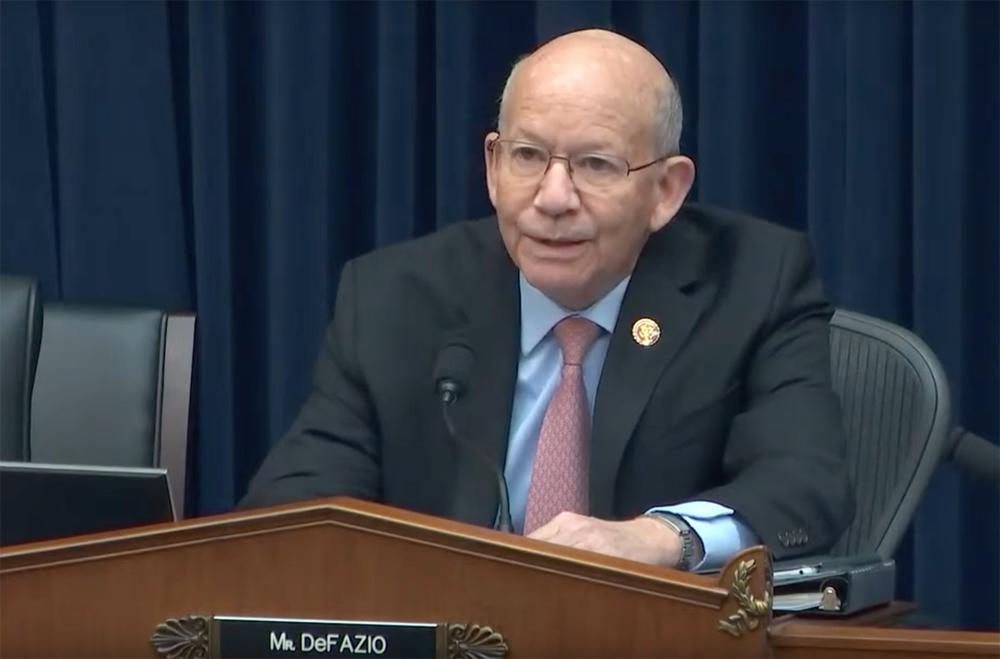
The House Transportation & Infrastructure subcommittee hearing was focused on the reauthorization of the Surface Transportation Board and how the independent agency can better regulate the industry.
Brad Hildebrand testifies by video for the National Industrial Transportation League during Tuesday’s house hearing on rail regulation.
“PSR is an operating methodology that has been championed by Wall Street to push railroads to improve their operating ratios and increase their bottom lines….,” says Brad Hildebrand, a former Cargill executive who represented the National Industrial Transportation League at the two-hour hearing. “Simply put, the STB needs greater statutory authority to provide effective oversight of the freight rail industry.”
The top item on shippers’ wish list: A new rule that would provide sole-served shippers with access to a second railroad through reciprocal switching. The STB will hold two days of hearings on the matter next week.
The implementation of PSR has hurt rail shippers, their customers, and the railroads themselves, says Chris Jahn, CEO of the American Chemistry Council, the trade association representing chemical manufacturers. “What we say about Precision Scheduled Railroading is that it’s doing less with less,” he says. “Our experience there is rates go up and velocity goes down.”
Recent rail service failures forced a chemical producer to curtail production at two of its plants in the Southeast by more than 115 million pounds. “These are lost sales not only for our members, and exacerbate inflation and supply chain challenges we have, but they’re also lost sales for the railroad,” Jahn says. “I think that’s really important. We can’t ship what we can’t make.”
In other cases, poor rail service has forced rail-dependent shippers to divert freight to trucks ... Our nation’s rail advantage is hemorrhaging,” Haksteen says. “The simple fact that rail volume is down, and truck volumes are up, illustrates that there is something wrong.”
|
|
NTSB Report Details Fatal 2021 Arizona Accident Involving Union Pacific Track Worker |
|
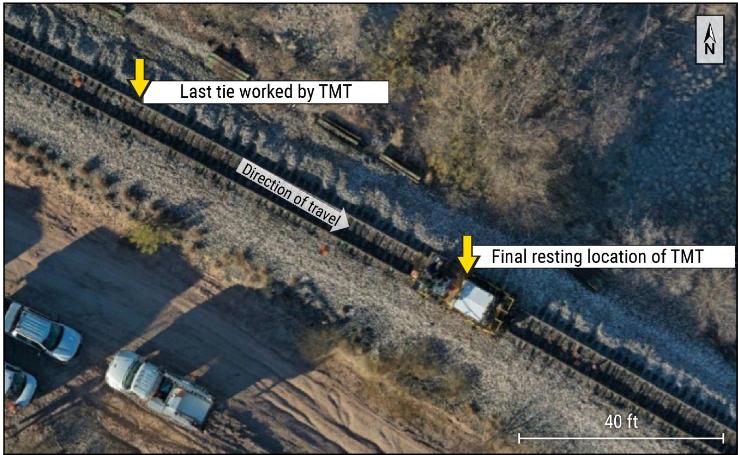
The failure of an operator to stop a tie tamping machine — with the operator admitting he was in a panicked state because the machine did not appear to stop when he expected — led to the death of a track worker struck by the tamper, the National Transportation Safety Board determined in an accident report released Thursday.
The accident occurred on the Union Pacific near Vail, Ariz., at about 12:40 p.m. on Jan. 31, 2021. The worker struck by the machine — part of a track gang of about 50 people and 23 pieces of equipment performing tie replacement and track surfacing — was airlifted to a hospital where he later died of his injuries.
The track machine involved operates using a joystick, which is pushed forward to move forward; when the joystick is released, propulsion stops and brakes are applied. In an interview with investigators, the operator said he “let go of the joystick in going forward position and it seemed like it didn’t stop to me. That’s when I started panicking.” The operator was unsuccessful in pulling the horn cable to warn the worker ahead of him and failed to hit the emergency stop button; he finally stopped the machine by pulling the joystick into the work cycle and dropping the tamper workheads into the ballast. The victim was found under the machine.
|
|
(Editor's Note: As the moderator stated, how unusual this is. Perhaps this is something that these guys should be doing on a regular basis. And while at it, how about some detailed bargaining committee reports and an invitation for the rank and file to get active and involved in the process.) |
|
BLET President Pierce and SMART-TD President Ferguson Give Joint Interview on Podcast |
|
SMART-TD President Jeremy Ferguson and BLET President Dennis Pierce gave a rare public joint interview on the Rails Tails & Trails YouTube channel in early March. The two rail union presidents spoke on a myriad of subjects including recent developments with BNSF’s HiViz attendance policy and commentary on national rail contract negotiations
|
|
Cleanup Continues after Union Pacific Derailment in Texas |
|
PITTSBURG, Texas — Cleanup continues after at least 20 cars of a Union Pacific train derailed Sunday afternoon in Pittburg, Texas. KLTV reports Pittsburgh Mayor David Abernathy said a train of more than 13,000 feet was involved, with two different portions derailing.
No injuries were reported. KXTW-TV reports the accident occurred about 1 p.m., and involved a train of mixed commodities. The rail line is expected to reopen this morning (March 8). The cause of the derailment is under investigation. Pittsburg is about 60 miles southwest of Texarkana, Texas.
|
|
(Editor's Note: Well, it looks like the glimmer of hope shown in an uptick of traffic in recent weeks has been dashed against the beachhead of PSR.) |
|
U.S., Canadian Freight-rail Volume Fell in Early March |
|
U.S. freight-rail traffic during the first week of March dipped 1.9% to 505,177 carloads and intermodal units compared with the same week last year, according to Association of American Railroads (AAR) data.
Total carloads for the week ending March 5 climbed 2.8% to 238,870 units, while intermodal volume fell 5.8% to 266,307 containers and trailers.
Four of the 10 carload commodity groups that AAR follows weekly posted increases compared with the same week in 2021. They included chemicals, up 5,267 carloads to 34,854; nonmetallic minerals, up 4,746 carloads to 32,504; and coal, up 2,675 carloads to 68,304.
Commodity groups that posted decreases during the week included motor vehicles and parts, down 2,641 carloads to 13,261; grain, down 1,572 carloads to 24,880; and petroleum and petroleum products, down 1,309 carloads to 9,195.
Meanwhile, Canadian railroads also reported decreases in traffic during March's first week. Carloads fell 8.9% to 74,912 units, while intermodal volume plummeted 12.8% to 66,261 containers and trailers.
|
|
Class Is Employed Fewer People in January |
|
U.S. Class Is employed 111,754 people in mid-January, down 2.4% from December 2021 and down 1.5% compared with employment during the same period a year ago, according to Surface Transportation Board (STB) data.
All employment categories logged decreases in January compared with December’s level. Transportation (train and engine) employment fell 3.87% to 45,767 workers; maintenance of equipment and stores was down 2.31% to 16,940; professional and administrative was down 1.4% to 9,672; maintenance of way and structures declined 1.15% to 27,452; transportation (other than train and engine) dipped 0.62% to 4,655; and executives, officials and staff assistants was down 0.21% to 7,268.
Five of the six categories logged year-over-year decreases. They were maintenance of equipment and stores, down 6.33%; professional and administrative, down 5.35%; transportation (other than train and engine), down 1.48%; maintenance of way and structures, down 0.6%; and executives, officials and staff assistants, down 0.34%.
Only transportation (train and engine) logged a year-over-year increase, which was 0.54%.
|
|
|
|
|
|
|