Weekly Digest Number 19 - May 11th, 2021 |
|
AMTRAK NEWS
America's Amtrak Moment Could Finally be Here
|
|
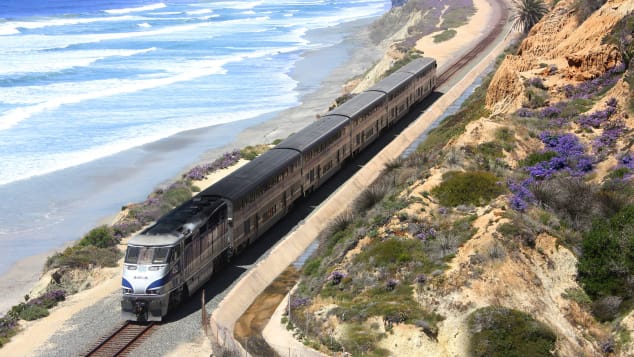
Created in 1971 from the creaking remains of the classic US railroads that helped build modern America, Amtrak has often lived a precarious existence. Subject to the whims of politicians in Washington D.C. and constantly under pressure from the well-funded and hugely influential oil, automotive and airline industry lobbies, the national passenger rail operator has been threatened with oblivion on several occasions. But as it celebrates a 50th anniversary that few would have been brave enough to predict, there are signs that Amtrak's moment may finally have arrived. The United States remains firmly wedded to the automobile and the sheer size of the nation means that air travel is often the only option for long-distance journeys. Yet dotted across the country are numerous routes where population density and distances make rail a viable option -- and a social necessity. That's not news -- those routes have existed since the earliest days of the railroads. What is novel is the renewed enthusiasm of Americans for commuting or taking long-distance leisure trips by train. What is most significant right now is the presence of a passionate Amtrak advocate in the White House. President Joe Biden, a long-time rail commuter rejoicing in the nickname "Amtrak Joe," is calling on Congress to invest $80 billion in the rail network.
|
|
WEBINAR: Amtrak’s 2035 Vision
Please join us to learn about Amtrak’s vision to grow service and connect new city pairs across the country. Their plan would provide new and improved train service to millions of additional passengers and increase connectivity between urban and rural communities.
Thursday, May 13, 2021 12:00 PM CT
|
|
Norfolk Southern and Virginia Agree to Expand Passenger-Rail Service |
|
Gov. Ralph Northam yesterday announced that Virginia has reached an agreement with Norfolk Southern Railway to extend passenger-rail service to the New River Valley for the first time since 1979. Known as the Western Rail Initiative, the $257.2 million agreement is designed to increase intercity passenger-rail service from Roanoke to the Northeast Corridor and is an expansion of the Transforming Rail in Virginia program to build a 21st-century rail network, Virginia government officials said in a press release.
The initiative includes $38.2 million for acquisition of right-of-way and track for approximately 28.5 miles of the Virginian Line from the Salem Crossovers west of Roanoke to Merrimac (Christiansburg). The initiative also calls for $219 million in infrastructure investments along the corridor ... The expansion complements the existing Amtrak Northeast Corridor service, which travels northbound from Roanoke in the morning and returns in the afternoon, Virginia officials said. The two Northeast Corridor round trips will be extended from Roanoke to Christiansburg upon completion of the infrastructure improvements in 2025.
|
|
HIGH SPEED RAIL NEWS
High-Speed Rail Championed in DC
|
|
(Editor's Note: RWU is in the process of drafting a position statement on the whole question of rail infrastructure development. While we are not opposed to HSR per se, we see it as just a small part of what it takes to build up a robust rail network of both passenger and freight service, one which focuses more on improving/upgrading existing rail right-of-way and infrastructure)
It was an exciting day on May 6th for high-speed rail advocates. A hearing on the opportunities and challenges facing high-speed rail was held by the House Committee on Transportation & Infrastructure. There were many champions for the game-changing power of high-speed rail among the elected officials, agencies, non-profits and private companies that spoke throughout the day.
Highlights from the Hearing:
-
Congressman Seth Moulton’s (D, MA) passion and understanding of high-speed rail stood out as he chaired the hearing for part of the day and asked pointed questions to the few skeptics in the room. We applaud his leadership today and the blueprint he’s laid out in his proposed legislation for a $205 billion investment in high-speed rail. Please let him know we appreciate his leadership!
- Congressman Peter D. Fazio (D, OR) discussed past investments in rail and why we don’t have passenger rail comparable to the rest of the world. “Since WWII: $2 trillion into highways; $777 billion into aviation; $90 billion into rail…then we wonder why we have a decrepit rail network."
|
|
Union Pacific Says Autonomous Trains are the Answer to Driverless Trucks
Until Autonomous Technology is Ready, CEO Says Railroad Needs One-Man Crews to Stay Competitive
|
|
(Editor's Note: As RWU has predicted in recent years, the rail carriers will use the specter of autonomous trucks - and hence trains - to win their long sought goal of single person crew operations. RWU was organized in 2008 from the group ROCU (Railroad Operating Crafts United) which was born a few years earlier when the rail carriers first made public their intentions to run trains with a lone crew member. We were committed to a two-person minimum train crew size then, and we are just as committed today. Trains are not trucks!)
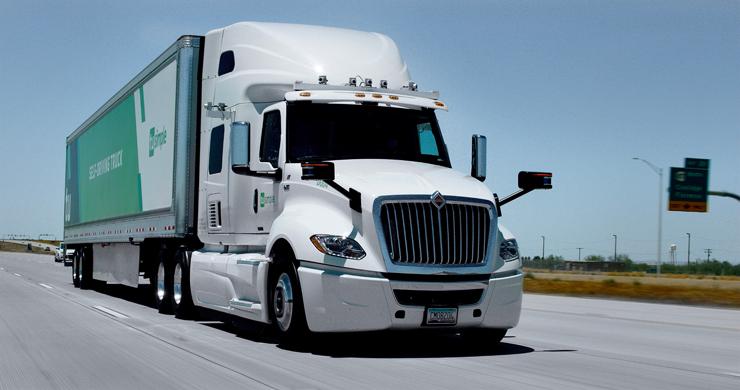
How can railroads compete with autonomous or electric trucks that would dramatically reduce the cost of trucking? “Ultimately, our answer to autonomous trucks is autonomous trains,” Union Pacific CEO Lance Fritz says. A first step toward automation is reducing crew size where feasible, Fritz said during the railroad’s investor day Tuesday. UP invested in autonomous truck company TuSimple in December to keep tabs on the technology, and so it can test driverless rigs for intermodal drayage service, Fritz says. TuSimple, which runs autonomous trucks in the Southwest with a driver aboard who can step in if necessary, plans to make its first driverless revenue move this fall. Analysts say that autonomous rigs could threaten nearly a third of the traffic that currently moves by rail. Electric trucks are significantly cheaper to operate than diesel rigs and are likely to arrive sooner, and in greater numbers, than driverless rigs, according to consulting firm Oliver Wyman. Either would erode rail’s cost advantage over trucks.
|
|
Union Pacific Sees Battery-Electric Locomotives as the Future |
|
(Editor's Note: While RWU supports any move towards electric rail propulsion, we take the position that nothing short of mainline electrification/multiple tracking is necessary to revitalize the nation's railroads, move away from carbon emissions, and allow the railroad to live up to its true potential and dramatically increasing freight and passenger movements)
With a goal of reducing greenhouse gas emissions 26% by the end of the decade, Union Pacific is working to improve locomotive fuel efficiency, plans to roll out battery-electric locomotives soon, and is exploring alternatives to the diesel-electric.
“We do not plan on buying any new locomotives — unless it’s battery-electric locomotives for testing out that concept, in which case I think we will be on top of that in the very near future,” CEO Lance Fritz said during an investor day presentation on Tuesday. Last year, Progress Rail unveiled its EMD Joule battery electric switcher, a 3,000-hp unit that can run for up to 24 hours. This year BNSF Railway tested Wabtec’s FLXdrive battery electric road locomotive in California. The locomotive reduced fuel consumption of a conventional locomotive lash-up by 10%, and Wabtec officials believe a production version with more batteries can reduce fuel use by up to 30%.
|
|
National Campaign for Transit Justice
Tell Congress: Pass the Freedom to Move Act!
|
|
As transit agencies across the country consider cuts to transit service -- while at the same time our nation begins to turn a corner in recovering from this public health and economic crisis -- it is critical we protect and expand public transit service, not reduce it.
The Freedom to Move Act, introduced by Rep. Ayanna Pressley and Sen. Ed Markey, will improve community livability and mobility, increase connectivity to critical services -- particularly for low-income workers and families, seniors and individuals with disabilities -- and address many of our nation’s most severe inequities. Before the COVID-19 pandemic, workers and families were spending more time and money commuting to jobs, education and other critical services than ever before. Data shows that low-income families in particular bear the biggest financial burden -- spending nearly 30 percent of their household income on transportation expenses. At the same time, increased traffic congestion is contributing to growing greenhouse gas emissions and pollution, exacerbating climate change and contributing to health disparities like asthma and lung cancer in communities already at the margins.
|
|
Petition to Congress: Keep Bigger, Heavier, Polluting Trucks Off Our Highways |
|
The petition to Congress reads:
"As you consider upcoming legislation on infrastructure and climate change, I urge you to stand up against the special interests who seek to allow longer and heavier trucks that would endanger our families, cost taxpayers billions in highway repairs and subsidies and put our environment at risk."
The tragic weather events and horrific scenes of truck and car crashes in Texas and around the country this winter ensure that the dual issues of climate change and safe roads will be front and center when Congress begins debating infrastructure in the coming weeks. That’s why big corporations and their lobbyists are working overtime to pressure Congress to allow heavier, longer and more polluting trucks on our highways ... But the truth is, bigger trucks would ultimately spew a whopping 55 million tons of additional carbon emissions a year while crushing our highways and bridges. That’s equal to the pollution caused by 10 million additional cars each year. An even more immediate threat lies in the fact that these bigger trucks are more dangerous. It’s simple physics: a longer, heavier truck is more difficult to control and when involved in a crash, causes more devastation. We need to stop Capitol Hill lobbyists from making both our highways and our environment more dangerous for our families.
|
|
RAILROAD PROFITS AND LOSSES |
|
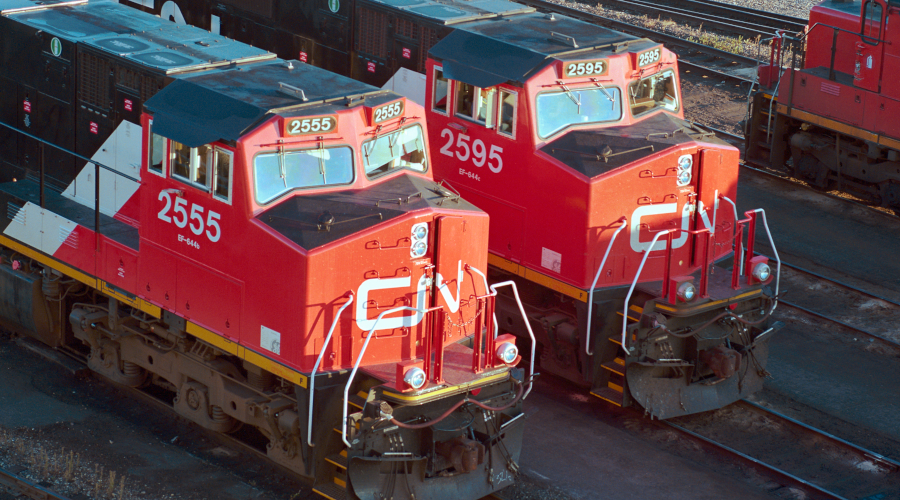
(Editor's Note: The rail profit picture is getting a little confusing these days, as operating ratios hit all time lows and stock prices all time highs. Meantime fright traffic has rebounded to pre-pandemic levels, but carload traffic still lags. CP and CN are about to enter a war for control of KCS that might likely ignite a new wave of mergers and acquisitions and a re-make of the North American corporate rail map. Meantime, railroads still have not moved the tonnage that they did in 2006, 15 years ago! Where is it all heading? All the while, railroad workers are seeing our ranks decimated, our union contracts violated wholesale, while threats to our jobs and livelihoods run rampant). |
|
PROPOSED MERGER UPDATE: STB Approves Voting Trust for CP’s Proposed Acquisition of KCS |
|
The Surface Transportation Board (STB) has found that formal board review of the voting trust agreement for use in connection with the proposed transaction between Canadian Pacific Railway and Kansas City Southern Railway is warranted. In the decision, the board determined that the proposed arrangement is acceptable with certain modifications, STB officials said in a press release. "Following this critical milestone, we are proceeding full-steam ahead to complete this historic combination, creating the first truly North American single line railroad," said CP President and Chief Executive Officer Keith Creel in a press release. "We are continuing to prepare our formal merger application and proxy filing for a shareholder vote in the near future."
|
|
Occupational Safety & Health (OSHA) News
|
|
Whistleblower Stakeholder Meeting
Wednesday, May 19th from 1 to 4 PM ET
|
|
The Occupational Safety and Health Administration (OSHA) is announcing a public meeting to solicit comments and suggestions from stakeholders on issues facing the agency in the administration of the whistleblower laws it enforces. The public meeting will be held on May 19, 2021, from 1:00 p.m. to 4:00 p.m., ET via telephone. Persons interested in attending the meeting must register by May 12, 2021. In addition, comments relating to the “Scope of Meeting” section of this document must be submitted in written or electronic form by May 12, 2021.
|
|
Tell OSHA: Protect Workers Now! |
|
About 275 U.S. workers die each day because of hazardous working conditions. Each year, working people report nearly 3.5 million work-related injuries and illnesses. With the pandemic, those numbers are now even higher. We need more staff and resources dedicated to protecting working people. We need to fully penalize and hold employers accountable for workplace safety violations. Add your name and tell the Occupational Safety and Health Administration that working people need protection, investment and resources.
|
|
Two Online Hazmat Training Classes for Rail Workers Available in May |
|
The Rail Workers Hazardous Materials Training Program is offering two virtual class in May: a Disaster Recovery/Response Course; and a DOT Hazardous Materials Transportation Safety and Security Course.
* May 17, 2021: Disaster Recovery/Response Course - The Disaster Response Recovery course is training for workers and community members who live and work in areas that are likely to be impacted by a hurricane. The course satisfies the requirements to assist workers and communities in recovery from natural and man-made disasters. The class will be conducted May 17 at noon (Eastern). Download a flyer here:
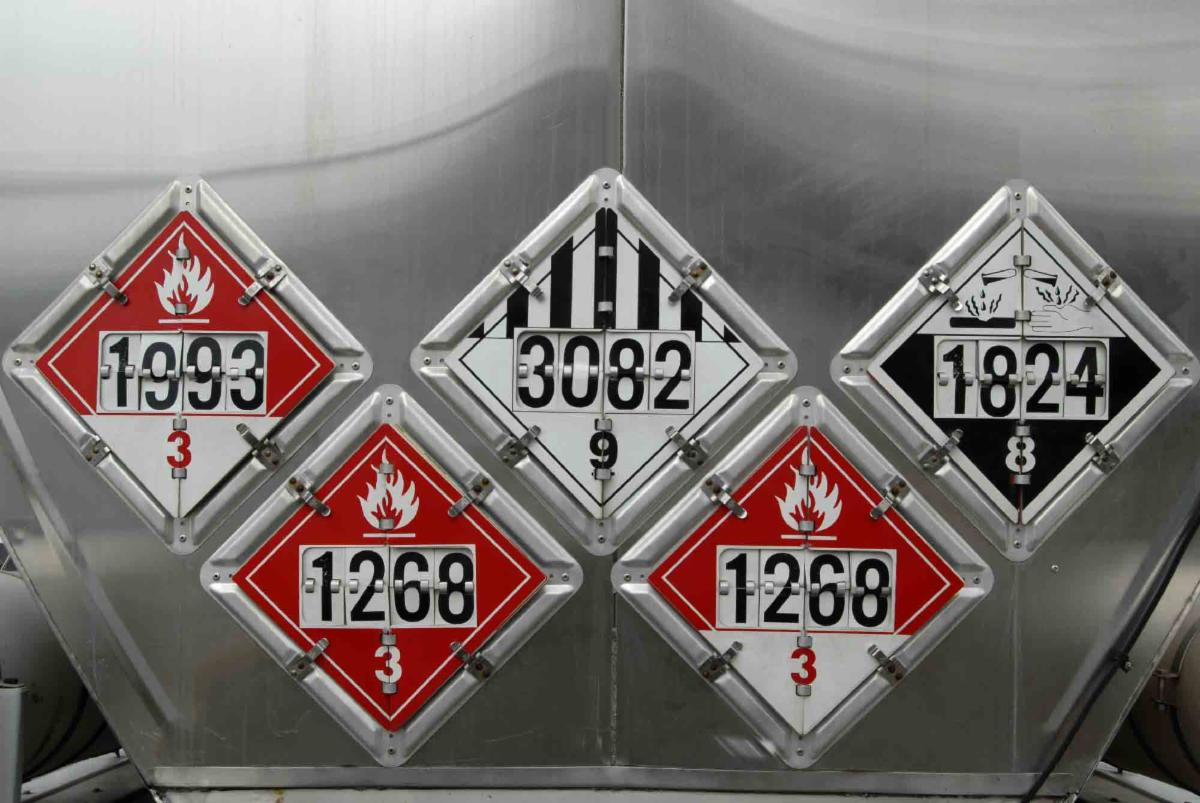
* May 19-20, 2021 and May 24-25, 2021: Hazardous Materials Transportation Safety and Security Course. The Hazardous Materials Transportation Safety and Security Course provides safety and security awareness training that is required by the Department of Transportation (DOT) for hazmat transportation workers. This course also provides OSHA first responder awareness-level training. The course is intended for railroad workers who are involved in the transportation of hazmat and who may be the first on the scene or the first to witness a release of hazardous materials, or be aware of a security threat.
|
|
Webinar: "Optimizing Shared-Use Rail Corridors in Europe: How do Rail Freight and Passenger Operations Co-Exist?" |
|
Tuesday, May 18, 2021
1:00 - 2:00 p.m. ET
Featuring Brian Solomon
Rail historian, author, columnist, and photographer
Brian Solomon is among the most prolific names in railroad publishing. He has authored and illustrated more than 60 books on railroads, including: Brian Solomon’s Railway Guide to Europe, Railway Depots Stations & Terminals, Streamliners —Locomotives and Trains in the Age of Speed and Style. He is the Manager of Marketing and Events for the Conway Scenic Railroad in New Hampshire.
|
|
|
|
|
|
|