Debt vs Equity: Choosing the Right

Path to Scale Your Business


As business owners look to grow, one of the most important, and often misunderstood, decisions is how to fund that growth. At its core, the choice typically comes down to two options: taking on debt or bringing in equity investors. Each path carries distinct advantages, tradeoffs, and risks, and the right choice depends less on preference and more on your business model, goals, and tolerance for pressure.


Making the right decision involves taking a strategic approach by:

1-Understanding the tradeoffs

2-Considering 4 key areas

3-Avoiding common pitfalls

4-Exploring alternative funding

Understanding the Tradeoffs


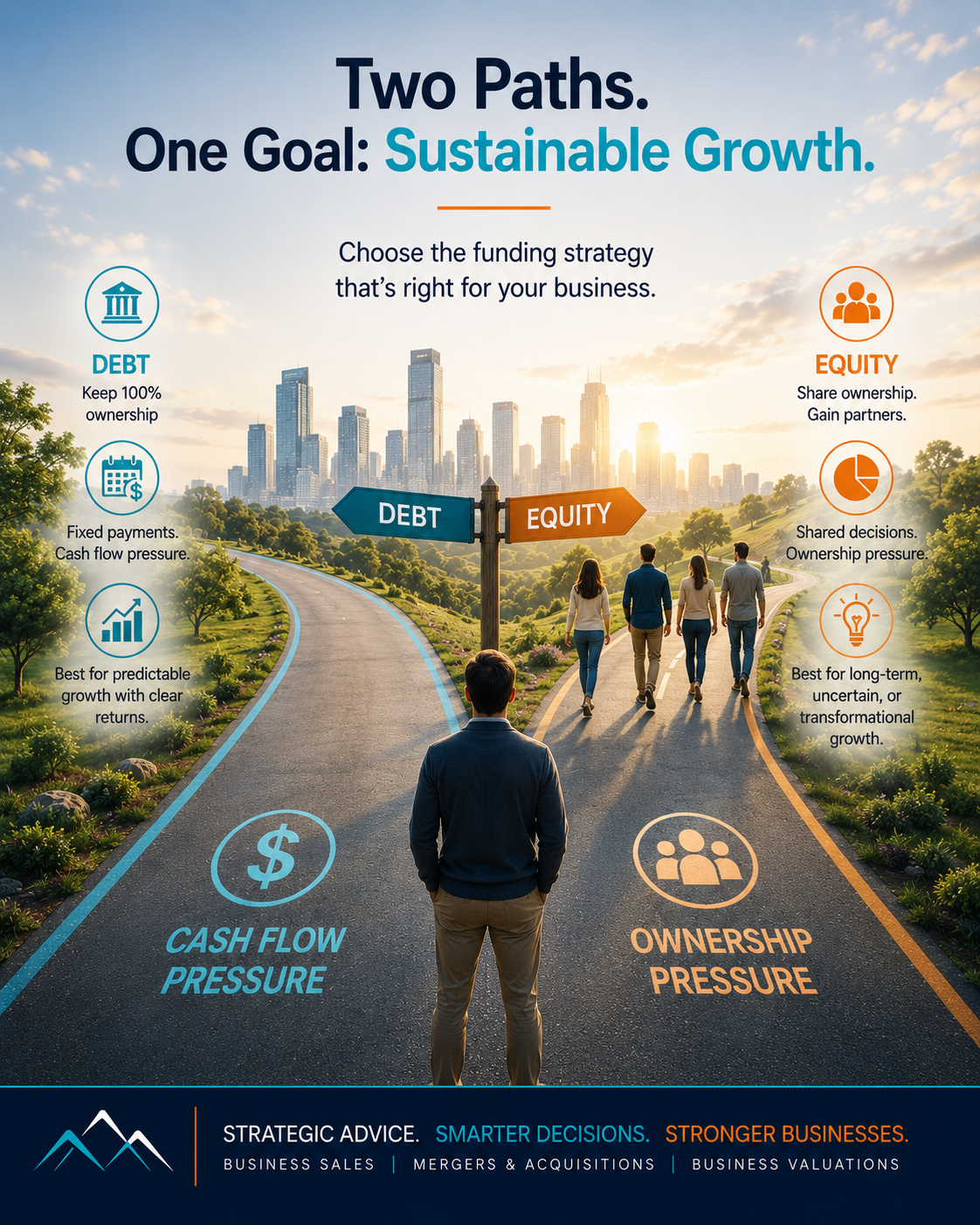
Debt financing involves borrowing capital that must be repaid over time, usually with interest. This includes traditional bank loans, SBA loans, or lines of credit. The primary advantage is clear: you retain full ownership and control. The downside is equally clear: repayment is mandatory, regardless of how the business performs in the short term.


Equity financing, on the other hand, involves selling a portion of your business to investors. While this eliminates the burden of monthly repayments, it introduces a different kind of pressure: shared ownership. Investors often bring valuable expertise and networks, but they also bring expectations, influence, and a vested interest in how and when you scale or exit.


In practical terms, debt creates cash flow pressure, while equity introduces ownership pressure. Most successful businesses leverage a combination of both over time, but only after carefully evaluating their situation.

Four Key Considerations Before Scaling


1. Cash Flow Resilience

The most critical question with debt is not whether you can secure it, but whether your business can comfortably service it. Growth rarely follows a straight line. Delayed payments, slower-than-expected ramp-ups, or unforeseen expenses can quickly strain cash flow. Debt works best when revenue is predictable and timelines to profitability are clear.


2. Control and Decision-Making

Equity investors are not passive participants. They often require input on major decisions, from strategic direction to exit timing. This can be highly beneficial if aligned but problematic if not. Before pursuing equity, consider how much control you’re willing to share and whether you’re prepared to manage investor relationships over time.


3. The True Cost of Capital

Debt may feel expensive due to interest payments, but equity can be significantly more costly in the long run. Giving up a percentage of your business means sharing in all future upside. What seems like a reasonable trade today can become a substantial cost if the business scales successfully. It’s important to evaluate not just immediate affordability, but long-term impact.


4. The Type of Growth You’re Funding

Not all growth initiatives are created equal. Debt is typically best suited for investments with clear returns and timelines—such as equipment purchases, inventory, or expanding an existing, proven operation. Equity is often better aligned with longer-term or uncertain initiatives, like entering new markets, developing new products, or building out infrastructure.


Matching the funding strategy to the nature of the growth initiative is one of the most overlooked but most important factors in scaling successfully.

Avoiding Common Scaling Pitfalls


One of the most frequent mistakes business owners make is scaling too quickly without a solid foundation. Growth should amplify what already works and not compensate for underlying weaknesses. A staged approach, where each level of growth is validated before moving to the next, is often the most sustainable path.

Additional best practices include:

  • Avoid using short-term debt to fund long-term, uncertain initiatives
  • Be cautious about early equity dilution, as it compounds over time
  • Maintain a cash buffer as growth almost always takes longer and costs more than expected 

Exploring Alternative Funding Options


While debt and equity dominate the conversation, they are not the only tools available. Business owners today have access to a range of flexible financing options, including:

  • Revenue-based financing, where repayments adjust based on monthly income
  • Strategic partnerships, which provide resources or capital without traditional dilution
  • Lines of credit, offering flexibility to manage short-term cash flow needs
  • Customer prepayments or contracts, effectively funding growth through secured revenue


These alternatives can often bridge the gap between traditional financing structures.

A Strategic Approach to Growth Capital


There is no universal “best” choice between debt and equity. The right decision depends on the predictability of your revenue, your appetite for risk, and your long-term vision for the business.


A common and effective approach is to start lean, using internal cash flow or modest financing, then introduce debt for predictable expansion, and reserve equity for larger, transformational opportunities that exceed what debt can reasonably support.


Ultimately, funding should serve your strategy, not define it. The goal is not simply to access capital, but to do so in a way that supports sustainable growth, preserves value, and aligns with your long-term objectives.


For business owners considering growth or an eventual exit these decisions don’t just impact today’s operations; they shape the future value and marketability of the business. Thoughtful planning now can make all the difference later.

We offer a Complimentary Consultation to help you assess your company's preparedness for sale, help you strategize your exit planning, and to discuss the process of selling a business and what you can expect.

Contact Us


516.902.6357

Facebook  LinkedIn

View as Webpage