|
Aryan Freedom Network Expands into Europe
The Aryan Freedom Network (AFN) formally announced the creation of CREW 21, describing it as the organisation's official international supporter network. In four Telegram posts, AFN declared that the Aryan Freedom Network has officially started a separate organisation called 'CREW 21 for Official Supporters around the world’, adding that "CREW 21 is the International Official Supporter organisation for the American organisation, the Aryan Freedom Network." Simultaneous launch material highlighted the establishment of supporter chapters in Spain, Poland, and Switzerland, marking AFN's first overt effort to establish a permanent organisational presence in Europe.
From National Growth to International Expansion
The announcement follows several years of sustained organisational growth within the United States. In June 2023, AFN pledged to expand into 30 U.S. states before the end of the year. Since then, TRAC has documented more than 22 state-specific expansion announcements, demonstrating an aggressive recruitment campaign that, at its peak, saw the organisation claim entry into a new state approximately every two days. By December 2024, AFN claimed to operate in 34 states, describing itself as the largest National Socialist and pro-White organisation in the United States.
Rather than representing a sudden shift in strategy, the move into Europe appears to be the logical next phase of AFN's long-term expansion campaign. Having established a nationwide footprint, the organisation is now seeking to export its model internationally while broadening its recruitment pool and strengthening links between like-minded extremists across national borders.
A Replicable International Structure
Unlike many neo-Nazi organisations that rely on loosely affiliated supporters, AFN has developed a structured cell-based "CREW 21" model designed for international replication. Each national chapter is intended to operate independently under local leadership while remaining ideologically aligned with the parent organisation through shared branding, symbols, and propaganda. AFN explicitly states that "Each country will have its own separate CREW 21 leadership, membership regalia, [and] insignia," while simultaneously remaining part of a broader international network. In effect, each chapter functions autonomously while uniting under a single ideological banner, creating a confederation-like structure that enables local flexibility while preserving organisational cohesion and transnational identity.
The launch posters reinforce this strategy through consistent branding centred around the CREW 21 shield and the website white-power.org, visually linking each national chapter back to AFN's core organisation. While the Swiss and Polish imagery relies primarily on national symbolism, the Spanish material goes a step further by incorporating imagery associated with historical fascism, framing neo-Nazi activism as patriotic national defence.
Significance
AFN's European expansion represents a notable development in the continued internationalisation of the extreme right. Rather than simply distributing propaganda overseas, the organisation is attempting to establish a permanent organisational infrastructure capable of recruitment, networking, propaganda dissemination, and coordinated activism under a common brand. Although the current size of the European chapters remains unknown, the launch across three countries simultaneously suggests a coordinated rollout rather than isolated local initiatives. TRAC is certain that additional national chapters will follow as AFN seeks to replicate the rapid state-by-state expansion strategy that underpinned its growth across the United States.
| | | TRAC Incident Report: Jama’a Nusrat ul-Islam wa al-Muslimin (JNIM) & Azawad Liberation Front (FLA) Target Six Major Towns in Armed Assaults and Bombings, Anefis (Kidal), Aguelhok (Kidal), Gao (Gao), Sévaré (Mopti region), Konna (Mopti), and Kéniéroba (Koulikoro), Mali | | |
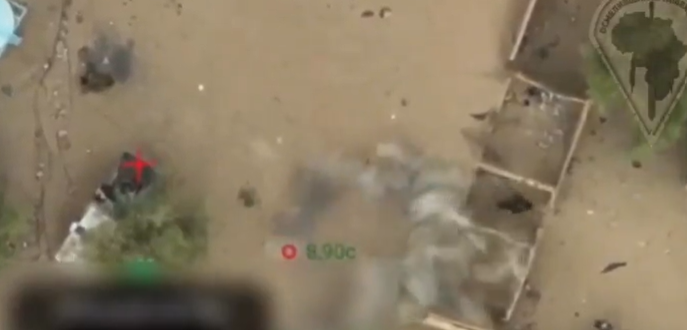
On 4 and 5 July 2026, Jama'a Nusrat ul-Islam wa al-Muslimin (JNIM) launched one of its most geographically widespread offensives in recent months, coordinating attacks across six major towns spanning northern, central, and southern Mali. The assaults targeted Anefis and Aguelhok (Kidal Region), Gao (Gao Region), Sévaré and Konna (Mopti Region), and Kéniéroba (Koulikoro Region), highlighting JNIM's continued ability to project force simultaneously across multiple operational theatres.
The offensive incorporated a mixture of direct assaults, indirect fire, and supporting operations conducted alongside separatist forces:
- Anefis (Kidal Region): The Front for the Liberation of Azawad (FLA) entered the town, claiming partial control and deploying a captured Africa Corps BTR armoured vehicle during the assault.
- Aguelhok (Kidal Region): JNIM and FLA forces conducted bombardments against military positions, although no major ground assault was reported.
- Gao (Gao Region): Fighting occurred near Gao Airport, with reports indicating that a Russian Su-24 aircraft crashed during the clashes.
- Kéniéroba (Koulikoro Region): Militants attacked the high-security prison, often referred to as the "African Alcatraz," approximately 50 km southwest of Bamako.
- Sévaré (Mopti Region): Militants assaulted the Sofara military barracks, although government forces repelled the attack after inflicting militant casualties.
- Konna (Mopti Region): Clashes erupted later the same morning as part of the broader offensive.
The operation closely mirrors JNIM's 25 April 2026 nationwide offensive, during which major assaults against military positions in the northern Azawad region were accompanied by diversionary attacks across central and southern Mali. Rather than concentrating forces on a single objective, JNIM again demonstrated its ability to stretch government resources by forcing simultaneous responses across hundreds of kilometres of territory. Although the Front for the Liberation of Azawad (FLA) claimed responsibility for several northern operations, the offensive once again highlighted the increasing operational coordination between JNIM and northern separatist actors. While Malian authorities stated that all affected areas remain under government control, the scale and geographic spread of the attacks underscore JNIM's sustained operational reach.
Particularly notable was the assault on Kéniéroba, which continues to emerge as a key militant hub in Koulikoro Region. Located approximately 50 km southwest of Bamako and close to the RN26 and Niger River corridor, the locality has increasingly served as a staging ground for attacks threatening the approaches to the capital. Continued militant activity in this area suggests JNIM is expanding pressure beyond its traditional strongholds while maintaining the capability to threaten strategic transportation routes linking southern Mali to Bamako.
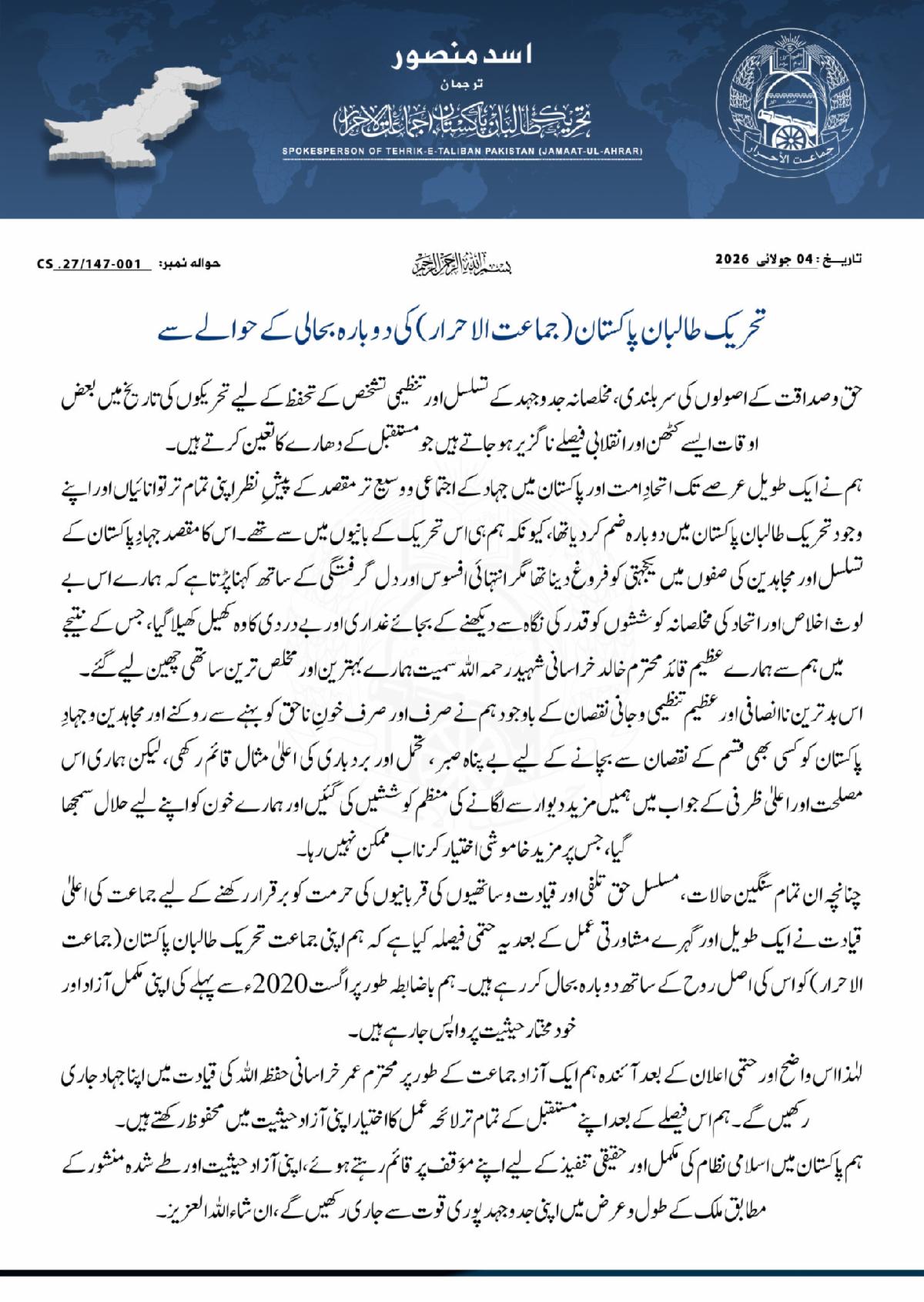
| | (Statement) Jamaat-ul-Ahrar (JuA) Announces Split From Tehreek-e-Taliban Pakistan (TTP) to Revive Independent Status in Pakistan | | |
On 4 July 2026, Jamaat-ul-Ahrar (JuA) formally announced its separation from Tehreek-e-Taliban Pakistan (TTP), restoring its status as an independent militant organisation under the leadership of Omar Khorasani. In its statement, JuA declared that, following "prolonged consultations", it had decided to "once again restore Jamaat-ul-Ahrar to its original status" and would resume operations independently. The group argued that previous efforts to preserve unity within the TTP ultimately came at a high cost, claiming that its commitment to organisational cohesion resulted in the deaths of its former emir Khalid Khorasani and other senior leaders while JuA itself became increasingly marginalised.
JuA openly accused the TTP leadership of betrayal and injustice, stating that "our sincerity and sacrifices were met with betrayal and injustice", while asserting that it had "remained silent until now" despite repeated grievances. The organisation further announced that it would now continue its campaign independently to establish an Islamic system in Pakistan, stating that it would "continue its jihad across Pakistan as an independent organisation" while pursuing the implementation of Sharia.
The announcement represents one of the clearest public indications of a significant internal fracture within the TTP in recent years. Rather than simply announcing an organisational restructuring, JuA has openly challenged the TTP leadership's credibility by portraying itself as the aggrieved party whose sacrifices were exploited while its leadership was sidelined. Such public accusations expose persistent factional distrust and demonstrate that previous attempts to consolidate Pakistan's jihadist landscape under a unified TTP command have failed to resolve longstanding personal, organisational, and leadership rivalries.
While the split weakens the TTP's centralised command and coordination in the short term, it simultaneously complicates Pakistan's security environment. An independent JuA creates another autonomous militant actor capable of competing for recruits, funding, operational prestige, and influence within the broader jihadist ecosystem. By framing its departure around narratives of betrayal, sacrifice, and organisational injustice, JuA is also attempting to rebuild its independent brand, regain former supporters, and re-establish itself as a credible alternative within Pakistan's militant landscape. Consequently, the split should be viewed not simply as an organisational separation, but as a potential catalyst for increased competition and operational activity among Pakistan's jihadist factions. Increased violence, especially against security forces and Chinese interests, should be anticipated and expected.
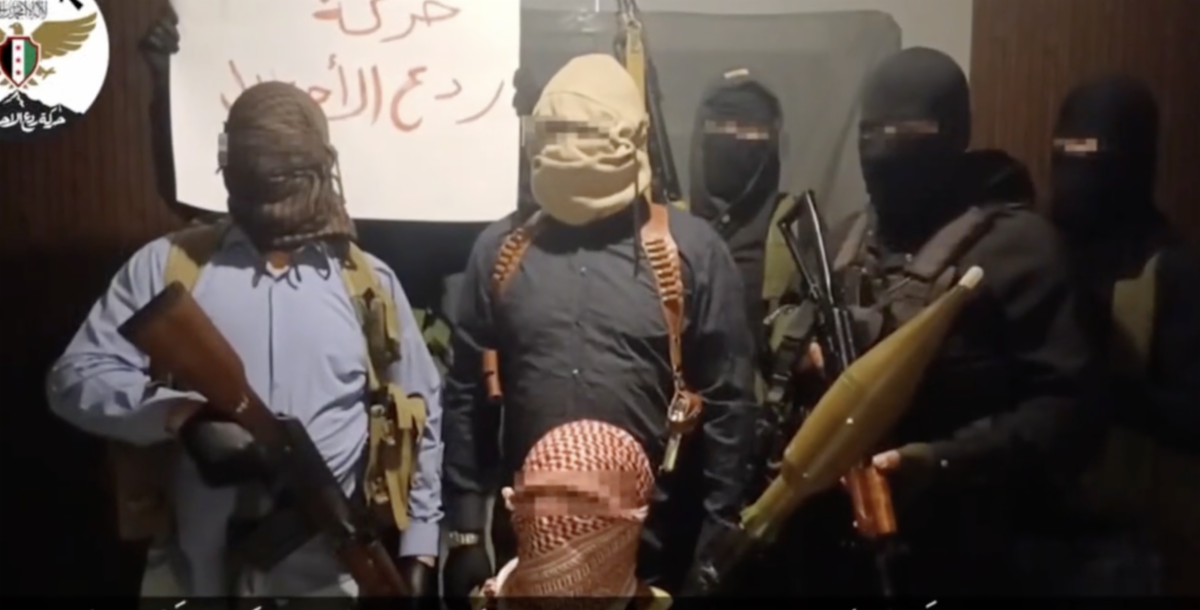
| | (Video) New Dara’a (Hauran) Tribal Armed Group “Harakat Rad al-Ishtilal” (Deterrence of the Occupation) Issues Statement Threatening to Fight Israel Defence Forces (IDF), Syria | | |
On 05 July 2026, a new armed group called “Deterrence of the Occupation,” comprised of tribal elements from Dara’a Governorate, issued a video affirming its commitment to armed struggle against Israeli activity in southern Syria. The region of southern Syria, including Dara’a and Quneitra governorates, remains a hotbed for various factions, militant groups, and armed elements. Its proximity to the Golan Heights and Israel makes its geographical location a rallying cry for a myriad of resistance-branded groups to come out of the woodwork, galvanising support in response to Israeli activity.
Only on 28 February, the new group calling itself Ansar al-Tawhid (Supporters of Monotheism) claimed to have fired eight Grad rockets at IDF personnel in Daraa Governorate. While the veracity of this claim remains unclear, the group explicitly positioned itself within the Palestinian resistance framework. Other local armed groups have previously issued statements and videos opposing Israeli incursions into Syrian territory, with at least one dating back to February 2025 following the IDF’s establishment of outposts along the Syrian border. Then, in late March, a handful of armed groups released videos featuring masked men declaring jihad on Israel in solidarity with Palestinian prisoners now threatened with execution under Israel’s newly passed death penalty law. These groups tend to surface in a relatively ad hoc fashion during politically salient moments, though they lose momentum and peter out just as quickly as their inception.
A more well-established group, the Islamic Resistance Front in Syria (IRFS), has also issued similar threats, framing its mission around armed resistance to Israel, particularly opposition to Israeli control of the Golan Heights. However, unlike this new group, which carries a Syrian flag in its logo, the IRFS maintains at least ideological ties, if not direct tactical cooperation, with Iranian Axis of Resistance factions, like Hezbollah.
The formation of “Deterrence of the Occupation” comes in the context of recent Israeli strikes on the village of Abdin, following local protests against the establishment of a new observation post and checkpoint, as well as reported attempts by the “Pioneers of Bashan” to establish settlements in the area. These incidents have contributed to the rapid proliferation of new armed group formations. However, as with many prior southern Syrian insurgent formations, TRAC assesses that these groups often function more as rallying frameworks or tools of intimidation than as actors capable of sustained military activity.
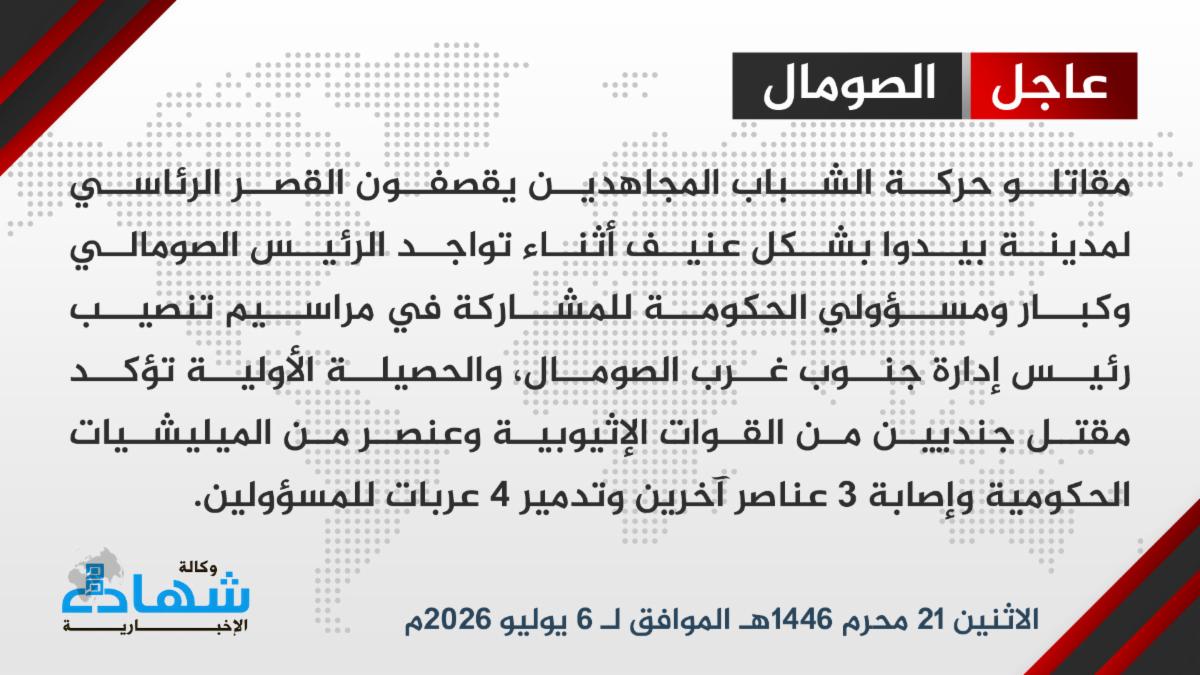
| | TRAC Incident Report: Al-Shabaab Militants Shell Presidential Palace During Inauguration Ceremony, Killing Three and Injuring Three, in Baidoa, Bay Region, Somalia | | TRAC Incident Report: Black Panther’s Protest Armed For Reopening of Da’quain Johnson Case in Grand Rapids, Michigan, United States | | TRAC Incident Report: Suspected Anarchists Target New Democracy (ND) Party Members’ Residences in Coordinated Gas Canister Attacks, Leading to the Death of One, in Thessaloniki, Greece | | | | |