Connecting

April 8, 2025


Click here for the sound of the Teletype

Top AP News

Top AP Photos

AP Merchandise

AP Emergency Relief Fund

Connecting Archive

AP Newsletters

AP Donations

AP News Tips

BULLETIN


Colleagues,


Great news for the AP and journalism and the First Amendment just broke from federal court in Washington. Here is the latest AP story. Go to the AP web site for updates.


If you have thoughts to share, please send them along for publication in Wednesday's Connecting.


Paul


AP wins reinstatement to White House events after judge rules government can’t bar its journalists


By DAVID BAUDER

Updated 4:29 PM CDT, April 8, 2025


A federal judge ordered the White House on Tuesday to restore The Associated Press’ full access to cover presidential events, ruling on a case that touched at the heart of the First Amendment and affirming that the government cannot punish the news organization for the content of its speech.


U.S.. District Judge Trevor N. McFadden, an appointee of President Donald Trump, ruled that the government can’t retaliate against the AP’s decision not to follow Trump’s executive order to rename the Gulf of Mexico. The decision handed the AP a major victory at a time the White House has been challenging the press on several levels.


“Under the First Amendment, if the Government opens its doors to some journalists — be it to the Oval Office, the East Room, or elsewher — it cannot then shut those doors to other journalists because of their viewpoints,” McFadden wrote. “The Constitution requires no less.”


It was unclear whether the White House would move immediately to put McFadden’s ruling into effect. McFadden held off on implementing his order for a week, giving the government time to respond or appeal.


The AP has been blocked since Feb. 11 from being among the small group of journalists to cover Trump in the Oval Office or aboard Air Force One, with sporadic ability to cover him at events in East Room.


The organization had asked McFadden to rule that Trump had violated AP’s constitutional right to free speech by taking the action because he disagreed with the words that its journalists use. He had earlier declined AP’s request to reverse the changes through an injunction.


Trump came out and said why he made the move


While there was little dispute in a March 27 court hearing about why Trump struck back at the AP – the president said as much – the administration said it was up to its own discretion, and not White House correspondents or longstanding tradition, to determine who gets to question the president and when.


Since the dispute with AP began, the White House has taken steps to control who gets to cover the president at smaller events and even where journalists sit during press secretary Karoline Leavitt’s briefings, saying both need to better reflect changes in how people get information.


The AP’s decisions on what terminology to use are followed by journalists and other writers around the world through its influential stylebook. The outlet said it would continue to use Gulf of Mexico, as the body of water has been known for hundreds of years, while also noting Trump’s decision to rename it the Gulf of America. Different outlets have used different approaches, some skirting it by calling it the “Gulf.”


“For anyone who thinks The Associated Press’ lawsuit against President Trump’s White House is about the name of a body of water, think bigger,” Julie Pace, the AP’s executive editor, wrote in a Wall Street Journal op-ed. “It’s really about whether the government can control what you say.”


Trump has dismissed the AP, which was established in 1846, as a group of “radical left lunatics” and said that “we’re going to keep them out until such time as they agree it’s the Gulf of America.”


Testimony revealed AP’s coverage has been impeded


For a news organization that relies on speed as a major selling point, the AP brought its chief White House correspondent and photographer to testify before McFadden about how its absence from covering certain events has delayed its transmission of words and images. Its lawyer, Charles Tobin, said AP has already lost a $150,000 advertising contract from a client concerned about the ban.


The government’s lawyer, Brian Hudak, showed how AP has been able to use livestreams or photos from other agencies to get news out, and pointed out that AP regularly attends Leavitt’s daily briefings.


As a service whose product is delivered to thousands of newspapers, websites and broadcasters across the nation and world, the AP has been part of small text and photo “pools” that have covered presidents of both parties for decades. The administration has sought to give more prominence to new – and in many cases, Trump-friendly – outlets.


In its action filed on Feb. 21, the AP sued Leavitt, White House chief of staff Susie Wiles and deputy chief of staff Taylor Budowich.


Trump has moved aggressively against the media on several fronts since taking office again. The Federal Communications Commission has open lawsuits against ABC, CBS and NBC News. The administration has sought to cut off funding for government-run news services like Voice of America and is threatening public funding for public broadcasters PBS and NPR for allegedly being too liberal in news coverage.


-0-


Good Tuesday morning on this April 8, 2025,


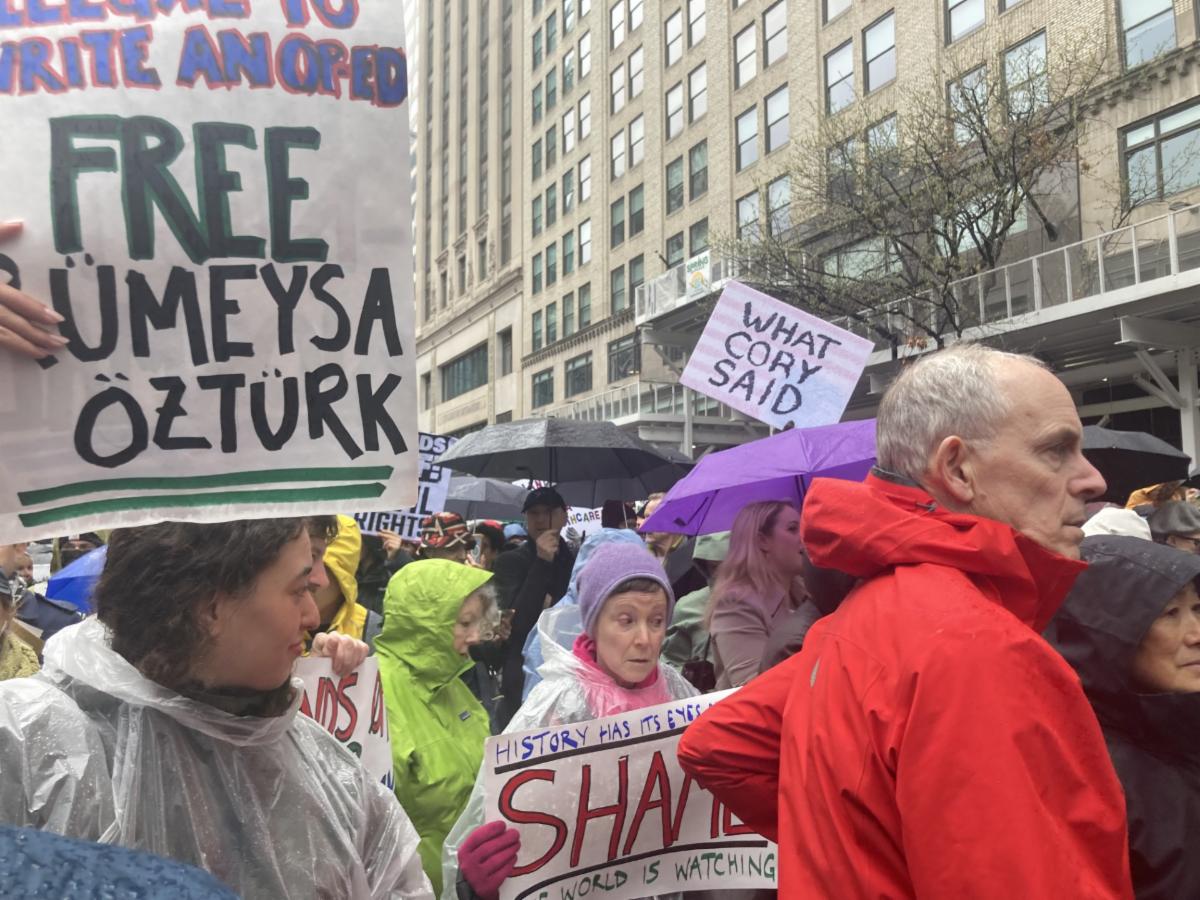
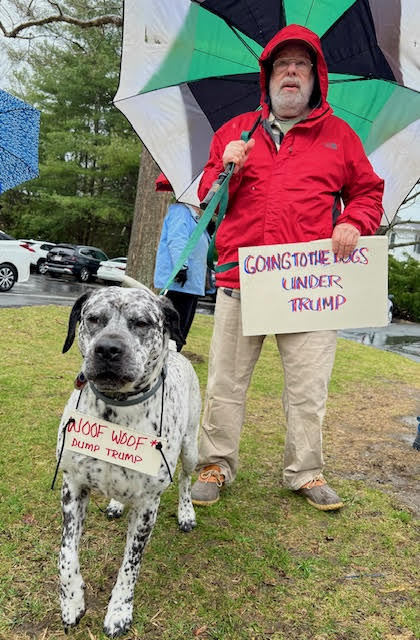
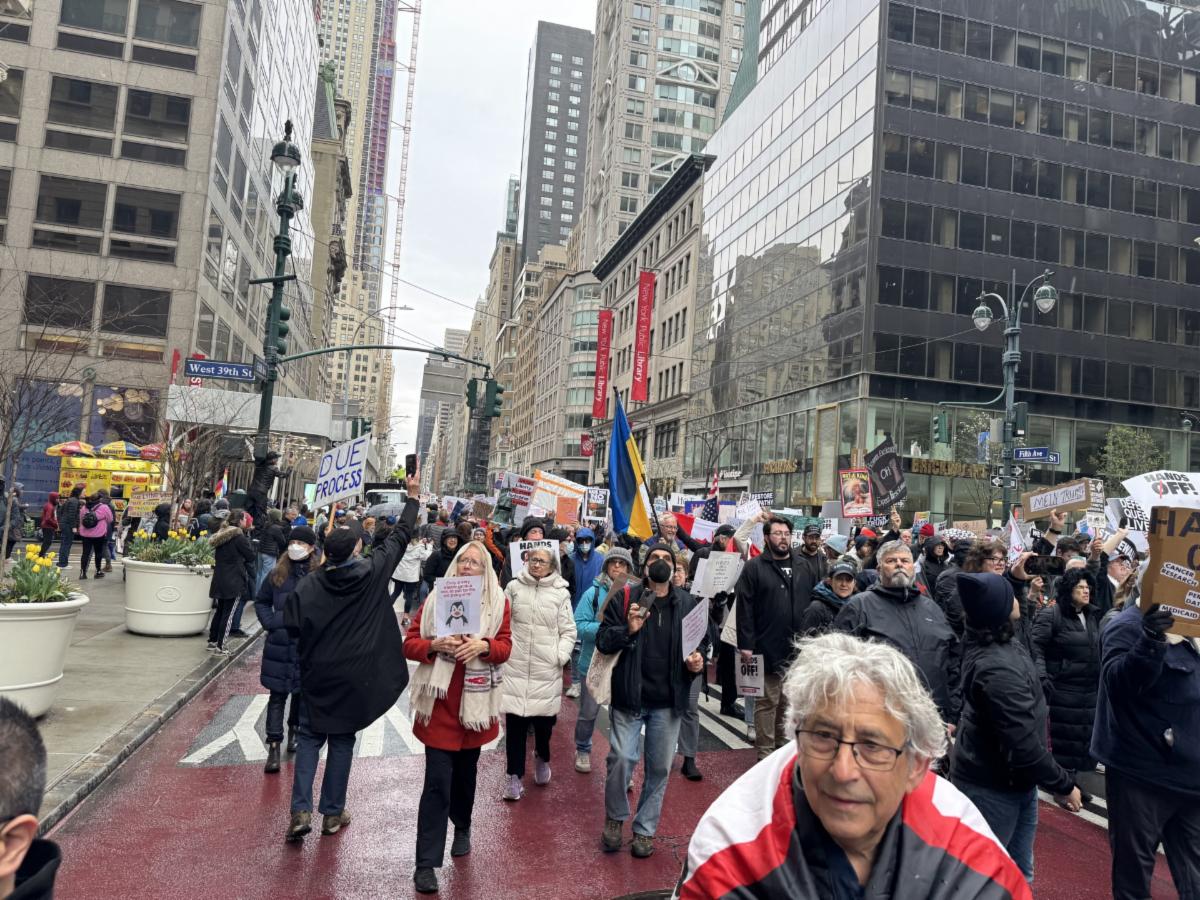
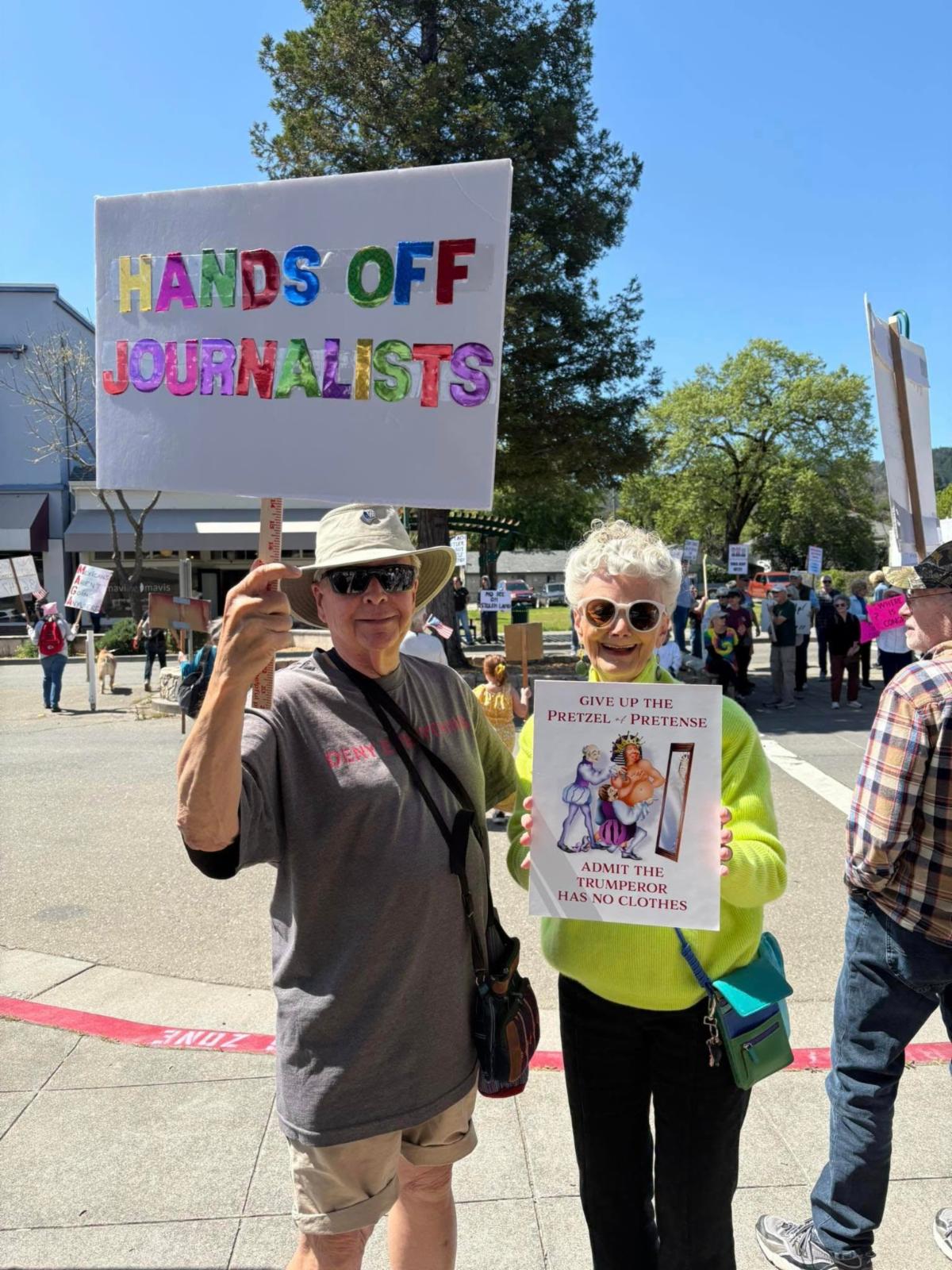
We bring you more photos from RETIRED colleagues taken during the Hands Off nationwide rallies.


I emphasize "retired" after a colleague outpointed that in Monday's edition, I implied that active-duty AP colleagues were invited to send rally photos, forgetting that current staffers are not allowed to participate in such political rallies.


For many of us, the rallies brought back memories from the protests of the 60s - when Richard Nixon and the Vietnam War were the targets of protest.


But I am safe in saying this to readers both active and retired - here's to a great day - be safe, stay healthy, live it to your fullest.


Paul


Back in the day of Stylebook adoption of ‘Ms.”


Virginia Sherlock - I enjoyed Connecting's reporting on AP Stylebook editor Paula Froke's well-deserved award, which reminded me of my lone experience with AP Stylebook editing.


While working on the General Desk in the early 1970s, I was asked to help the AP Stylebook team decide how to deal with the increasingly popular reference to women as "Ms." rather than "Miss" or "Mrs."  We identified men by last name only -- "Smith" or "Jones" -- but women were identified as "Mrs. Smith" or “Miss Jones", depending on marital status. That meant reporters had to ask a woman for her marital status before using her name in a story. 


When "Ms." became increasingly popular to identify women without divulging marital status, there was some debate -- not over whether women should be referred to in a different manner than men but whether some women might be offended if we refused to identify them as married women. So someone came up with a phrase to attach to AP's reference to a woman as "Ms."


The phrase was: "Ms. Smith, who prefers that designation."


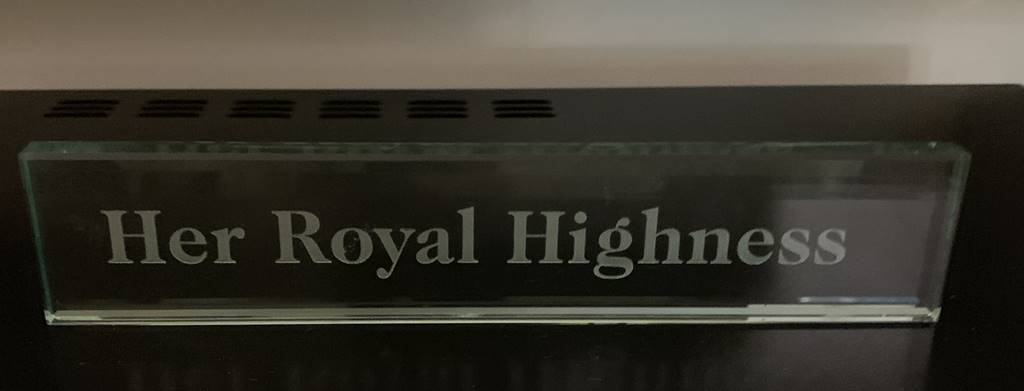
My response to the AP Stylebook team was that women should be referred to in exactly the same manner as men, that is, by last name only. If they insisted on using a designation for women, and if I were allowed to choose the designation, then I prefer the designation "Her Royal Highness".


It took a few years for The AP to finally do away with designating women as "Miss," "Mrs." or "Ms.", but eventually the Stylebook allowed last-name-only designations for both men and women. 

My colleagues presented me with a desk marker (above) when I left The AP.


More of your photos from Hands Off rallies

Linda Sargent - I've attached a few rally photos from Dallas. Many of the signs were so clever. I wasn't quick enough to snap a photo of the one that said "Does my ass make my country look small?"


This was my first protest. Husband Ed hadn't been to one in more than 50 years.


When I told that to a woman waiting for a street car and explained that I had worked for the AP for 30 years so protests were out of the question, she asked if I thought the AP would survive Trump and seemed to think the AP got public funds. I wonder how many other people think that.


The rally began in Dealey Plaza, where President Kennedy was assassinated. It's always a busy place with tourists visiting the spot and people hawking their views on whether Lee Harvey Oswald acted alone. We especially loved the drivers of the U.S. Postal Service trucks honking their horns in support as they navigated the traffic.


I don't have a crowd estimate for you because I'm not good at that but I'd like to think there were a couple thousand, good for a day when the temp was in the upper 40s. After listening to speakers for at least 30-40 minutes, the crowd marched a big loop through downtown.


Ed dashed off a note to The Dallas Morning News to complain about the paper's lack of coverage.

Rhonda Shafner – Here’s a photo from a mid-Manhattan Hands Off Rally Saturday. 

Barbara Woike - In our tiny town of Stockbridge, MA, with a population of less than 2,000 residents, more than 200 demonstrators, mostly seniors, showed up in the rain to say “Hands Off” on Saturday, April 5, 2025. (Photo by Barbara Woike)

Francesca Pitaro - From Sunday’s protest in NYC. The weather didn’t dampen our enthusiasm.

Mark Thayer – at Hands Off rally in Cloverdale, Calif.


‘Just a thought?’


John Lumpkin - Just a thought, given the legitimate frustration about our situation in WDC with the Trump administration. It’s not good and possibly only curable by AP grinding IMO on objective coverage and perhaps a future general public backlash against such actions.


The “thought” -


This situation is temporal, though handwringing is understandable. Let’s play the long game that is based on AP’s history as a neutral and nonpartisan journalism organization, even if our commercial footprint is not as robust as it was.

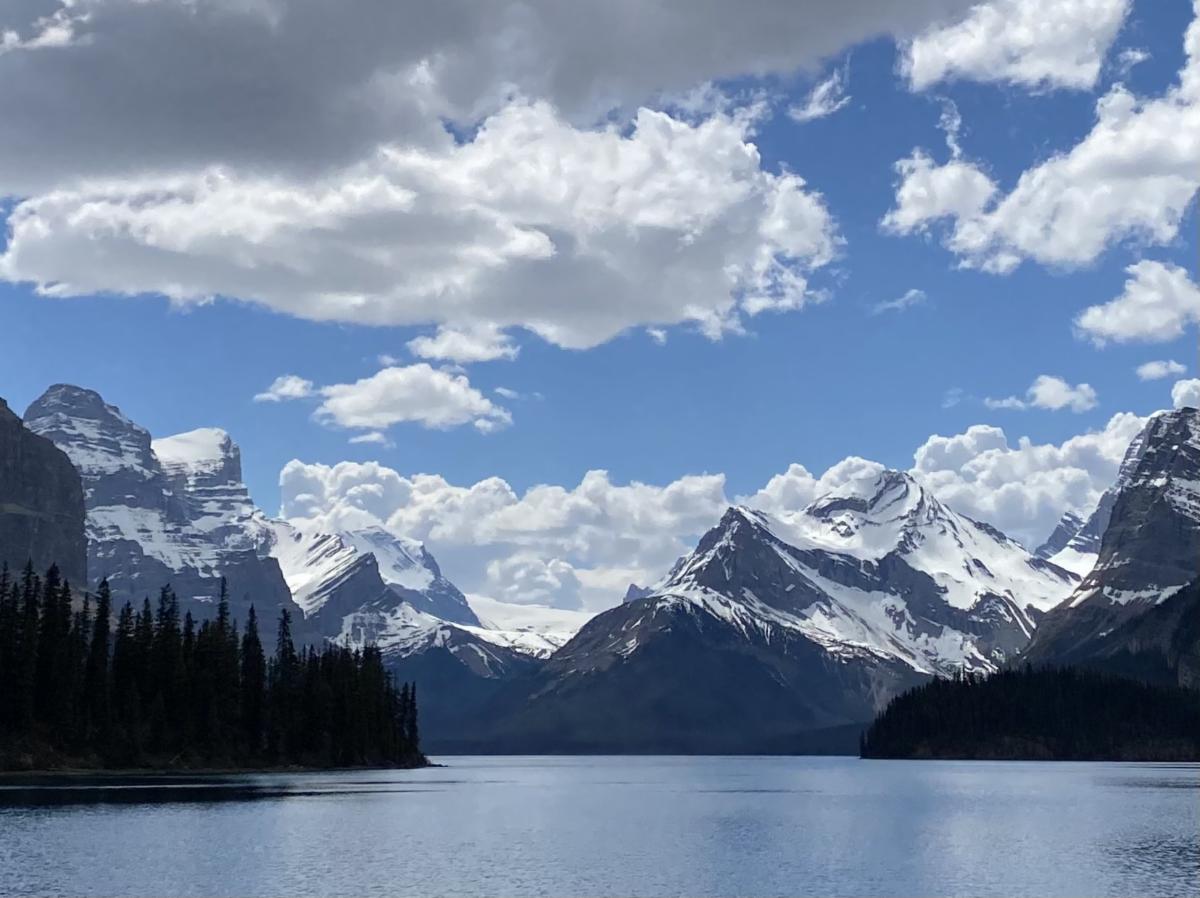
The photo above is from the bow of a boat last year that took a small group of tourists including Eileen and me to the back end of Maligne Lake in Jasper National Park in Alberta, Canada.


There is no current human habitation though humans have been there in centuries past and indigenous people thought it had spiritual significance. An Anglo explorer in 1908, Mary Schaffer, called what the photo displays as “The Hall of the Gods.”


What happens tomorrow or a month from now in WDC news reporting versus the current Administration isn’t going to change the far reaches of the waters of the Hall that our boat never reached. We thought how inconsequential we were/are.


That said, the history of our democracy and our profession indicates literal truth will prevail at some point. Let’s keep searching without asserting. Maybe our small boat will dock at the far end of the Hall of the Gods.


-0-


This is the opening paragraph of Article I of the AP By-Laws from the 1985 edition, titled "Objects":


"The Associated Press is a mutual and cooperative association formed to gather with economy and efficiency an accurate and impartial report of the news. The union for a common aim and purpose of representatives of all shades of thought and opinion - political, social, economic, religious - is assurance the news gathered and distributed by The Associated Press shall be as objective and complete as human endeavor can make it.


It sounds like good instruction for us in the current turmoil.


I love the words "accurate and impartial" as I have come to choose "neutral" in moving away from compromised terms like "fact-based" and even "objective" - the latter of which some journalism programs teach is not attainable.


Go Play Golf!


Doug Pizac - It is Saturday morning and while eating breakfast I am watching CNN do a story about the huge crowds forming in D.C., Atlanta, etc. to protest Trump’s axing of jobs in the federal government and creating expensive tariffs. While these demonstrations are massive and nationwide, they are essentially symbolic in nature against actions that are affecting Americans to their core in terms of affording food, health insurance, retirement plans, buying a car, etc.


This was followed with a segment on President Trump not only playing golf in Florida while these events are going on, but being at top of the leader board in a tournament he’s in. So, do you really think all these protests are affecting him? I think not. However, this juxtaposition sparked an idea.  


To make it personal to him, his cabinet, and with members of Congress, one has to make it personal to them where it counts just as their actions are making it personal to the masses. For the president it is naturally his ego. And for the legislature their weakest link are not just voters but those who are physically close to them -- eg. their actual neighbors. And let’s not forget where the true power is: those who donate to them.


A few weeks ago, Connecting members chimed in with sayings, quotes, etc. on what should be worn regarding AP being banned from White House pool coverage. Similarly, those who disagree with DOGE and other actions need T-shirts that hit close to home to the politicians and their money sources.


To that, I offer up the following shirts using maybe a golf ball graphic I made up:

Can’t afford food? GO PLAY GOLF!


Can’t afford health insurance? GO PLAY GOLF!


Can’t afford new shoes? GO PLAY GOLF!


Can’t afford retirement? GO PLAY GOLF!


Can’t afford medicine? GO PLAY GOLF!


And so on. These are sure to get under Trump’s skin.


Washington retirees lunch group – war stories, friendly chats, office gossip…and politics

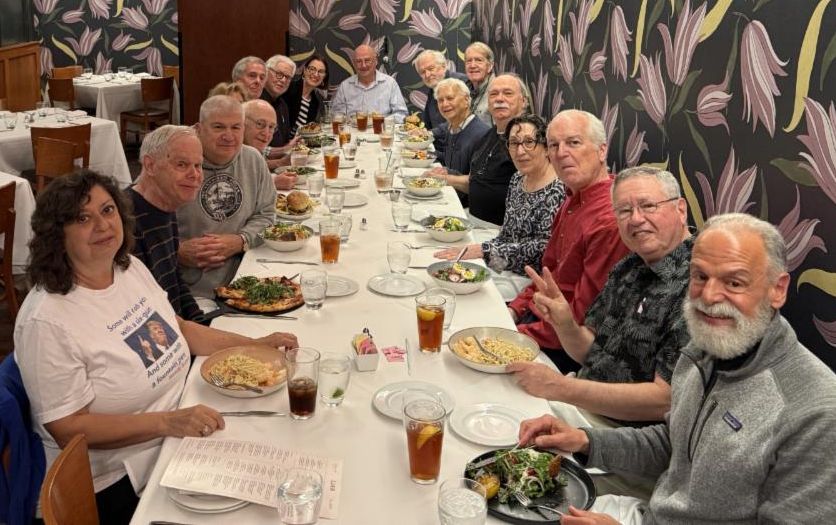
Left to right: Laurie Asseo, Bob Furlow, Jim Rubin, Jim Abrams, Donna Cassata (hidden), Alan Fram, Matt Yancey, Libby Quaid, Robert Glass, John Henry, Jim Drinkard, Larry Margasak, Mike Sniffen, Carole Feldman, Bob Burns, Dick Carelli and Ricardo Alonso-Zaldivar.


Robert Glass - The first Monday of every month, a group of Washington retirees meets for lunch either online or in person. Mike Sniffen organized the group eight years ago. We started with a half dozen participants and have grown to more than 20, most of whom are regulars. For years, we met at Old Ebbitt Grill across the street from the Treasury and a couple of other downtown restaurants, then along came the pandemic. That forced us online, but it had the benefit of including people from other parts of the country. Now we meet half the time online and half in person. Regardless of venue, we always have a satisfying mix of war stories, friendly chat, office gossip old and new and, of course, politics (we're all Washington bureau veterans, after all). We also take occasional polls predicting how an election or some other political development is going to play out. (We got the last election decidedly wrong.) This week, we had a record 17 participants at Lia's, a restaurant in Bethesda, Md. A Los Angeles Times retirees group meets at the same place and sometimes the same day, which gives us a chance to reconnect. Two people belong to both groups.


Dad, the videojournalist

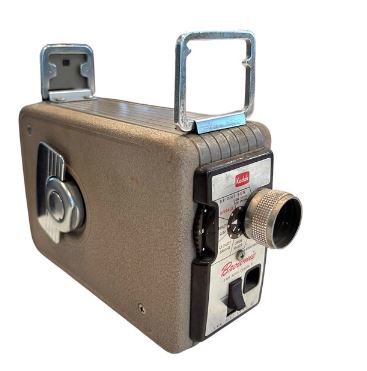
Fires and floods did not escape the lens of the Kodak Brownie 8 mm film camera wielded by Ray Mittelstadt, father of our colleague Mark Mittelstadt, former AP bureau chief and AP liasion to APME. Mark explains:


Mark Mittelstadt - Dad thought he was an engineer, and in fact he was. Straight out of Iowa State University with an engineering degree he took a job at a local utility company where he stayed his whole career.


But seven years after his death, Ray Mittelstadt is being recognized for another activity: filming news.


Not long after he joined Iowa-Illinois Gas and Electric Co. in Fort Dodge, Iowa, Ray married the striking brunette who, it turned out, had been the receptionist directed by her manager to call him at his family’s home 60 miles away for a job interview. Along came two children, and then a third, and like many fathers in the 1950s wanting to capture the growth of their families, he bought a Kodak Brownie 8 mm film camera. He shot away -- at the house when we moved to the other side of town, on vacations, family gatherings, as we grew up.


As the years wore on, the wind-up camera got less and less use and was shelved. But from time to time we would watch on a projector and laugh at family memories captured in short movies (approximately 4-5 minutes long on 3-inch film reels.)


Three boxes of film accompanied my parents as they moved to four houses in three cities, then wound up at my mother's apartment in a senior center back in her hometown of Fort Dodge. Film deteriorates over time and I begged my folks to let me get it converted to digital so we all could enjoy what it contained again. Mom refused. Even following Dad's death in 2018, she was adamant: "They're not leaving this house. I don't want anyone else handling them!"


Following her death two years ago, my sister and brother agreed to let me have all of it. I brought back to Arizona nearly 60 home movies plus thousands of slides.


I bought a home movie converter and was going to digitize the film myself. When it sat in the box unopened for more than a year, I finally decided to chance my legacy and sent half of dad's reels to that company that advertises everywhere all the time. Within about four weeks I got back a 32 GB flash drive plus DVDs containing 27 movies. The originals came back, too.


I was overjoyed. (And relieved the movies safely made it to Chattanooga and back!)


My immediate family and my sister and brother have loved seeing them. 

While most of the videos have been of family, I was certain three would have a broad community interest: a 1961 fire that destroyed a Fort Dodge boat factory, burning plastics and solvents spewing clouds of thick black smoke that could be seen for miles and sending ash into a big municipal swimming pool across the street; a 1964 parade and ceremony marking the opening of a replica fort from which Fort Dodge gets its name; and upstream ice jams that caused major flooding of the Des Moines River in spring 1965. Posts of those movies on Facebook have drawn hundreds of likes and nearly as many comments and remembrances.


This was decades before the era of instant news footage. The nearest television station was more than 50 miles away and back then either would have not known about a big fire or major flooding in our northwest Iowa city, or would not have chosen to send a crew.


"Wow," commented one woman on Facebook. "Watching the ice flow down the river does bring back a memory of watching the ice flow at the dam, but I don't remember if it was the same year. Great film of an unfortunate situation. Thanks for sharing."


"I love the digitized home videos, Mark!," another poster wrote. "Your dad did an amazing job with the camera. Thanks for sharing."


I'm preparing to ship another batch of film for conversion. Most, again, are of family, but there are at least a couple reels that I suspect will show newsworthy events. And who knows what's on a 9-inch reel that I do not recall?


Meanwhile, anyone want to buy a MovieMaker Pro? Never used. Still in the box.


The wire?


Keith Robinson - The new editor of a local weekly I write for came to the paper right out of college. That probably would not have happened 20 years ago.

.

Anyway, she asked me what it was like working for the AP. One thing I highlighted is that when a big story broke, we actually sent the story to the wire in real time as it was happening. At that, she asked “What do you mean by the wire?”


I immediately thought to myself oh, no, I’m part of the legacy media.


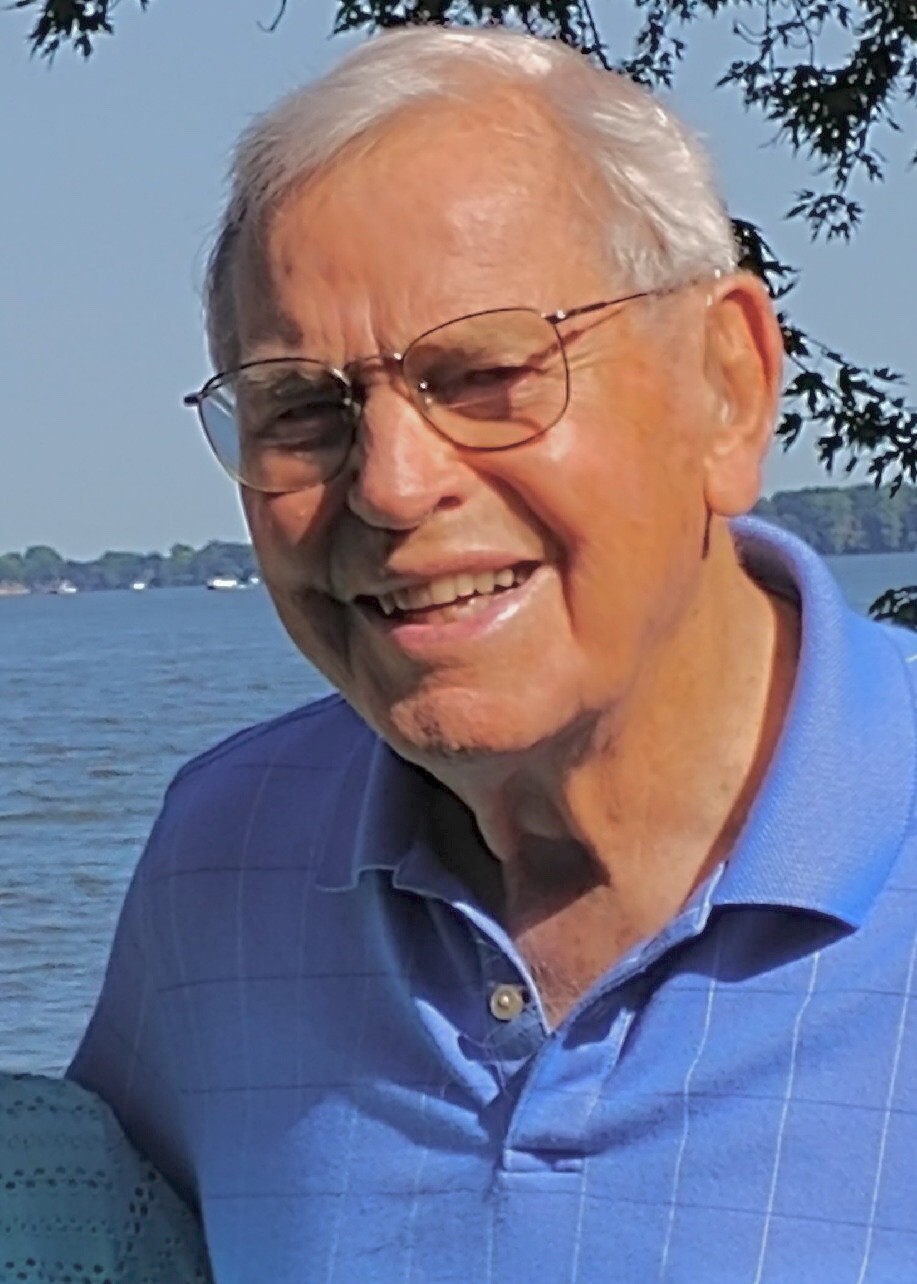
On death of National Geographic photographer Jim Brandenburg

Doug Pizac -- It is with sadness that I share with you the death of famed National Geographic photographer Jim Brandenburg. He was 79. I met and worked with Jim during my career building years at NGS in the early-mid 1970s. He was one of those great photographers back then who I picked their brain for knowledge when they were in town. Here is the PetaPixel link that has pictures and a video about him and his project called “Chased by the Light” where he took only ONE photo a day -- a single frame of a single situation that took hours to do -- for 90 consecutive days with no do-overs. And here’s the Minneapolis Star-Tribune link to a more personalized obit that includes a 60-image slideshow of his work.


Stories of interest


Republican senator claims video floating killing of journalists was a ‘joke’ (Guardian)


By RICHARD LUSCOMBE


The Republican US senator and Donald Trump loyalist Markwayne Mullin has evidently sought to backtrack from comments suggesting politicians could “handle our differences” with journalists by shooting and killing them, insisting he was trying to make a joke.


The Oklahoma lawmaker, a former mixed martial arts (MMA) fighter, on Saturday posted to X a video of himself at a stairway in the US Capitol building recounting the tale of the newspaper columnist Charles Kincaid.


In 1890, Kincaid shot dead former Kentucky congressman William Taulbee, with whom he had been feuding.


“There’s a lot we could say about reporters and the stories they write, but I bet they would write a lot less false stories – as President Trump says, fake news – if we could still handle our differences that way,” Mullin says at the conclusion of the almost two-minute clip.


Read more here. Shared by Doug Pizac.


-0-


How an errant headline about a tariffs 'pause' briefly sent stocks soaring (NBC)


By Rob Wile and Jason Abbruzzese


An unfounded claim that President Donald Trump was considering pausing the implementation of sizable tariffs briefly sent U.S. stocks skyrocketing on Monday, an indication of just how volatile the current economic situation has become.


Just after 10:10 a.m., a headline was posted by several well-followed finance-focused accounts on X that said White House economic adviser Kevin Hassett had indicated that Trump was considering a 90-day pause — China excluded — on his sweeping tariffs plan.


Though unverified, the headline was instantly digested by investors — many of whom operate through algorithmic software that can parse information for buy or sell signals — and sent stocks soaring, reversing an earlier massive sell-off.


The unfounded headline got an extra boost when it was mentioned at about 10:14 a.m. ET on CNBC in an effort to explain the market’s moves (with one anchor noting the source of the claim was unclear) and then included the headline in an on-air graphic. The move resulted in trillions in gains in stock-market value in a matter of minutes.


Read more here. Shared by Dennis Conrad.


-0-


Tensions Erupt Inside Wall Street Journal Over Competing Projects About Imprisoned Journalist Evan Gershkovich (Variety)


By Tatiana Siegel


It was a dramatic moment. On Aug. 1, 2024, Wall Street Journal reporter Evan Gershkovich stepped off a plane in Turkey to freedom, after 16 months spent in a Russian prison. That same day in 2024, Journal colleagues Joe Parkinson, chief of the World Enterprise Team, and senior reporter Drew Hinshaw published a 7,000-word deep dive that chronicled the wild saga that ended in a prisoner swap and Gershkovich’s release. The Journal, through a video crew, also captured exclusive footage on the ground that would be used in a documentary spearheaded by Parkinson and Hinshaw and produced by the newspaper. The pair would expand their reporting into a book about how Gershkovich was convicted in Russia of being a U.S. spy, a charge that he and the paper vehemently denied.


The only problem is Gershkovich is not cooperating on either the documentary or the book, sources tell Variety. Instead, Gershkovich has his own film and book in the works, sparking tensions inside the newsroom over the competing projects.


Read more here. Shared by Myron Belkind.

AP classes, by the year...


(EDITOR'S NOTE: This is a listing of Connecting colleagues who have shared the year and the bureau where they started with the AP. If you would like to share your own information, I will include it in later postings. Current AP staffers are also welcome to share their information. We include deceased staffers when their information is shared; their names are italicized.)


1951 - Norm Abelson (Boston)


1953 – Charles Monzella (Huntington, WVa)


1955 – Henry Bradsher (Atlanta), Paul Harrington (Boston), Joe McGowan (Cheyenne)


1957 - Louis Uchitelle (Philadelphia)


1958 – Roy Bolch (Kansas City), Robert Dubill (Buffalo)


1959 – Charlie Bruce (Montgomery)


1960 – Claude Erbsen (New York), Bill Lenz (Detroit), Carl Leubsdorf (New Orleans), Harry Moskos (Albuquerque)


1961 – Peter Arnett (Jakarta, Indonesia), Strat Douthat (Charleston. WVa), Warren Lerude (San Diego), Ed Staats (Austin)


1962 – Paul Albright (Cheyenne), Malcolm Barr Sr. (Honolulu), Myron Belkind (New York), Dave Mazzarella (Newark), Peggy Simpson (Dallas), Kelly Smith Tunney (Miami)


1963 – Hal Bock (New York), Jeff Williams (Portland OR)


1964 – Rachel Ambrose (Indianapolis), Larry Hamlin (Oklahoma City), John Lengel (Los Angeles), Ron Mulnix (Denver), Lyle Price (San Francisco), Lew Simons (New York), Arlene Sposato (New York), Karol Stonger (Indianapolis), Hilmi Toros (New York)


1965 – Bob Dobkin (Pittsburgh), Harry Dunphy (Denver), John Gibbons (New York), Bob Greene (Kansas City), Jim Luther (Nashville), Larry Margasak (Harrisburg), Rich Oppel (Tallahassee), Jim Rubin (Trenton). Lynn Sherr (New York)


1966 – Shirley Christian (Kansas City), Mike Doan (Portland, OR), Edie Lederer (New York), Nancy Shipley (Nashville), Mike Short (Los Angeles), Marty Thompson (Seattle), Nick Ut (Saigon), Kent Zimmerman (Chicago)


1967 – Dan Berger (Los Angeles), Adolphe Bernotas (Concord), Lou Boccardi (New York), Linda Deutsch (Los Angeles), Don Harrison (Los Angeles), Frank Hawkins (New York), Doug Kienitz (Cheyenne), David Liu (New York), Bruce Lowitt (Los Angeles), Chuck McFadden (Los Angeles), Martha Malan (Minneapolis), Bill Morrissey (Buffalo), Larry Paladino (Detroit), Michael Putzel (Raleigh), Bruce Richardson (Chicago), Richard Shafer (Baltimore), Victor Simpson (Newark), Michael Sniffen (Newark), Kernan Turner (Portland, Ore)


1968 – Lee Balgemann (Chicago), John Eagan (San Francisco), Earleen Fisher (Indianapolis), Joe Galu (Albany/Troy), Peter Gehrig (Frankfurt), Charles Hanley (Albany), Jerry Harkavy (Portland, Maine), Herb Hemming (New York), Brian King (Albany), Samuel Koo (New York), Karren Mills (Minneapolis), Michael Rubin (Los Angeles), Rick Spratling (Salt Lake City), Barry Sweet (Seattle)


1969 - Ann Blackman (New York), Ford Burkhart (Philadelphia), Harry Cabluck (Pittsburgh), Dick Carelli (Charleston, WVa), Dennis Coston (Richmond), Ron Frehm (New York), Mary V. Gordon (Newark), Daniel Q. Haney (Portland, Maine), Mike Harris (Chicago), Brad Martin (Kansas City), David Minthorn (Frankfurt), Cynthia Rawitch (Los Angeles), Bob Reid (Charlotte), Mike Reilly (New York), Doug Tucker (Tulsa), Bill Wertz (Minneapolis), Jim Willse (New York), Bill Winter (Helena)


1970 – Richard Boudreaux (New York), David Briscoe (Manila), Sibby Christensen (New York), Richard Drew (San Francisco), Bob Egelko (Los Angeles), James Gerstenzang (San Francisco), Steve (Indy) Herman (Indianapolis), Tim Litsch (New York), Lee Margulies (Los Angeles), Arthur Max (Tel Aviv), Chris Pederson (Salt Lake City), Brendan Riley (San Francisco), Chuck Robinson (Indianapolis), Larry Thorson (Philadelphia)


1971 – Harry Atkins (Detroit), Jim Bagby (Kansas City), Larry Blasko (Chicago), Jim Carlson (Milwaukee), Jim Carrier (New Haven), Chris Connell (Newark), Bill Gillen (New York), Bill Hendrick (Birmingham), John Lumpkin (Dallas), Kendal Weaver (Montgomery)


1972 – Hank Ackerman (New York), Rod Davis (Dallas), Bob Fick (St. Louis), Joe Frazier (Portland, Ore.), Terry Ganey (St. Louis), Mike Graczyk (Detroit), Denis Gray (Albany), Lindel Hutson (Little Rock), Linda Kramer Jenning (San Francisco), Brent Kallestad (Sioux Falls), Tom Kent (Hartford), Nolan Kienitz (Dallas), Kent Kilpatrick (Detroit), Andy Lippman (Phoenix), Mike Millican (Hartford), Bruce Nathan (New York), Ginny Pitt Sherlock (Boston), Lew Wheaton (Richmond)


1973 - Jerry Cipriano (New York), Susan Clark (New York), Norm Clarke (Cincinnati), Marty Crutsinger (Miami), Steve Fox (Los Angeles), Joe Galianese (East Brunswick), Merrill Hartson (Richmond), Mike Hendricks (Albany), Tom Journey (Tucson), Steve Loeper (Los Angeles), Jesus Medina (New York), Ellen Miller (Helena), Tom Slaughter (Sioux Falls), Jim Spehar (Denver), Paul Stevens (Albany), Jeffrey Ulbrich (Cheyenne), Owen Ullmann (Detroit), Suzanne Vlamis (New York), John Willis (Omaha), Evans Witt (San Francisco)


1974 – Norman Black (Baltimore), Julie Dunlap (Philadelphia), David Espo (Cheyenne), Dan George (Topeka), Robert Glass (Philadelphia), Steve Graham (Helena), Tim Harper (Milwaukee), Elaine Hooker (Hartford), Sue Price Johnson (Charlotte), Fong Lien (Los Angeles), Dave Lubeski (Washington), Janet McConnaughey (Washington), Lee Mitgang (New York), Barry Shlachter (Tokyo), Bud Weydert (Toledo), Marc Wilson (Little Rock) 


1975 – Peter Eisner (Columbus), Charles Hill (Charlotte), Jim Limbach (Washington), Bill McCloskey (Washington), David Powell (New York), Eileen Alt Powell (Milwaukee)


1976 – Brad Cain (Chicago), Judith Capar (Philadelphia), Dick Chady (Albany), David Crary (Jackson), Steve Crowley (Washington), Diane Duston (Columbus), David Egner (Oklahoma City), Carole Feldman (Newark), Steve Hindy (Newark), Marc Humbert (Albany), Steven Hurst (Columbus), Richard Lowe (Nashville), Mike Mcphee (Boston), John Nolan (Nashville), Guy Palmiotto (New York), Charlotte Porter (Minneapolis), Chuck Wolfe (Charlotte)


1977 – Bryan Brumley (Washington), Robert Burns (Jefferson City), Charles Campbell (Nashville), Carolyn Carlson (Atlanta), Dave Carpenter (Philadelphia), Solange De Santis (New York), Jim Drinkard (Jefferson City), Ken Herman (Dallas), Mike Holmes (Des Moines), Doug Jeffries (New York), Brad Kalbfeld (New York), Larry Kilman (Atlanta), Scott Kraft (Jefferson City), John Kreiser (New York), Peter Leabo (Dallas), Kevin LeBoeuf (Los Angeles), Ellen Nimmons (Minneapolis), Joyce Rosenberg (New York), Dan Sewell (Buffalo), Estes Thompson (Richmond), David Tirrell-Wysocki (Concord)


1978 – Jane Anderson (Providence), Vinnie D'Alessandro (Hartford), Tom Eblen (Louisville), Ruth Gersh (Richmond), Monte Hayes (Caracas), Doug Pizac (Los Angeles), Charles Richards (Dallas), Reed Saxon (Los Angeles), Steve Wilson (Boston)


1979 – Jim Abrams (Tokyo), Peter Banda (Albuquerque), Brian Bland (Los Angeles), Scotty Comegys (Chicago), John Daniszewski (Philadelphia), Frances D’Emilio (San Francisco), Pat Fergus (Albany), Brian Friedman (Des Moines), Sally Hale (Dallas), Susana Hayward (New York), Jill Lawrence (Harrisburg), Warren Levinson (New York), Joe Madison (New York), Barry Massey (Kansas City), Phillip Rawls (Nashville), John Rice (Carson City), Kurt Rossi (New York), Linda Sargent (Little Rock), Joel Stashenko (Albany), Robert Wielaard (Brussels)


1980 – Alan Adler (Cleveland), Christopher Bacey (New York), Diane M. Balk (Indianapolis), Jeff Barnard (Providence), Mark Duncan (Cleveland), Bill Kaczor (Tallahassee), Mitchell Landsberg (Reno), Mike Mazzo (East Brunswick), Kevin Noblet (New Orleans), Lee Perryman (Tampa), Jim Rowley (Baltimore), David Speer (Jackson), Hal Spencer (Providence), Jo Steck (Los Angeles), Carol J. Williams (Seattle)


1981 – Paul Davenport (Phoenix), Dan Day (Milwaukee), John Flesher (Raleigh), Debra Hale-Shelton (Little Rock), Len Iwanski (Bismarck), Ed McCullough (Albany), Drusilla Menaker (Philadelphia), Kim Mills (New York), Mark Mittelstadt (Des Moines), Susan Okula (Hartford), Roland Rochet (New York), Lee Siegel (Seattle), Marty Steinberg (Baltimore), Bill Vogrin (Kansas City)


1982 – Dorothy Abernathy (Little Rock), Al Behrman (Cincinnati), Tom Cohen (Jefferson City), John Epperson (Chicago), Ric Feld (Atlanta), Kiki Lascaris Georgio (New York), Nick Geranios (Helena), Mike Gracia (Washington), Howard Gros (New Orleans), Mark Humphrey (Nashville), Dan Juric (East Brunswick), Robert Kimball (New York), Rob Kozloff (Detroit), Bill Menezes (Kansas City), David Ochs (New York), Eric Risberg (San Francisco), Cecilia White (Los Angeles)


1983 – Elise Amendola (Boston), Edward L. Birk (Boston), Donna Cassata (Albany), Scott Charton (Little Rock), Sue Cross (Columbus), Mark Elias (Chicago), Mary Esch (Albany), Doug Fisher (Columbus), Alan Fram (Newark), David Ginsburg (Washington), Lisa Hamm-Greenawalt, Diana Heidgerd (Miami), Kevin McGill (New Orleans), Sheila Norman-Culp (New York), Carol Esler Ochs (New York), Jim Reindl (Detroit), Amy Sancetta (Philadelphia), Angie Lamoli Silvestry (New Orleans), Rande Simpson (New York), Dave Skidmore (Milwaukee), Barbara Worth (New York)


1984 – Laurie Asseo (Phoenix), David Beard (Chicago), Owen Canfield (Oklahoma City), Wayne Chin (Washington), Jack Elliott (Oklahoma City), Jim Heintz (Columbus), Candice Hughes (Dallas), Danny Johnston (Little Rock), Kelly P. Kissel (New Orleans), Joe Macenka (Richmond), Paul Newberry (Atlanta), Eva Parziale (San Francisco), Walt Rastetter (New York), Malcolm Ritter (New York), Keith Robinson (Columbus), Cliff Schiappa (Kansas City), David Sedeño (Dallas), Andrew Selsky (Cheyenne), Pedro Sotomayor (Los Angeles), Patty Woodrow (Washington)


1985 – Dennis Conrad (Cleveland), George Garties (Los Angeles), Beth Grace (Columbus), Betty Kumpf Pizac (Los Angeles)


1986 – Joni Baluh Beall (Richmond), David Beard (Jackson), Tom Coyne (Columbia, SC), Dave DeGrace (Milwaukee), Alan Flippen (Louisville), Paul Geitner (Montgomery), Jim Gerberich (San Francisco), Howard Goldberg (New York), Mark Hamrick (Dallas), Sandy Kozel (Washington), Arlene Levinson (Boston), Robert Meyers (London), David Morris (Harrisburg), Susan Ragan (New York), Bob Seavey (Lima), Barbara Woike (New York)


1987 – Donna Abu-Nasr (Beirut), Jim Anderson (Mexico City), Dave Bauder (Albany), Bob Bellafiore (Albany), Chuck Burton (Charlotte), Ted Duncombe (Philadelphia), Beth Harris (Indianapolis), Lynne Harris (New York), Steven L. Herman (Charleston, WVa), Elaine Kurtenbach (Tokyo), Rosemarie Mileto (New York), John Rogers (Los Angeles), Julia Rubin (Denver)


1988 – Chris Carola (Albany), Peg Coughlin (Pierre), Frank Eltman (New York), Kathy Gannon (Islamabad), Steve Hart (Washington), Melissa Jordan (Sioux Falls), Margaret Lillard (Nashville), Bill Pilc (New York), Philip Rosenbaum (New York), Kelley Shannon (Dallas), Darlene Superville (Newark)


1989 – Charlie Arbogast (Trenton), Susan Boyle (New York), John Braunreiter (Milwaukee), Ted Bridis (Oklahoma City), Paul Randall Dickerson (Nashville), Katie Fairbank (Indianapolis), Ron Fournier (Little Rock), Ann Gibson (Richmond), Josh Lemieux (Kansas City), Teresa Walker (Nashville)


1990 – Frank Fisher (Jackson), Ken Giglio (Washington), Kathryn Loomans (Washington), Dan Perry (Bucharest), Steve Sakson (Baltimore), Sean Thompson (New York)


1991 – Amanda Kell (Richmond), Suzanne Mast Lee (Washingon), Santiago Lyon (Cairo), Lisa Pane (Hartford), Wayne Partlow (Washington), Ricardo Reif (Caracas), Bill Sikes (Buffalo)


1992 – Emery P. Dalesio (Trenton), Jennifer Garske (Washington), Kerry Huggard (New York), Wilfredo Lee (Washington)


1993 – Connie Farrow (St. Louis), Shawn Pogatchnik (London), Jim Salter (St. Louis), Tim Sullivan (New York), Adam Yeomans (Tallahassee)


1994 - Glen Johnson (Boston), Ralph Siegel (Trenton)


1995 – Elaine Thompson (Houston), Donna Tommelleo (Hartford)


1996 – Patricia N. Casillo (New York), Burt Herman (Sacramento), John Khin (New York)


1997 – J. David Ake (Chicago), Peter Banda (Albuquerque), Martha Bellisle (Carson City), Kia Breaux (Kansas City), Chuck Burton (Charlotte), Pamela Collins (Dallas), Aaron Jackson (New York), Rachel La Corte (Miami), Madhu Krishnappa Maron (New York), Jim Suhr (Detroit), Jennifer Yates (Baltimore)


1998 – Alan Clendenning (New Orleans), Guthrie Collin (Albany), David Koenig (Dallas), Mitch Stacy (London), Richard Turkheimer (New Orleans)


1999 – Melinda Deslatte (Raleigh), Stacey Plaisance (New Orleans), Laura Rauch (Las Vegas), Terry Spencer (Miami)


2000 – Carrie Antlfinger (Milwaukee), Betsy Blaney (Dallas), Gary Gentile (Los Angeles), Ken Miller (Oklahoma City), Rhonda Shafner (New York), Tom Tait (Las Vegas)


2001 - Mike Weissenstein (New York)


2002 - Michael Casey (Jakarta)


2003 - Valerie Komor (New York)


2004 - Jim Baltzelle (Dallas)


2005 – Ric Brack (Chicago), Richard Jacobsen (Mexico City), Frank Jordans (London)


2006 – Jon Gambrell (Little Rock)


2008 - Steve Braun (Washington)


2011 - Joseph B. Frederick (New York)


2013 - Alex Sanz (Atlanta)


2014 - Peter Costanzo (New York)


2024 - Gabriela Aoun (San Diego)

Today in History - April 8, 2025

By The Associated Press

Today is Tuesday, April 8, the 98th day of 2025. There are 267 days left in the year.


Today in history:


On April 8, 1974, Hank Aaron of the Atlanta Braves hit his 715th career home run in a game against the Los Angeles Dodgers, breaking Babe Ruth's home run record that had stood since 1935.


Also on this date:


In 1820, the Venus de Milo statue, likely dating to the 2nd century B.C.E., was discovered by a farmer on the Greek island of Milos.


In 1864, the U.S. Senate passed, 38-6, the 13th Amendment to the U.S. Constitution abolishing slavery. (The House of Representatives passed it in January 1865; the amendment was ratified and adopted in December 1865.)


In 1911, an explosion at the Banner Coal Mine in Littleton, Alabama, claimed the lives of 128 men, most of them convicts leased out from prisons.


In 1913, the 17th Amendment to the Constitution was ratified, providing for election of U.S. senators by state residents as opposed to state legislatures.


In 1962, Cuba announced that 1,200 Cuban exiles tried for their roles in the failed Bay of Pigs invasion were convicted of treason and sentenced to 30 years in prison.


In 1990, Ryan White, the teenager whose battle with AIDS drew national attention and led to greater understanding and de-stigmatization of those suffering from the disease, died in Indianapolis at age 18.


In 1992, tennis great Arthur Ashe announced at a New York news conference that he had AIDS, having contracted HIV from a blood transfusion in 1983.


In 2010, President Barack Obama and Russian President Dmitry Medvedev signed the New START nuclear arms reduction treaty in Prague.


In 2020, a 76-day lockdown was lifted in the Chinese city of Wuhan, where the global COVID-19 pandemic began.


Today's Birthdays: Journalist Seymour Hersh is 88. Songwriter-producer Leon Huff is 83. Rock musician Steve Howe (Yes) is 78. Sports broadcaster Jim Lampley is 76. Sen. Ron Johnson, a Republican from Wisconsin, is 70. Author Barbara Kingsolver is 70. Actor John Schneider is 65. Guitarist Izzy Stradlin (Guns N' Roses) is 63. Singer Julian Lennon is 62. Actor Dean Norris is 62. Actor Robin Wright is 59. Actor Patricia Arquette is 57. Actor Taylor Kitsch is 44. Boxer Gennady Golovkin is 43. NFL wide receiver CeeDee Lamb is 26. Actor Skai Jackson is 23.


Got a photo or story to share?

Connecting is a daily newsletter published Monday through Friday that reaches 2,000 retired and former Associated Press employees, present-day employees, and news industry and journalism school colleagues. It began in 2013. Past issues can be found by clicking Connecting Archive in the masthead. Its author, Paul Stevens, retired from the AP in 2009 after a 36-year career as a newsman in Albany and St. Louis, correspondent in Wichita, chief of bureau in Albuquerque, Indianapolis and Kansas City, and Central Region vice president based in Kansas City.


Got a story to share? A favorite memory of your AP days? Don't keep them to yourself. Share with your colleagues by sending to Ye Olde Connecting Editor. And don't forget to include photos!


Here are some suggestions:


- Connecting "selfies" - a word and photo self-profile of you and your career, and what you are doing today. Both for new members and those who have been with us a while.


- Second chapters - You finished a great career. Now tell us about your second (and third and fourth?) chapters of life.


- Spousal support - How your spouse helped in supporting your work during your AP career. 


- My most unusual story - tell us about an unusual, off the wall story that you covered.


- "A silly mistake that you make"- a chance to 'fess up with a memorable mistake in your journalistic career.


- Multigenerational AP families - profiles of families whose service spanned two or more generations.


- Volunteering - benefit your colleagues by sharing volunteer stories - with ideas on such work they can do themselves.


- First job - How did you get your first job in journalism?


- Most unusual place a story assignment took you.


Paul Stevens

Editor, Connecting newsletter

paulstevens46@gmail.com