Here’s a powerful column by the CEO of Highlights for Children that is just as relevant after the election. “Kids care about this country and its future. Why don’t our leaders care about them?”
|
|
“Early education ballot initiatives won easy approval in St. Louis, San Antonio, Colorado, and Multnomah County, Oregon... with wide margins of victory — demonstrating that even in a pandemic, voters will spend on the nation’s youngest learners. The diverse funding mechanisms in the two cities, one state and one county — majority Democratic areas — offered a glimpse at the many paths forward for cities, counties and states looking to do the same in the future as consensus grows on the benefits of pre-k.” |
|
|
|
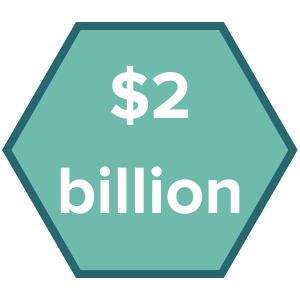
Ohio House Majority Floor Leader Bill Seitz estimated Ohio’s state budget will have a $2 billion hole for the current fiscal year as state revenue has been impacted by the coronavirus, according to the Dispatch.
|
|
|
Learning extension centers (Columbus)
Columbus City Council announced an investment of almost $2 million in Learning Extension Centers (LECs) for students in grades K-12 to come for reliable internet, meals, wraparound services and learning supports – a vital service for those families who are still learning remotely and lack access to in-person help. A map of LECs can be found here.
|
|
School funding
Ohio lawmakers are looking to pass a new school funding formula before the end of the year. Members of the House Finance Committee will hear testimony and see a possible substitute bill for HB 305, the funding plan authored by (now) Speaker Bob Cupp, who’s been working on this issue for quite some time. (A Senate companion bill, SB 376, was also introduced this week. The Senate version differs in that there is a six-year phase in component.) The new plan would cost an additional $1.99 billion in state funds, and help drive funds to schools in poorer areas of the state, especially.
|
|
Election-related reads
There is a lot of great analysis about what last week’s election means for children, child care, and schools. Education Dive looks at what a Biden presidency may mean for K-12 education, pointing out that his “coronavirus response plan includes reopening schools and child care programs as the ‘the single most important step’ to reopening the economy.” Education Next speculates about what sort of executive orders could be forthcoming from a Biden administration, in the event that Republicans keep control of the Senate. (And here’s a similar read from Ed Source.) The 74 Million has a thorough “cheat sheet” of various races and campaigns around the country and what the results could mean for schools. Finally, a timely article on the need to teach greater news literacy around the country (presumably not just for students, either).
For more election-specific analysis related to the passage of tax issues and plans for early childhood around the country, see “Beyond the Buckeye State.”
|
|
Here’s a run-down of developments from around the U.S. as it relates to early childhood “wins.”
-
The 74 Million looks at early childhood ballot issues that won in four locations (St. Louis, San Antonio, Colorado, and Multnomah County, Oregon). New America has a similar article, highlighting these cities and others – including Cincinnati, which just renewed a property tax from which 30% of profits fund the Preschool Promise program.
-
Here are two explainers about Colorado’s new tax on smoking and vaping, the funds from which will go toward K-12 and preschool funding.
-
San Antonio’s pre-K program just “won another 8 years.” Specifically, voters voted to renew a city sales tax of 1/8 cent. Perhaps the most notable line from this article is this description of one campaign strategy for the measure: “Supporters also campaigned on a 2019 study showing that PreK 4 SA delivers a $3,790+ return on investment for each student enrolled.”
-
Voters in one Florida community said yes to funding a new Children’s Services Council (CSC), which will establish a “new 0.5 mill county property tax dedicated to funding programs that address school readiness, child abuse, juvenile arrests and other issues affecting local youth and their families.” Learn more about the concept and use of CSCs here.
-
Finally, Multnomah County, Oregon is making big headlines. NYT explains why it could be a national model; Vox does as well.
The fact that these communities voted to invest in early childhood during uniquely difficult financial times is a testament to the hard work of organizers as well as the long-term value of investing in young children. In the days ahead, as governments struggle to balance their budgets and folks point out the typically large price tags for universal pre-K or child care measures, it’s worth remembering that many local communities have figured out strategies to make it happen. Moreover, to quote one of our panelists from a recent event (CLASP’s Christine Johnson-Staub), there’s perhaps never been a better time to challenge “scarcity thinking” when it comes to discussions about the need to invest in babies, toddlers, and young children.
|
|
Nobel Prize-winning economist and University of Chicago Professor James J. Heckman will present “Giving Kids a Fair Chance: A Business Strategy that Works” on November 19 from 12-2 pm. Heckman will talk about the critical importance of high-quality early childhood education and how we can best support the sector.
|
|
If you missed the recent panel discussion, The Impact of COVID-19 on K-12 Education and Child Care, you can now watch it here. Jamie presented alongside Action for Children CEO Dr. Eric Karolak and Columbus City Schools Superintendent Dr. Talisa Dixon.
|
|
This article examines how tough it can be for parents and teachers to find the most effective learning apps.
The headline for this article is meant to be provocative (we think); we sure hope they’re right.
NPR has some useful tips on how parents can talk to kids about the election, and civics in general. The article suggests, among other ideas, to remind children of the U.S.’s “hard history.” An OSU professor is quoted to elucidate this point: “The United States and its democracy are a work-in-progress, and in order for children to understand the role we all have to play in its improvement, they need to learn about its failures as well as its successes. ‘I think the highest form of patriotism is self-reflection and saying, 'Hey, this is what we've done wrong,' says Hasan Kwame Jeffries, a history professor at Ohio State University.”
|
|
New OSU research (from assistant professor of psychology Dr. Zeynep Saygin) shows that newborns are born with their brains “prewired” to see words. View a brief explanation of the study here, or read the study itself as published in Scientific Reports. Meanwhile, researchers from the University of Denver examined parents’ brains, and found that caregivers also went through vital brain changes during this life transition. Read more here; view the research here.
Another OSU study of kindergarteners in a Midwestern state (authored by educational studies' Nathan Helsabeck and co-authored by Crane’s Dr. Kelly Purtell, Dr. Laura Justice, Dr. Tzu-Jung Lin and educational studies' Dr. Jessica Logan) found seven different pathways a sample of 568 children took in their early education and care before arriving at school. Dr. Purtell said of this study, “It reflects the patchwork availability of child care in this country. Child care for infants and young kids is expensive, so there are not a lot of affordable options for parents. Parents have to find different ways to take care of their kids while they work.”
The Hechinger Report describes research from the University of Southern California that examined the extent to which second-grade teachers demonstrated racial bias in their grading of students’ writing assignments. To conduct the study, researchers recruited 1,500 teachers online and asked them to grade two versions of the same essay, differing only in the name of the boy’s friend (e.g., a racially distinct Black or white name, according to “Freakonomics”). They found that teachers who were white were 8% less likely to rate the Black child’s essay as on grade level; female teachers were 7% less likely to deem him on grade level, compared to the white child’s essay. As the Hechinger Report says, “The fact that racial biases are higher among both whites and women is troubling because women account for almost 90 percent of teachers in U.S. elementary schools and whites make up almost 80 percent of the teaching force.”
|
|
This edition written by: Jamie Davies O'Leary, Associate Director of Policy and Caitlin Lennon, Communications & Policy Specialist |
|
|
|
|
|
|