|
The Power of Boycotts in Securing Voting Rights During Hostile Administrations
#VRABlackHistory #WeWillToo
How Our Ancestors Successfully Fought Back and #WeWillToo
| |
|
View as Webpage
Please note, if you'd like to opt out from only the upcoming daily Black History Month Voting Rights Alliance #VRABlackHistory series, please email carnwine@tjcoalition.org. Unsubscribing at the bottom of this email unsubscribes you to all Transformers, not just from this special February Series.
| |
Click the buttons below to share this article to your social networks: | | |
CLICK BELOW TO WATCH OUR Ahmaud Arbery Day
National TeleTown Hall
| You Can Make A Difference. Just as our ancestors did. | |
|
Reporting by: Caitlyn Arnwine (formerly Caitlyn Cobb). This article was written in 2025 with a complete source list at the bottom. Sources are also cited throughout the article. View more on the #VRABlackHistory Series 2025 below the source list. Please note this is not a comprehensive article, but a shorter article meant to encourage more research on these topics.
View as Webpage
⮚ Introduction
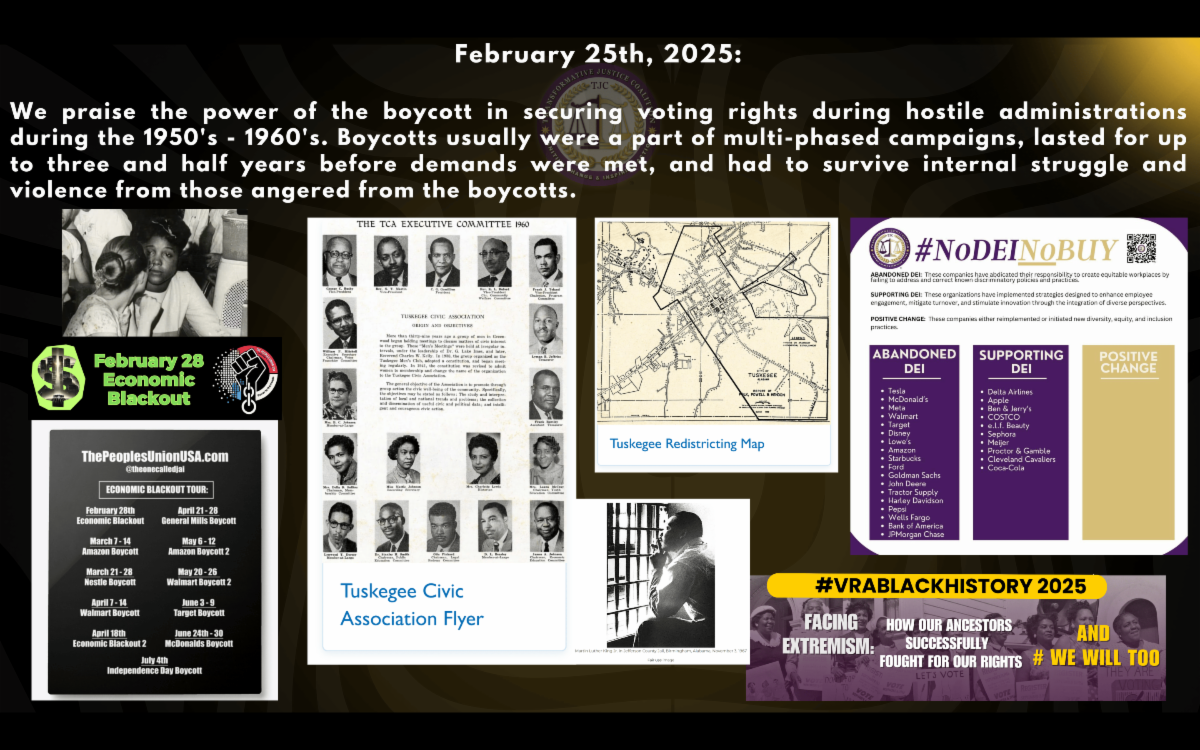
February 25th, 2025, we praised the power of the boycott in securing voting rights during hostile administrations during the 1950's - 1960's. Boycotts usually were a part of multi-phased campaigns, lasted for up to three and half years before demands were met, and had to survive internal struggle and violence from those angered from the boycotts.
This isn't the only period of boycotts for voting rights, and these are just a few of the boycotts. We hope that examining this period will encourage readers to research the way the Black press and boycotts have been used in America since colonial times through present day.
Hostile "administrations" for this article is defined as hostile presidencies; state courts and the U.S. Supreme Court; and, all local, state, and federal legislative branches.
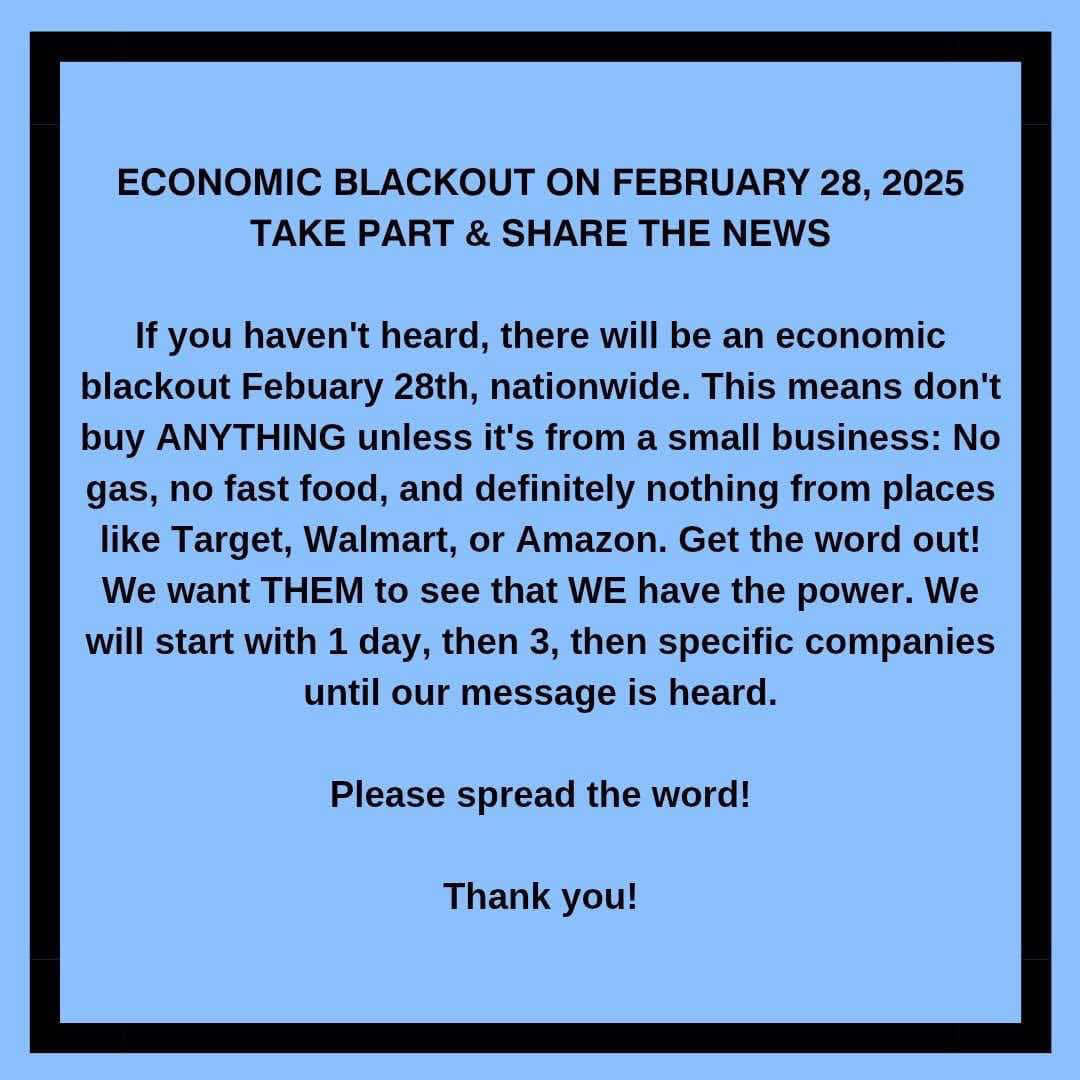
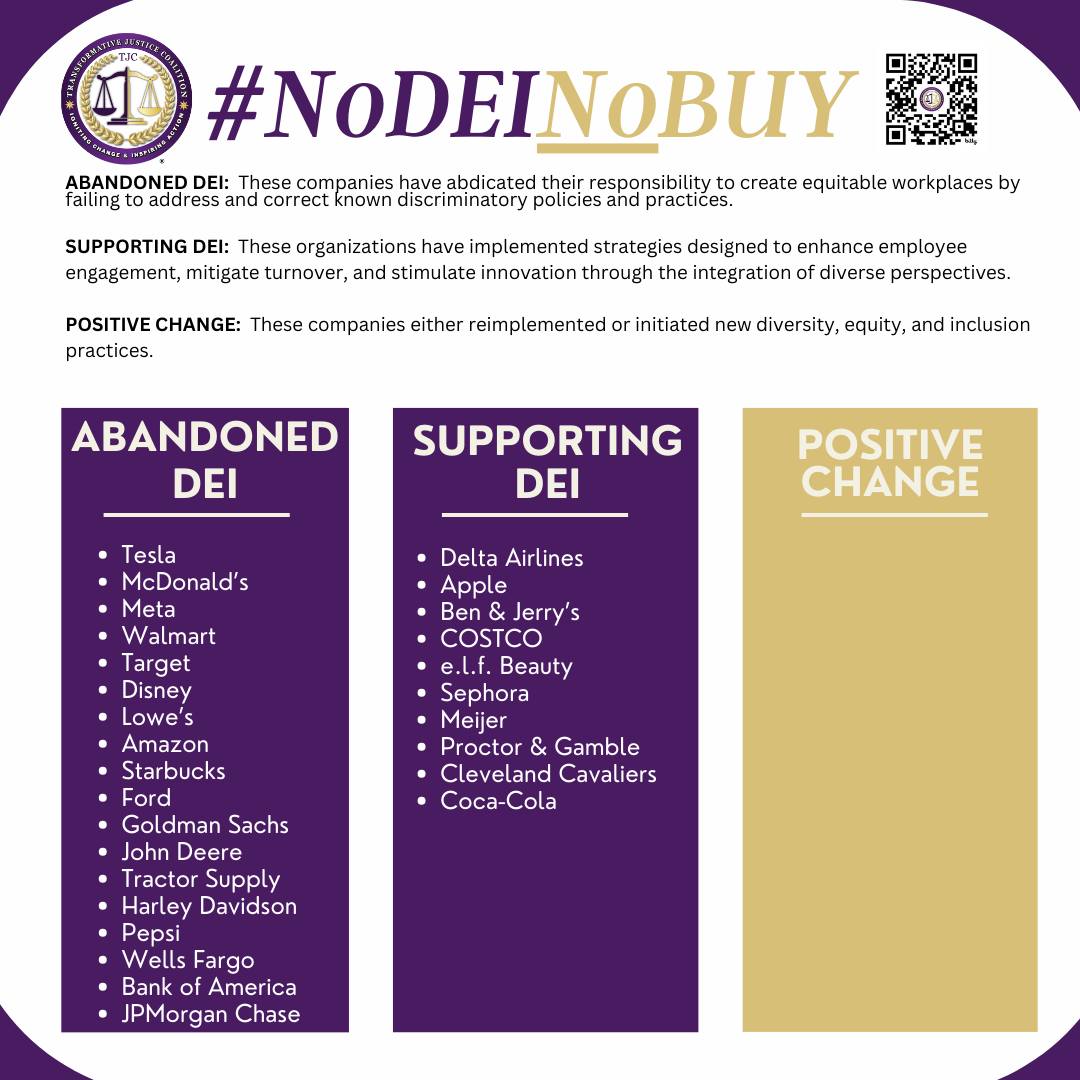
Today, when this article is published, February 28th, 2025, there is a National Economic Blackout against companies that are rolling back diversity, equity, and inclusion initiatives. This is a 24-hour National Economic Blackout originating from The Peoples’ Union USA, and how now taken on a life of its own as various groups, causes, and individuals have connected itself to it. The goal of the 24-hour National Economic Blackout is to prove to the companies and the economy at large how much they depended on consumer’s dollars, and that if their stocks and businesses are shocked for one day- imagine if the National Economic Blackout were to last longer. (The People's Union USA homepage, 25th para.)
Discussing this National Economic Blackout Day and comparing it to boycotts of the mid-2000’s, “Dr. Manveer Mann, an associate professor of marketing at Montclair State University, told NJ Advance Media that while boycotts of companies have taken place throughout history, there hasn’t been a well-publicized blanket economic boycott such as the one being organized. ‘It has happened in the past, but it has typically been focused on very specific companies because of specific actions that they took,’ Mann said. Mann also said ‘there is research that has studied’ whether boycotts work, but ‘it is really difficult to actually find scientific evidence’ on whether these movements work or not. The reason Mann said this is because these movements ‘are limited to a very small segment of really driven consumers for whom the issue is really important, and it’s not at a level that you see sort of major changing in a company’s sales.’…’’It’s happened in a different context in the past, but not at the level that this economic blackout is being talked about so it’s hard to say if it works or not,’ Mann said. ‘If that audience is large enough,’ then yes, ‘there will be implications for businesses.’” (People are boycotting Target, Walmart, Amazon, Best Buy and more on Feb. 28. Here’s why, NJ.com, February 27, 2025)
It's clear Dr. Mann either doesn’t know the true history of the United States of America or isn’t looking far enough back.
⮚ Boycotts You May Not Know, but should
The Baton Rouge Bus Boycott of June 19th - June 25th, 1953, although only a week-long, galvanized the South and sparked the inspiration for the Montgomery Bus Boycott. “The Baton Rouge action showed that direct, peaceful protest could be effective if it was well organized and the cause appealed universally to the Black community. One of the most important elements of the 1953 bus boycott was the emergence of religious leaders as protest organizers." (Baton Rouge Bus Boycott, Melton, 64 Parishes)
Most people have heard of the Montgomery Bus Boycott, sparked by Rosa Parks' arrest, that led to the desegregation of the Montgomery bus system. Some people may even know Rosa Parks was not the first to give up her seat, but the ideal candidate that helped unify people in this effort. Even fewer may realize the Montgomery Bus Boycott wasn't just a few days, then everything was resolved; but that the Montgomery Bus Boycott lasted 381 days. Over a year, from 1955 until 1956, led by Martin Luther King and other community leaders who made up the Montgomery Improvement Association. 90% of the city's Black residents participated in the boycott of the city's busses by walking miles to work every day or organizing carpools and despite city officials and White citizen's attempts to stop the boycott. "In June 1956, a federal district court ruled in Browder v. Gayle that Alabama’s segregation of buses was unconstitutional; the U.S. Supreme Court upheld that decision in November. On December 20, King called for an end to the bus boycott after 382 days. 'We came to see that, in the long run, it is more honorable to walk in dignity than ride in humiliation,' he said. The success of the Montgomery bus boycott demonstrated the effectiveness of nonviolent civil disobedience, and prompted its leaders to form a new civil rights organization, the Southern Christian Leadership Conference, with King as its president." (The Civil Rights Movement: 7 Key Moments That Led to Change, History.com, 2024)
Do you also know about the Tuskegee Boycotts from 1957 - 1963?
⮚ The Tuskegee Boycotts (1957- 1963)
| |
⮚ The Jacksonville Campaign (1962 - 1963)
In the 1960’s in Jacksonville, Mississippi, the NAACP’s leadership was fearful of violent reprisals against African-Americans, and therefore focused only on voter registration drives but no other action to end racial discrimination. The youth were inspired by sit-ins in Greensboro, North Carolina in February 1960, so Medgar Evers, NAACP’s field secretary, recognized the Youth Council’s desires and helped organized boycotts of downtown businesses around Easter 1960. The first major protest was at a White-only library where Black students went in saying they were looking for books they couldn’t find in the “colored branch”. The police confronted them and arrested them for breach of peace, and demonstrations over their arrests were met with dogs, clubs, and tear gas. Two months later, waves of Freedom Riders began arriving, supporting the ongoing demonstrations, prompting 300 arrests. African American churchwomen organized “Womanpower Unlimited”, led by Claire Collins Harvey, and raised funds and coordinated support for those detained by police, starting locally and then even helping those out-of-state. From 1961 through 1962, the Jackson NAACP held voter registration drives and successful legal challenges. They attempted to organize boycotts during this time, but there wasn’t enough participation for them to be successful.
When the University of Mississippi was desegregated, it reignited the Black community and in October 1962, the NAACP’s North Jackson Youth Council coordinated a successful boycott of the Mississippi State Fair for Negroes. This enabled the Youth Council to be able to organize a more comprehensive campaign which included boycotts of White-owned businesses in several different places, passing out leaflets entitled Jackson Movement and spoke at churches. The boycotts were deemed by Evers to be 60-65 percent effective, yet White business owners refused to give into demands. Yet, since the Youth Council had seen the Birmingham Campaign result in its demands being met, they didn’t give up. 6 months into the boycotts, the state NAACP announced that there would be a possibility of future mass marches, picketing, and demonstrations.
“In addition to the earlier demands, the movement called for the mayor to create a biracial committee, hire black policemen and school crossing guards, and desegregate all public facilities. In a final effort to avert a Birmingham-like confrontation, Rev. Edwin King Jr., Tougaloo’s new chaplain, organized a series of interracial ministers’ meetings to encourage dialogue among city and state religious leaders. After white ministers refused to join their black counterparts in demanding an end to racial discrimination in Jackson, and with Mayor Thompson refusing to budge, the direct action phase of the movement commenced on 28 May.” (Jackson Civil Rights Movement, Mississippi Encyclopedia)
Many arrests and a lot of violence resulted because of the direct action, and the state NAACP grew weary of providing bail, and the adverse administration prohibited the movement from coordinating future demonstration. Smaller protests and speaking by King and others began to try to change hearts and minds of White residents- and then Evers was murdered by a sniper. New outrage motivated people over his murder, and marches spontaneously erupted in the streets and mass meetings were over capacity. The marches that resulted at Evers’ funeral were the last marches of this campaign. “On 18 June Mayor Thompson, pressured by the Kennedy administration, agreed to meet some of the movement’s demands, including hiring black policemen and crossing guards. This agreement fell well short of the original demands, failing to provide for desegregated public facilities and businesses or for a biracial committee. Yet encouraged by NAACP leaders and more conservative local ministers, a majority at a mass meeting at a Pearl Street African Methodist Episcopal Church voted to accept the compromise. While this decision represented the end of Jackson’s mass movement, smaller protests and activities continued. King led students, faculty, and out-of-state ministers back to local white-only churches for the next ten months, resulting in more than forty arrests. Tougaloo activists also waged an increasingly successful campaign to desegregate the city’s entertainment venues by encouraging performers to cancel scheduled appearances. In the end, the desegregation of Jackson’s public accommodations and businesses occurred through federal law and reluctant local compliance. In July 1964 Jackson Chamber of Commerce leaders called on the city’s businesses to comply with the new Civil Rights Act, a request reluctantly seconded by Mayor Thompson.” (Jackson Civil Rights Movement, Mississippi Encyclopedia)
| |
⮚ Conclusion
Currently, the Transformative Justice Coalition will unite with others in a multi-phase campaign to support boycotts, economic fasting, protests, litigation, communications and other strategies to demand change, following the profound and lasting spirit of our ancestors.
We urge the people of America to take a stand to ensure fairness, justice, and equal opportunity for all, rejecting systems that uphold exclusion and inequality. Your voice and engagement can make a difference! Learn more: https://bit.ly/NoDEINoBUY
| |
|
|
1. Albany Movement. (n.d.). New Georgia Encyclopedia. Retrieved February 28, 2025, from https://www.georgiaencyclopedia.org/articles/history-archaeology/albany-movement/
2. Baton Rouge Bus Boycott. (n.d.). 64 Parishes. Retrieved February 28, 2025, from https://64parishes.org/entry/baton-rouge-bus-boycott
3. Birmingham Campaign | The Martin Luther King, Jr. Research and Education Institute. (n.d.). Retrieved February 28, 2025, from https://kinginstitute.stanford.edu/birmingham-campaign
4. Black citizens boycott white merchants for U.S. voting rights, Tuskegee, Alabama, 1957-1961 | Global Nonviolent Action Database. (n.d.). Retrieved February 28, 2025, from https://nvdatabase.swarthmore.edu/content/black-citizens-boycott-white-merchants-us-voting-rights-tuskegee-alabama-1957-1961?form=MG0AV3
5. BlackPast. (2011, October 3). (1963) Martin Luther King, Jr., “Letter From a Birmingham Jail” •. https://www.blackpast.org/african-american-history/1963-martin-luther-king-jr-letter-birmingham-jail/
6. Civil Rights Movement: Timeline, Key Events & Leaders. (2025, February 5). HISTORY. https://www.history.com/topics/black-history/civil-rights-movement
7. Fenison, J. (2009, February 26). Charles Sherrod (1937—2022) •. https://www.blackpast.org/african-american-history/sherrod-charles-1937/
8. Jones, J. N., Bailey Kroop, Lexi Love, Liam Bendicksen, Jackson. (2021, April 5). The Black Freedom Struggle: 1963 in Review. ArcGIS StoryMaps. https://storymaps.arcgis.com/stories/19bca484f24e486d90ee97628950f7af
9. Key leaders and organizations in Georgia’s Civil Rights Movement | Georgia History Class Notes | Fiveable. (n.d.). Retrieved February 28, 2025, from https://library.fiveable.me/hs-georgia-history/unit-14/key-leaders-organizations-georgias-civil-rights-movement/study-guide/juIf4l7Y6ppkeae0
10. “Letter from Birmingham Jail” | The Martin Luther King, Jr. Research and Education Institute. (n.d.). Retrieved February 28, 2025, from https://kinginstitute.stanford.edu/letter-birmingham-jail
11. Momodu, S. (2016a, August 31). The Albany Movement (1961–1962) •. https://www.blackpast.org/african-american-history/albany-movement-1961-1962/
12. Momodu, S. (2016b, August 31). The Birmingham Campaign (1963) •. https://www.blackpast.org/african-american-history/birmingham-campaign-1963/
13. NJ.com, K. R. | N. A. M. for. (2025). People are boycotting Target, Walmart, Amazon, Best Buy and more on Feb. 28. Here’s why. Nj. https://nj.com/business/2025/02/people-are-boycotting-target-walmart-amazon-best-buy-and-more-on-feb-28-heres-why.html
14. r2WPadmin. (n.d.). Jackson Civil Rights Movement. Mississippi Encyclopedia. Retrieved February 28, 2025, from https://mississippiencyclopedia.org/entries/jackson-civil-rights-movement/
15. The Civil Rights Movement: 7 Key Moments That Led to Change | HISTORY. (n.d.). Retrieved February 28, 2025, from https://www.history.com/news/civil-rights-movement-key-events?form=MG0AV3
16. Transport and bus boycotts in the United States. (2024). In Wikipedia. https://en.wikipedia.org/w/index.php?title=Transport_and_bus_boycotts_in_the_United_States&oldid=1231730942
17. Tuskegee Boycott. (n.d.). Encyclopedia of Alabama. Retrieved February 28, 2025, from https://encyclopediaofalabama.org/article/tuskegee-boycott/
18. Union, J. T. P. (n.d.). The People’s Union USA. The People’s Union USA. Retrieved February 28, 2025, from https://thepeoplesunionusa.com/
19. Yesterday, we honored The Children’s Crusade #VRABlackHistory. (n.d.). Transformative Justice Coalition. Retrieved February 28, 2025, from https://campaignlp.constantcontact.com/em/1122865384673/28250a7c-8628-4742-ac3c-f207dee2b077
| |
|
HAPPY BLACK HISTORY MONTH!
From the Transformative Justice Coalition and the Voting Rights Alliance
We hope you enjoy our #VRABlackHistory Series 2025 with the theme:
"Facing Extremism: How Our Ancestors Successfully Fought For Our Rights and #WeWillToo"
Please note, if you'd like to opt out from only the upcoming daily Black History Month Voting Rights Alliance #VRABlackHistory series, please email carnwine@tjcoalition.org. Unsubscribing at the bottom of this email unsubscribes you to all Transformers, not just from this special February Series.
The Transformative Justice Coalition and the Voting Rights Alliance, in honor of Black History Month, are continuing the annual tradition of our daily special series devoted to sharing the legacies and stories of the sheroes, heroes, and events in the fight for Black suffrage. This series was created in 2017 and will introduce many new articles this year. In addition to these daily newsletters all February long, this series also incorporates daily social media posts; an interactive calendar; and, website blog posts to spread the word broadly.
This year, the Voting Rights Alliance’s #VRABlackHistory Series will take readers through the most difficult fights for our African-American voting rights- and how we won.
Feel free to publish on your social media outlets and teach these lessons, with credit given to the Transformative Justice Coalition. Please let us know if you do share the series so we can publicly recognize and thank you. Be sure to send any publications to carnwine@tjcoalition.org so we can repost!
Others can sign up for the daily articles at VotingRightsAlliance.org.
The 2025 #VRABlackHistory Series #WeWillToo Edition will connect our history to modern times to show just how our ancestors beat the odds. Every day, this series will detail in chronological order the fights for Black suffrage, and will feature articles on the Fugitive Slave Laws and the parallels to the present day mass deportation raids conducted by ICE; the fight for same day voter registration; how our ancestors worked with hostile presidencies and courts to achieve rights; how Juneteenth has been used to mobilize voters; the amazing achievements of the Reconstruction Era; why birthright citizenship began and how the 14th Amendment has been interpreted throughout history; how DEI initiatives started; the 15th Amendment; how Black youth mobilized to lower the voting age to 18; how the Tuskegee Airmen went on to fight for voting rights after their service; how boycotts were used to fight for voting rights; the "Souls To The Polls" voting initiatives of the Black churches in the 1950's- 1990's; how Black people fought for voting rights for disabled people; how Black people fought for equal access to the ballot for the LGBTQIA community; the history of voting rights for Black women and how Black women continue to vote and lead voter efforts at amazing rates; and, more.
Our ancestors faced much greater opposition than we do today, even as we face a new hostile federal Administration- and they persevered. The sentiment felt by some African-Americans post-election is to sit back, sit out, and a general feeling of frustration and hopelessness. This Series targets those feelings: we can win! This Edition of the Series is also a tribute to all of those fighting back, especially against efforts to ban DEI and our history. “Those who do not learn from history are doomed to repeat it” – so let us learn from our history, our beautiful, strong, resilient, Black History.
| | | | |