July 29, 2024


Dear Prince Families:


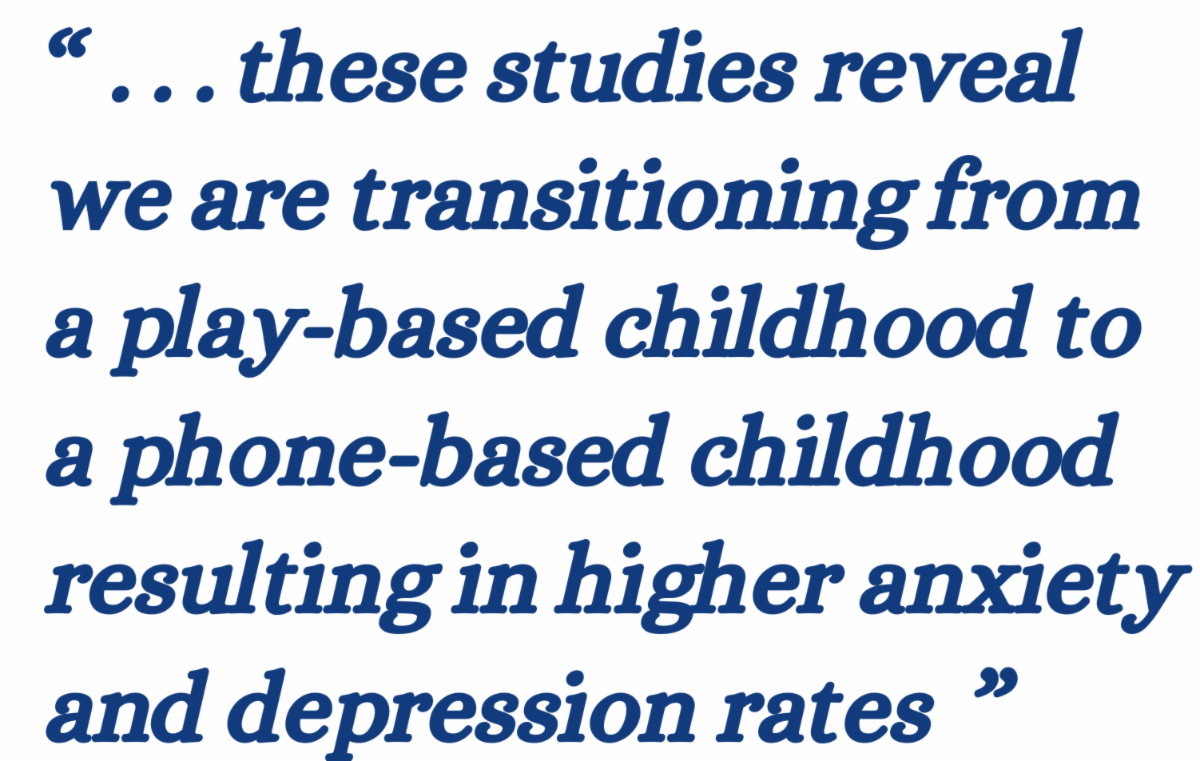
One cannot read an educational journal or listserv and not be inundated with data on the impact cell phones are having on young people. Pew Research and other reputable organizations have conducted in-depth quantitative and qualitative studies in the United States and abroad on the impact of cell phones on the emotional, social, and physical health of children and adolescents, and most of it is not good. In summary, these studies reveal we are transitioning from a play-based childhood to a phone-based childhood resulting in higher anxiety and depression rates.

Educational and medical pundits have identified Generation Z (birth years 1995-2012) as the group most affected by cell phones. The introduction of the front-facing camera on the iPhone 4 in 2010 resulted in the explosive growth of Instagram users from 10 million in 2010 to 90 million in 2013 as students discovered and started posting “selfies.” The subsequent introduction of filters and other editing software began showing our young people the person in the mirror was becoming less and less attractive compared to the (altered) appearance of classmates on their phones.

If you are new to Prince, prior to the COVID-19 pandemic, we were a no phone policy school. Our policy was phones could not be seen or heard, and students kept their phones in their backpacks or lockers. Following months of at-home quarantine where many students had unfettered access to phones, we revised our no cell phone policy and implemented “phone caddies” in all middle and high school classrooms, which is a location in each classroom where students store and retrieve their phones before and after class to protect instructional time. That policy has been in effect for middle and high school since 2021, until now.


Here are the cell phone policies starting school year 2024-2025:


Middle School.

We are returning to a no phone policy for middle school students. We will follow the same practice we did pre COVID-19 where students are required to keep their phones in their backpacks or lockers during the school day. Once the last class is over, students can use their phones (carline pick up, late pickups following co-curricular activities, etcetera). If a student needs to call a parent during the school day, they can use the phone in the middle school office. Parents can always contact their student by calling the middle school office or emailing them at their school account since middle school students use school laptops throughout the instructional day.


High School.

After examining several different programs at other schools, we have decided that phone caddies remain the best solution. However, the caddies must be used properly; we have “slacked off” on the proper use of caddies, so high school students will experience a strong reemphasis on the proper use of caddies by all teachers in all grades. Practices like taking a cell phone out of the caddie to make a call during a class/study hall will no longer be allowed. If a student needs to send a text or make a call during the school day, they can do so during a class exchange or morning break.

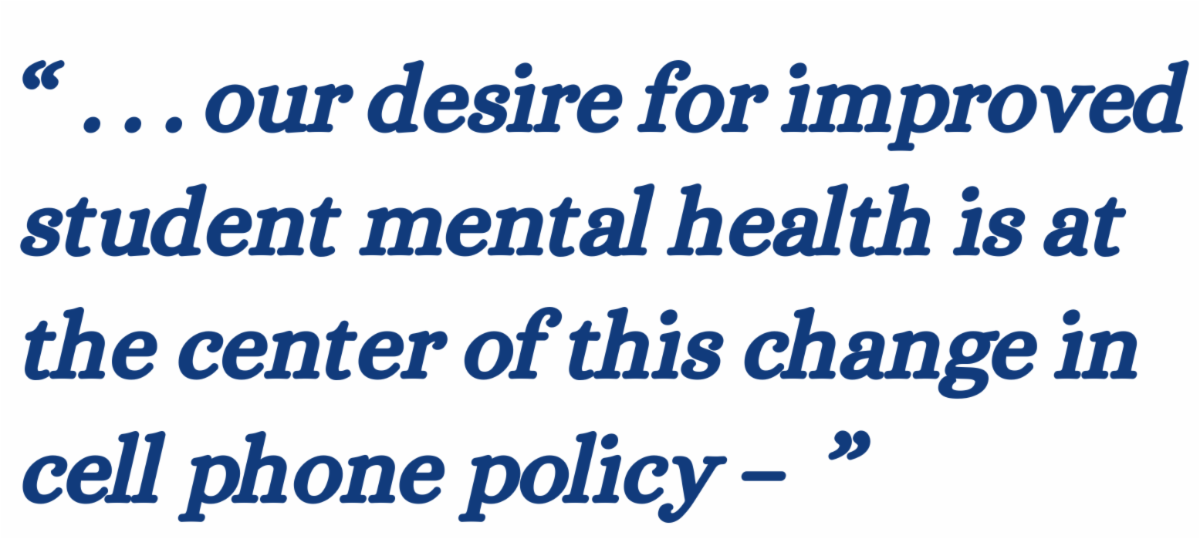
Difficult decisions like these are often unpopular, but our desire for improved student mental health is at the center of this change in cell phone policy – scientific research from multiple credible sources supports this cell phone policy change. Cell phone policies for middle school and high school students will be documented in all course syllabi, and we will discuss these policies in detail with students when we return to school. Of course, exceptions will be made for the small number of students who must have a phone to transmit medical data (blood sugar levels, etcetera) to their parents. Leadership experience has taught me these decisions will be praised by some and condemned by others. The latter traditionally results in my receipt of “spirited emails” from parents, which I respond to by calling the sender since too often email results in miscommunication.


In closing, we are excited to welcome everyone back to school in a few days. We are finishing several campus improvement projects to enrich the experiences of our students. Please enjoy this closing week of summer as our faculty finalizes our plans for the exciting year ahead.

Dr. Seth A. Hathaway, Ed.D.

Head of School

Twitter: @PACS_Head

Instagram: @pacsheadofschool

Sources:

Pew Research Center (pewresearch.org/social-trends)

Common Sense Media Report (2023)

Program for International Student Assessment (PISA) (2022)