Welcome to a new academic year in the Department of Art & Archaeology! | | |
I am thrilled to welcome new and returning members of the Department of Art and Archaeology community to the new academic year, and hope that it will be most rewarding experience for each and all.
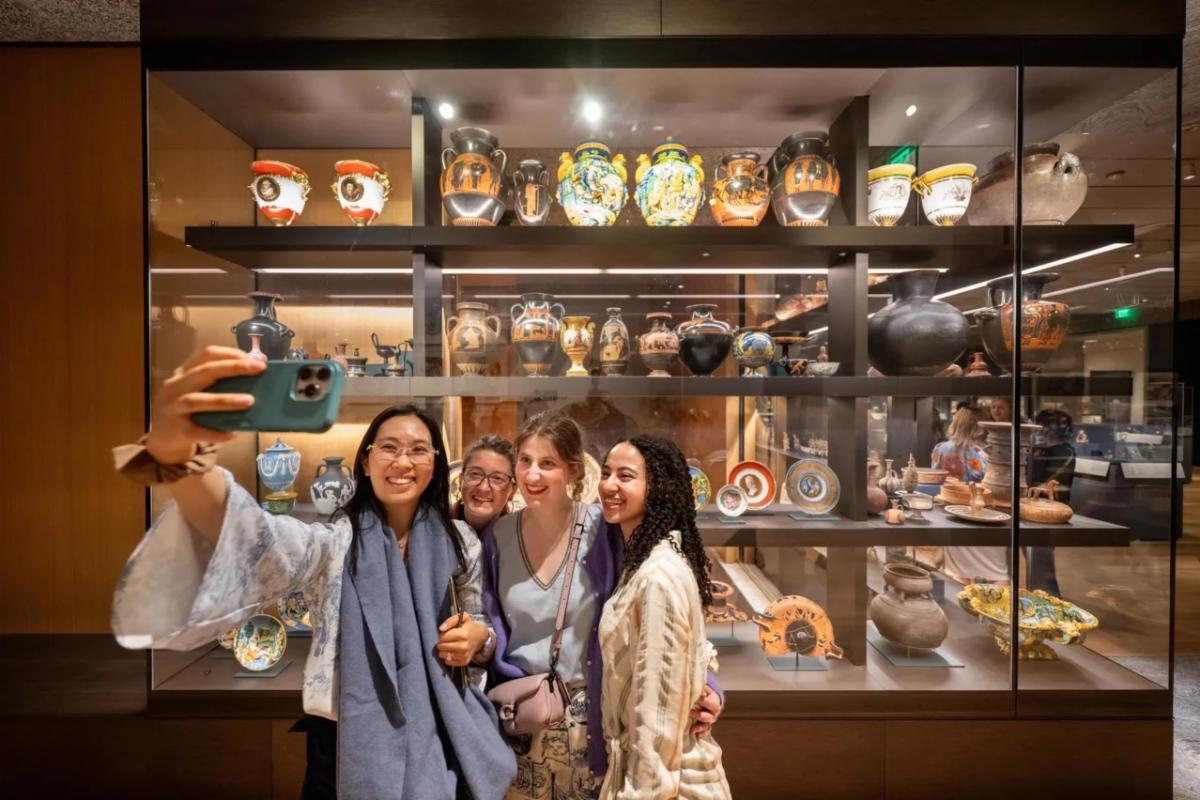
It has been nearly a year since we moved into our new suite here at the Museum. And as we settle into and get used to the space, I hope that the thrill of proximity to the Museum’s magnificent galleries, the awesome Marquand library, and our own classrooms is gradually replacing the stress of relocation and the difficult years of “exile” in Green Hall!
Thanks to our dedicated faculty, instructors, and staff, the coming year offers exciting courses, lectures, seminars, and travel. Students from across the four divisions are welcome to explore opportunities for majors and minors in Art History, Archaeology, and Practice of Art.
Please check out our newsletter and website, and follow us on social media for up-to-date news about our events, as well as research, publications, and activities by our faculty, students, and alumni.
Sincerely,
Professor Chika Okeke-Agulu, Acting Chair
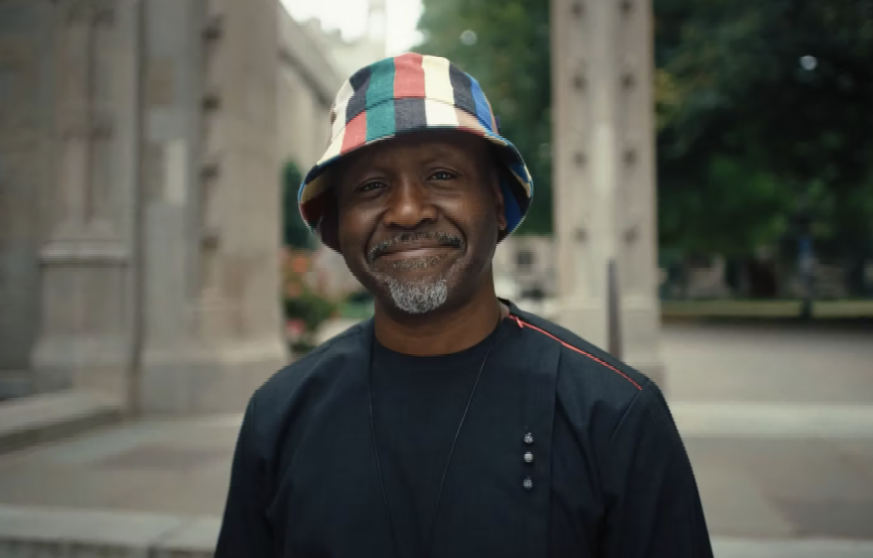
| Still from Venture Forward video featuring Chika Okeke-Agulu | |
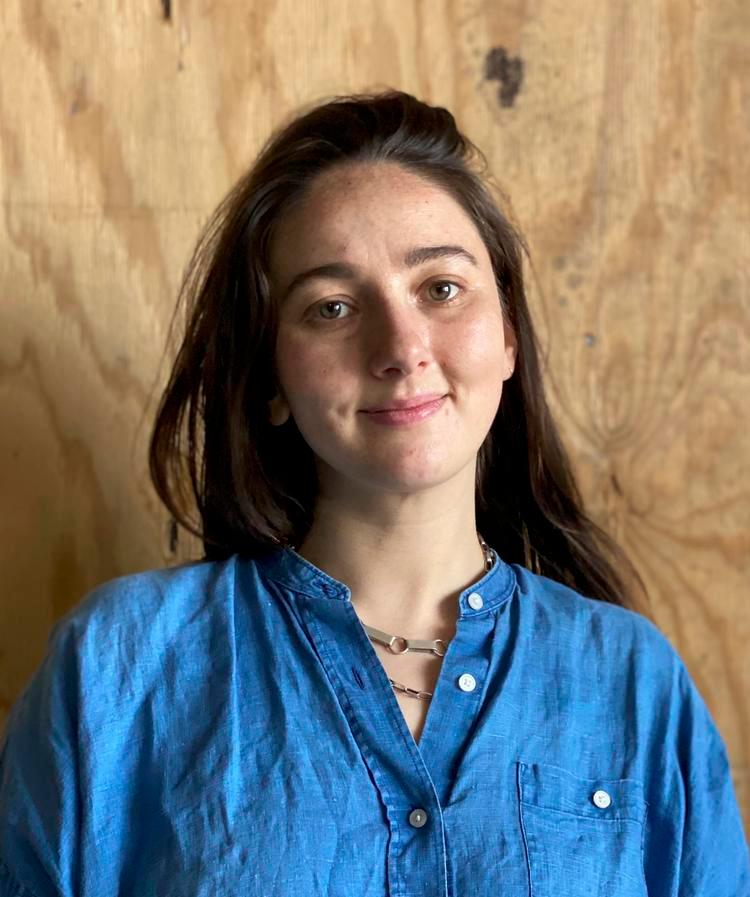
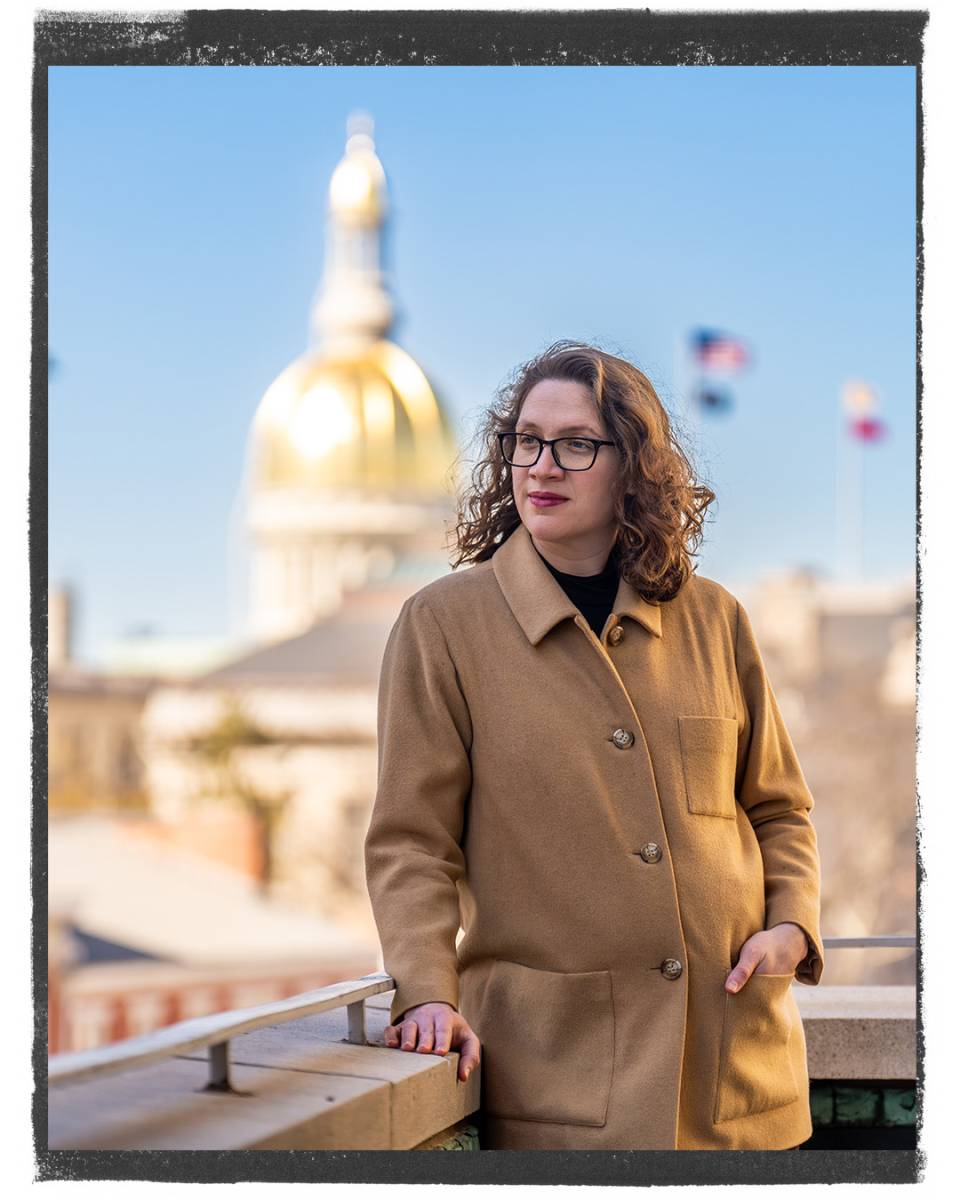
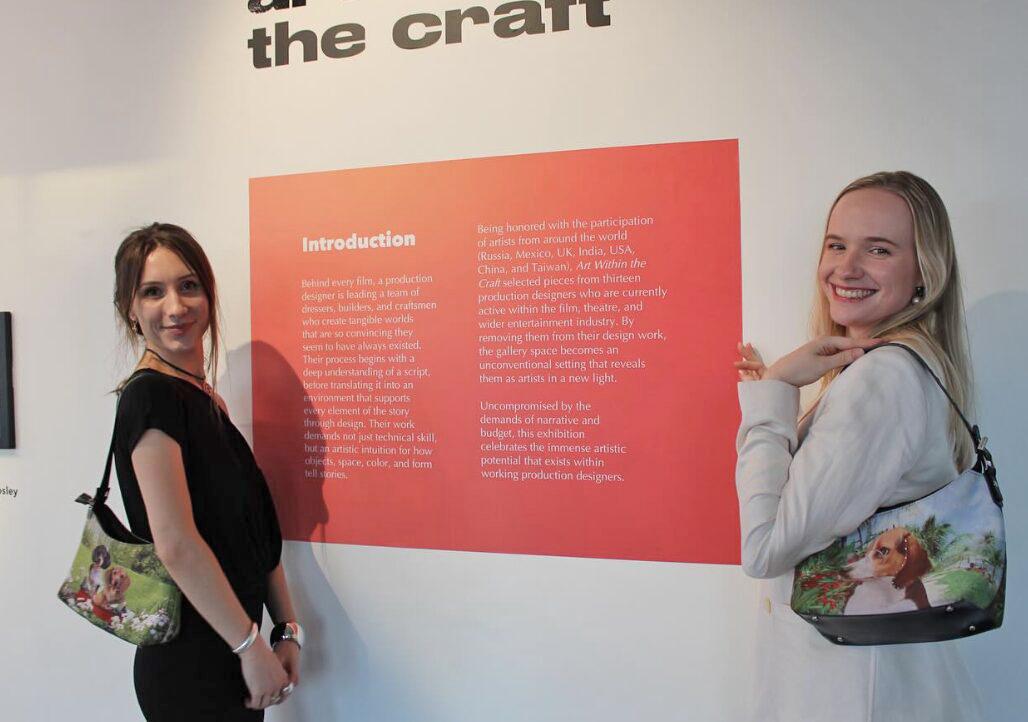
Acting Chair
Director of Graduate Studies
Director of Undergraduate Studies
(Lewis Center Visual Arts)
Interim Director of the Program in Visual Arts
Director of the Program in Archaeology
| | |
A&A Welcomes the Great Class of 2030!
| | |
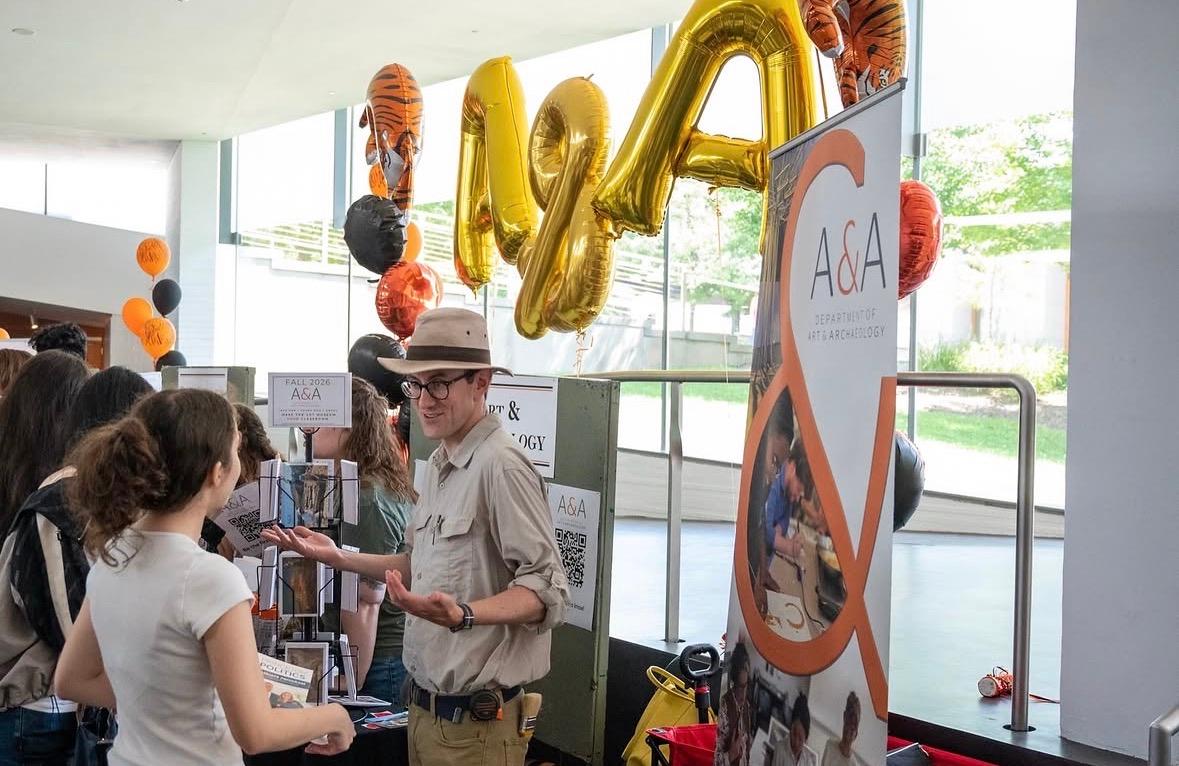
A&A added an extra level of excitement to the Academic Expo landscape, held in the Lewis Center for the Arts Forum!
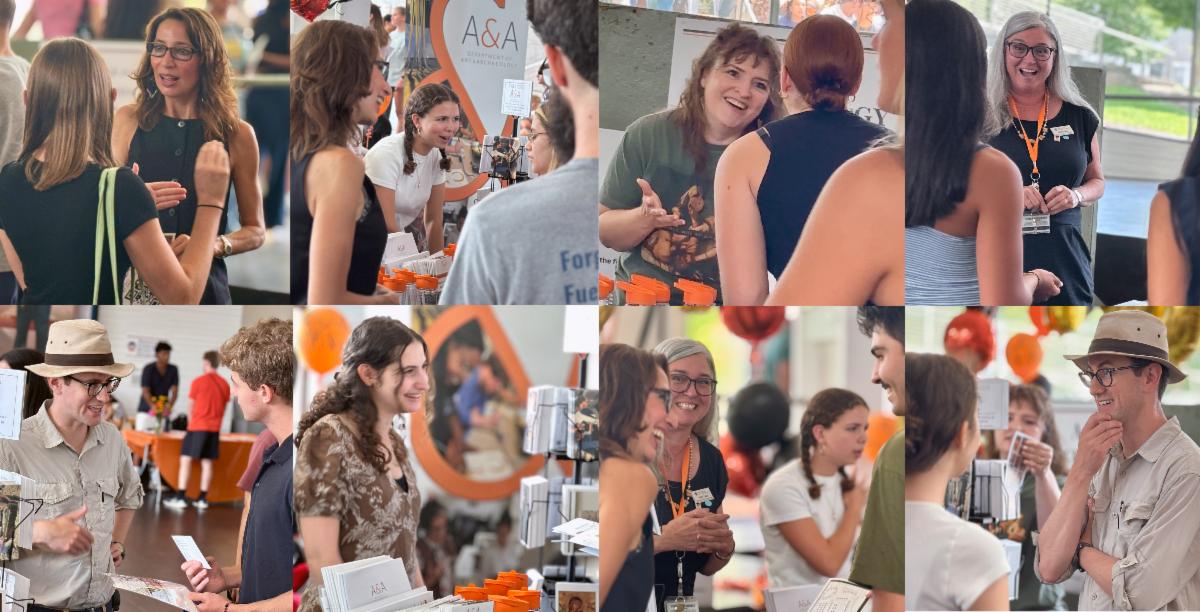
As first year students streamed in, they were welcomed by Director of Undergraduate Studies Professor Carolina Mangone, Professor John Sigmier, Undergraduate Program Administrator Kelly Lake, and History of Art majors Jane Buckhurst '27 and Talia Goldman '27, as well as Susan McLernon '27 who is minoring in the Program in Archaeology.
The A&A team welcomed them with our signature flair —as well as treats, stickers, waterbottles, and the captivating course postcards everyone has come to anticipate!
It's invigorating to learn the diverse interests students are exploring and help them discover together that every line of inquiry, from across the humanities to STEM, finds its connection within our art and archaeology major or minor programs.
We're looking forward to recognizing many new faces in ART 100 next week!
Learn about A&A's undergraduate program
| | Top: Professors Carolina Mangone and John Sigmier along with Undergraduate Program Administrator Kelly Lake and students Jane Buckhurst, Talia Goldman, and Susan McLernon introduce first year students to A&A (Photo/ Kirstin Ohrt); above: featured on the Princeton University Instagram account, Professor John Sigmier expands on the Program in Archaeology (Photo/ Maddy Pryor, Office of Communications) | | FALL 2026 COURSE SPOTLIGHTS |
ART 100
“An Introduction to the History of Art:
Meanings in the Visual Arts” (LA)
Professor John Sigmier with A&A Faculty
T, Th: 9:35–10:25 am
In ART 100, Princeton’s inimitable art history immersion class, the entire new Princeton University Art Museum is your classroom, and the full breadth of the Department of Art & Archaeology faculty shares their expertise.
A beloved rite of passage for A&A majors and minors, ART 100 is also a phenomenal opportunity for anyone interested in understanding what the visual arts communicate. As you learn to examine a sampling of media—including painting, sculpture, architecture, photography and prints—and artistic practices from diverse historical periods, regions, and cultures, you will gain a new way of interpreting the world around. Without a doubt, this course will change the way you see.
In fall 2026, Professor John Sigmier, who is an archaeologist and architectural historian of the Roman world, takes on the role of Maestro as leading art historians step in to explore each week’s theme from their area of specialization.
"I think the most exciting element of this course is that it is taught by the entire Art & Archaeology faculty. Every lecture will be delivered by an expert about their area of expertise—it’s a syllabus of greatest hits. We’ll encounter all kinds of different topics and perspectives across a broad temporal and geographic expanse, and each time the lecturer will be a subject matter specialist. Not many introductory classes are like that!"
— Professor John Sigmier
Professor Sigmier shares what's special about ART 100
ENROLL in ART 100
| Top: Details of works from the Princeton University Art Museum collection discussed in ART 100; above: John Sigmier |
ART 200 / NES 205 / AFS 202
“The Art and Archaeology of the Ancient Near East and Egypt” (LA)
M, W: 2:25–3:15 pm
“The Art and Archaeology of the Ancient Near East and Egypt” traces the development of architectural and artistic forms that paralleled the rise of complex societies.
"It’s very rewarding to explore this material with students and get them thinking about the “deep time” of human culture. Most have had some exposure to ancient Egypt, but ancient Iraq/Mesopotamia is usually less familiar, while Iran and Central Asia are nearly unknown. The attitudes these artifacts and structures reveal can seem profoundly alien, given the vast gulf of time that separates us from it. Yet we can also trace underlying patterns of civilization dating all the way back to 4000 BCE that are still operative today. I think that tension between the foreign and the familiar is one of the most fascinating aspects of the course."
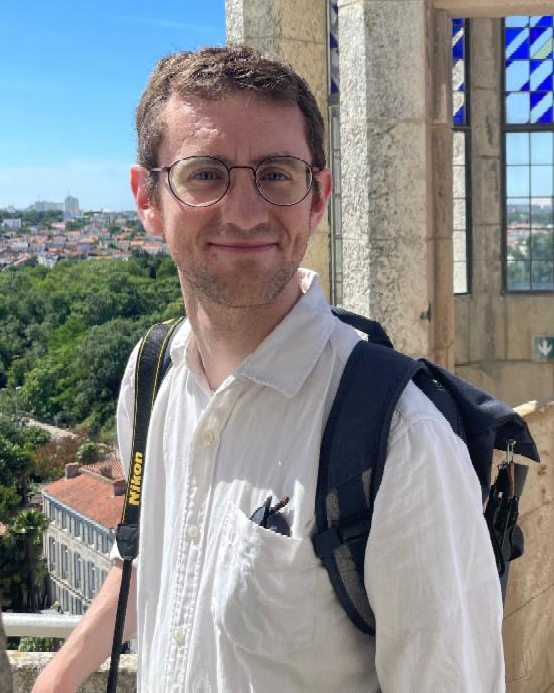
— Breton Langendorfer
Learn Breton Langendorfer's goal for the course
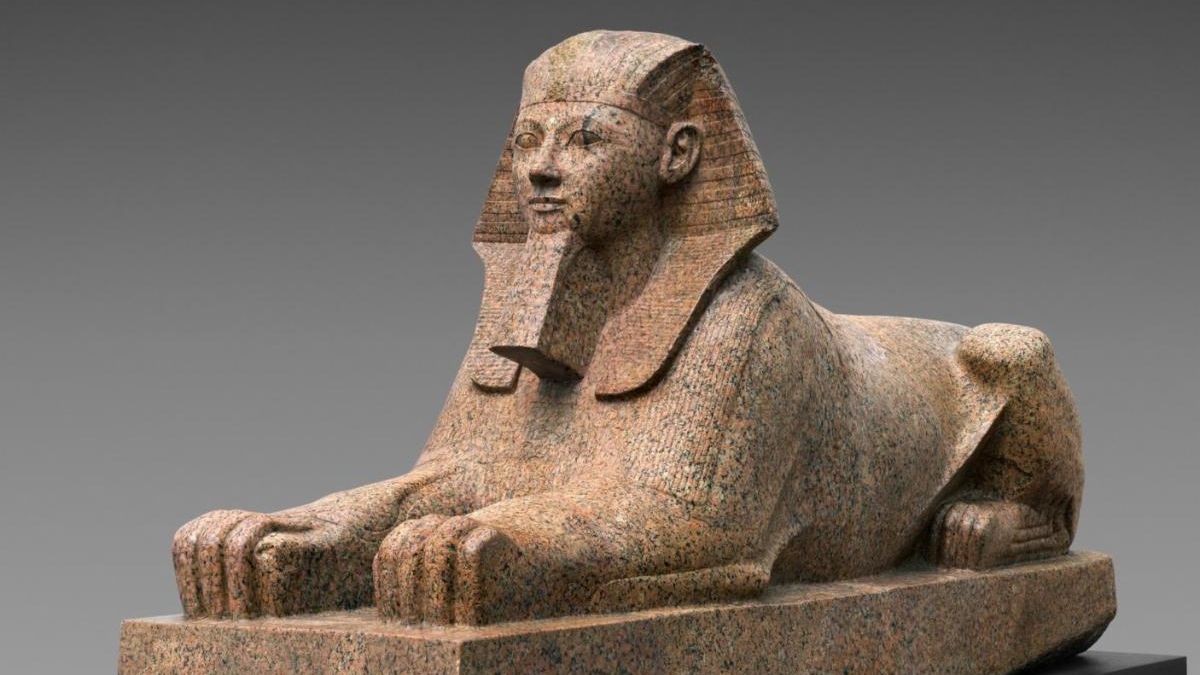
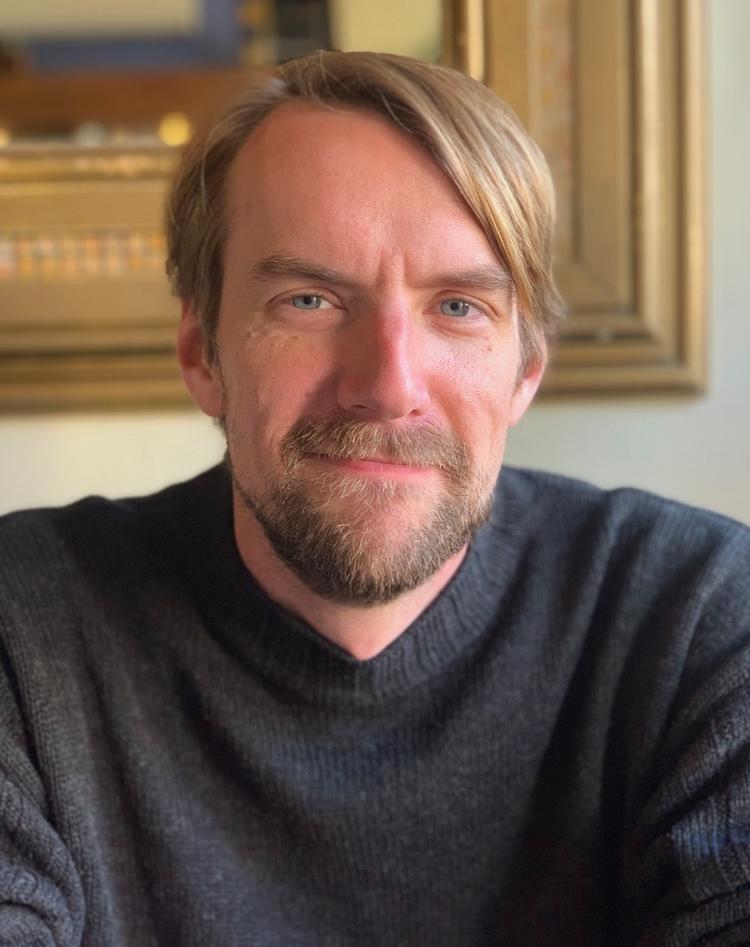
| Top: Sphinx with face of Queen Hatshepsut (New Kingdom Egypt, ca. 1460 BCE), Metropolitan Museum of Art; above: Breton Langendorfer |
ART 248
“Photography and the Making of the Modern World” (LA)
M, W: 1:20–2:10 pm
Taught by Professor Monica Bravo, ART 248: “Photography and the Making of the Modern World” explores key moments in the history of photography from its inventions in the early nineteenth century to its omnipresence in the twenty-first.
Themes include photography’s contested relation to the “real,” its emulation and eventual transformation of the fine arts, and its role in the construction of personal and collective memories. We will approach photography as a relational history: the product of collaborations, networks, and systems rather than select privileged makers. We trace a loose chronology examining case studies of and by practitioners on six continents, with a focus on underrepresented groups and unknown makers.
"Social conceptions of photography have changed a lot since I last taught the course, especially with the advent of AI. It is now more important than ever to gain critical visual literacy in analyzing images we encounter online, as well as to understand how photography has evolved in response to social forces (and vice versa). Each of us has more photographic processing power at the tips of our fingers than makers had in the whole of the nineteenth century: thinking about the consequences of the “democratization” of the medium is a crucial aspect of the course."
— Professor Monica Bravo
Q&A with Professor Bravo about ART 248
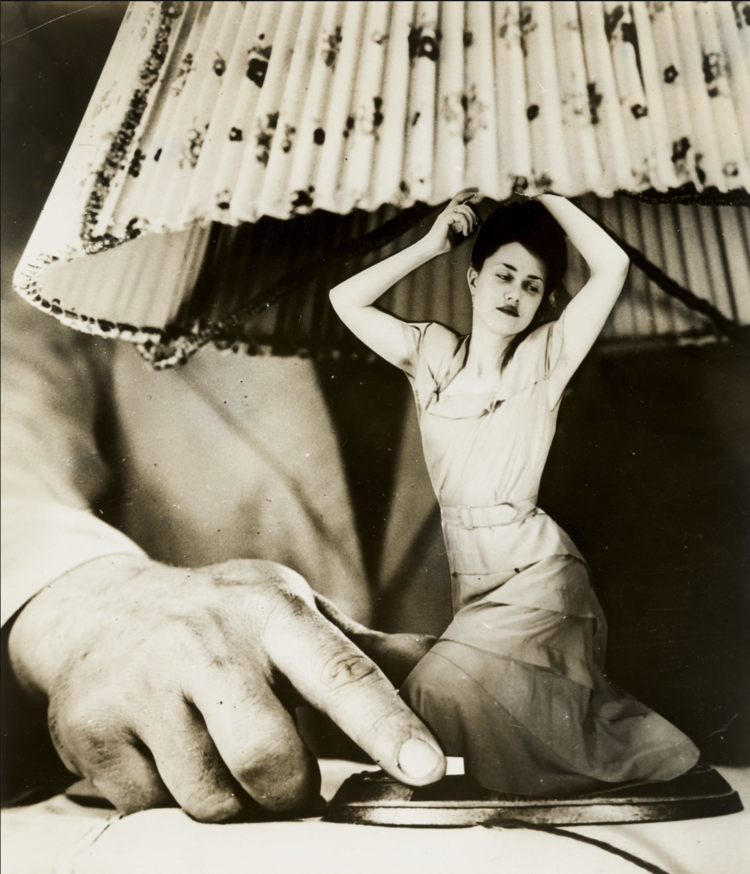
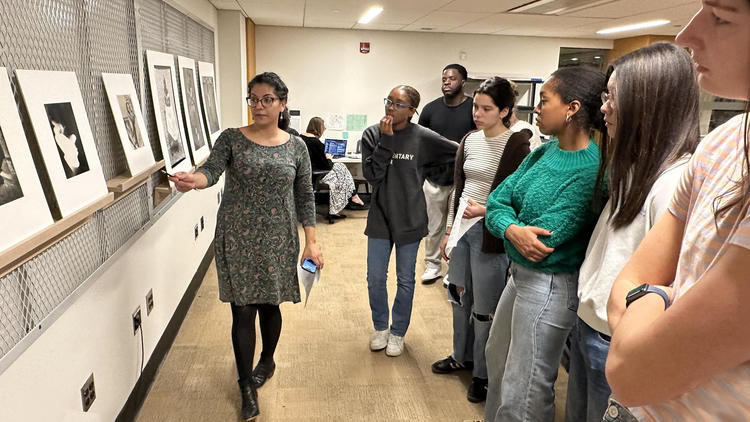
| Top: Grete Stern, Dream No. 1, Electrical Appliances for the Home, 1949/1950. Gelatin silver print, 10 ½ x 9 in. Museum of Modern Art, New York. © 2026 Galería Jorge Mara-La Ruche; above: Monica Bravo presents works from Princeton University Art Museum’s collection in ART 248, fall 2023 (Photo/ Kirstin Ohrt) |
ART 347/ NAI 347
“Native American Art on the Move:
Place and Displacement”(CD or LA)
T, Th: 1:20–2:40 pm
Indigenous art is deeply tied to ancestral lands, yet its history is also shaped by land seizure, migration, and voluntary travel. Similarly, Native cultural objects have moved through museum collection, appropriation, and exhibition. This fall, Julia Silverman explores how the movement of these objects presents new ways to interpret them through the lenses of art history and Indigenous studies in her fall 2026 course ART 347/ NAI 347 “Native American Art on the Move: Place and Displacement”(CD or LA).
I’ve been thinking about many concepts central to the course—mobility, appropriation, repatriation, space, sovereignty—in isolation for several years, so I’m especially excited to see what fresh approaches students bring to these complex and difficult topics.
"Although concepts of place and land are often central to Native American arts, I’m excited to think more about movement: how, within a modern world, the circulation of people, belongings, and images can dictate new approaches to Native art history."
— Julia Silverman
Learn Julia Silverman's course goals
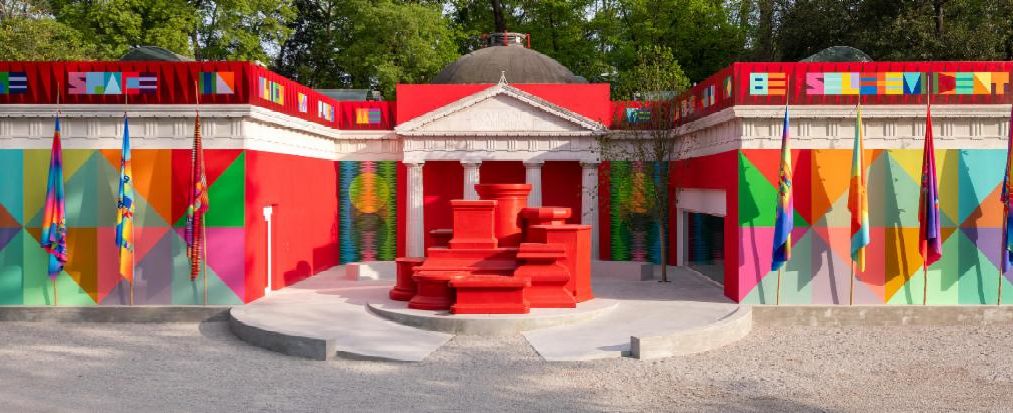
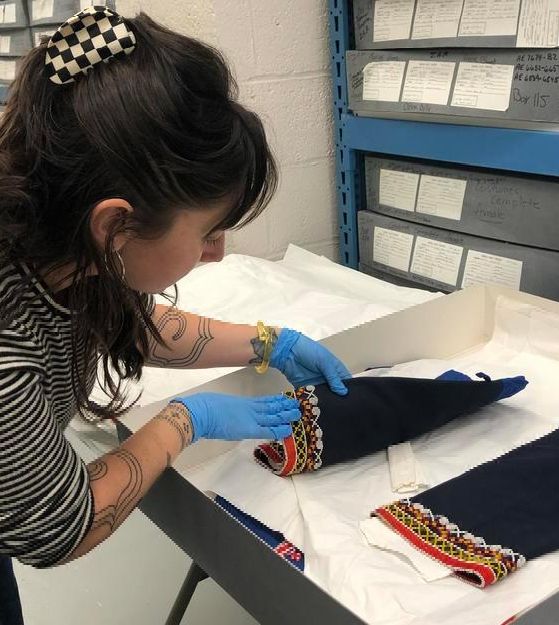
| Top: Jeffrey Gibson (Mississippi Band of Choctaw, Cherokee descent), the space in which to place me, 2024; above: Julia Silverman studies a pair of 20th Century Seneca leggings in the Rochester Museum and Science Center (Photo courtesy of Julia Silverman) |
ART 516/ HUM 516/ AAS 516
“Crafting the Nation:
Art, Materiality and Independence in the Post-Colony”
W 1:20–4:10 pm
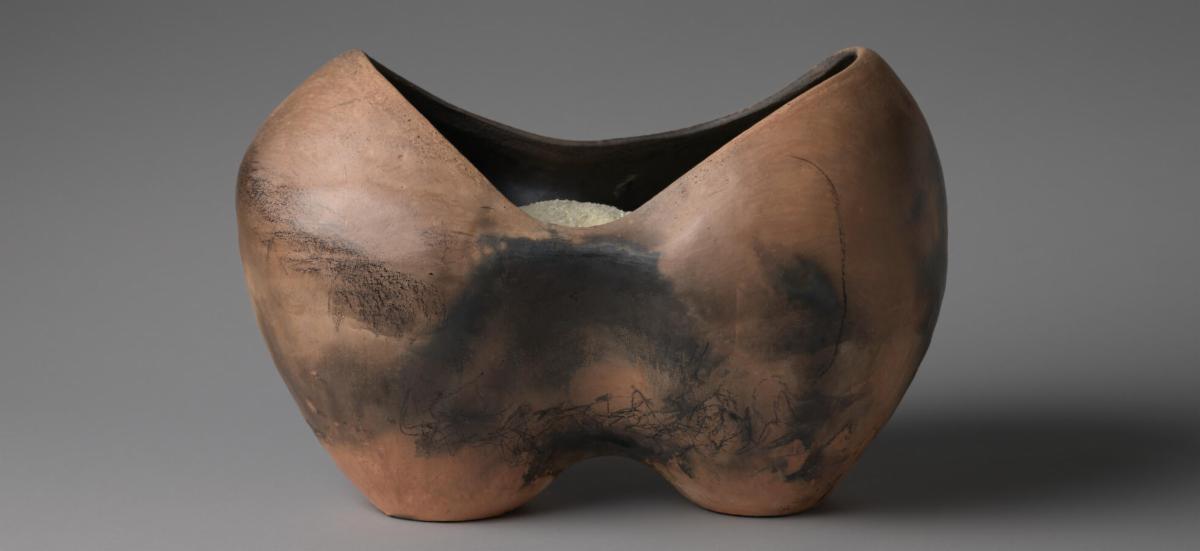
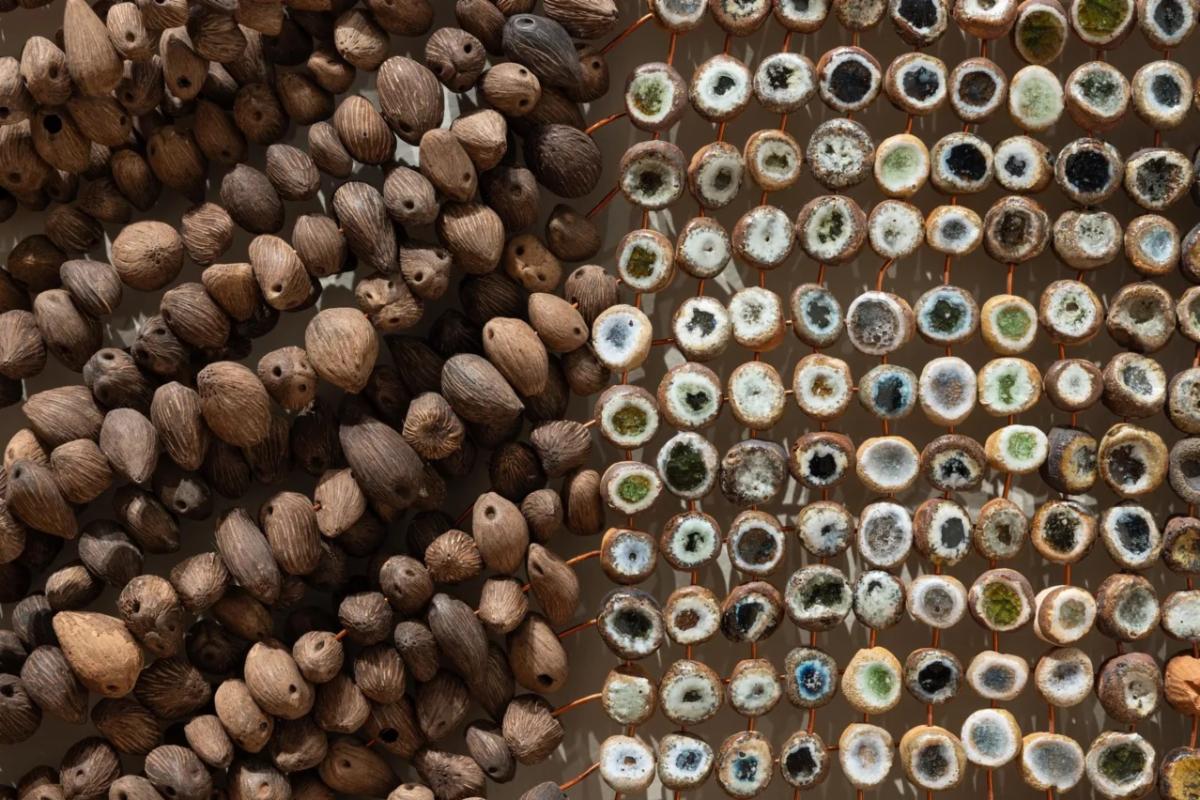
Co-taught by Professor Anna Arabindan-Kesson (A&A and African American Studies) and Perrin Lathrop (Princeton University Art Museum), ART 516/ HUM 516/ AAS 516 “Crafting the Nation: Art, Materiality and Independence in the Post-Colony” is framed around the exhibition Clay Has Memory: Creative Lineages from Africa curated by Lathrop to explore the development of arts and craft practices against the backdrop of movements for independence in the former British Empire.
“[Students will gain] an embodied approach to their theoretical and historical work. To see how movements and ideas and processes for change form in and around art and artistic practice, and to experience this as thinkers and makers.”
— Anna Arabindan-Kesson, Professor of Art & Archaeology and African American Studies
“In one session, we’ll look at a 1960s-era àdìrẹ indigo-dyed wrapper from Nigeria in the African art galleries and then head to PUAM’s Creativity Labs to learn to apply àdìrẹ patterns and immerse fabric in dye directly from renowned Nigerian artist and art historian Peju Layiwola.”
— Perrin Lathrop, Princeton University Art Museum Curator of African Art
Read a Q&A with Anna Arabindan-Kesson and Perrin Lathrop
ENROLL in ART 516 /HUM 516 /AAS 516
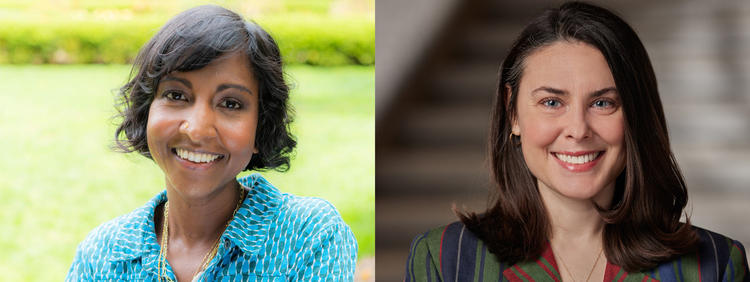
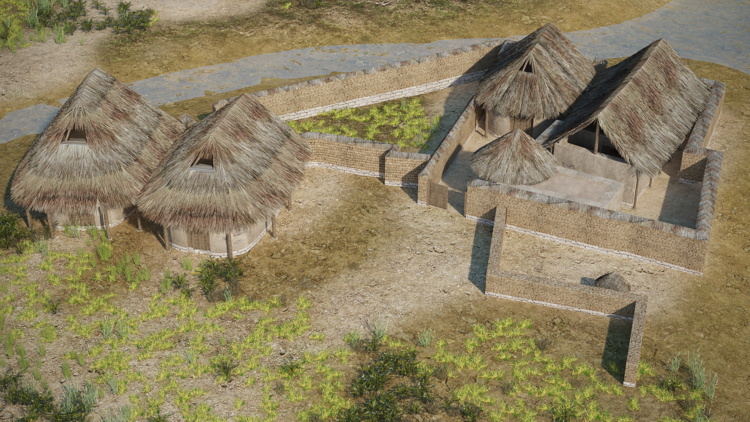
| Top: Anna Arabindan-Kesson and Perrin Lathrop; above: Adebunmi Gbadebo (born 1992; born Livingston, NJ, active Philadelphia, PA), William Ravenell, 2025. Pit-fired soil from True Blue Plantation (Fort Motte, South Carolina), shoe polish, Carolina Gold rice; 38.1 × 50.8 × 35.6 cm. Museum purchase, Mary Trumbull Adams Art Fund (2026-3) | | Oropos. Graphic reconstruction of Early Iron Age compounds (3D drawing by Markos Mazarakis Ainian) |
PITHOS LECTURE
“From Rulers’ Dwellings to Temples, Thirty Years On”
Wed., Sep.23, 4:30 pm
Tuttle Lecture Hall, Room 134
Princeton University Art Museum
Alexandros Mazarakis Ainian
University of Thessaly, Volos, Greece
PITHOS (Princeton-Ioannina-Thessaly On-Site Seminars) Graduate Exchange Program Lecture
Cosponsored with the
Seeger Center for Hellenic Studies
PITHOS lecture
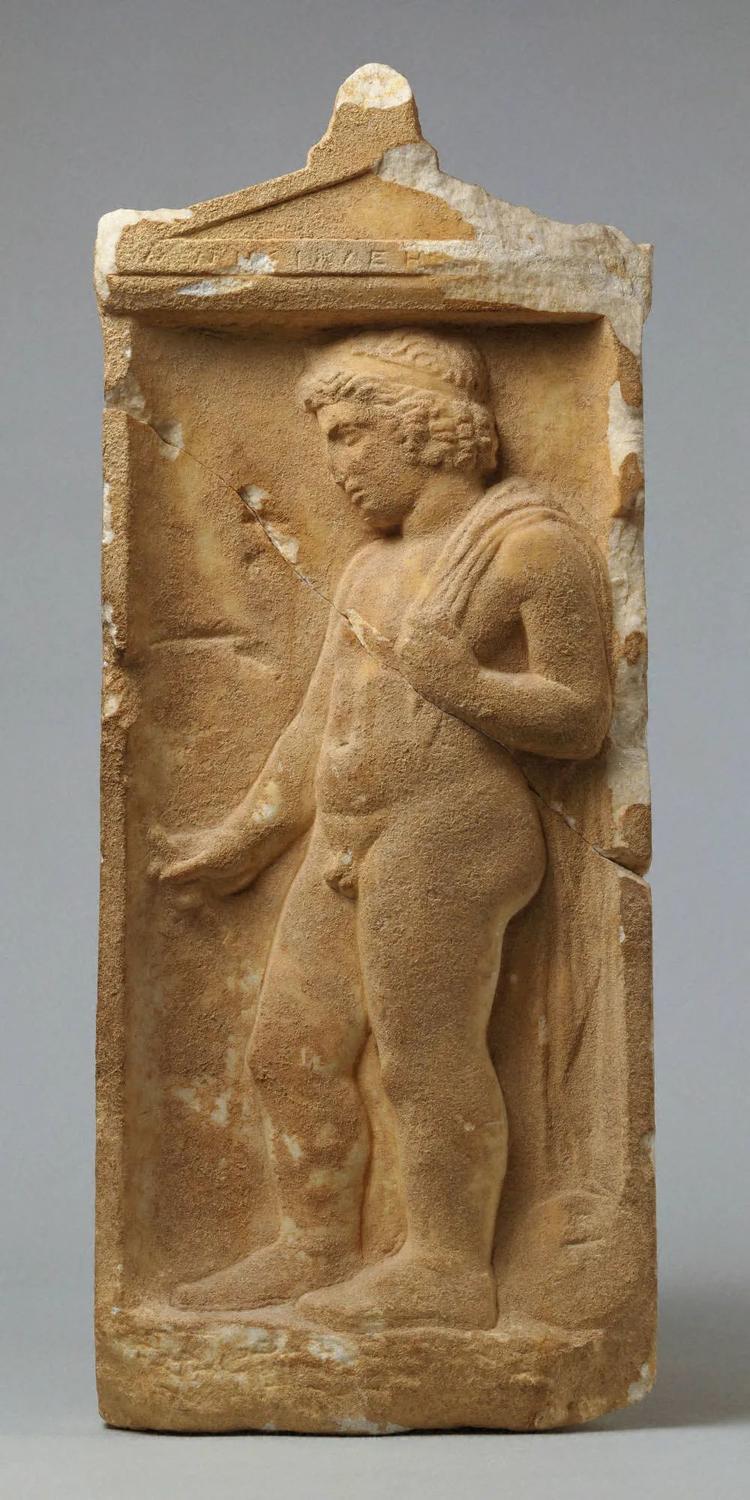
| |  | Classical Period (ca. 480–323 BCE), Athens, Greece, Grave stele of Mnesikles, ca. 400–350 B.C.E. Princeton University Art Museum, Fowler McCormick, Class of 1921, Fund |
CURATOR TALK
Intimate Grief: Death in Ancient Greece
“A curatorial discussion of funerary objects and rituals in ancient Greece”
Thu., Sep. 24, 4:30 pm
Grand Hall, Princeton University Art Museum
Carolyn M. Laferrière
Princeton University Art Museum
Nathan Arrington
(A&A)
Cosponsored with the Princeton University Art Museum and the Department of Classics
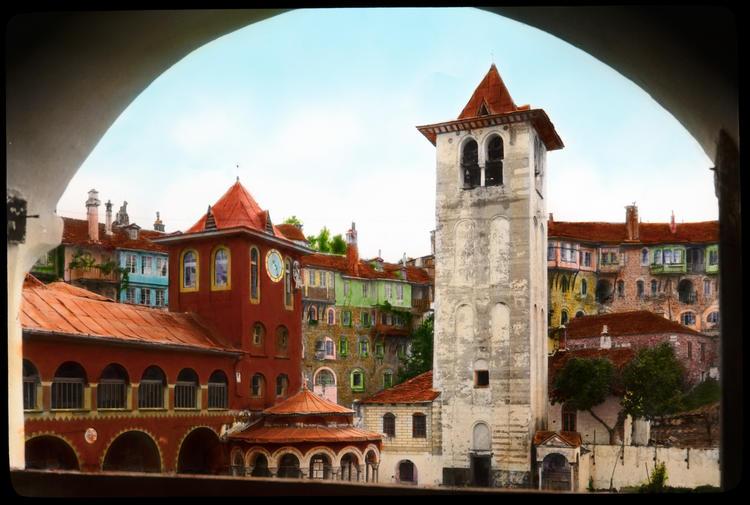
| | | View of Vatopedi Monastery, 1929 Mount Athos Expedition Collection, Department of Art and Archaeology, Princeton University. |
SYMPOSIUM
“Athonite Collections and Their Challenges: Scholarly Access and Digital Surrogates”
Sep. 25–Sep. 26, 2026
Louis A Simpson Building, Room A71
Keynote Lecture:
Fri., Sep. 25, 4:30–6 pm
Zachary Chitwood
Ludwig Maximilian University, Munich, Germany
Julis Romo Rabinowitz Building, Room A17
Cosponsored with the Princeton Institute for International and Regional Studies, the Seeger Center for Hellenic Studies, the Department of Religion, and the Index of Medieval Art
| | Photo/ Tori Repp/Fotobuddy |
SPECIAL EVENT
Nassau Street Sampler
Thu., Sep. 3, 5–8 pm
Princeton University Art Museum
Stop by and visit
A&A's table!
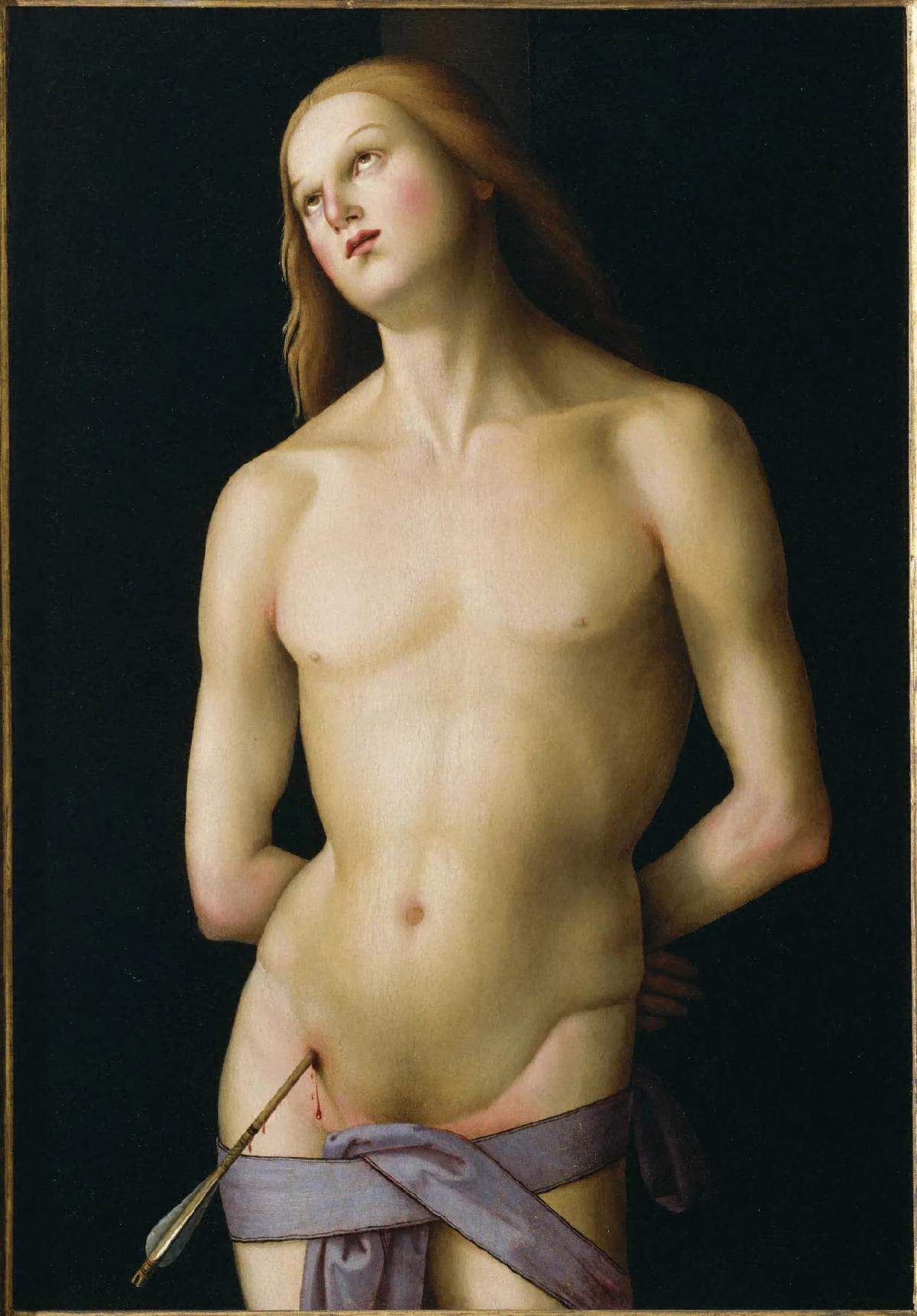
| | | Master of the Greenville Tondo, formerly attributed to Perugino (Pietro di Cristoforo Vannucci), Saint Sebastian, ca. 1500–1510. Princeton University Art Museum. Gift of the Samuel H. Kress Foundation to the New Jersey State Museum; transferred to the Princeton University Art Museum |
POP-UP TALK
Curator Talk:
Veronica White
Friday, Sep. 4, 2–3 pm
Grand Hall, Princeton University Art Museum
Veronica White Talk
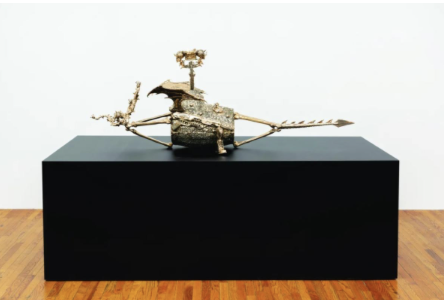
| | | Emmanuel Louisnord Desir, B.E.T. Syndrome, 2025, bronze, 291⁄2 × 26 × 80". Photo: Joerg Lohse. From Fade |
EXHIBITION
Fade
Now–Sep. 6, 2026
Studio Museum in Harlem, NYC
Curated by Adria Gunter, Yelena Keller, Jayson Overby, Kiki Teshome, and Habiba Hopson
Fade
| |
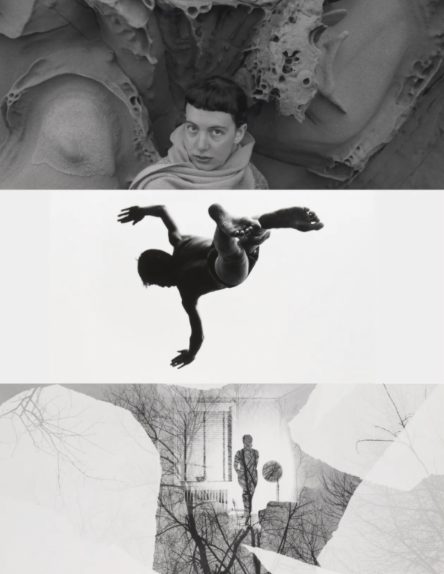
EXHIBITION
Photography as a Way of Life: Minor White, Aaron Siskind, and Harry Callahan
Now–Sep. 7, 2026
Princeton University Art Museum
Photography as a Way of Life
| | |
HMEI FACULTY SEMINAR
“Seeing Beyond Sugar in Cuba”
Tue. Sep. 8, 12:15–1:15 pm
Briger Hall Auditorium,
11 Ivy Lane
Rachel Price
(Spanish and Portuguese)
Beyond Sugar in Cuba
| | |
EXHIBITION
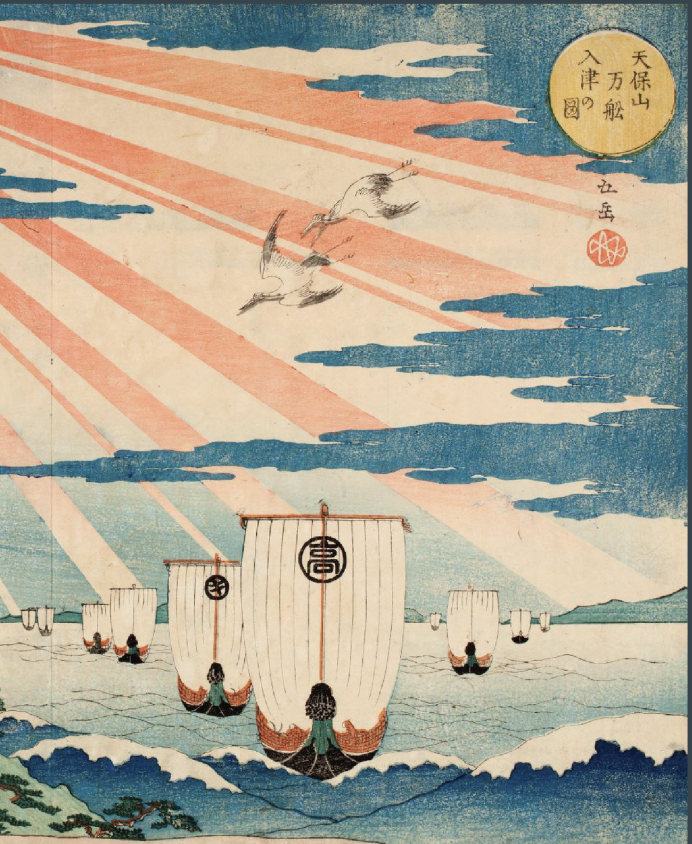
The Art of Japanese Publishing
Sep. 9–Dec. 6, 2026
Ellen and Leonard Milberg Gallery, Firestone Library
Curated by Nicole Fabricand-Person ’76 *01, Japanese Art Specialist, Marquand Library of Art & Archaeology and Holly Hatheway, Director, Marquand Library of Art & Archaeology
| |
COLLOQUIUM
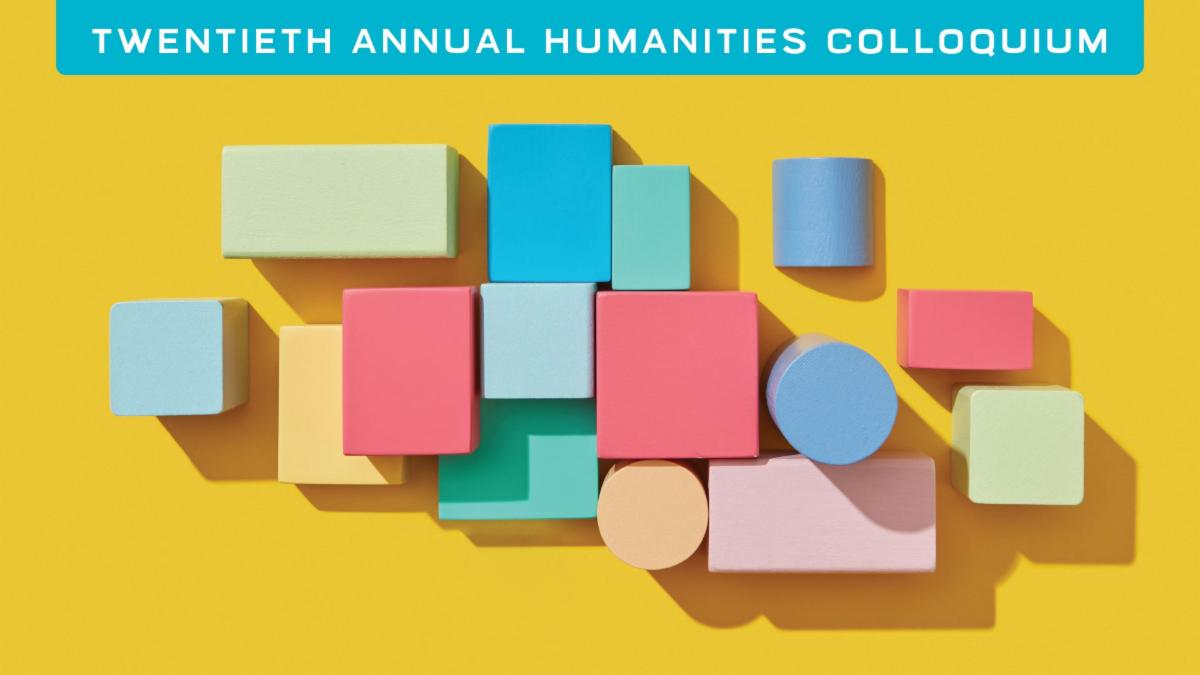
20th Annual Humanities Colloquium
Thu., Sep. 10, 4:30 pm
Grand Hall, Princeton University Art Museum
Panelists:
Devin Fore (German)
Katja Guenther (History)
Brooke Holmes (Classics)
Beth Lew-Williams (History)
Hosted by the Humanities Council
| | |
BOOK LAUNCH PARTY
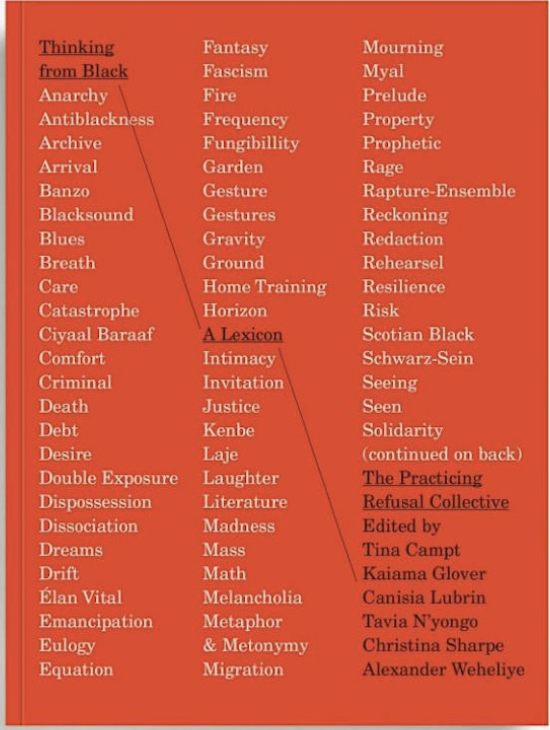
Thinking from Black: A Lexicon
Mon., Sep. 14, 5–7 pm
PS1 MoMA, 22-25 Jackson Avenue, Queens, NYC
With readings by Tina M. Campt, Kaiama L. Glover, Saidiya V. Hartman, Tavia Nyong’o, Cameron Rowland, Alexander G. Weheliye
Thinking from Black launch party
| | |
FILM SCREENING
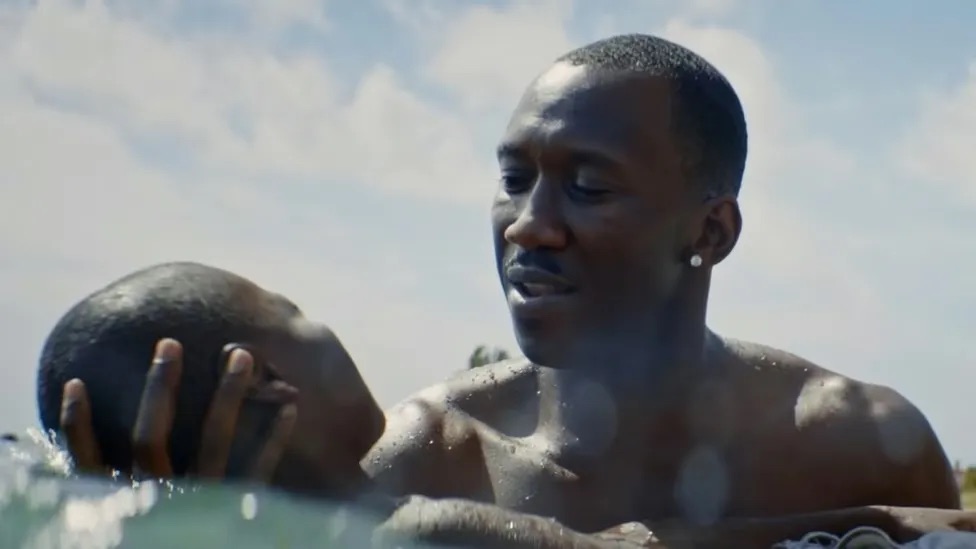
Moonlight (2016)
Wed., Sep. 16, 7–9 pm
Tuttle Lecture Hall, Room 134
Princeton University Art Museum
| |
LECTURE
“Libidinal Economies of Fascism”
Wed., Sep. 16, 5 pm
Aaron Burr Hall, Room 219
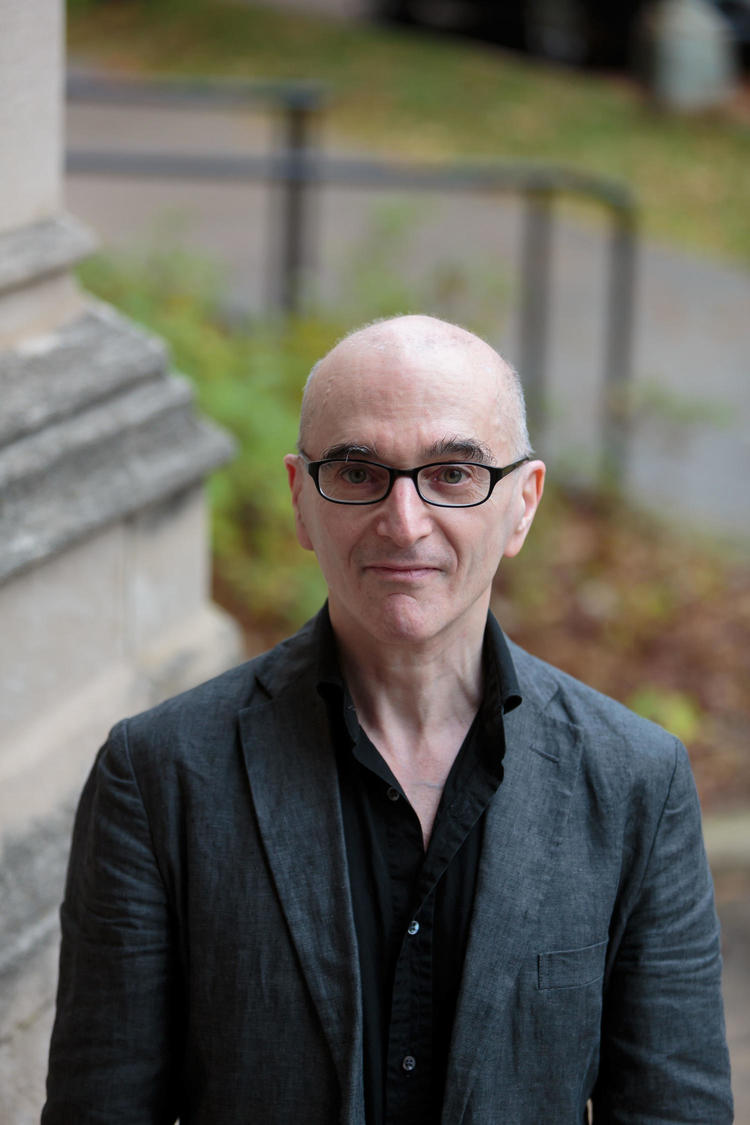
Tim Dean
University of Illinois,
Urbana-Champaign
Cosponsored by the Department of English, the German Department, and the Program in European Cultural Studies
| | |
LUNCHTIME TALK
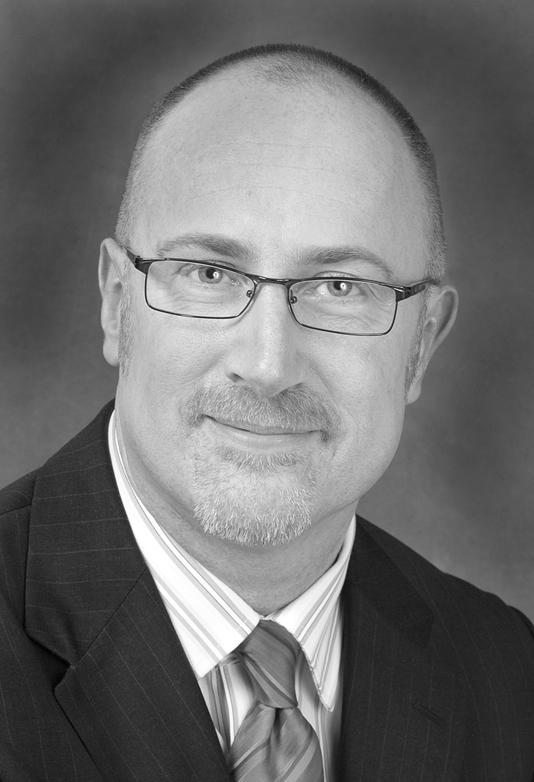
“Disenfranchised Grief"
Tim Dean
University of Illinois,
Urbana-Champaign
Thu. Sep. 17, 12 pm
Frist Health Center, Room 253
Registration required
Disenfranchised Grief
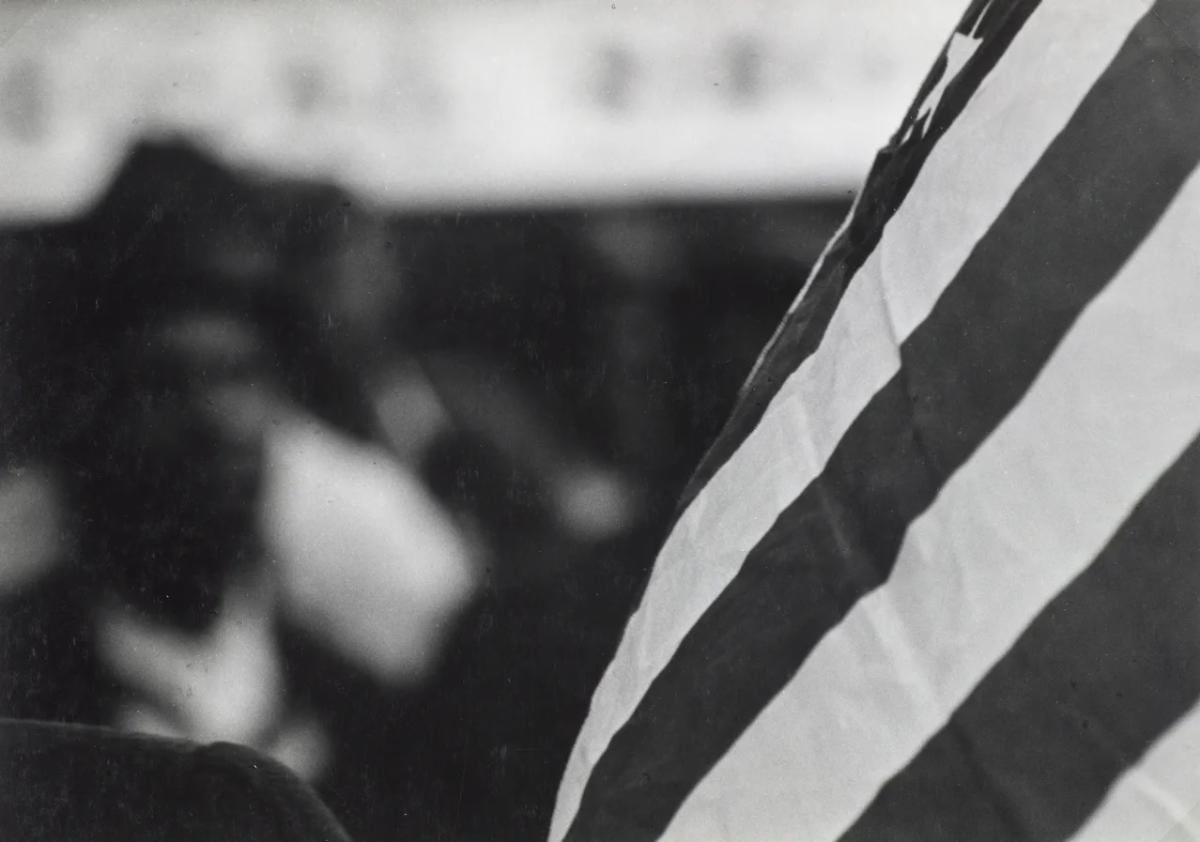
| | | Beuford Smith, Flag Series, 1972. Princeton University Art Museum. Museum purchase, Fowler McCormick, Class of 1921, Fund. © Beuford Smith |
PANEL DISCUSSION
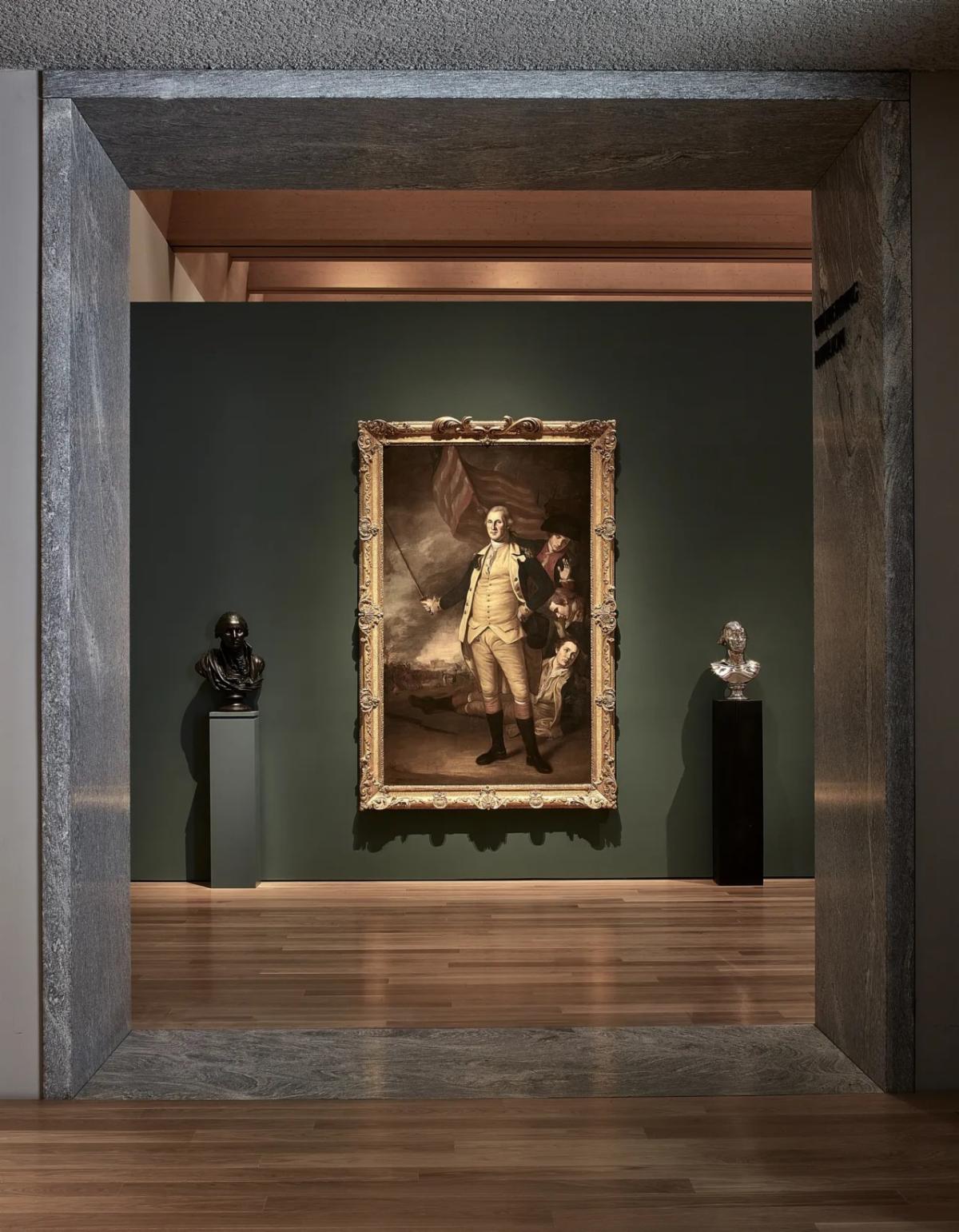
“Re-Visioning America”
Thu., Sep. 17, 5:30–6:30 pm
Grand Hall, Princeton University Art Museum
Panelists:
Judith K. Brodsky
Rutgers University
Rhinold Ponder
Art Against Racism
Jun Nakamura
Princeton University Art Museum
Moderator:
Karl Kusserow
Princeton University Art Museum
Re-Visioning America
| |
TIGERSIDE CHATS
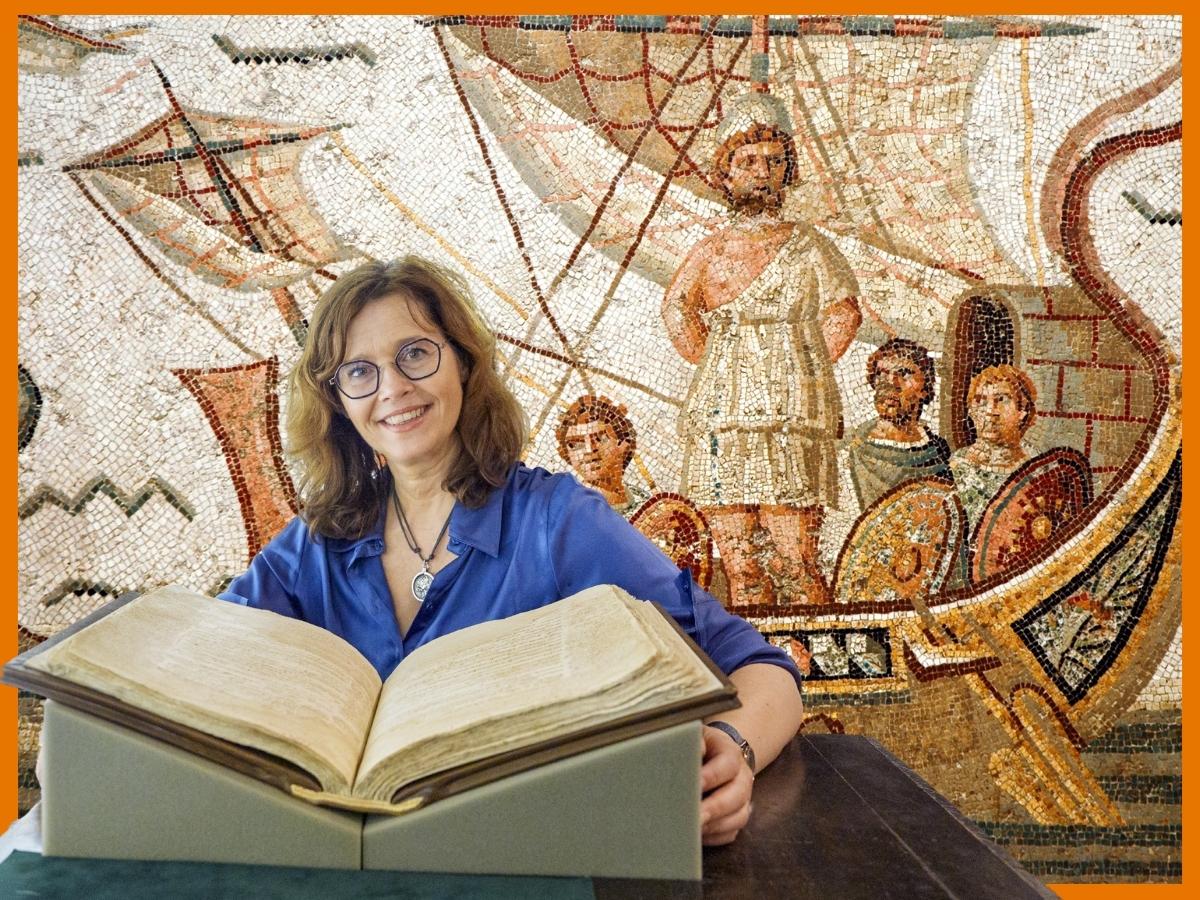
“Homer's Odyssey”
Tue., Sep. 22, 4:30–5:30 pm
Zoom Webinar
Barbara Graziosi
(Classics)
Free and open to the public
“Homer's Odyssey”
| | |
PANEL DISCUSSION
Princeton Alumni in the Arts Panel
Tue., Sep. 22, 4:30-6 pm
Tuttle Lecture Hall, Room 134
Princeton University Art Museum
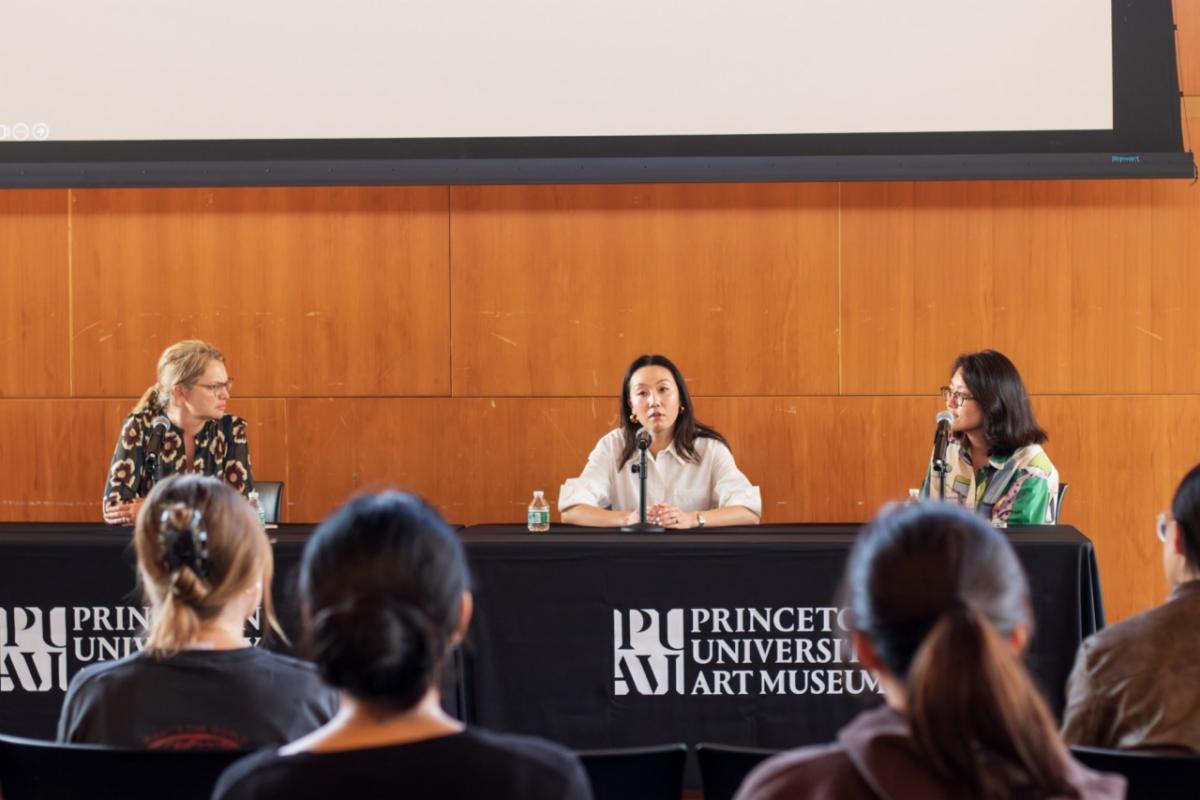
The Museum’s Student Advisory Board (SAB) invites Princeton University undergraduate and graduate students to a panel discussion featuring three University alums whose studies and careers have centered around the arts. Panelists will discuss their career paths and answer questions submitted by SAB members. A reception will follow the panel.
Alumni in the Arts Panel
| | |
FILM SCREENING
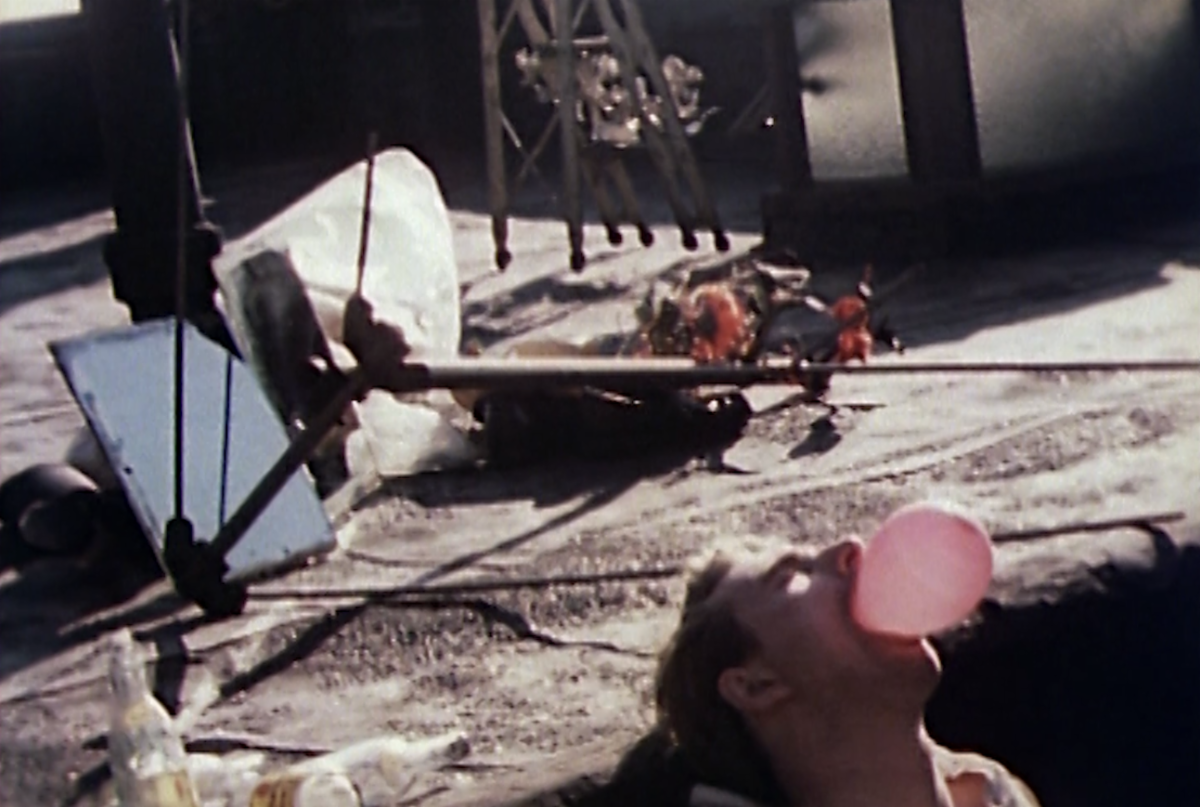
Roots of the NY Underground
Thu., Sep 24, 7 pm
MoMA, Floor T2, Theater 2
Introduction by Julia Curl (A&A)
| |
GALLERY CRAWL
Re-Visioning America Gallery Crawl
Thu., Sep. 24, 5:30–7:30 pm
Various downtown Princeton locations
Gallery Crawl
| | | Ozioma Onuzulike, Agbada (“1,500 Brand”) (detail), 2022. Princeton University Art Museum. Museum purchase, Fowler McCormick, Class of 1921, Fund. © Ozioma Onuzulike |
ARTIST CONVERSATION
Virtual Artist Conversation: Ozioma Onuzulike
Fri., Sep. 25, 2–3 pm
Via Zoom
Chika Okeke-Agulu (A&A) in conversation with artist Ozioma Onuzulike
Ozioma Onuzulike
| | |
FILM SCREENING
The Material is the Message
Sun., Sep 27, 4:30 pm
Wed., Sep. 30, 7:30 pm
MoMA, Floor T1, Theater 1
Introduction by Julia Curl (A&A)
| |
LECTURE
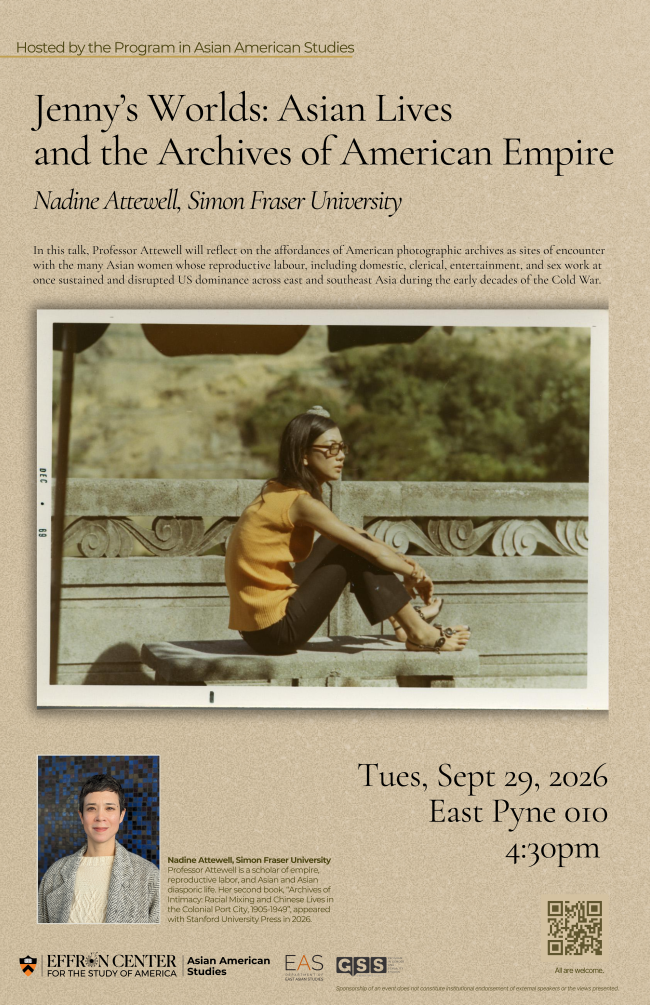
“Jenny’s Worlds: Asian Lives and the Archives of American Empire, Nadine Attewell”
Tue., Sep. 29, 4:30–6 pm
East Pyne Building, Room 010
Nadine Attewell
Simon Fraser University
Hosted by the Program in Asian American Studies
Jenny’s Worlds
| | |
LECTURE
“The Default of the Human: Some Reflections on Negative Anthropology”
Wed., Sep. 30, 5–6:30 pm
Aaron Burr Hall, Room 219
Eric Santner
University of Chicago
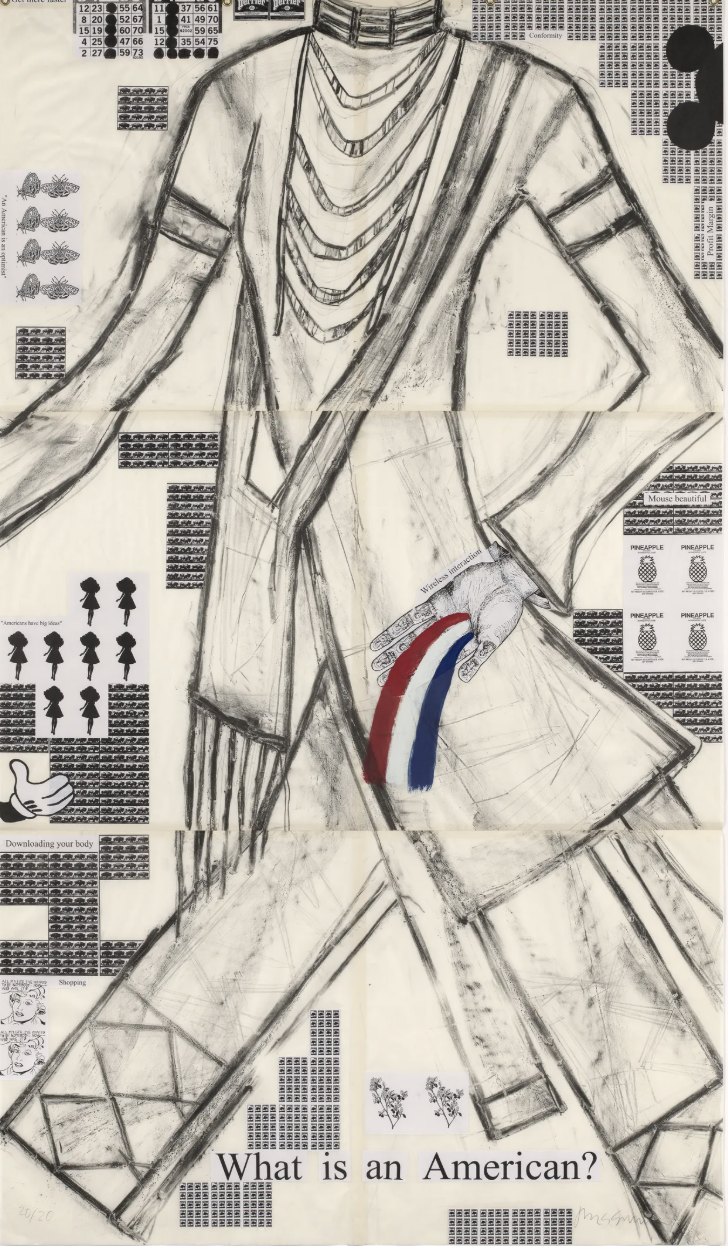
| | | Jaune Quick-to-See Smith, What is an American?, 2003. Princeton University Art Museum. Promised gift of Dr. Ferris Olin. Photo: Joseph Hu |
EXHIBITION
“What Is an American?”: Artists Reflect
Now-Nov 1, 2026
Princeton University Art Museum
Jun Nakamura, Curator
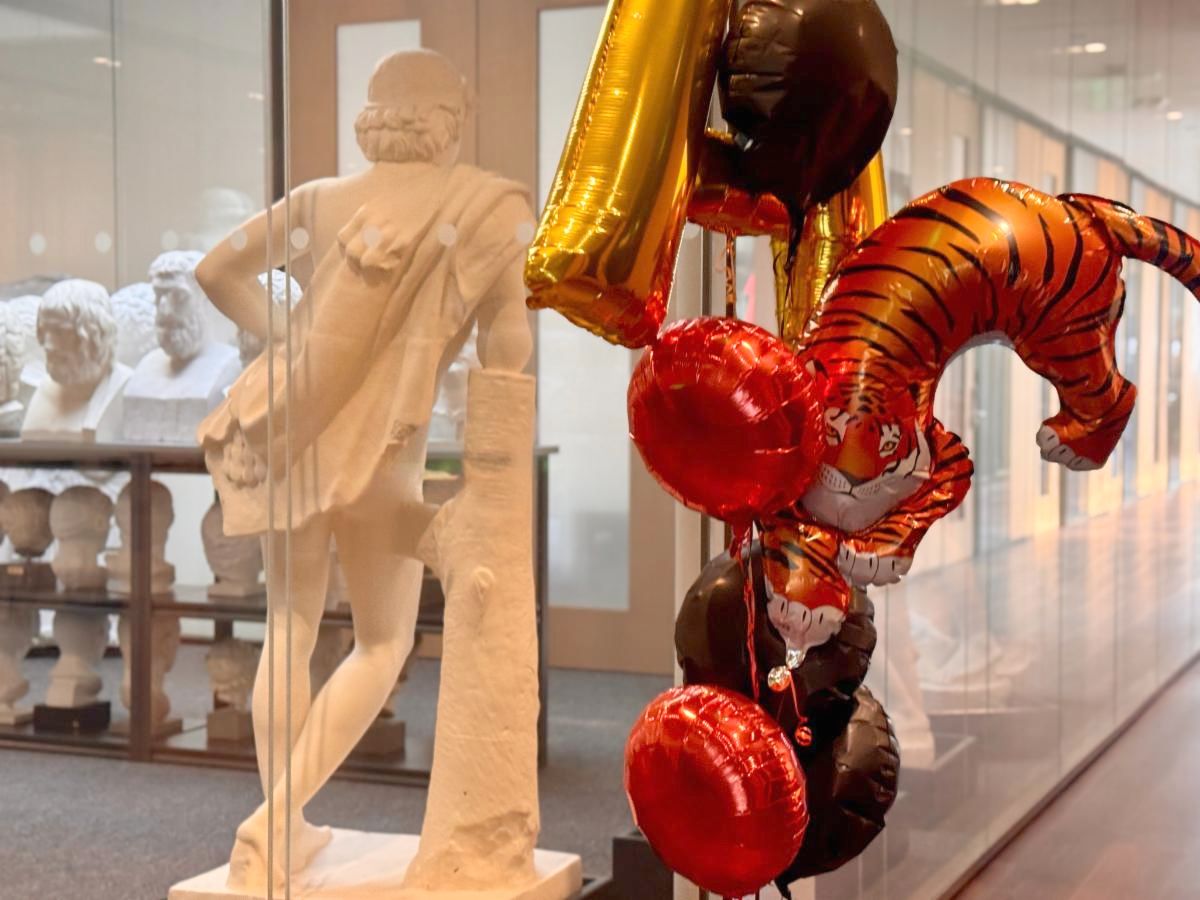
| | The A&A halls are waiting (impatiently) for the new academic year to begin! (Photo/ Kirstin Ohrt) | Launching into a new year of A&A E-news, we're thrilled you're part of the A&A community! Every Friday, we'll keep you in the loop on news, events, and announcements—and we encourage you to share your updates with Communications Specialist Kirstin Ohrt. | | Contributions to and/or sponsorship of any event does not constitute departmental or institutional endorsement of the specific program, speakers or views presented. | | |
Please check the A&A website for updates on department-sponsored events. Events are open to the public unless otherwise indicated.
To request accommodations for a disability, please contact Mo Chen at least 5 days prior to a department-sponsored event.
Princeton’s Visitor Policy
| | | | |