A Message from the Executive Director |
Another season has ended and another one is beginning. This is how it has been from the beginning of time. Winter is on the horizon, and this is the time to get prepared for the cold that accompanies it. It is also time for the flu shots and if the federal government decides, our third COVID-19 booster shot.
We at the National Indian Council on Aging (NICOA) strongly encourage our tribal elders to get the shot and our tribal leaders to ensure that our elders are protected from this pandemic. They must also encourage their elders and tribal members to take the shot now that the Centers for Disease Control (CDC) approved a third booster for those over the age of 65. According to the CDC, Indian Country has lost over 7,000 American Indian and Alaskan Natives since the beginning of this pandemic. Of this number, over 80 percent of these deaths were among those over the age of 50. This is alarming and troubling as this age cohort represents tribal history, traditions, customs and language.
NICOA, along with other national aging organizations, realized that this pandemic has had additional negative outcomes as well: Social isolation and the physical and mental stresses felt by those who provide care to elders and their family members. As close tribal communities, the strain is felt by staying home, maintaining social distances and staying away from large crowds. Mental health is affected with depression, anxiety and loneliness increasing among elders. There is a need among tribal communities to reach out and safely connect to those elders. NICOA’s efforts have been to provide information and resources to Indian Country through videos, radio messages and online articles. This has been the result of funding made available to NICOA to try to stem the tide of this outcome.
Finally, as Indian Country tries to battle these issues, there are other problems that are occurring that become background scenarios to what is in the foreground. In the western part of the country, the raging wildfires are impacting Indian people, threatening their homes and lives. On the coast, tribal communities are having to relocate tribal members as ocean levels rise. In the southeast part of the country, communities are flooded by abnormal storms that have dropped, in some locations, up to 20 inches of rain in a 24-hour period.
Additionally, there is a major political effort to ensure that voting rights are suppressed. This will affect the ability of Indian people to express their views. Major legislation designed to help historically marginalized communities has become a focus. In these battles, NICOA has been an “once more into the fray” organization to express the needs of our elders.
Indian Country: Be assured that NICOA will continue to fight on behalf of tribal governments, tribal communities and tribal members, no matter where they are, as we have for the past 45 years. We need your help, your prayers and support to do this. Remember that you are not alone.
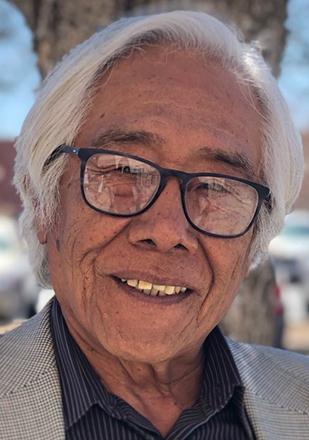
Larry Curley
Executive Director
|
|
|
|
Register Now for Understanding Alzheimer’s and Dementia Webinar – Oct. 20 |
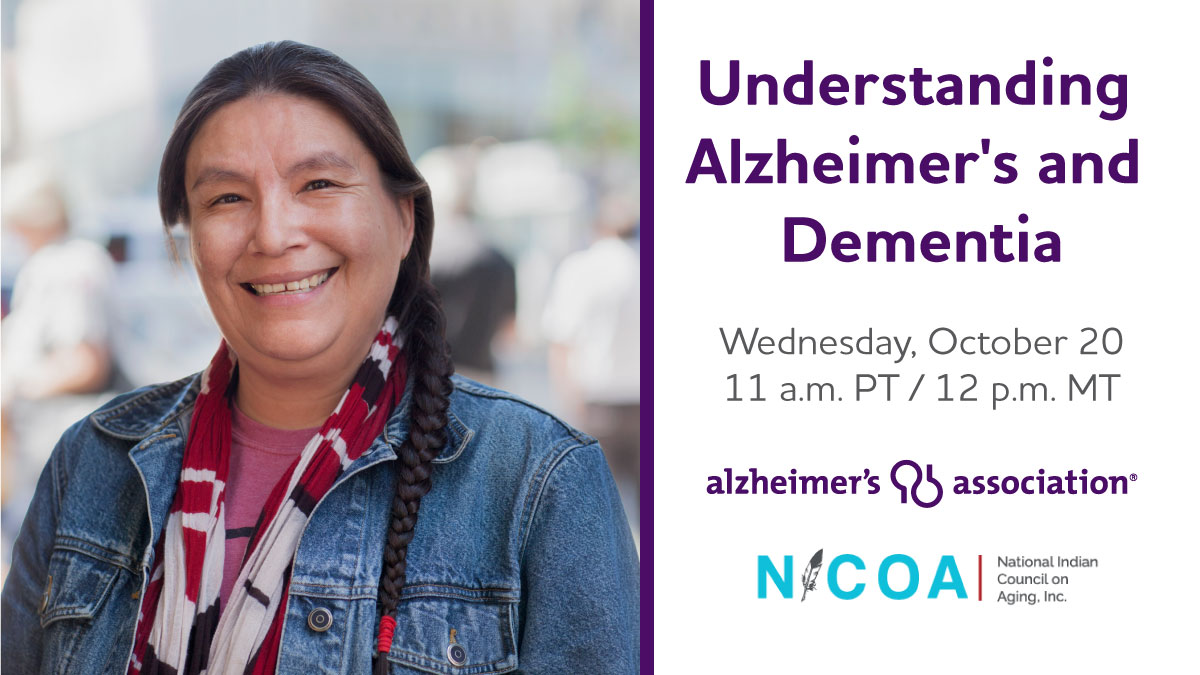
In partnership with NICOA, the Alzheimer's Association is offering a one-hour webinar Understanding Alzheimer’s and Dementia on October 20. This free webinar will examine the impact of Alzheimer's, particularly as it affects American Indian and Alaska Native individuals.
Other areas covered in the program include the difference between Alzheimer's and dementia, disease stages and risk factors, current research and treatments, and information on how individuals and families affected by the disease can access Alzheimer's Association resources. Valerie Tsosie (Navajo), an Alzheimer's Association community educator, will lead the webinar.
The webinar is offered in conjunction with a partnership announced in July by NICOA and the Alzheimer’s Association. This important partnership is promoting brain health and awareness to American Indian and Alaska Native individuals in the NICOA network. It is also aimed at maximizing support for individuals and families in the NICOA network impacted by Alzheimer’s and other dementia.
The October 20 webinar will take place at 11 a.m. PT / 12 p.m. MT. Individuals interested in attending can register here. |
|
|
|
NICOA's 2021 American Indian Elders Conference |
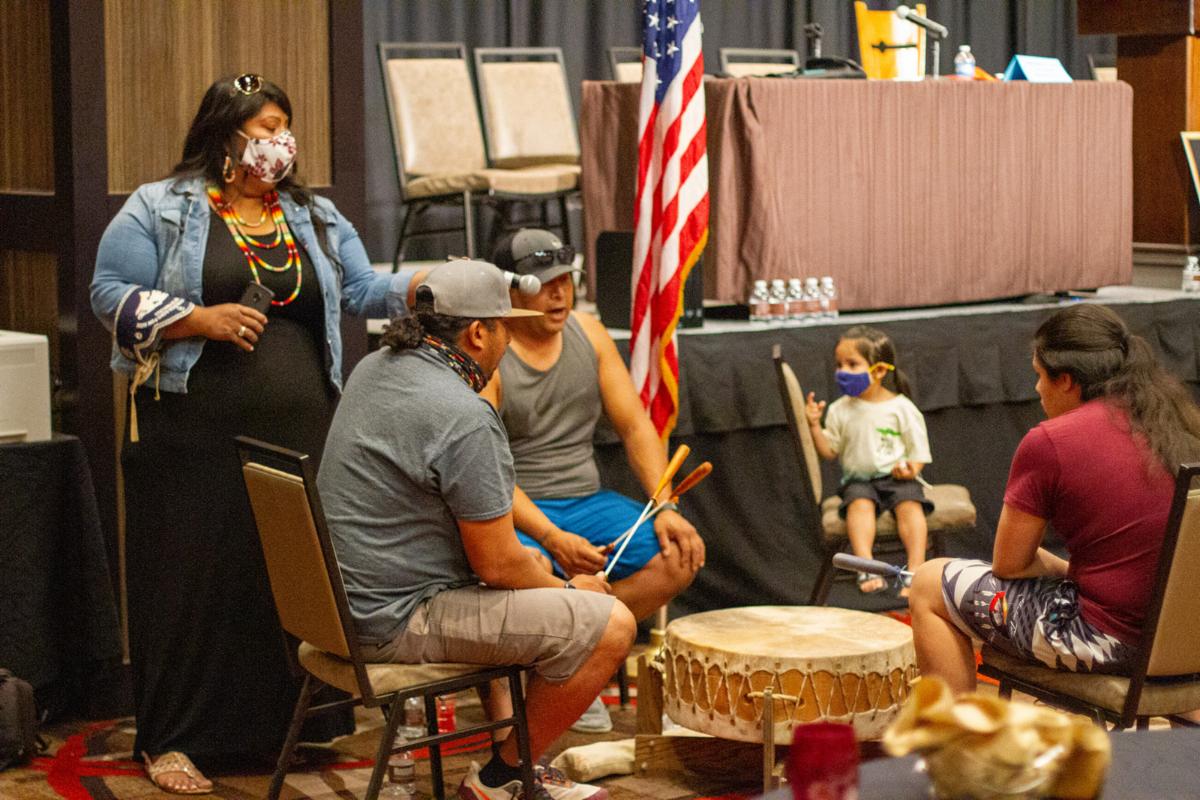
Last month NICOA held its 23rd conference on aging in Indian Country. “Resilience for Tomorrow…Together” was the theme of our American Indian Elders Conference.
Keynote speakers from federal, state and tribal programs and agencies were present to provide program updates and listen to the aging needs of American Indian and Alaska Native elders. Symposium topics included “Role of Tribal Leaders in Reaffirming the Value of Elders In Preserving Tribal Cultures,” “Becoming an Elder: Tribal Perspective on Aging in Indian Country,” “Native American Veterans: Issues and Concerns as They Age,” “Future Elders: Perspectives on Aging from the Youth,” and “The Aging Network: Challenges & Opportunities in the Next Decade.”
Informational workshops were provided by service providers and aging network professionals with experience in providing services to Native elders. Workshop sessions included caregiver support, elder abuse prevention, health, nutrition, transportation, disease prevention, long-term services and supports, employment and training, financial assistance and more.
NICOA’s conference is the only national aging conference in the country focusing exclusively on the needs of American Indian and Alaska Native elders. It offers the opportunity to elevate issues in American Indian politics and legislation, and focus on issues such as health, safety, financial management, elder abuse, caregiving, employment, retirement and the Older Americans Act.
|
|
|
|
NICOA Highlights Social Isolation, Loneliness Among Elders |
Looking to address the issue of social isolation and loneliness among American Indian and Alaska Native elders, the National Indian Council on Aging (NICOA) launches a national campaign today to educate Native families about the health concern and offer resources.
In addition to elders, the Connected Indigenous Elders campaign targets caregivers, youth and tribal leaders to engage and remind them that they all play an important role in our elders’ mental wellbeing and physical health. One study showed that prolonged social isolation was as harmful as smoking 15 cigarettes a day and is more harmful than obesity.
About one-fourth of elders 65 and older are considered to be socially isolated. Elders are at increased risk for loneliness and social isolation because they are more likely to face factors such as living alone, the loss of family or friends, chronic illness, and hearing loss, according to the Centers for Disease Control.
“We know that elders who are socially connected live longer, have less health problems and can have some protection from mental health issues such as dementia and Alzheimer’s,” NICOA Executive Director Larry Curley said. “Our elders are our culture and language keepers – they are the foundation of our communities.”
|
|
|
|
Audio and video public service announcements about the issue, which intensified in many tribal nations during the height of COVID-19, will play on tribal radio stations across the country, including on Indian Health Service’s waiting room cable service, GoodHealthTV.
The three-month campaign funded by a grant from the CDC Foundation points to resources such as how to detect depression and tips for elders on how to stay socially connected on connectedindigenouselders.org. The website also contains information for caregivers, who are often family members juggling work, children and multiple responsibilities. The campaign encourages self-care among caregivers, who will be encouraged to enter in an online contest for a drawing for personal care products. |
|
|
|
|
|
NICOA Executive Director Larry Curley visited Indian Country Today to talk about the new campaign.
|
|
|
|
#ConnectedIndigenousElders also persuades youth, who will also be encouraged to enter into an online contest on how they engage with their elders, to learn from and help take care of tribal knowledge keepers. Tribal leaders as decision-makers for elder programs will also be engaged.
The campaign is part of a project supported by a grant from the CDC Foundation using funding provided by donors to the CDC Foundation’s COVID-19 Emergency Response Fund.
|
|
|
|
I hope that everyone was able to get out of their houses and enjoy a little bit of summer! Fall has come which for me means a time of new beginnings.
The Senior Community Service Employment Program is back in full swing, assisting low-income individuals 55 and older to gain employment skills to be able to find employment and become self-sufficient. This is done by placing a qualified applicant at a nonprofit or governmental host agency, where they will train for approximately 20 hours a week making minimum wage, while learning new skills. They will also attend a variety of classes where they will create a functional resume and gain the skills necessary to apply for and secure employment.
Sue Chapman
SCSEP Director
|
|
|
|
"Looked Over By Employers" North Dakota's Elder Employment Opportunities |
North Dakota’s elder population comprise a segment of the U.S. population that account for roughly 5 percent of the unemployment rate, according to the North Dakota Job Services. Many of these individuals are 55 and older, have no financial support from family and are looking for ways to re-enter or remain in the workforce.
The National Indian Council on Aging (NICOA), a national nonprofit organization, in conjunction with the United States’ Senior Community Service Employment Program (SCSEP) are teaming up in an effort to change these statistics — even in Dickinson.
Through grants being provided by the US Department of Labor under the authority of the Older American Act of 1965, the group provides the training and skills required to get mature, dependable individuals back out into the community.
“While many people think of older adults as retirees, the truth is millions of Americans aged 55 and over work full or part-time jobs every day,” an NICOA press release said. “According to the National Council on Aging, the reasons they work are varied, but for many it’s a matter of necessity to remain financially secure and independent.”
Founded in the 1960’s under the name of Green Thumb, the NICOA and SCSEP provide paid training to low-income seniors 55 and older. With the ability to work remotely their services are provided throughout North Dakota with Participant Assistants located in Bismarck, Fargo, Mandan, Minot, Dickinson and Cooperstown, these individuals help elderly North Dakotans receive the training they need to be successful in a modern workforce.
Sarah Piersol, program manager at NICOA, shared a story about a gentleman in Hannaford, ND, who at the age of 90, re-entered the workforce.
Piersol said that with the assistance received through the program, he entered the lawn care technician position he loved, where before the opportunity would have eluded him.
“It’s heartbreaking to know that many of these individuals face discrimination because of their age,” she said. “They are looked over by employers for many jobs that they are fully capable of doing.”
The program is not limited to Native Americans or Indigenous communities and is open to all residents regardless of gender, mental or physical disability, race, national origin, religion or sexual orientation.
The NICOA consider elderly employees as a benefit for many businesses, as the individuals are often reliable and valuable resources for small businesses.
Those interested in talking with a Participant Assistant about re-entering or remaining in the workforce can learn more about this program by calling 701-314-5100. You can also text NIOCA to 56512, or visit www.nicoa.org/programs/scsep. |
|
|
|
Older Adults Equity Collaborative |
|
A Message from the Older Adults Equity Collaborative |
Happy fall everyone! The Cherokee Indian Fair will take place October 5-9 in beautiful Cherokee, North Carolina. If you are nearby, please stop by and visit.
NICOA has begun a campaign to raise awareness of social isolation especially during the COVID pandemic. Our talented team has created a webpage, and public service announcement videos and radio spots that highlight the impact of social isolation and loneliness for elders and caregivers and what tribal leaders can do to help address the situation. People who are connected to family and friends in their community have fewer health problems and live longer. We are running some fun contests for youth and caregivers, please check it out! Be a good relative and learn more here.
September is National Preparedness Month, a time to recognize the need to promote disaster preparedness. The theme this year is “Be prepared, not scared.” The Federal Emergency Management Agency has lots of great suggestions including an emergency supply list. Check it out at https://www.ready.gov/kit.
It has been a difficult time since COVID came into our lives. I know I have dealt with emotions and concerns for my family. When people are stressed, they are more likely to fall prey to misinformation. The sheer amount of misinformation available to the uncritical eye is just overwhelming these days. Whether the misinformation being shared is well meant or not, it has led to lots of unnecessary pain and suffering. Please take a moment to read the US Surgeon General’s Advisory titled, Confronting Health Misinformation. It has sensible advice and encourages us that, “Together we have the power to build a healthier information environment.”
There are many who are coping with tremendous loss right now and everyone has been touched in some way by the pandemic. It can be hard to know the right thing to do, but anger and rage can’t be the best answer. We are all weary and doing our best. Thank you for having compassion and patience with others and ourselves.
Rebecca Owl Morgan
Eastern Band of Cherokee Indians
Older Adults Equity Collaborative Project Coordinator
|
|
|
|
Personal Reflections on Indigenous Elders as Repositories of Culture |
During 2020, while COVID-19 was raging across the nation, my tribe, the Eastern Band of Cherokee Indians in Cherokee, N.C., took intense measures early on, shutting down the Qualla Boundary (our tribal lands), implementing mass testing, contract tracing and case isolation. Tribal leaders and elders feel a sense of urgency about preserving the culture and language, as was demonstrated during the worst of the pandemic when Native language speakers were prioritized to receive the vaccine by some tribes.
In the end the Eastern Band of Cherokee Indians handled the pandemic more effectively than many other areas in North Carolina, ensuring elders’ legacies were preserved, including all the tribal knowledge they harbor.
Growing up in western North Carolina I was proud of my culture and saw lots of examples of artistic vision completely expressed. Wood carvers Amanda Crowe, Goingback Chiltoskey, John Julius Wilnoty, and Johnson Owle, master storyteller Jerry Wolfe, potter Amanda Swimmer, basket maker Alice Walkingstick and beader Martha Owl illustrated that Cherokee people were creative and talented.
Some elders learned these skills not at home, but in a boarding school setting. ( From 1880 to 1954 the U.S. Indian Service operated the Cherokee Boarding Schools at Cherokee, N.C.) They survived their boarding school experience and came home to make a living using their skills. |
|
|
|
The Older Adults’ Equity Collaborative (OAEC) Resource Library |
The New York Academy of Medicine is pleased to announce the launch of the new Older Adults’ Equity Collaborative (OAEC) Resource Library, which collects digital materials on an ongoing basis from each OAEC member organization to provide guidance, tools and best practices for the aging services network, providers serving diverse communities and populations, and diverse older adults and caregivers.
|
|
|
|
2020-2021 Membership Available Online |
|
Membership with NICOA offers many valuable benefits. As a paid member you will receive NICOA’s online bimonthly newsletter, legislative updates on important issues and resolutions affecting elders, voting privileges for qualified members and discounted registration fees for qualified members to attend our biennial conferences.
Be an important part of a national membership network and become a NICOA member by applying online or by mail. |
|
|
|
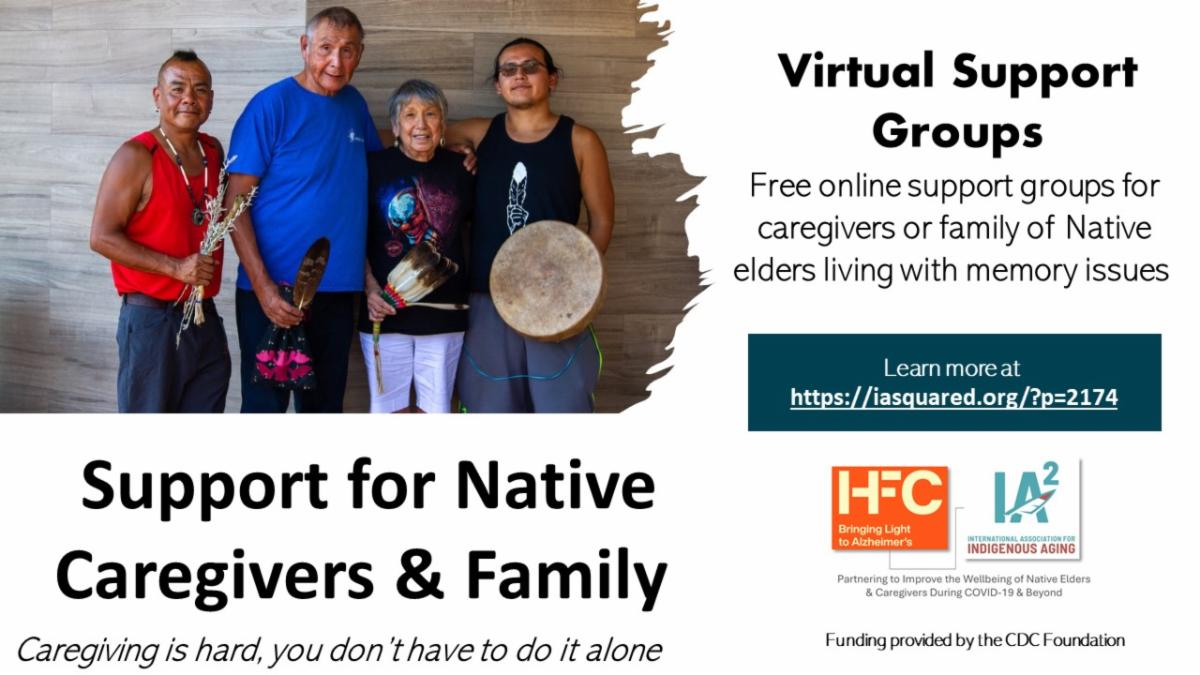
Virtual Support Groups and Free In-Home Respite Care |
Are you caring for an American Indian or Alaska Native loved one living with memory loss, other cognitive issues, or a diagnosis of dementia and/or Alzheimer's disease?
Click the link below to learn more about and apply for an opportunity to receive 50 hours of in-home care to support you and your loved one. Best of all, it is free! Eligibility requirements apply, first come, first served, deadline November 30, 2021.
|
|
|
|
IA2 Now National Dementia Friends Sublicensee for Tribal Communities |
IA2 and n4a are pleased to announce that IA2 is now officially the national sublicensee for the Dementia Friends USA program. Dementia Friends USA is part of a global movement focused on changing the way people act, think, and talk about dementia. Through education and training, individuals are exposed to what it is like to live with dementia and are encouraged to turn their understanding into action.
IA2 partnered with master trainers from the University of Nevada, Reno this week to pilot the first information session and Champion training at the National Indian Council on Aging’s 2021 elders conference. The pilot sessions featured new Dementia Friends content, revised and adapted for use with American Indians and Alaska Natives.
As a national sublicensee, IA2 will host training sessions to allow individuals to certify as Dementia Friends Champions in their own community. A Champion is someone who attends a 1-hour information session, followed by a 3-hour training. This training equips individuals with the skills and knowledge to raise awareness about dementia in their community. Additionally, it encourages trainees to share what they know about Alzheimer’s and dementia with others.
|
|
|
|
Get Ready for the Next “Steps To Well-Being” Challenge |
It’s said the third time is the charm. After two successful and fun step challenges in 2020, it’s time to get ready for the National Senior Games Association’s third virtual competition that features you and others from your state competing for bragging rights while keeping yourself fit!
StepsToWELL-Being allows you to join a team and/or participate individually. In addition, the names of all participants are eligible for selection from a prize drawing every Friday. Also, the Wellness Score feature now allows you the option to accumulate wellness points.
Make a note for the National Senior Games StepsToWELL-Being Challenge, which will begin March 15 and run through April 12. Registration is now open, and anyone any age can join at no cost, not just athletes. If you have already participated, you are in the system and ready to log in to enter your data. Participants record all types of physical activity with the goal of obtaining the highest number of average steps for state Senior Games/partner organization and/or themselves.
If you are new to this, you can set up your profile now to be ready for the starting gun. Click here to create a user profile, and when asked “Which Group Do You Belong To” from the drop-down menu, choose OYOH Physical Activity New Registration. Use the password seniorgames to complete your registration. Click here for detailed sample directions on how to sign up, record activity and synchronize your fitness-tracking device. |
|
|
|
Distance Doesn’t Have to Become Isolation for Indigenous Elders |
Call grandma.
That’s Larry’s Curley’s message.
So I did. It went something like this:
“Grandma, it’s Shaun. How are you?”
“Hi babba! I’m great, how are you? How is your mom?”
We went back and forth a good half hour, catching up on family business and chatting a little football before she had to leave for an appointment. We hadn’t spoken in a few weeks. I could hear the joy in her voice, and I ended the conversation feeling better than I did earlier in the day.
That’s the point, says Curley.
“That is the way to begin a relationship or conversation. Just ask anything.” Curley (Diné) is the co-founder and executive director for the National Indian Council On Aging.
He said conversations with elders are part of a significant effort young people must engage, especially considering the toll the pandemic has left on Native American communities.
|
|
|
|
|
|
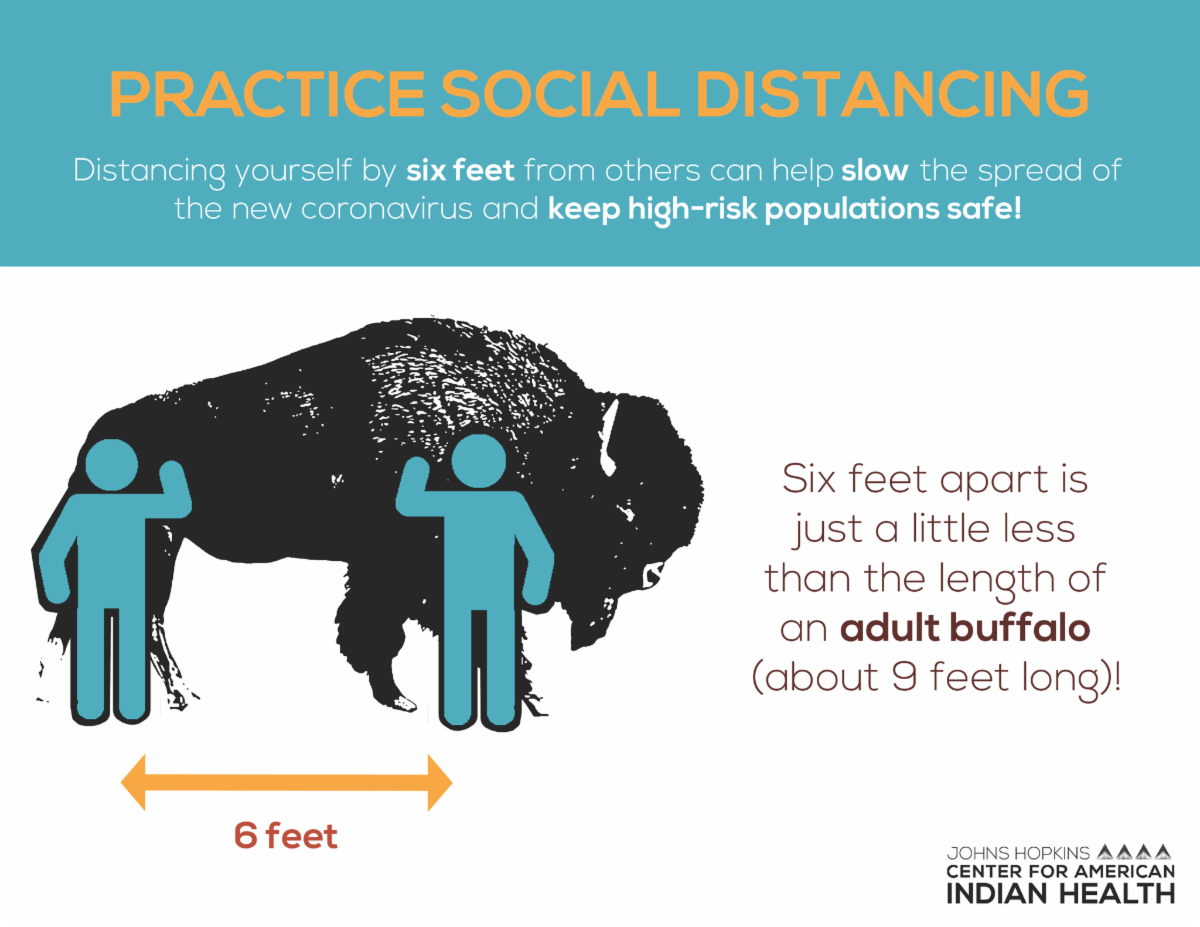
Posters from Johns Hopkins Center for American Indian Health |
Johns Hopkins Center for American Indian Health has materials related to COVID-19 for tribes to distribute. |
|
|
|
#GetBanked to Receive Child Tax Credits and Other Government Payments |
The Federal Deposit Insurance Corporation (FDIC) encourages you to open a checking account to receive Child Tax Credits that began in July. With an insured bank account, you can receive stimulus funds and tax refunds securely and more quickly via direct deposit. Having a bank account can also provide access to safer and lower-cost financial products.
The #GetBanked website has helpful resources , including the top reasons to #GetBanked, a checklist to help you choose the best type of account for your needs, and links to FDIC partners where you can open an account online or at a local branch. With a banking relationship, you can receive and send money, pay bills online, all with no check-cashing fees. |
|
|
|
SSA Begins Offering In-Person “Express Interviews” at Local Offices |
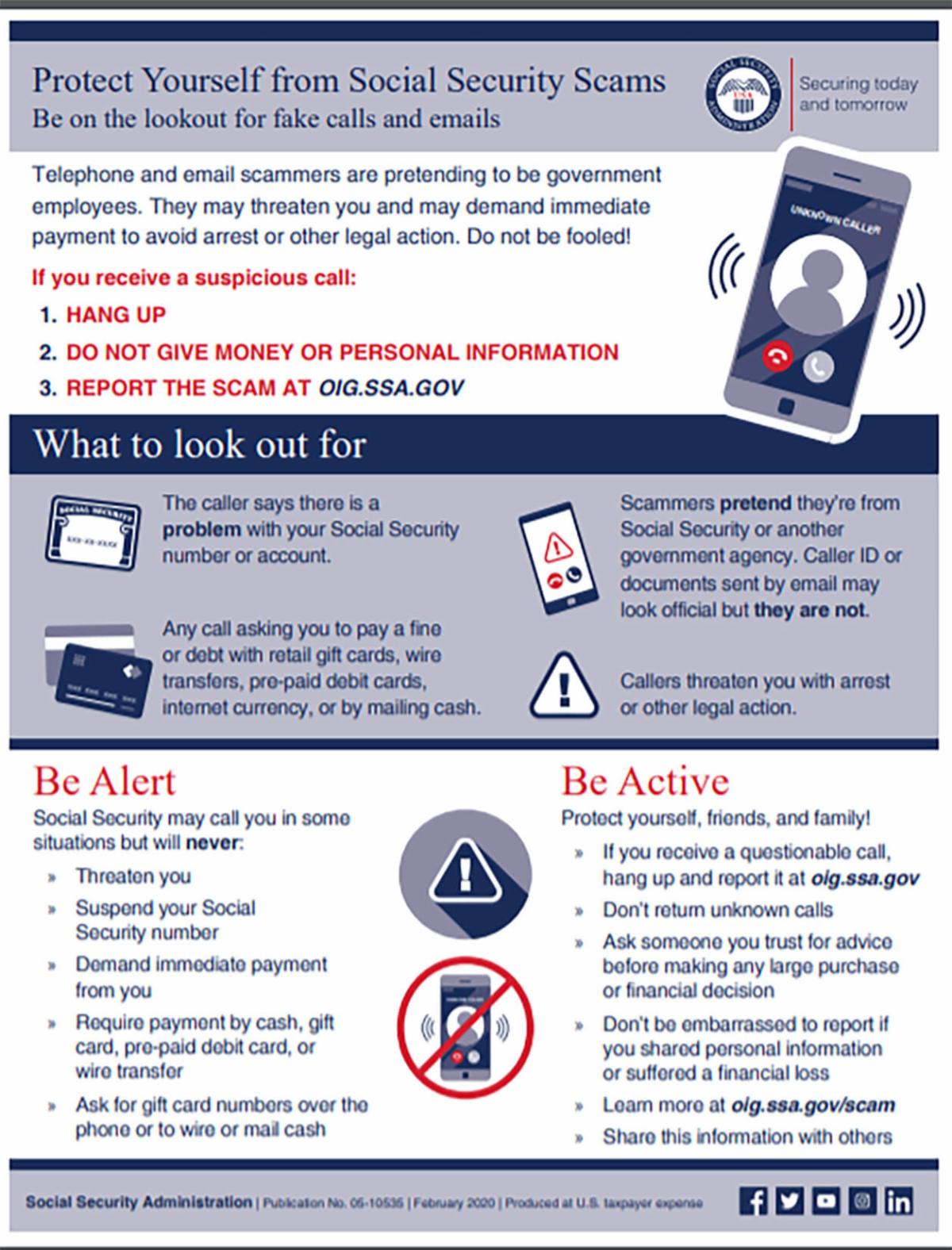
The Social Security Administration (SSA) is offering “express interviews” (EXI) at its field offices and Social Security card centers nationwide. According to the Emergency Message released on implementation of the EXI process, “EXIs are brief interviews, lasting approximately 5-7 minutes, which allow eligible individuals to apply for an original or replacement Social Security Number (SSN) card and submit necessary evidence in person.” This new procedure comes after a Senate Committee on Finance hearing in late April about how the pandemic has hampered access to Social Security benefits and services.
While this initiative is primarily intended to assist those who need a new or replacement SSN card, EXI appointments are also available for those who need to submit original documents to SSA in establishing their eligibility in a claim for benefits, as well as other purposes. Notably, EXIs are available for people who “are unable or unwilling to mail original evidence documents.” This is particularly important for those who need to show their immigration documents to SSA, as non-citizens are required to have these documents in their possession at all times, under Department of Homeland Security regulations.
EXIs will not be the primary option offered to individuals interacting with SSA, and local managers will have the discretion to determine the criteria for offering EXIs in particular offices based on staffing and other office considerations. The scope of EXI appointments will be strictly limited to submitting documents in person, and any additional questions or concerns would have to be raised separately by phone or mail.
|
|
|
|
Emergency Broadband Benefit Fraud Alert |
The FCC has issued a consumer advisory warning the public about an Emergency Broadband Benefit imposter website that was collecting personal information from consumers and falsely claiming to provide free devices and services related to the Emergency Broadband Benefit Program.
Consumers are reminded to only use the official Emergency Broadband Benefit website, GetEmergencyBroadband.org, to enroll in the program. Consumers can also contact a participating provider directly, but they should first verify that a provider is approved to participate in the program by visiting fcc.gov/emergency-broadband-benefit-providers and searching by their state or territory.
The WiFi Freedom USA website falsely claimed that it can provide consumers with free devices and services related to the Emergency Broadband Benefit Program. Consumers may have also seen advertisements for WiFi Freedom USA’s website on social media platforms.
If you provided your personal information to WiFi Freedom USA, visit IdentityTheft.gov. If you made any payments to WiFi Freedom USA, please contact your financial institution to see if there are any remedies available to you. You can file a report about government imposter fraud with the Federal Trade Commission at Reportfraud.ftc.gov and get information about how to recover any money you paid. |
|
|
|
5 Recent Tribal Newsletters |
|
|
|
Census Shows Increase in Native Population |
All multiracial groups gained percentages compared to the overall population. In the 10 years since 2010, the number of people the Census categorizes as American Indian and Alaska Native increased from 5.2 million to 9.7 million. In 2020, the American Indian and Alaska Native alone population (3.7 million) accounted for 1.1 percent of all people living in the United States, compared with 0.9 percent (2.9 million) in 2010.
The American Indian and Alaska Native alone population grew by 27.1 percent, and the American Indian and Alaska Native in combination population grew by 160 percent since 2010. The White and American Indian and Alaska Native population also increased, growing by about 2.5 million people or 177 percent, making it the second largest Multiracial combinations in 2020 (4 million).
|
|
|
|
American Indians Have Highest COVID Vaccine Rate |
In May 2021, the Centers for Disease Control and Prevention (CDC) announced on Twitter that its COVID-19 data tracker now displays U.S. vaccination progress by race and ethnicity. The tracker, “Percent of People Receiving COVID-19 Vaccine by Race/Ethnicity and Date Reported to CDC, United States,” showed that as of July 6, American Indians and Alaska Natives have the highest vaccination rate in the country, with 45.5 percent having received at least one dose and 39.1 percent fully vaccinated.
This is especially impressive as the U.S. Native population had more than 3.5 times the infection rate, more than four times the hospitalization rate, and a higher mortality rate than white Americans, reports the Indian Health Service (IHS), a federal health program for American Indians and Alaska Natives. Official data reveal that the Navajo Nation, the largest tribe in the U.S., has been one of the hardest-hit populations, reporting one of the country’s highest per-capita COVID-19 infection rates in May 2020, the Navajo Times reports.
From the beginning, American Indians and Alaska Natives were being hospitalized and dying from COVID-19 at a higher rate than any other racial group in America throughout the pandemic. Now, American Indian and Alaska Native vaccination rates are higher than white vaccination rates in 28 states, including New Mexico, Arizona, and Alaska, where many Indigenous people receive care from tribal health centers and the Indian Health Service (IHS) Connecticut News Project’s CT Mirror reports. In states like South Carolina and Tennessee, however, vaccination rates have been far lower for American Indians and Alaska Natives than for white Americans. |
|
|
|
Montana Tribe Finalizes Water Rights Settlement |
U.S. Secretary of the Interior Deb Haaland signed the long-pending water compact this month, executing a complex agreement that confirms the Confederated Salish and Kootenai Tribe’s water rights and authorizes funding to modernize a federal irrigation project comprising 1,300 miles of aging canals also known as the Flathead Indian Irrigation Project. The agreement, which was initially introduced in Congress in 2016 before being passed last year, also provides funding for habitat restoration and transfers control of the National Bison Range to the tribes.
Although the compact requires the Confederated Salish and Kootenai Tribes to relinquish thousands of off-reservation water rights claims, the final agreement received broad support from both the tribes and many of the non-Native water users who rely on rivers that flow through tribal lands in Montana.
According to attorneys involved in the negotiations, the $1.9 billion being put into trust represents the largest amount ever awarded to a tribe as part of a water rights settlement.
The dispute stems from the 1855 Treaty of Hellgate, which created the 1.25 million-acre Flathead Indian Reservation in northwestern Montana. Arguing that a provision of the treaty gives the Confederated Salish and Kootenai Tribes exclusive water rights for fishing in streams both on and off the reservation, the tribe made more than 10,000 water rights claims throughout the state — all of which would have had to be litigated in court.
To avoid years of costly litigation, the tribe chose to negotiate the settlement, which quantified extensive water rights for both consumptive and instream uses both on and off the reservation, including co-ownership of certain rights with the Montana Department of Fish, Wildlife and Parks. |
|
|
|
Six Tribes Sue Over Wolf Hunt |
The tribes' lawsuit follows one filed in August by a coalition of animal advocacy groups, challenging the quota set by the Natural Resources Board, seeking to cancel the November hunt and challenging the constitutionality of the state law that requires a wolf hunt.
The tribes are represented by Earthjustice, which in January filed a lawsuit challenging the Trump administration’s decision to remove wolves from the Endangered Species Act.
In Wisconsin, state law requires the Department of Natural Resources (DNR) to issue wolf hunting licenses if the gray wolf is removed from the U.S. and Wisconsin lists of endangered and threatened species. The season must occur from the first Saturday in November through the end of February.
The DNR has the authority to set limits for the number of licenses it issues and the number of wolves that may be harvested. The season ends when the harvest limits are met.
Wisconsin is the only state that mandates a wolf season, and one of only five that allow wolves to be hunted. Under federal treaty rights, the Ojibwe tribes are entitled to up to half the hunt quota, but they do not harvest wolves because they view them as family.
The tribes argue that, in setting a quota for the November wolf hunt, the Natural Resources Board "purposefully and knowingly discriminated against the Ojibwe Tribes by acting to nullify their share." In addition, they argue the board "failed to use sound biological principles" in setting the quota and that it failed to place "adequate safeguards" to protect the Ojibwe tribes' share.
|
|
|
|
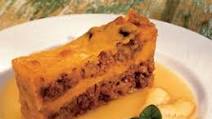
Native American Bread Pudding
- 1 cup raisins
- 4 cups bite-sized pieces day-old French bread
- 1/2 cup toasted black walnuts, coarsely chopped
- 1 tsp. ground nutmeg
- 1 tsp. ground cinnamon
- 2 cups grated mild Cheddar cheese
- 1 1/2 cups granulated sugar
- 3 1/2 cups hot water
- 4 Tbs. unsalted butter
Soak raisins 20 minutes in warm water to cover, and drain. Preheat oven to 300F. Spray 5×9-inch loaf pan with nonstick cooking oil, and set aside until ready to use.
Cover bottom of loaf pan with 2 cups cubed bread. Sprinkle half raisins and half walnuts over bread. Sprinkle 1/2 teaspoon nutmeg and 1/2 teaspoon cinnamon over raisins and walnuts. Cover with 1 cup grated cheese. Add remaining 2 cups bread, and pat down so layers are firm. Make next layer, using remaining raisins, nuts, nutmeg and cinnamon. Add remaining 1 cup grated cheese, and spread evenly over top.
Heat sugar in saucepan over medium heat, stirring occasionally until sugar has melted, about 10 minutes. Add hot water slowly to prevent splashing, and let sugar syrup dissolve.
Add butter, and stir constantly until melted, 3 to 5 minutes. Remove from heat, and pour over layers, making sure sugar syrup saturates bottom.
Bake loaf 35 to 40 minutes, or until cheese browns and sugar syrup bubbles. Remove from oven, place on wire rack and cool. Cut into 11/2-inch-thick slices, and serve with Prickly Pear Syrup, Peach Honey, or any fruit syrup or sauce.
|
|
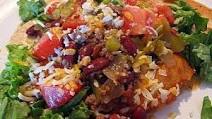
Indian Navajo Taco
- 1 cup unbleached flour
- 1/4 teaspoon salt
- 1 teaspoon baking powder
- 1/2 cup milk
- Vegetable oil for frying
- 1 pound ground meat beef, lamb, buffalo, or venison
- 1 1/2 medium onions coarsely chopped
- 3 cloves minced garlic
- 19 oz can kidney beans drained
- 8 ounces beef broth
- 14 oz can diced tomatoes
- 1 1/2 tbsp oregano
- 1 tbsp chili powder
- salt and pepper to taste
- 1 head iceberg lettuce shredded
- 3 to tomatoes diced
- 2 cups shredded sharp Cheddar cheese
- diced green chili
Sift together the flour, salt, and baking powder into a large bowl. Pour the milk over the flour mixture all at once and stir the dough with a fork until it starts to form one big clump. Using your floured hands, begin to mix the dough, trying to get all the flour into the mixture to form a ball. Do not knead otherwise you will have a heavy fry Bread.
Cut the dough into four (4) pieces. Using your floured hands, form disks of about 6 inches in diameter. Heat the vegetable oil to about 375 degrees F. Your oil should be about 1-inch deep in a large cast-iron skillet or other large fryer. Take the formed dough and gently place it into the oil, being careful not to splatter the hot oil. Press down on the dough as it fries so the top is submersed into the hot oil. Fry until brown, and then flip to fry the other side. Each side will take about 1 to 2 minutes.
In a large frying pan over medium-high heat, brown ground meat, onions and garlic until you see no pink meat. Add beans, broth, diced tomatoes, oregano, chili powder, salt and pepper. Bring to a boil and simmer 20 min. Place one fry bread, cupped side up, on a plate. Layer ground meat, lettuce, tomatoes, Cheddar cheese, and green chili onto top of each fry bread.
|
|
|
|
The National Indian Council on Aging, Inc. (NICOA) is a not-for-profit 501 (c)(3) charitable organization. Please consider adding NICOA to the charities you support.
NICOA needs your financial support as the advocacy and political work we do for our elders is not free. Grants that have helped fund NICOA are under threat in Washington, D.C., but you can help.
Your financial support will go directly to support our mission to improve health, social services and economic wellbeing for all American Indian and Alaska Native elders. Donations are tax deductible.
|
|
|
|
|
|
|
|