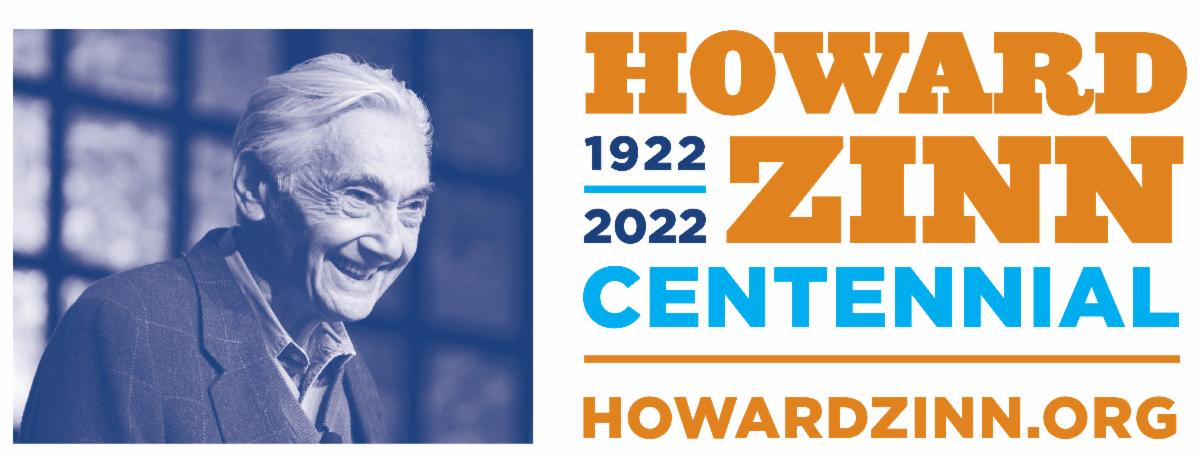
The year 2022 marks the 100th anniversary of Howard Zinn’s birth on August 24, 1922 in Brooklyn. Although Howard died in 2010, his work continues to inform and inspire educators around the world. His most popular book, A People’s History of the United States, has sold more than 4 million copies.
At the Zinn Education Project, we plan to commemorate the anniversary in a number of ways:
-
Continue to provide free lessons and classes on teaching people’s history and defend teachers’ right to teach outside the textbook. Since we launched the Zinn Education Project with the support of Howard Zinn in 2008, more than 140,000 teachers have signed up to access free people’s history lessons from our website. Thousands more have participated in our online classes, workshops, and study groups. Those teachers are under attack from right-wing legislation that bans teaching about institutionalized racism, making it difficult to teach honestly about U.S. history.
-
Share Howard Zinn’s writing about prisons and his correspondence with prisoners. While Zinn’s essays on the Civil Rights Movement and war are well known, his writing about prisons gets less attention, reflecting the invisibility of mass incarceration in this country. During this anniversary year, we will shine a light on Zinn’s extensive, decades-long correspondence with prisoners and his belief that prisons should be abolished.
-
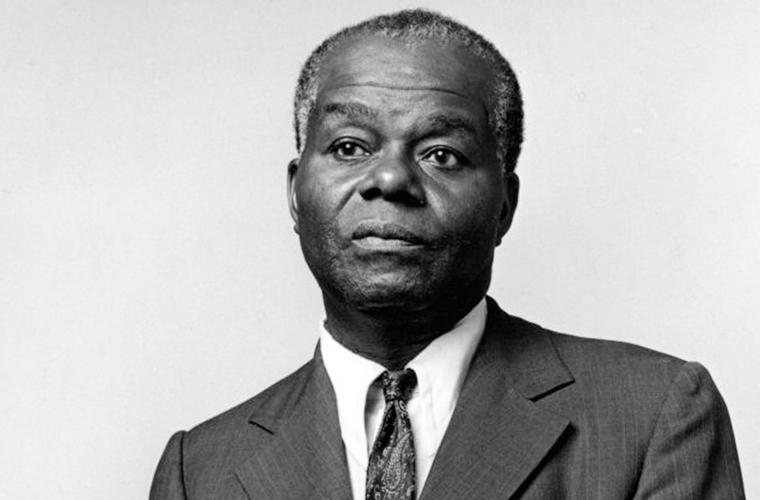
Highlight examples of the people’s historians who preceded Howard Zinn and the countless contemporary people’s historians. Too often, people place Zinn on a pedestal as the first and most influential people’s historian. Zinn would be the first to object. (It is not just fans who lionize him. The right promotes an outsized focus on Howard Zinn so that they can use him in their McCarthy-like attacks on the teaching of people’s history.) We should not focus on one people’s historian, but celebrate and learn from the work of people’s historians more broadly. These include historians from the 19th and early 20th century, Zinn’s contemporaries, and those who continue to expand our understanding of people’s history today. We begin with John Henrik Clarke, born in 1915.
|
|
Share your memories, favorite Howard Zinn quotes, or other stories.
#HowardZinn100
|
|
We begin our selection of writing by Howard Zinn on prisons with an essay called “ Solutions” from Justice in Everyday Life: The Way It Really Works, published in 1974.
In the spirit of prison abolitionists today, Zinn wrote that, “Prisons cannot be reformed, any more than slavery can be reformed. They have to be abolished. And yet, they will not be abolished until society is changed, until people think differently about punishment, about law, about crime, about violence, about property, about human beings.”
Art by Lex Non Scripta via Justseeds.org
|
|
John Henrik Clarke
People’s Historian
|
|
We begin our twice-monthly feature of a people’s historian with John Henrik Clarke, born on Jan. 1, 1915, in Union Springs, Alabama. Clarke was a professor of Black and Puerto Rican Studies at Hunter College of the City University of New York and advocated for African American studies during the Black Power Movement.
Clarke explains what motivated him to study history:
|
|
“I saw no African people in the printed and illustrated Sunday school lessons. I began to suspect at this early age that someone had distorted the image of my people. My long search for the true history of African people the world over began.” |
|
Teach the Black
Freedom Struggle Classes
with People’s Historians
|
|
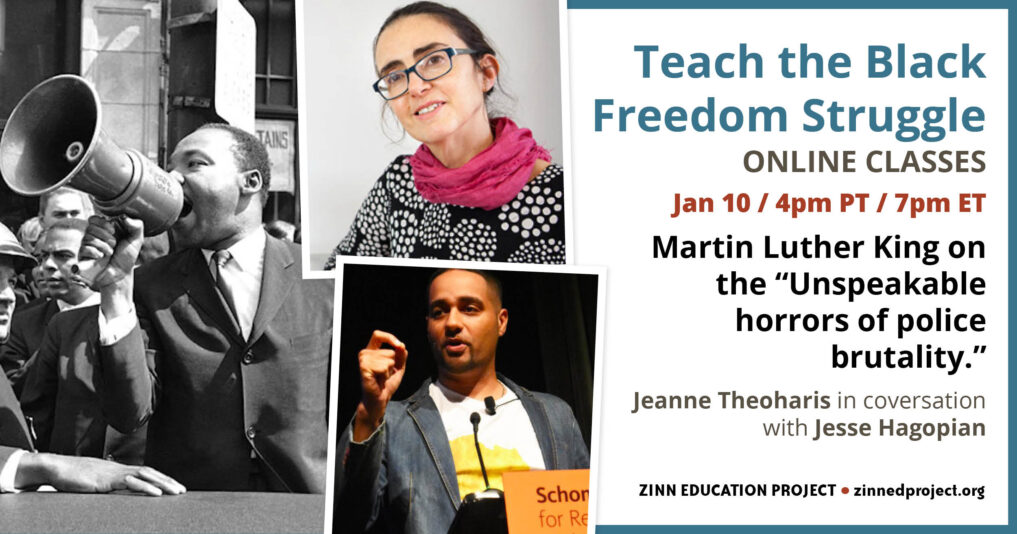
Historian Jeanne Theoharis will shed light on Dr. Martin Luther King Jr.’s longstanding critique of police brutality. As she notes in an article in The Atlantic, “Critics of Black Lives Matter have held up King as a foil to the movement’s criticisms of law enforcement, but those are views that King himself shared.” Theoharis will be in conversation with Rethinking Schools editor and high school teacher Jesse Hagopian.
|
|
Check out and sign up for the full list of classes scheduled to date in 2022. |
|
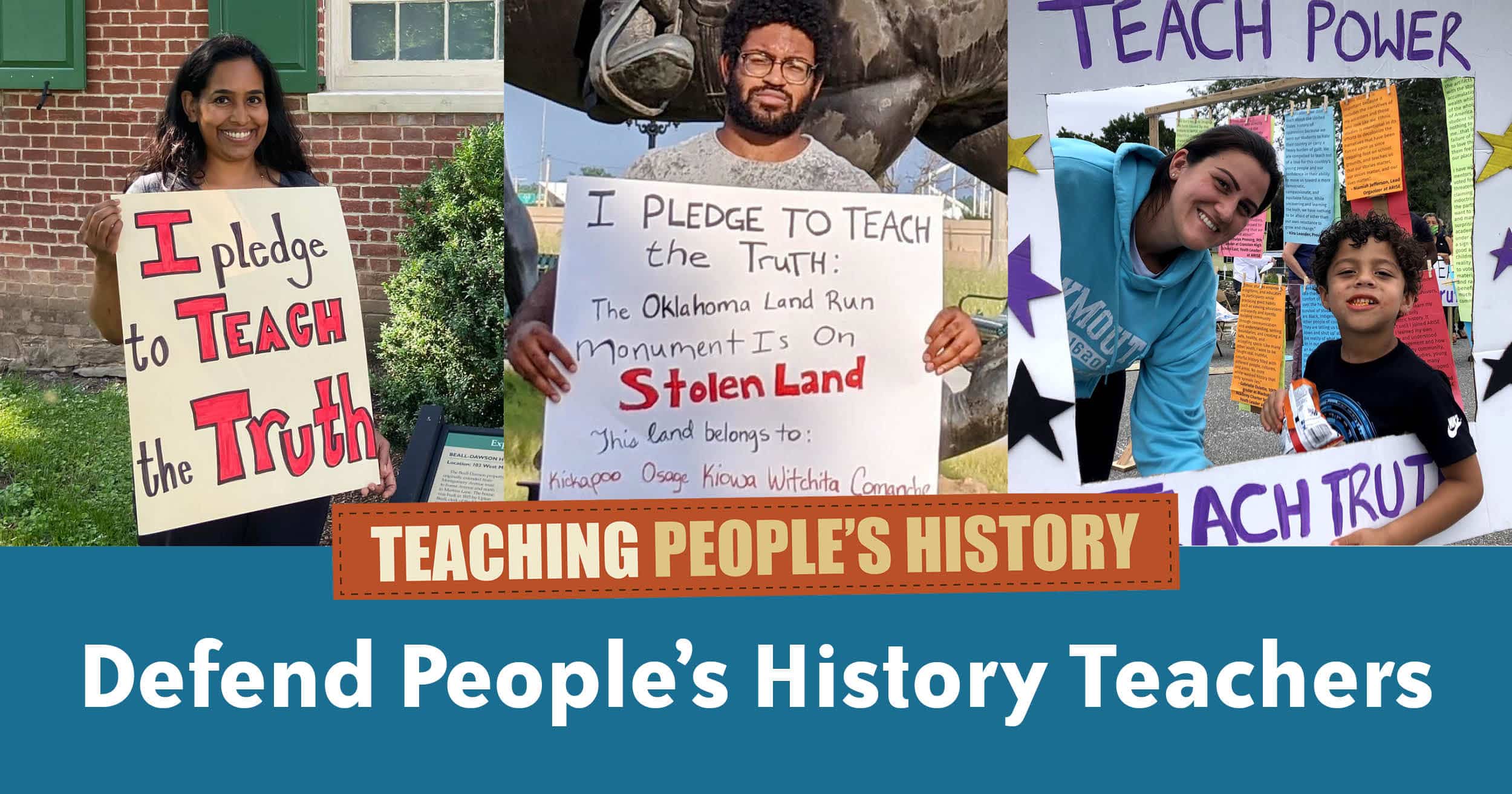
Teachers are under attack for teaching truthfully about U.S. history. Please donate so that we can continue to offer free people’s history lessons and resources, and defend teachers’ right to use them. |
|
|
|
PO BOX 73038, WASHINGTON, D.C. 20056
|
|
|
|
|
|
|