HOURS: MONDAY - FRIDAY 7 AM - 4 PM January 2026

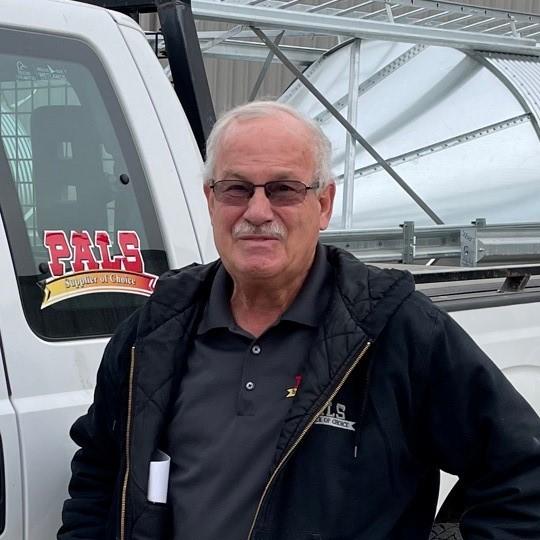
Dale Berkner Retired


Dale retired from PALS on Friday, December 19th. Dale has been a valued member of the organization throughout his career. We have the deepest gratitude for his hard work and dedication.


Thank you Dale and we hope you enjoy your retirement!!


Additional contacts for any of your Poultry, Livestock Equipment or Animal Health needs:


ANIMAL HEALTH:

Chelsey Weller - 320-220-7602


TURKEY EQUIPMENT:

Josh Guetter, Poultry Manager - 320-222-9506

Andy Lobbins - 320-262-5652

Wayne Zimmer - 320-222-9517


HOG EQUIPMENT:

Nic Sunstrom - 320-212-0189


EQUIPMENT PARTS & ANIMAL HEALTH:

Front Counter - 320-235-8860 Option #1

Rick Eckblad - 320-222-9514

Kevin Brown - 320-235-8865a limited time only" or "only 7 remaining!"

Happy New Year! Now that the holiday decorations are packed away and we’re officially kicking off 2026, it’s time to get back into the swing of things. While last month was all about slowing down and catching our breath, January is already hitting the ground running with plenty of market shifts to keep an eye on. From the fallout of new trade truces to the constant rollercoaster of commodity prices, there’s a lot to unpack as we start this fresh chapter. We’re excited to jump back in and help you make sense of it all so you can stay ahead of the curve in the coming year.


Despite the snowy weather that typically keeps things quiet, January 2026 has unfortunately brought a fresh wave of Highly Pathogenic Avian Influenza (HPAI) cases to Central Minnesota. While many hoped the cold would slow things down, the virus has remained stubborn, with Minnesota recording its first major infections of the year in mid-January. Notably, a commercial turkey meat bird flock in Meeker County was hit hard on January 12, affecting roughly 250,600 birds. Another detection in the same county involved 9,000 commercial turkey breeder hens. These recent spikes have pushed Minnesota to the second-highest spot in the nation for affected birds this month, proving that even a blanket of snow isn't enough to stop the spread. Local experts at the Minnesota Board of Animal Health are doubling down on biosecurity warnings, reminding everyone that this virus is still very much a threat even in the dead of winter.

HPAI Response


For further official updates and biosecurity guidance, refer to the Minnesota Board of Animal Health HPAI Dashboard.

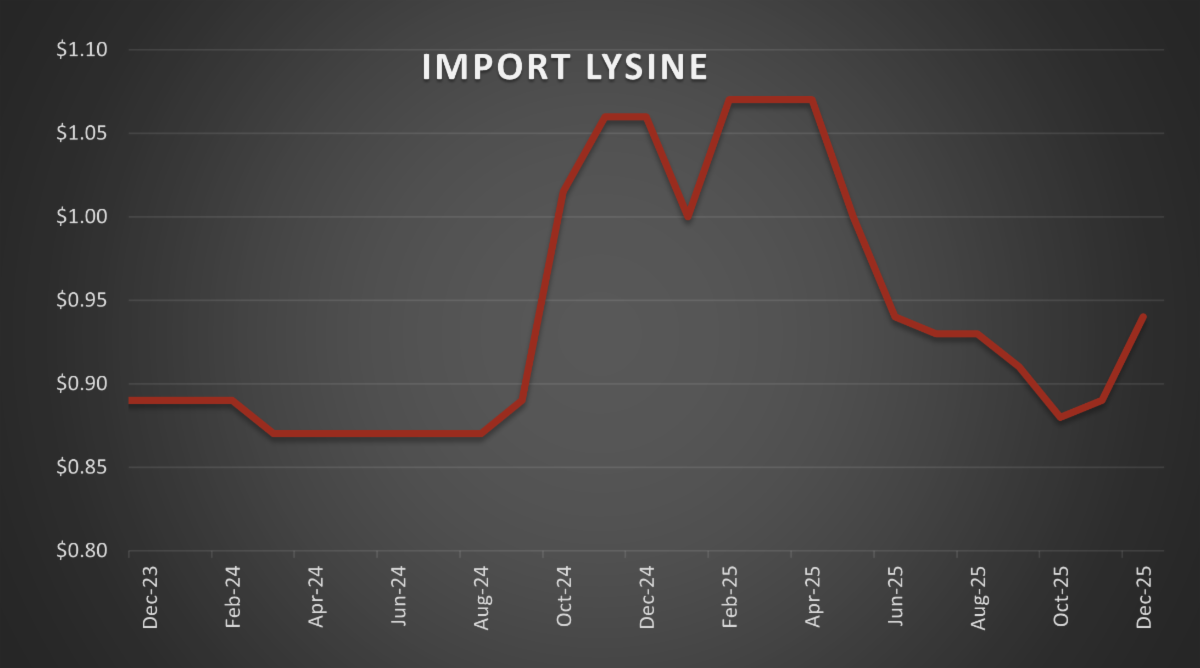
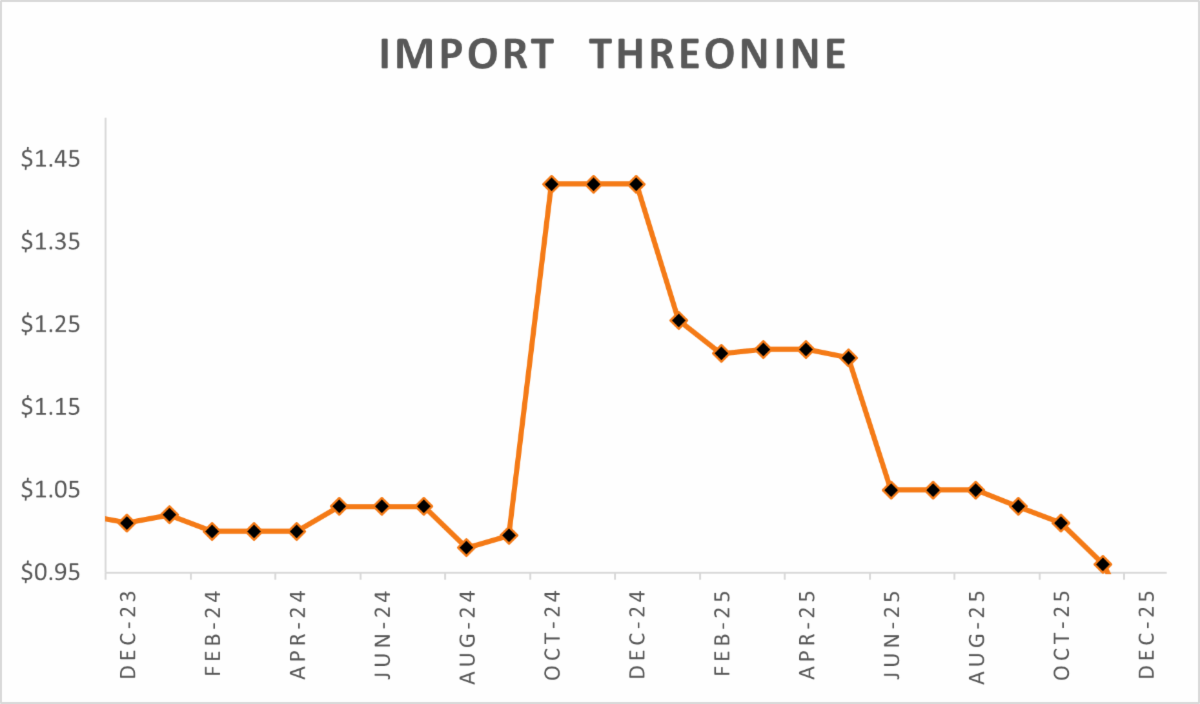
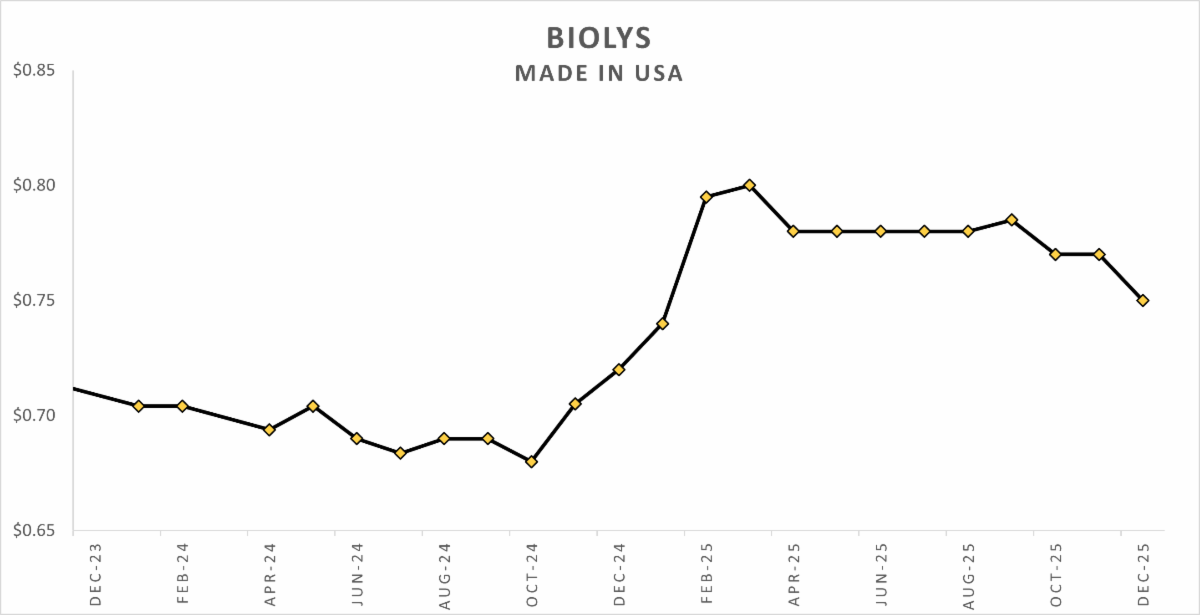
It looks like the trade officials are kicking the can down the road yet again on the Lysine AD/CV duty announcement. Instead of a clear answer, word now is that we won’t see all updates until sometime later in the first quarter of 2026. This constant stalling is keeping the market on edge, pushing prices higher as the uncertainty builds. Because of these delays, you can expect Biolys prices to keep climbing right alongside Lysine for the foreseeable future. Expect plenty of chatter on this "can-kicking" at the International Production & Processing Expo (IPPE) in Atlanta next week. It’s bound to be a major topic of conversation on the floor as everyone tries to figure out what these constant delays mean for the 2026 outlook.


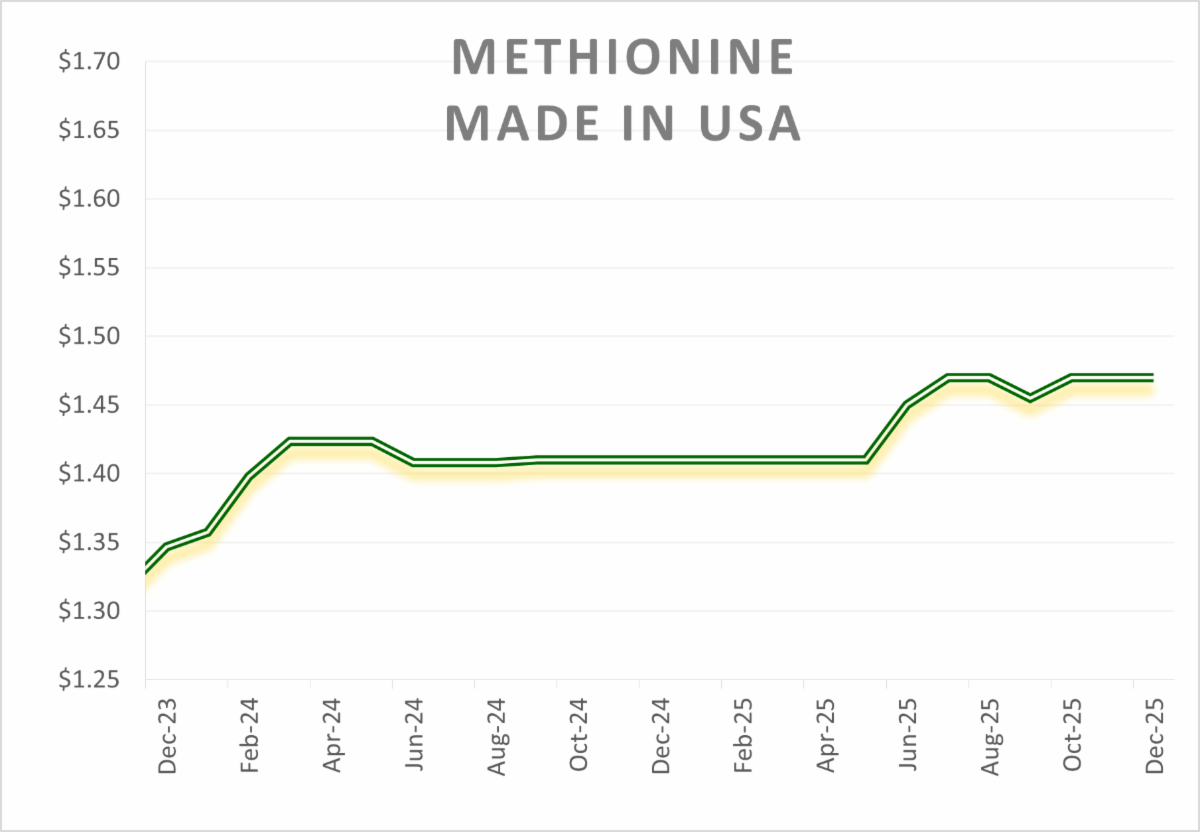
The outcome of the delayed Lysine AD/CV announcement is expected to have a major "domino effect" on Methionine usage throughout 2026. If duties land too high, many formulators will likely pivot back to using more soybean meal as a protein source; however, because soybean meal changes the amino acid profile of the ration, it often requires a higher inclusion of supplemental Methionine to balance it out.


This shift comes at a time when the U.S. soybean meal market is seeing ample supplies and lower prices—recently forecast at around $295 per short ton for the 2025/26 season—driven by record-high yields in the Midwest and expanded domestic crush capacity. While Methionine prices are currently holding steady and had even shown signs of softening, this potential surge in demand from increased soybean meal inclusion could quickly flip the script and drive prices back up as the market adjusts to the new Lysine reality.

World Agricultural Supply and Demand Estimates


The January 2026 WASDE report from the USDA projects ample supplies and lower prices in the U.S. soybean meal market, forecasting prices around $295 per short ton for the 2025/26 season. This outlook is driven by record-high yields in the Midwest and expanded domestic crush capacity. Read the full World Agricultural Supply and Demand Estimates report at USDA.

Copper metal prices have continued their volatile run into January 2026, recently hitting a fresh all-time high of $6.11 per pound before settling slightly to around $5.91 as of mid-month. This brief cooling is largely due to a massive influx of scrap metal and the U.S. decision to defer certain tariffs on critical minerals, which eased some of the panic-buying and hoarding seen throughout December. Despite this slight breather, the long-term outlook remains incredibly tight, with analysts at J.P. Morgan and S&P Global warning that structural supply deficits—driven by AI infrastructure and defense spending—could push prices toward $15,000 per ton by the second quarter of 2026. Expect the market to stay in a phase of high-level volatility as traders balance record U.S. stockpiles against these persistent global shortages.


As we head into the rest of January, it’s clear that 2026 is already demanding our full attention. From the unexpected winter surge of HPAI in Central Minnesota to the "can-kicking" on Lysine duties and the record-breaking volatility in the copper market, there is no shortage of variables to account for in your planning. Whether you’re pivoting your feed formulations toward affordable U.S. soybean meal or navigating the shifting tides of global trade, our goal is to help you cut through the noise. We look forward to seeing many of you at IPPE in Atlanta next week to keep these conversations going. Until then, stay warm, stay vigilant with your biosecurity, and let’s make the most of the opportunities this New Year brings!


Chelsey

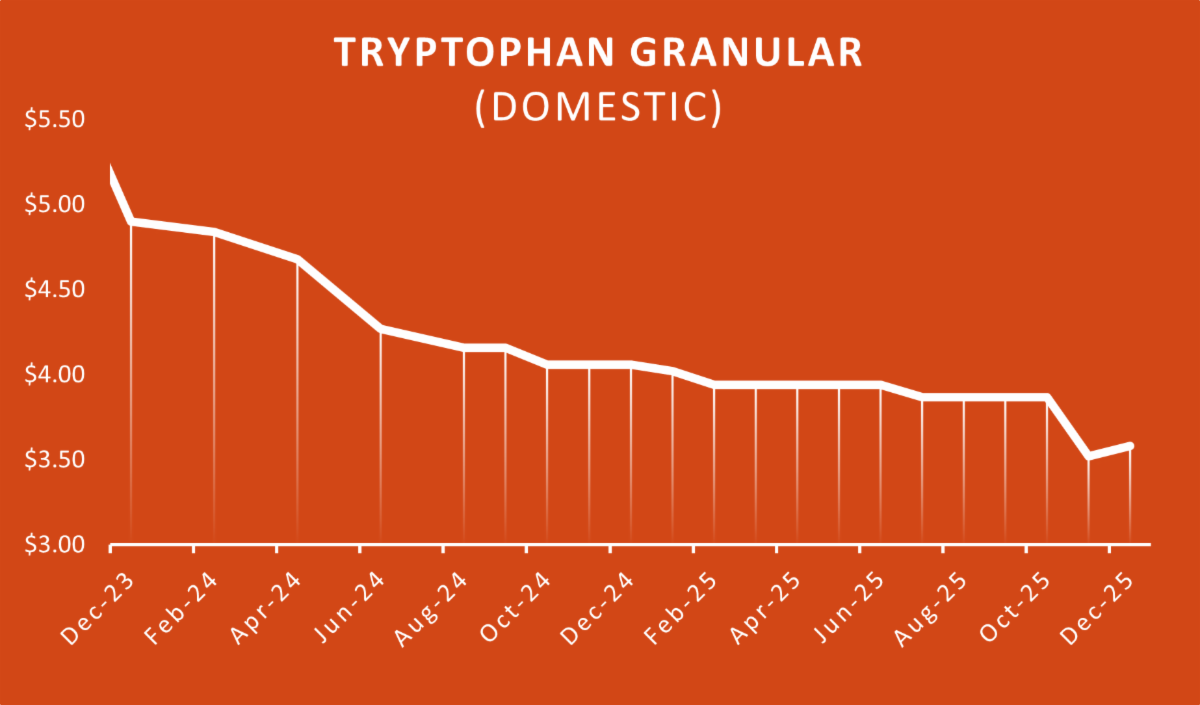
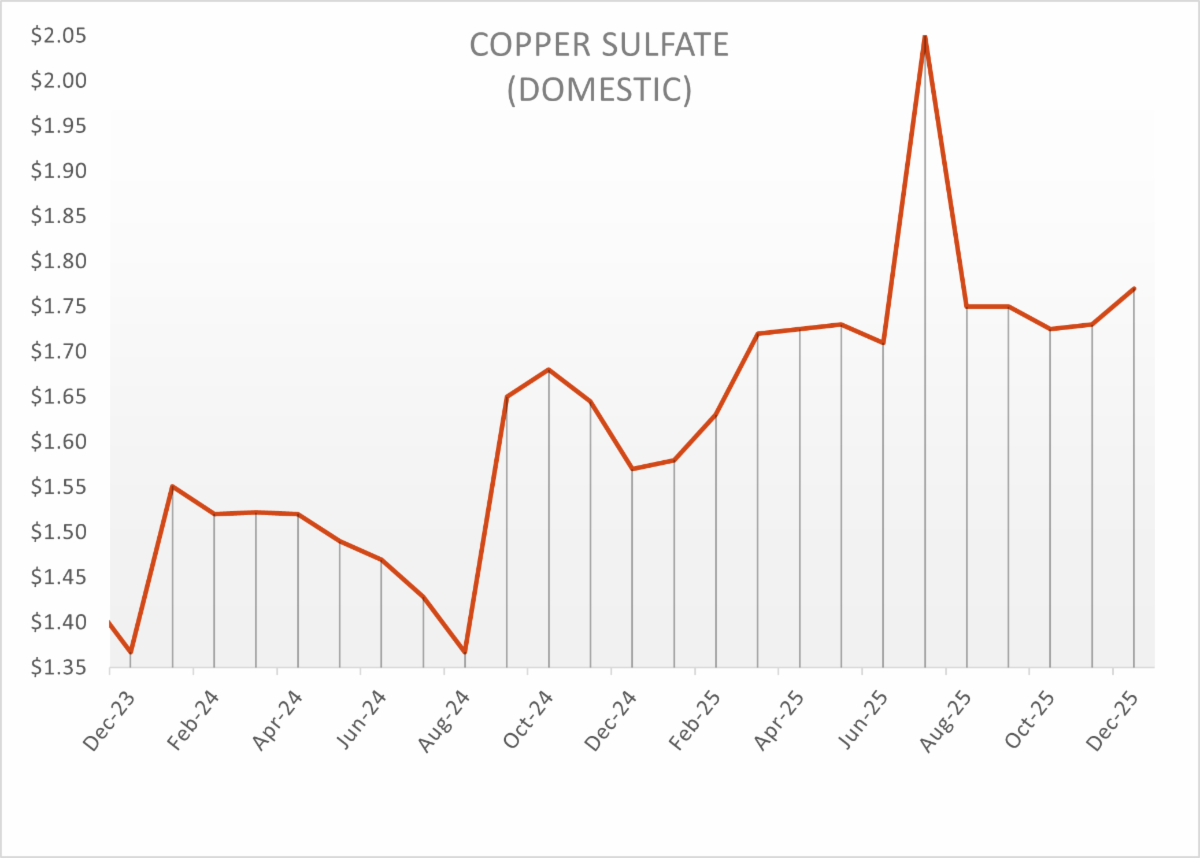
Pricing in graphs reflect our highest retail price. We carry multiple brands of amino acids. Full pallet, truckload, customer pickup and other factors may reduce your purchase price.


Did you know?   Willmar Poultry started PALS in 1955 to reduce their costs and assist local turkey growers. Over time, the manufacturing similarities of poultry and hog equipment brought PALS into the hog business. So much in fact, that today PALS business is 65% hog related.  

 PALS sells primarily 3 things: animal health products, animal agriculture equipment, and building & repair services. 
Animal Health:
Feed ingredients: While we supply several smaller mills, we have found we are a good secondary supplier for other distributors, mills and farms.  

Disinfectants / Cleaners / Water line cleaners / Antibiotics / Water Solubles / Insecticides / Rodenticides / Litter Treatments

Equipment: 
Our largest volume is in the hog industry.  Followed by turkey & chicken.   We
sell some cattle and dairy equipment; mostly feed lines and fans.   
(We are actively trying to build this category) 

Service:   
Our in house teams work in all service areas. We work closely with several subcontractors
on installation and service work.    
want them to do here? (Call-to-Action)
We run route trucks 5 days a week. We also utilize direct shipping. It can be one box, pallets, or full truckloads.
CHECK US OUT ONLINE AT WWW.PALSUSA.COM
PALS, Inc | 1-800-328-8842 | 3735 1st Ave W Willmar, MN 56201 | www.palsusa.com