NewsletterHeader5.png

Weekly Analyst Review

01 October 2026


Bottom Line Up Front

ISWA Factionalism and Organisational Fragmentation in the Shadow of al-Mainuqi


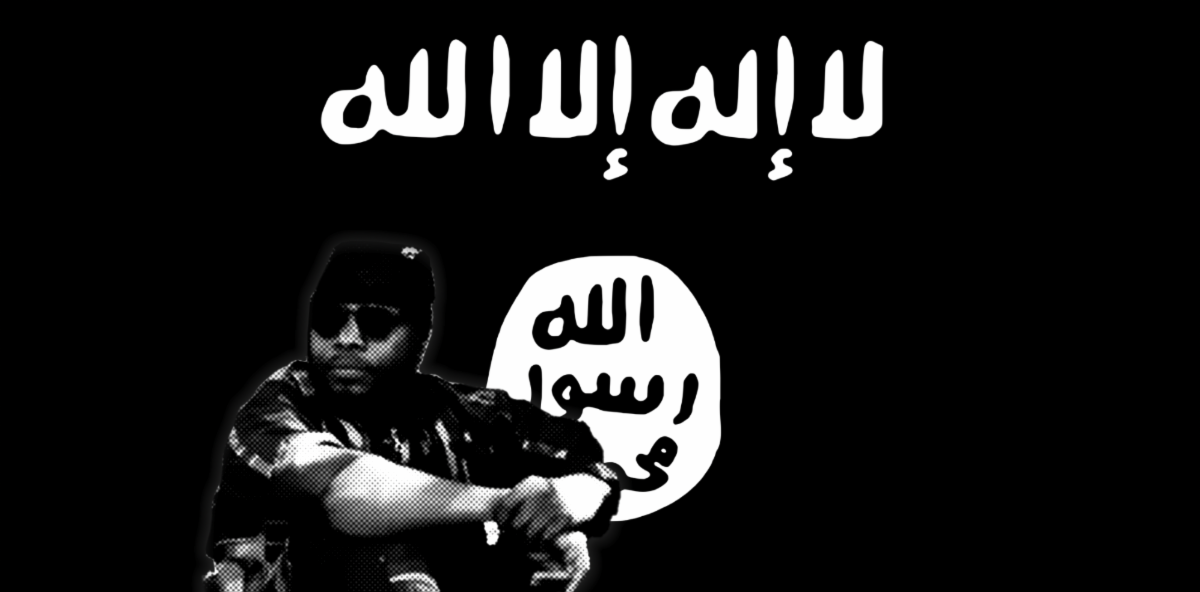
Since the death of Islamic State West Africa (ISWA) leader al-Manuqi in mid-May 2026, the group has been in a near-constant state of paranoia amid defections to Boko Haram and surrenders to Nigerian authorities. The latest split represents at least the third significant internal rift to affect the group in recent months, as leadership disputes, succession questions, operational security concerns, and disagreements over strategy continue to strain cohesion.


ISWA was historically one of the most prompt and prolific claimers of incidents. Since Mainuqi’s death, however, the group has struggled to relay claims of responsibility and operational updates through Islamic State’s central media apparatus at the same pace and volume. This degradation suggests that Mainuqi played a critical role in maintaining communication channels with IS central command, serving as a key intermediary transmitting incident reports for official Islamic State propaganda.


State of Paranoia

In response to this deterioration, IS central media has increasingly used editorials in Al-Naba and supplementary communications to reinforce unity, emphasising patience, obedience to leadership, discipline, and operational security. These messages suggest IS leadership recognises the persistent risk factionalism poses to its affiliates and views ideological guidance as a means of preventing further defections. This has been reinforced by the presence of foreign fighters, intended to provide training and foster a sense of the wider Islamic State community. However, this has largely fallen flat, with local Nigerian fighters resenting their presence and the preferential treatment they receive.


Despite central command’s efforts, the situation has largely backfired. ISWA’s new commander, Ba Shuwa, has zealously implemented these initiatives, but the deteriorating situation following Mainuqi’s death has instead culminated in an environment of paranoia. ISWA leadership has increasingly looked inwards, arresting senior Shura Council members over fears of defections to Boko Haram and surrenders to Nigerian authorities. Most prominent among those arrested is Yaku Buduma, who commands over 1,000 ISWA militants in the Lake Chad region.


Formation of Buduma Faction

This has led to the splintering of the Yaku Buduma faction of ISWA in Nigeria’s Lake Chad region. Buduma-aligned militants launched an armed assault against Ba Shuwa’s faction in an attempt to free imprisoned members, including Buduma himself, effectively cleaving a substantial body of militants from the wider ISWA structure.


The practical effects could be substantial. Reports that more than 1,000 fighters have broken from one of the rival factions represent a significant potential loss of manpower for ISWA, particularly in the Lake Chad Basin, where control depends heavily on local networks and a sustained presence in remote communities. These defections may weaken ISWA’s territorial influence and ability to project force across northeastern Nigeria and neighbouring border regions. Departing members may also join Boko Haram factions or surrender to Nigerian authorities, creating further intelligence leaks for ISWA.


The Future of the Buduma Defectors

A significant portion of the Buduma faction could ultimately surrender to Nigerian authorities, particularly if continued fighting becomes increasingly difficult. A large-scale surrender would provide security forces with valuable intelligence on ISWA’s leadership structure, logistical networks, weapons procurement, safe havens, and operational practices, potentially exposing vulnerabilities for future counterterrorism operations. For now, the Nigerian government may benefit simply by allowing its enemy's internal divisions to continue.


Alternatively, some Buduma fighters may align themselves with Boko Haram factions already competing with ISWA for militants, resources, and territory across the Lake Chad Basin. Such a realignment would provide Boko Haram with experienced manpower familiar with ISWA’s tactics, leadership, and operational infrastructure, potentially reinforcing the Bakura Doro faction.


However, a breakaway faction numbering over 1,000 militants is not necessarily dependent on surrendering or joining an existing organisation. Buduma possess sufficient manpower and operational experience to sustain an independent militant force, potentially introducing yet another armed actor into the already fragmented Yobe–Borno security environment.

Other Developments

TRAC Incident Report: Heavy Clashes Erupted between Somali Forces, Forces Loyal to Former South West State President Laftagareen and Al-Shabaab Militants for the Control of Baidoa, Bay Region, Somalia

On 28 September 2026, heavy clashes erupted across Baidoa after forces loyal to former South West State President Abdiaziz Hassan Mohamed Laftagareen, alongside al-Shabaab militants, launched an early-morning assault against Somali federal and South West State forces. The fighting continued for at least five hours before government forces said the assault had been repelled. The confrontation represents another major escalation in the struggle between Mogadishu and Laftagareen over political authority and centralisation.


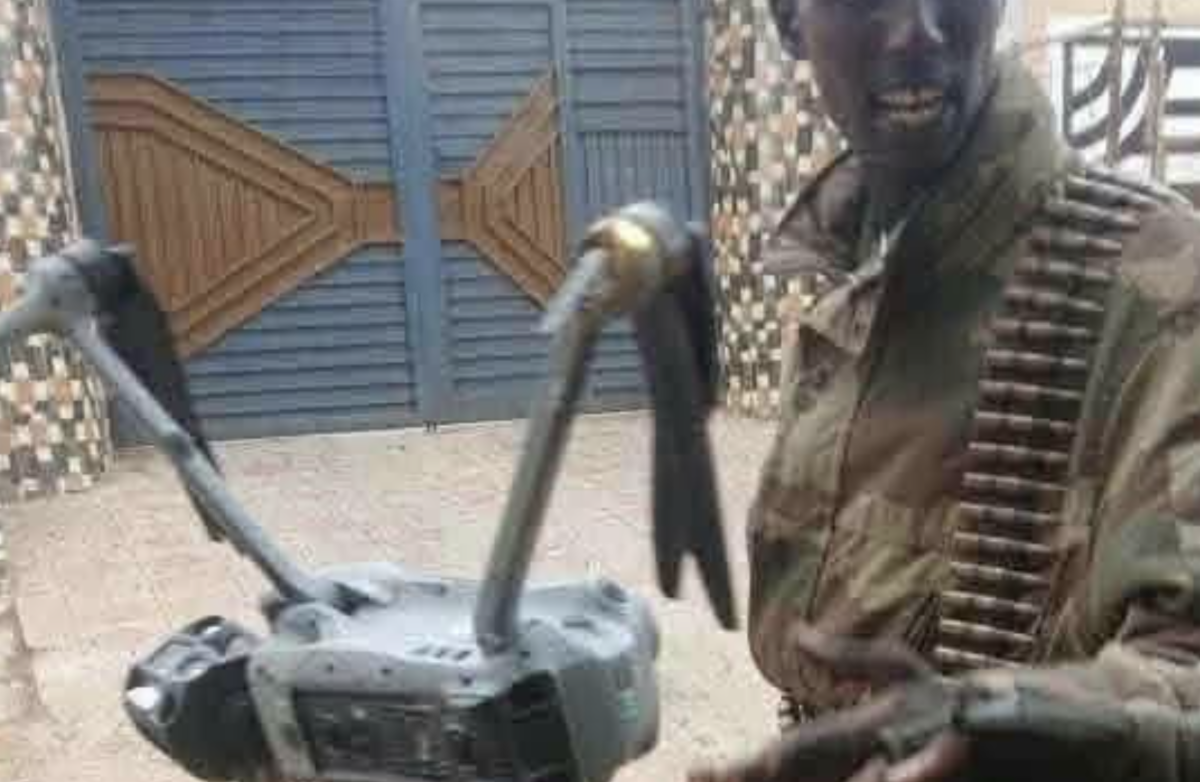
Al-Shabaab is once again exploiting this conflict, while the concentration of government forces around Baidoa creates additional freedom for militants in surrounding rural areas. Particularly significant was the appearance of explosive drones alongside IEDs and VBIEDs, potentially giving al-Shabaab another means of bypassing ground defences and striking Somali, African Union and international forces from the air. This capability is especially concerning ahead of the EU–Somalia Business Forum in Mogadishu on 5–6 October, which will concentrate European and Somali businesses, investors and government representatives in the capital. Given al-Shabaab’s history of targeting high-profile hotels and internationally associated locations, any expansion of its UAV capability increases the threat surrounding such events.


TRAC has tracked the al-Shabaab–Ansarallah relationship and suspected weapons and drone trafficking between Yemen and Somalia since 2024. The appearance of explosive drones in Baidoa therefore warrants close attention as a potential further development of this relationship. Meanwhile, Somalia’s 8th Division Commander Ahmed Dheere, a close ally of House Speaker Aden Madobe, was killed during the fighting, adding another senior commander to those lost in the escalating battle for Baidoa.

TRAC Incident Report: Narcomantas Threatening Judicial and Law Enforcement Officials Appear Simultaneously Across Morelos, Mexico

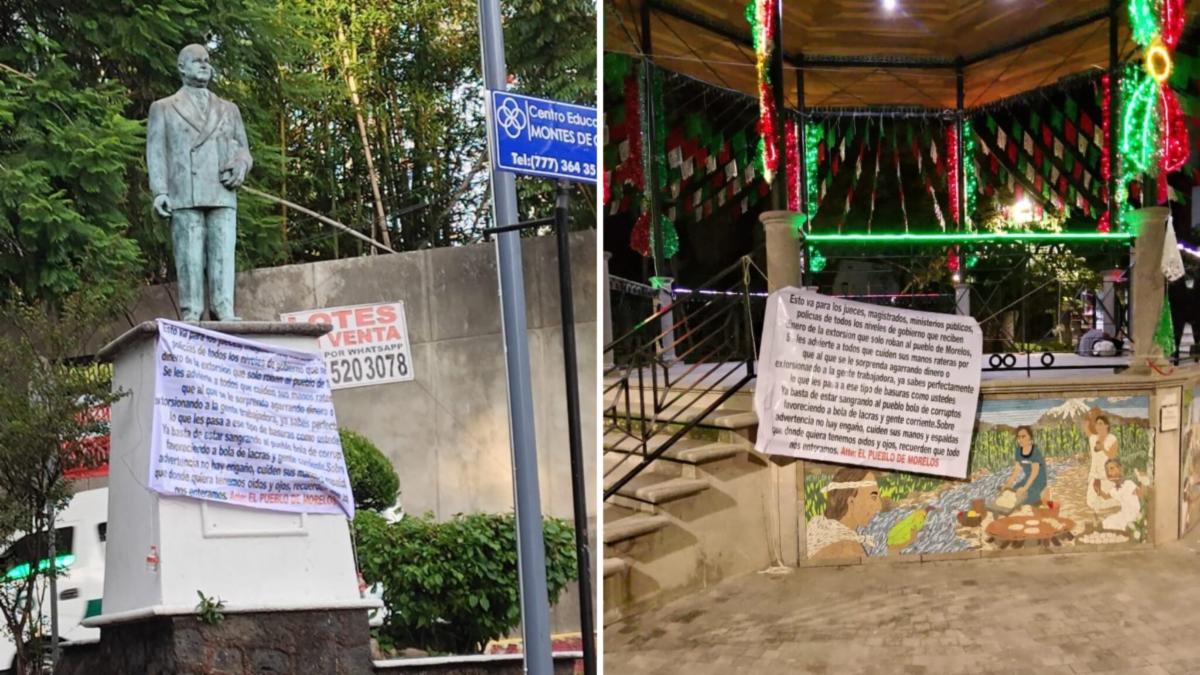
In the early hours of 23 September 2026, residents and authorities reported the discovery of several narcomantas in high-traffic public areas across Morelos. The banners were found simultaneously in Cuautla’s main square, the community of Oacalco in Yautepec, and Cuernavaca. The narcomantas contain direct threats against judges, magistrates, prosecutors, and police officers at all three levels of government, accusing them of involvement in corruption schemes and extortion targeting citizens.


The security environment in Morelos is marked by the presence and activities of several organised criminal groups and affiliated local cells, including the Sinaloa Cartel (CDS), La Familia Michoacana (LFM), La Nueva Familia Michoacana (LNFM), the Jalisco New Generation Cartel (CJNG), Los Rojos, Los Tlahuicas, Los Tlacos, and Los Linos. The fact that some of these groups are relatively small or locally focused does not, by itself, rule them out as potential perpetrators. Placing banners requires relatively limited manpower, and several small teams with printed tarps and vehicles could deploy messages across Cuautla, Oacalco, Yautepec and Cuernavaca, a spread of roughly 50-60 km, either independently or on behalf of a larger organisation. The simultaneous appearance of the banners indicates at least some degree of coordination and access to the resources required to produce and deploy them. However, the operation’s geographic reach alone does not establish that it was conducted by a major criminal organisation. Similarly, the ability to place a banner does not necessarily reflect the capacity to carry out the threats it contains.


The wording of the narcomanta is informative in itself. It is signed “The People of Morelos” rather than by a specific group or alias, which suggests a deliberate attempt to present the message as a popular demand and not as a threat issued by a criminal organisation. By casting themselves as defenders of the population against a corrupt system, the authors appear to draw on genuine public frustration with corruption and extortion in Morelos. The claim that they have “eyes and ears everywhere” further signals an intent to make officials feel monitored and exposed.

TRAC Incident Report: Islamic State Central Africa (ISCA/Wilayat Wasat Afriqiyah) Militants Captured and Beheaded 9 Christians in Bandisende, Ituri Province, Congo (DR) 

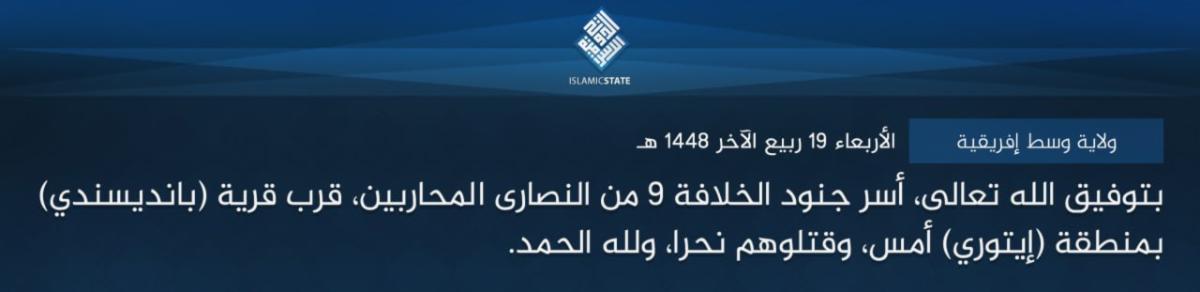
On 28 September 2026, Islamic State Central Africa (ISCA) militants captured and beheaded 9 Christians in Bandisende, Ituri Province, Congo. ISCA militants were last active in Bandisende just the day prior to this incident when they led an armed assault on civilians in the town.


Activity in Bandisende continues to represent a notable expansion of the group’s operating area west of Mambasa. This activity appears to be part of a broader geographic shift that has emerged only over the past several months, with ISCA increasingly pushing into areas that were previously largely outside its previously held territory. The development mirrors the group’s recent territorial gains and incursions into formerly unoccupied areas of Haut-Uele Province, suggesting that ISCA continues to exploit lightly governed, remote areas to expand its reach.


ISCA activity in Bandisende could serve as a potential staging point for further expansion into Tshopo Province, particularly given the town’s location along the RN4, a key route connecting the area to the west. The group has previously shown interest in operating or conducting attacks in Tshopo, and increased activity around Bandisende could provide ISCA with greater freedom of movement and opportunities to establish local networks along the corridor. While there is not yet clear evidence of an imminent expansion into Tshopo, the group’s repeated interest in the province suggests that continued activity around Bandisende warrants monitoring for signs of movement westward along RN4.

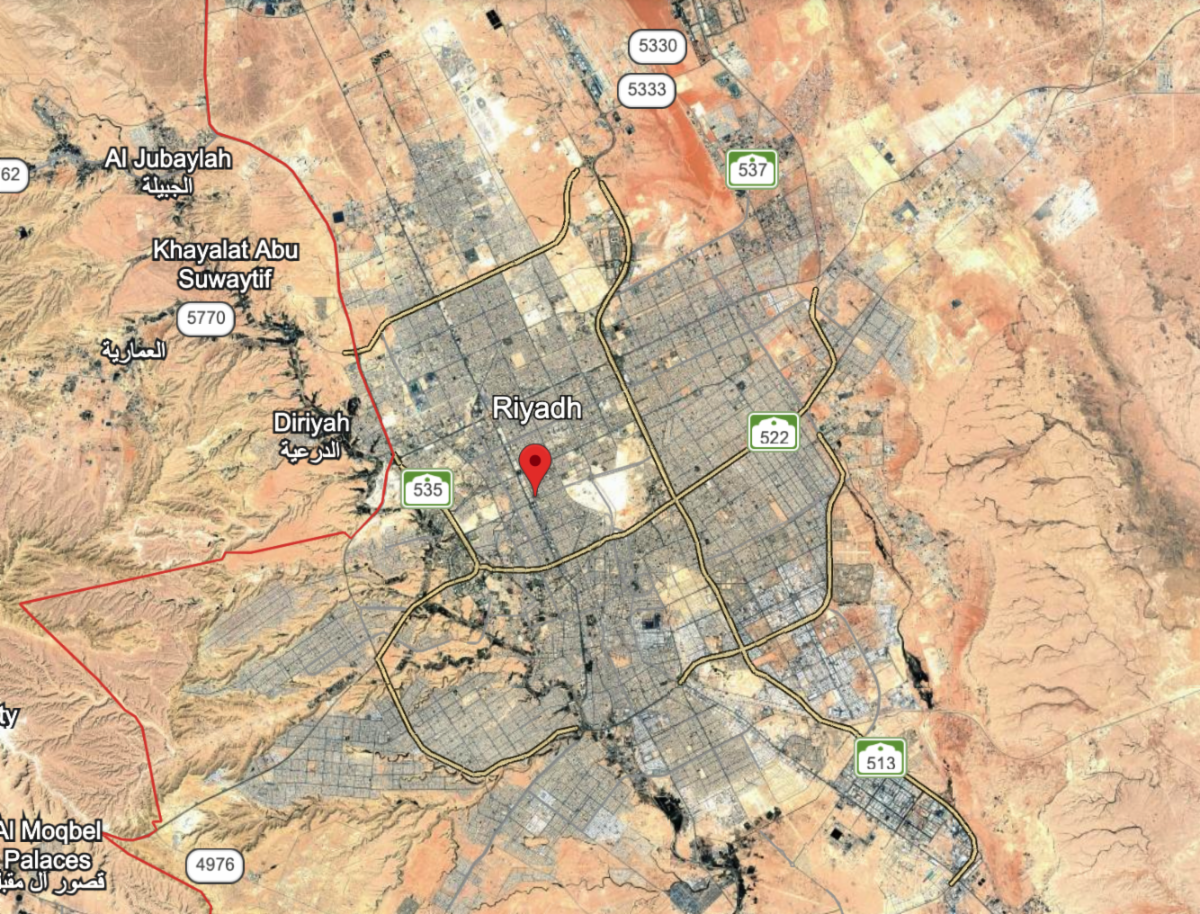
(Chatter) Houthis (Ansarallah) Allegedly Preparing to Target Bridges and Ground Transportation Next in Riyadh, Saudi Arabia 

(Statement) Muslim Brotherhood (Al-Ikhwan al-Muslimeen) Announces Intention to Continue Operating In Syria

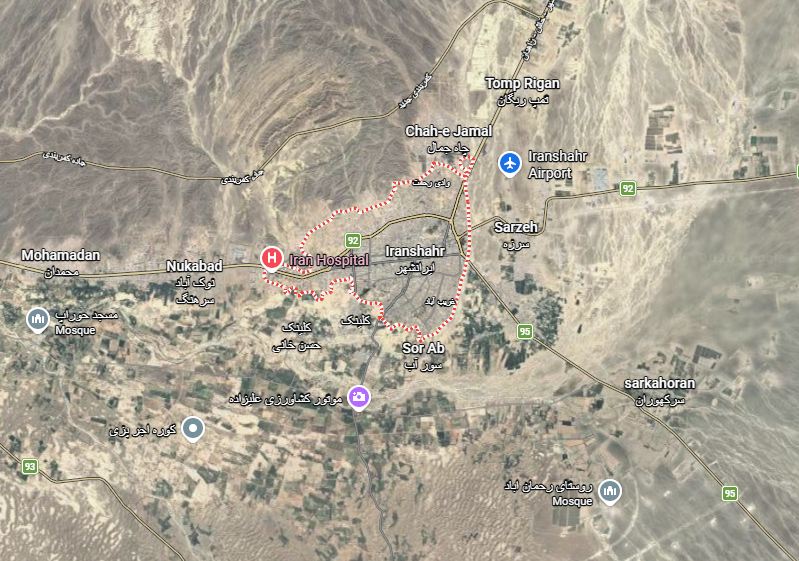
TRAC Incident Report: Baloch Separatists Clash with IRGC & Security Forces in Hours-Long Engagement, Gharibabad, Iranshahr, Sistan & Baluchestan, Iran

TRACFusion_Newsletter2.png

CLICK HERE FOR PAST WEEKLY BRIEFINGS

TRAC Logo_Primary_TransparentWhite.png
Facebook          X          Instagram