|
|
Defending wildlife and habitat through:
Advocacy
Conservation
Education
|
|
|
News & Updates: April 2024 |
|
In this issue:
- AOK Celebrates 25 years of prairie-chicken conservation
- What good is a prairie-chicken?
- AOK gets a big win for Cheyenne Bottoms
- Kansas Department of Wildlife and Parks names a new secretary
-
Philanthropy Corner: Earth Day Double Your Donation Campaign Update
- AOK Events
- Big Kansas Road Trip in Lincoln County
-
Hutton
Work Fun! Weeks
-
Chapter Spotlight: Smoky Hills Audubon Society - A small chapter with a big impact
-
AOK Nature Spot Recommendations: Cedar Bluff State Park offers hikes and roadside wildlife viewing
|
|
|
AOK Celebrates 25 Years
of Prairie-Chicken Conservation
|
|
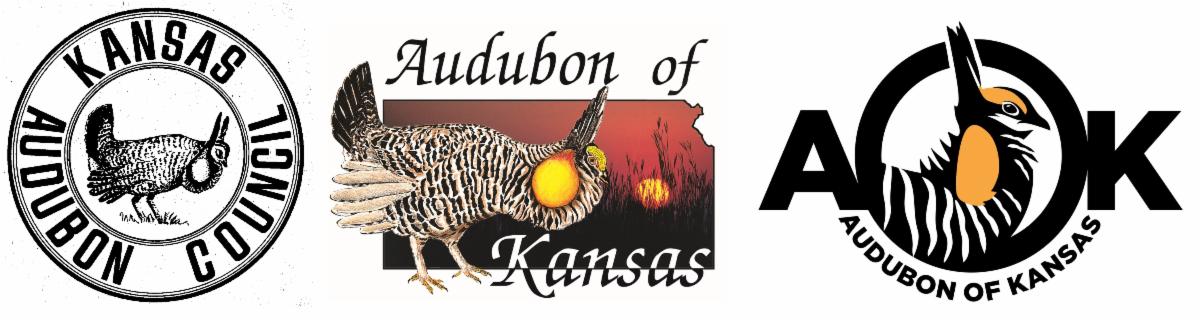
Audubon of Kansas is celebrating our 25th anniversary this year. Prairie-Chickens have always been central to Audubon of Kansas' identity and mission. Even though our logo has changed over the years, the prairie-chicken has been a prominent part of our logo. It was even a part of the Kansas Audubon Council's logo, the precursor to AOK.
Two of AOK's early board members had an inordinate fondness for prairie-chickens. Robert 'Bob' Robel was a Professor at Kansas State University, and the foremost aurhority on prairie grouse. His research examined the management and behavior of many species including prairie-chickens, quail, and deer in Kansas, Black Grouse and Red Deer in the United Kingdom. He was also an avid hunter and accomplished taxidermist. As an AOK Trustee, he was successful in advising big wind energy companies to move the proposed location for a major industrial wind development in the Flint Hills from their first three choices to an area with less of an impact on prairie-chickens.
Bill Browning was another board member with a passion for prairie grouse, and contributed several articles to Prairie Wings about managing his property for prairie-chickens. He is a rancher in the Flint Hills who has implemented numerous initiatives for improving habitat including removing woody vegetation manually and with prescribed fire, implementing a patch-burn/patch-graze operation for grazing cattle, and spot spraying Sericea lespedeza, an invasive plant.
Under former Executive Director Ron Klataske's leadership, AOK continued to be a strong voice for prairie-chicken conservation. AOK is among several organizations that advocates for Environmental Quality Incentive Program (EQIP) funding for patch-burn grazing practices, and special Conservation Reserve Program and EQIP initiatives for Lesser Prairie-Chickens. AOK was the only organization that publicly challenged the claim made by the former Kansas governor that the answer to Lesser Prairie-Chicken conservation was to raise them in captivity (thus, eliminating the need to protect habitat from various developments), and to strongly denounce the legislation promoted by former Secretary of State Kris Kobach that would have made it a crime for agency personnel in Kansas to assist the US Fish and Wildlife Service to conserve the species if it was designated as a federally threatened species!
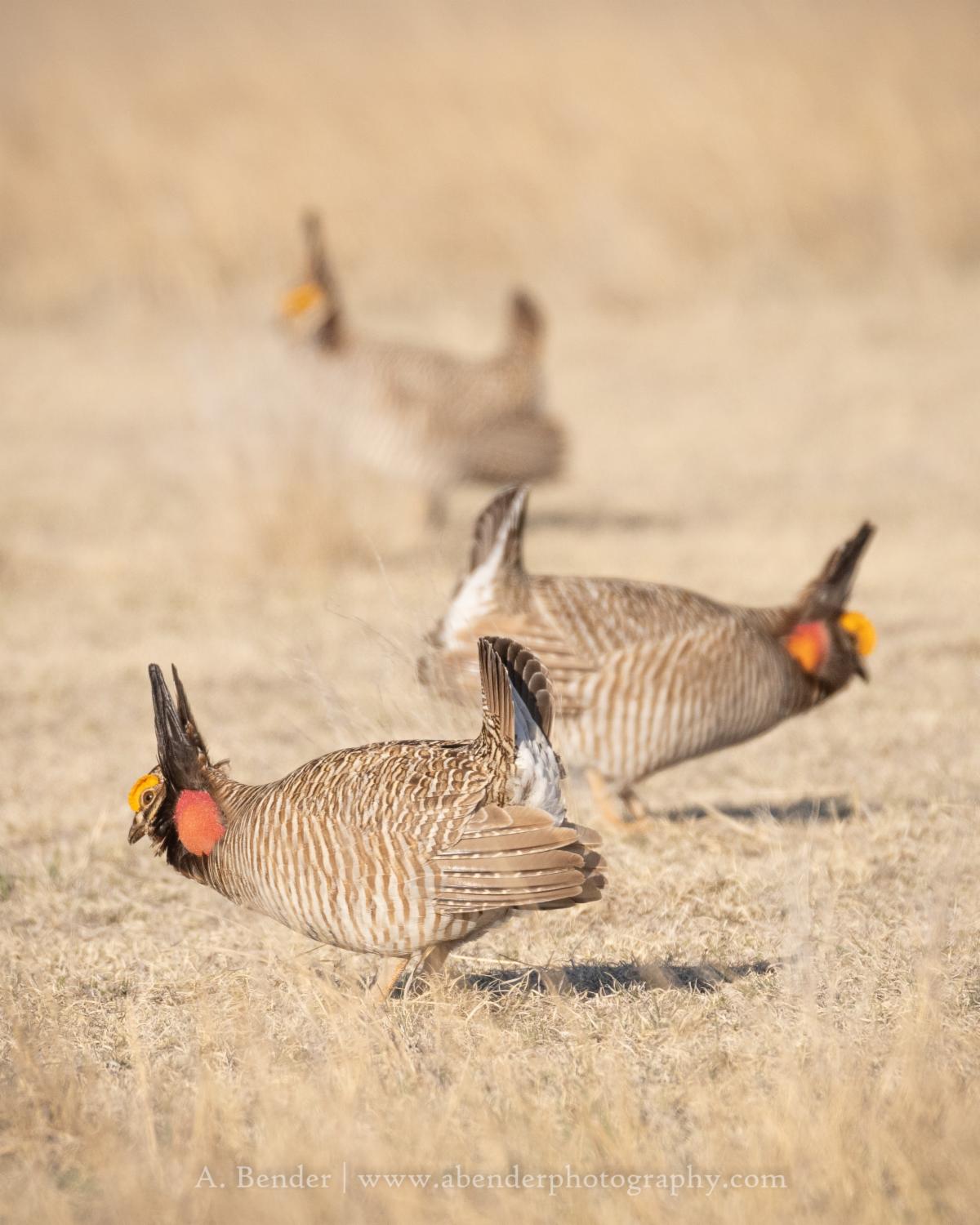
Today, AOK is still active in prairie-chicken conservation. AOK's current Executive Director, Jackie Augustine, has spent 20 years studying prairie-chicken behavior, first for her doctorate degree in biology, and then as an Associate Professor at The Ohio State University - Lima. Her expertise is instrumental in allowing AOK host the Kansas Lek Treks Prairie-Chicken Festival. The festival draws positive attention to prairie-chickens in western Kansas. AOK supported the listing of the Lesser Prairie-Chicken as a threatened species in Kansas, and provides oral and written testimony throughout the state when solar and wind energy developments threaten prairie-chicken habitat.
|
|
|
What good is a prairie-chicken? |
|
The first time I encountered this question, I was a graduate student standing nervously next to a poster of my research in the Kansas statehouse. It was my first visit to the statehouse, and I was soaking in the history and grandeur of the place. A weathered politician was walking quickly through our posters barely glancing at them. He saw my poster, paused, and asked, “What good are prairie-chickens?” I stammered, “Economic importance as a game bird?” He grunted and resumed his determined walk.
Many people have negative views of prairie-chickens. Now that the Lesser Prairie-Chicken is listed as a federally threatened species in Kansas, Oklahoma, Colorado, and northern Texas (they are endangered in New Mexico and western Texas), prairie-chickens are being viewed as another way the federal government is telling producers what to do with their land. Lawmakers and businesspeople see the chickens as a roadblock to economic growth. There is a federal lawsuit (Case 7:23-cv-00047-DC-RCG) in the Texas District Court from the Attorneys General of Kansas, Texas, and Oklahoma which questions the science and legality of the listing. Politicians at the state and federal level are denouncing the listing and trying to defund its enforcement.
I am still frequently asked the ‘What good is a prairie-chicken?’ question in various forms. Media representatives ask, “Why should we save prairie-chickens?” Ranchers ask, “How do prairie-chickens contribute to my cattle operation?” Kansas Lek Treks Prairie-Chicken Festival participants ask, “Why do you care so much about prairie-chickens?”
My answer depends on my audience. Scientists understand that prairie-chickens are an umbrella species – if you preserve prairie-chicken habitat, you protect many other species that need grasslands. Prairie-chickens need 50,000 acres for a healthy network of populations. Those acres must contain shorter grass for displaying, taller grass for nesting, and grazed rangelands for raising chicks (grass with corridors to walk through, but thick areas to hide from predators). By protecting all grass types, you are protecting Horned Larks which require short grass, Cassin’s and Henslow’s Sparrows which prefer thicker, taller grass, and many other species. Birdwatchers know that seeing prairie-chickens takes effort, but results in an entertaining experience you will never forget. The birds have comical displays and intense fights to determine who wins the opportunity to mate. Over 130 birdwatchers from all over the country recently flocked to Hays, Kansas, to see the birds (which also provides an economic boost to local businesses). To the media, I talk about the prairie-chicken as an indicator of the health of the land and the rural community. They give us a sense of place – without them, Kansas would be another Iowa, Illinois, or Indiana – endless acres of row crop agriculture with only small pockets of wildlife here and there. (Note that Iowa and Illinois have small populations of less than 200 prairie-chickens which those states are actively trying to conserve.) To Ranchers, I talk about how the presence of prairie-chickens acts as a visual confirmation of their good stewardship of the land and the long-term health of the grassland ecosystem. If a ranch has prairie-chickens on their property, they should be able to just keep doing what they are doing for a long time to come. They should be proud of the healthy grass maintained with cattle grazing to recycle nutrients back into the soil. To Christian groups, I quote Genesis 1:21: On the fifth day of creation, God created “every winged bird according to its kind. And God saw that it was good.” Every faith has a text that talks about how nature and humanity are intertwined. To those interested in history and culture, prairie-chickens have inspired Native American dancing and rituals, and have been a part of the history of European settlement through food for pioneers and a delicacy shipped via train to eastern cities. They continue to inspire songs and art to this day (shout out to Tallgrass Express and their “Prairie Chicken Pete” https://tallgrassexpress.com/prairie-chicken-pete). To me, prairie-chickens are my personal connection to nature. They give me hope that there are still wild places left that are worth protecting.
Essay by AOK Executive Director, Jackie Augustine, PhD Biology
|
|
|
AOK gets a Big Win for Cheyenne Bottoms |
|
AOK immediately went into action when a large scale industrial solar facility was proposed to be located immediately adjacent to Cheyenne Bottoms, a wetland of international importance and a critical stopover site for the endangered Whooping Crane. Although AOK is supportive of renewable energy projects, such development should not degrade Kansas' remaining wild places. We were concerned that the heat shimmer from solar panels may confuse waterbirds into thinking they are a body of water, as has been documented in other areas. When the birds attempt to land on the panels, they may be injured or be unable to take off if they need a running start.
AOK was the most vocal and consistent voice for wildlife with our testimony consisting of four written letters and three in-person hearings. Other environmental organizations were also involved including the International Crane Foundation, Ducks Unlimited, Kansas Department of Wildlife and Parks, The Nature Conservancy, Burroughs Audubon Society, and others. Together, we were able to convince the commissioners to delinate a 2-mile 'no build' zone around Cheyenne Bottoms, with an additional 2 miles designated as a 'conditional permitted' zone. Additionally, all power lines in the area will be buried (soil permitting) thereby reducing the threat of mortality via collisions. This is especially important for juvenile Whooping Cranes who are particularly susceptible to these collisions.
Without the testimony of environmental organizations, local citizens, and wildlife watchers throughout the state, this solar facility would have been built directly adjacent to the Bottoms. Now, migrating Whooping Cranes, shorebirds, waterbirds, and waterfowl will be able to continue using the Bottoms as a critical stopover refuge along their perilous journey.
|
|
|
Kansas Department of Wildlife and Parks
Names a New Secretary
|
|
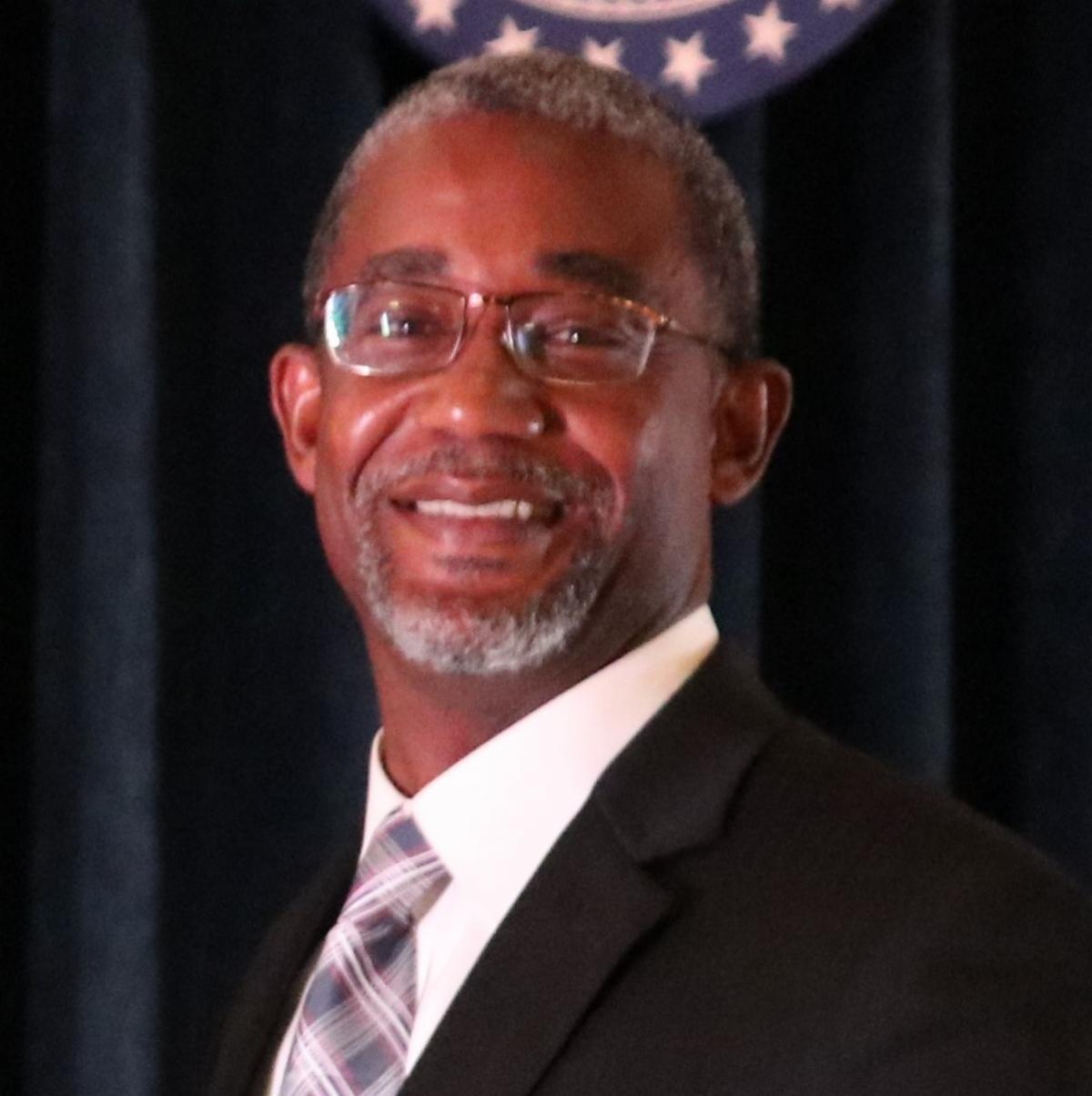
Governor Laura Kelly announced in March that she has appointed Chris Kennedy as Secretary of the Kansas Department of Wildlife and Parks (KDWP) effective March 18, 2024. Kennedy is preceded by Secretary Brad Loveless whose tenure with the Department began in January 2019.
“I’m grateful to Secretary Loveless for his steadfast commitment to the State of Kansas and our state’s natural resources over the past five years,” Governor Laura Kelly said. “I’m confident that Chris Kennedy is the steadfast leader needed to guide the Kansas Department of Wildlife and Parks in its next chapter.”
Born in North St. Louis, Missouri, Kennedy was introduced to natural resources at a young age, having grown up shooting, hunting, boating, and fishing. He brings nearly three decades of experience in wildlife and natural resources, beginning with his first internship out of high school at the U.S. Fish and Wildlife Service to conducting water quality and quantity research projects across Arkansas, Kansas, and Louisiana. In 1996, Kennedy joined the Missouri Department of Conservation (MDC), where he remained until this appointment to succeed Loveless. While at MDC, Kennedy assisted private landowners, managed public waters, conducted public resource education, and sought to increase the agency’s ability to serve all citizens. He is perhaps most well-known for his work researching, managing, and restoring aquatic species such as alligator gar while advancing opportunities for Missouri’s youth to work with resource professionals to better manage public resources. Kennedy has also been a guest on the National Geographic Channel's Monster Fish and Animal Planet’s River Monsters on episodes featuring the alligator gar.
“I am honored that Governor Kelly has appointed me to serve the people of Kansas in this capacity,” Chris Kennedy said. “I am delighted that my more than 30 years of experience will further strengthen the KDWP’s mission to conserve and enhance the state’s wildlife and natural resources to be enjoyed by Kansans for generations to come.”
To make the transition as smooth as possible, Secretary Loveless will assist Kennedy with integrating into the agency prior to Loveless’ formal departure in April. “Chris has proven himself a great leader of people with an exceptional understanding of fish, wildlife, and outdoor recreation issues,” Kansas Department of Wildlife and Parks Secretary Brad Loveless said. “He’s very fortunate to be working with the professionals at Kansas Wildlife and Parks, and conversely, I know they will really appreciate and enjoy working with someone as capable and committed as Chris.”
|
|
|
Philanthropy Corner:
Earth Day Campaign Update
There’s still time to Double Your Donation at AOK!
|
|
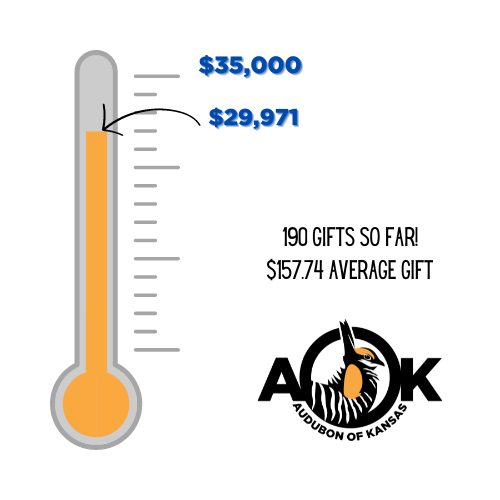
Our Earth Day campaign is still active through May 1st. If you haven't made a donation yet there's still time.
We're SO close now to reaching our challenge match goal of raising $35,000!
Can we bring this home and unlock our full challenge match?
This year we are offering an incredible opportunity to double your donation with a 1 to 1 match up to $35,000. That means your gift will be DOUBLED by generous matching donors.
- Your opportunity to double your donation online ends May 1st at 11:59PM. Checks must be postmarked by May 1, 2024. Thank you for strengthening our voice through your generous support!
|
|
Thursday, May 2
8-10pm: Dark Sky Viewing
Achterberg Wildlife-Friendly Demonstration Farm, 950 N 170 Rd, Lincoln, KS
Kansas has some of the best night sky viewing in the country. Join astronomers in viewing the night sky. It will be an excellent night for observation as the moon will not rise until after midnight. We will look at constellations and observe planets and other astronomical features through telescopes.
Friday, May 3
8am: Migration Bird Hike
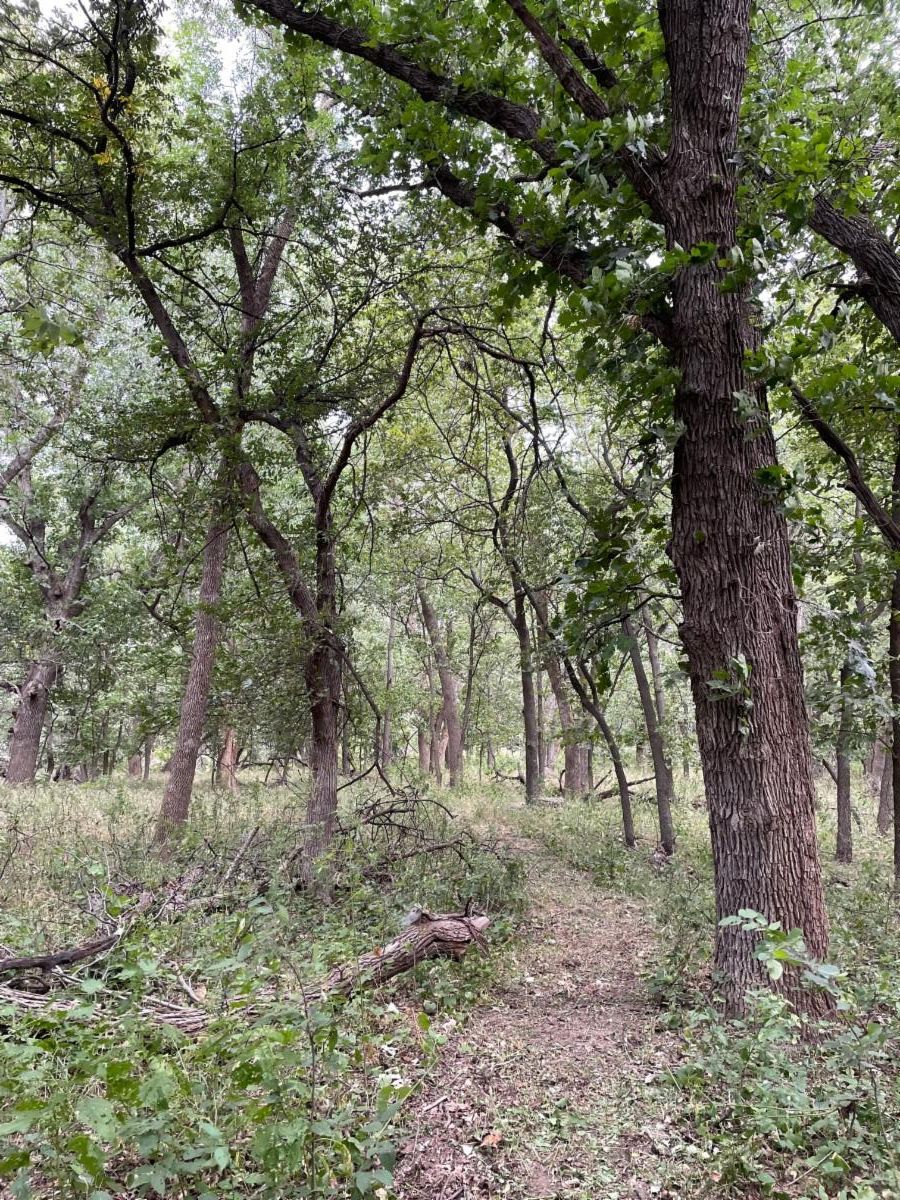
May is the height of songbird migration through Kansas. Audubon of Kansas' Connie Achterberg Wildlife-Friendly Demonstration Farm has a mix of habitats that attracts a wide variety of birds, including grassland and riparian woods. Executive Director, Jackie Augustine, has been a birdwatcher and ornithologist (a scientist that studies birds) for over 25 years. She will lead you on a short hike through the sanctuary and help you identify birds by both sight and sound. If you have them, bring binoculars
3pm: Managing for Quail and other wildlife
Audubon of Kansas' Achterberg Wildlife-Friendly Demonstration Farm hosts two coveys of bobwhite quail. Executive Director, Jackie Augustine, will talk about recent habitat improvements aimed at removing woody species and making the area more suitable for Connie Achterberg's favorite bird, the bobwhite quail.
8pm: Owl Hike
Owl Hike - Whooooo's awake? The Connie Achterberg Wildlife-Friendly Demonstration Farm is home to both Barred and Great Horned Owls. Audubon of Kansas Executive Director, Jackie Augustine, will discuss owl biology and lead participants in a hike through the sanctuary to listen for owls. You will learn to identify owls by their calls. As owls are wild animals, viewing owls is not guaranteed, but there is a good chance to see them.
|
|
May 20-24
Work Fun! Week at Hutton Niobrara Ranch Wildlife Sanctuary, Bassett, NE
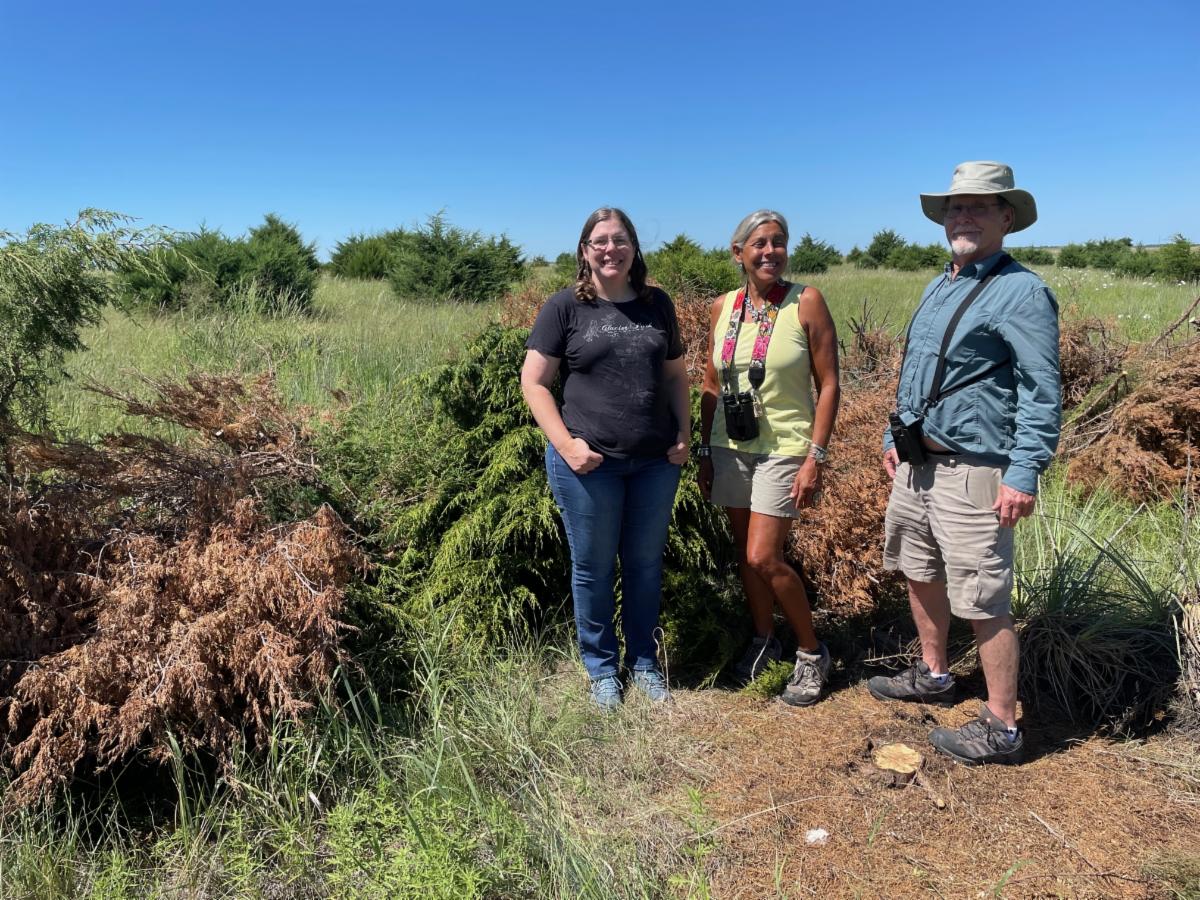
With 5000 acres, there is always a lot to do at Hutton to maintain the best habitat for wildlife and enhance our offerings for human visitors. We hope to have enough people to divide into two crews: one crew will work on removing cedars from a section of pasture and the other will perform clean up around the house (clean flower bed, archiving museum materials).
Volunteers can stay at the Hutton homestead for free during the work week. Dinners will be provided, but please bring your own breakfast and lunch. You will have access to a full kitchen in the house. Of course, there will also be plenty of time to explore the property or assist Amy with surveys for Virginia Rail and Sora. Hutton is near Bassett, NE. Opportunities to carpool may be available. Directions provided when RSVP received. RSVP required. Email or call (402-382-5538) Amy and let her know that you will be attending.
October 3-7
Work Fun! Week at Hutton Niobrara Ranch Wildlife Sanctuary, Bassett, NE
October 6
Open House at Hutton Niobrara Ranch Wildlife Sanctuary, Bassett, NE
November 1-2
Celebration of Cranes at Sterling/Quivira National Wildlife Refuge
December
Registration opens for Kansas Lek Treks Prairie-Chicken Festival
April 10-13, 2025
Kansas Lek Treks Prairie-Chicken Festival, Hays, KS
|
|
Chapter Spotlight:
Smoky Hills Audubon Society -
A small chapter with a large impact!
|
|
Smoky Hills Audubon Society covers 9 counties in the north-central portion of the state (Saline, Jewell, Mitchell, Lincoln, Ellsworth, Cloud, Clay, Ottawa, and Dickinson). They have an active chapter with many attendees to their programs.
Their next program is May 16th featuring Brenna Riley from Pheasants Forever. They meet in Room 229 of the Peters Science Hall (Kansas Wesleyan University, Salina). Go early to meet the speakers at 7:00pm with the program beginning at 7:30pm.
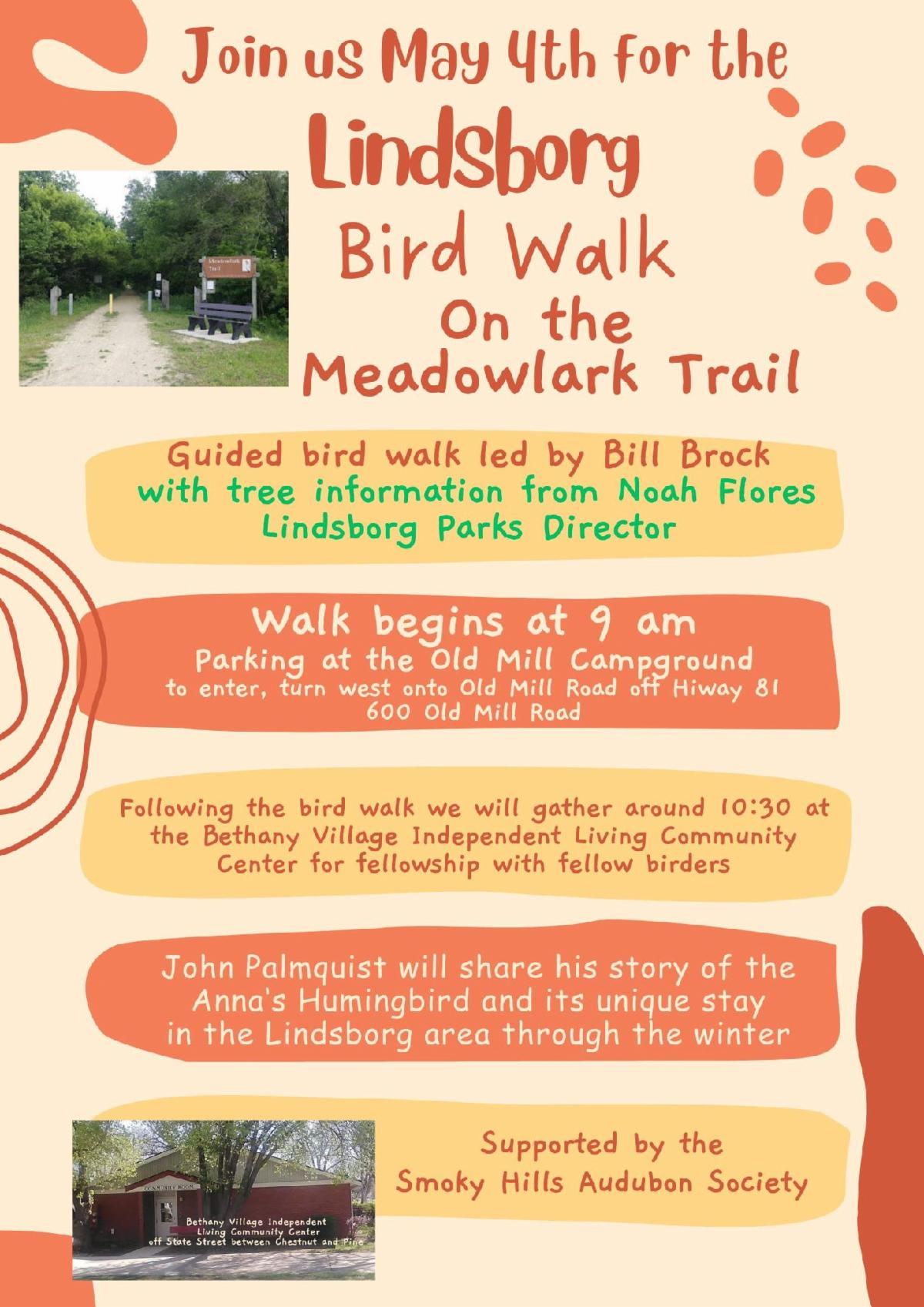
On May 4th, they are hosting a bird and tree walk along the Meadowlark Trail in Lindsborg. See the flier below for more information. There is also a city wide yard sale, Millfest and May Day activities so lots to do and see.
|
|
|
AOK Shares Favorite Birding Spots! |
|
Cedar Bluff State Park offers hikes and roadside wildlife viewing
32001 KS-147
Ellis, KS 67637
38.775978, -99.810007
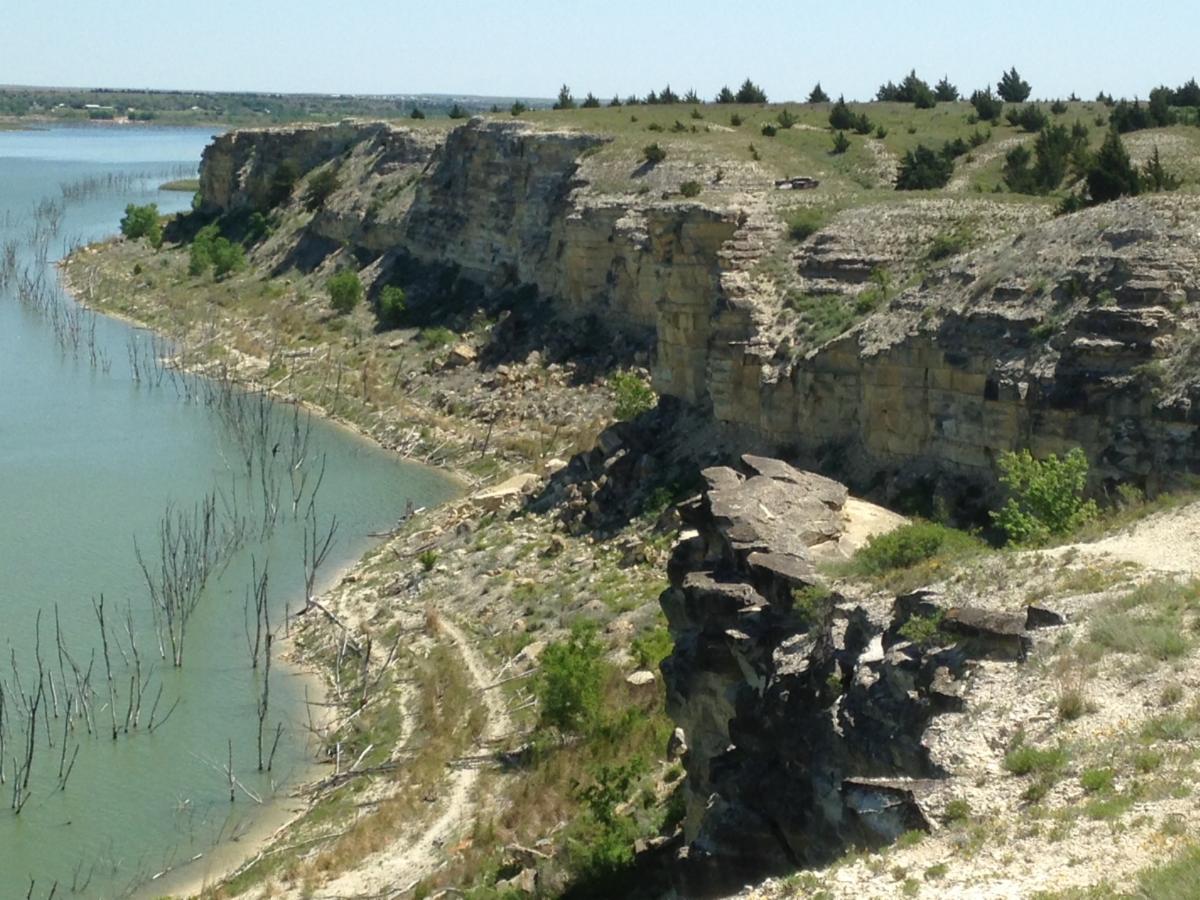
Cedar Bluff State Park provides over 800 acres for exploring nature. On the north side of the reservoir, enjoy opportunities to easily get close to the reservoir to search for eagles and waterbirds. The south side of the reservoir has hiking trails and wonderful views of the bluffs. The Kansas Trail Guide names the Agave Trail as one of the Top 10 trails of Kansas. The trail combines a short paved 1-mile nature trail loop with a more challenging 4-mile route that crosses rugged canyons and scenic limestone bluffs. For those who would rather see wildlife from the comfort of their car, abundant wildlife can be seen from the gravel roads encircling the reservoir including snakes, birds, deer, and abundant wildflowers.
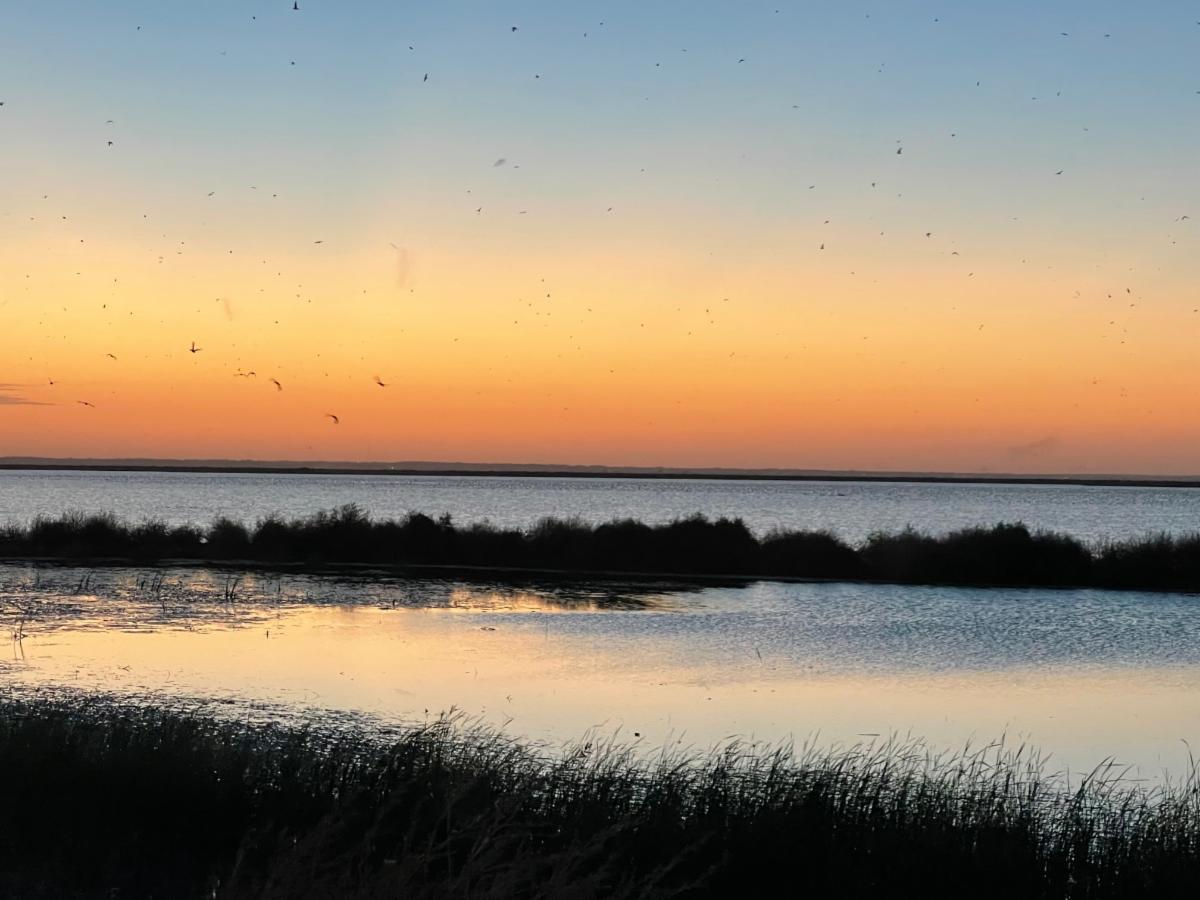
Photo by JK Augustine showing the view from the car-accessible overlook on the south side of the reservoir
|
|
|
Ellen Johnson Mosley - Director of Philanthropy - Gift Planning, Membership, Endowments, Events Management - ellen@audubonofkansas.org
Amy Kucera - Sanctuary Manager - Questions about AOK sanctuaries and habitat management amy@audubonofkansas.org
Audubon of Kansas
PO Box 1106 - Manhattan, KS 66505
785-537-4385
|
|
|
|
|
|
|