|
On the USCCB’s website, we read the following statement regarding the season of Lent:
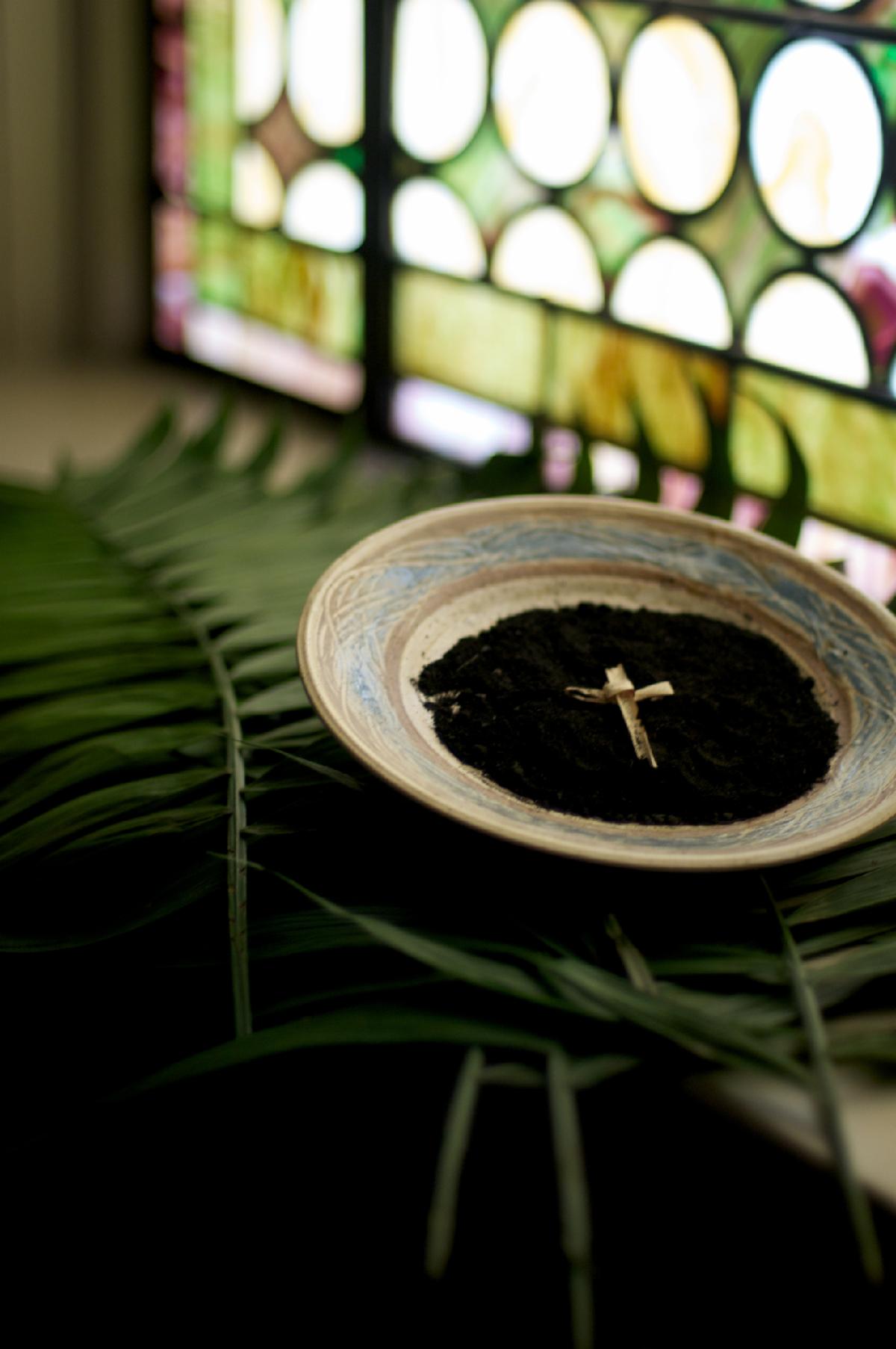
“Lent is a 40-day season of prayer, fasting, and almsgiving that begins on Ash Wednesday and ends at sundown on Holy Thursday. It is a period of preparation to celebrate the Lord's Resurrection at Easter. During Lent, we seek the Lord in prayer by reading Sacred Scripture; we serve by giving alms; and we practice discipline through fasting. We are called to abstain from luxuries during Lent, but we are also urged to pursue an inner conversion of heart as we seek to follow Christ's will more faithfully. We recall the waters of baptism in which we were baptized into Christ's death, died to sin and evil, and began new life in Christ.”
If Francis de Sales were alive today, he would draw extra attention to Lent being an opportunity to “pursue an inner conversion of heart.” In other words, whether through prayer, fasting, almsgiving or good works, our Lenten practices should not merely impact parts of who we are. Our Lenten practices should have what Francis called a “universal” impact, meaning, they should have an impact on all of who we are. In the beginning of his "Introduction to the Devout Life," Francis provides an illustration of what can happen if our Lenten practices fail to be universal in effect:
“One man sets great value on fasting, and believes himself to be leading a very devout life, so long as he fasts rigorously, although all the while his heart is full of bitterness. One will
| |  | |
not moisten his lips with wine, perhaps not even with water, in his great abstinence, but he does not hesitate to steep them in his neighbor’s blood, through slander and detraction. Another person reckons himself as devout because he repeats numerous prayers daily, although at the same time he does not refrain from making all manner of angry, irritating, conceited or insulting comments among family and neighbors. Yet another one freely opens his purse in almsgiving but closes his heart to all gentle and forgiving feelings towards those who are opposed to him. Still another one is ready enough to forgive his enemies but will never pay his rightful debts unless forced to do so by others. While all these people may consider themselves to be ‘religious’, in truth they are in no sense actually devout at all.”
May our practices of prayer, fasting, almsgiving and good works help us to “universally” become more of the people that God created us to be during these 40 days of Lent, and beyond.
| | |
E Pluribus Unum
“Out of many, one.” As two hundred and fifty years of lived experience of the “American Experiment” clearly demonstrates, this is easier said than done.
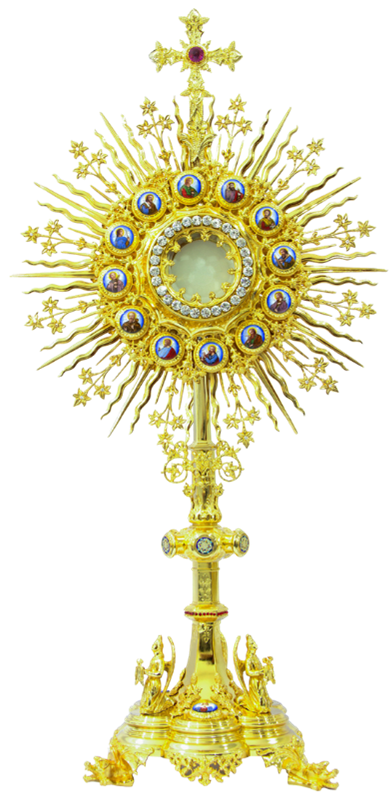
Today, we find ourselves in a cycle of political, cultural, relational, and spiritual polarization that has been described by some as a battle for our national soul. Just as in the past, there is no single solution to the conflicts and divisions in our present. Throughout American history, however, the exercise of prayer has always been a key element in our collective efforts at striving for understanding, reconciliation, healing, justice, and peace. In a statement dated January 28, Archbishop Paul S. Coakley, president of the U.S. Conference of Catholic Bishops (USCCB) invites parishes across the United States to offer a Holy Hour for Peace.
It seems fitting that St. John Neumann parish has chosen Presidents’ Day to hold a “Holy Hour for Peace,” an opportunity, in the words of Archbishop Coakley to “pray for reconciliation where there is division, for justice where there are violations of fundamental rights and for consolation for all who feel overwhelmed by fear or loss… for healing in our nation and communities…and to ask the Lord to make us instruments of his peace and witnesses to the inherent dignity of every person.”
As we see in the case of the presidents we honor on February 16, there is always a place for the power and promise of prayer in a nation based on the God-given, unalienable rights of life, liberty, and the pursuit of happiness. As Archbishop Coakley aptly states:
"Your faith matters. Your prayers matter. Your acts of love and works of justice matter."
| | |
|
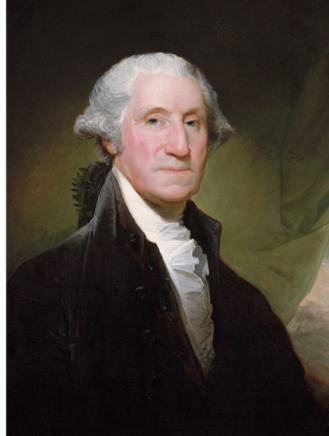
President George Washington
“I now make it my earnest prayer, that God would have the United States in his holy protection, that he would incline the hearts of the Citizens to cultivate a spirit of subordination and obedience to Government, to entertain a brotherly affection and love for one another, for their fellow citizens of the United States at large, and particularly for their brethren who have served in the Field, and finally, that he would most graciously be pleased to dispose us all, to do Justice, to love mercy, and to demean ourselves with that Charity, humility and pacific temper of mind, which were the Characteristicks of the Devine Author of our blessed Religion, and without an humble imitation of whose example in these things, we can never hope to be a happy Nation. Amen.”
Prayer adapted from Washington’s Circular Letter to the States, which he wrote on June 8, 1783, as the commander in chief, at his headquarters in Newburgh, New York. This circular was directed to the governors and states of the new nation. His reference to them has been replaced by the words “the United States.” Otherwise, the words and the spellings are those of General George Washington of the Continental Army.
| | |
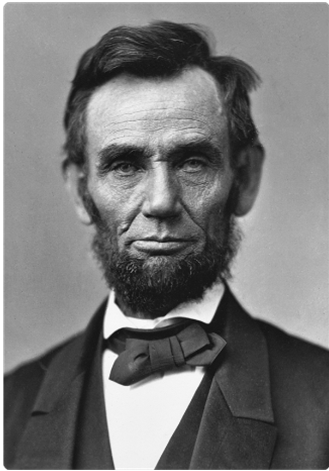
President Abraham Lincoln
“We have been the recipients of the choicest bounties of Heaven; we have been preserved these many years in peace and prosperity; we have grown in numbers, wealth, and power as no other nation has ever grown. But we have forgotten God. We have forgotten the gracious hand which preserved us in peace and multiplied and enriched and strengthened us, and we have vainly imagined, in the deceitfulness of our hearts, that all these blessings were produced by some superior wisdom and virtue of our own. Intoxicated with unbroken success, we have become too self-sufficient to feel the necessity of redeeming and preserving grace, too proud to pray to the God that made us. It behooves us, then, to humble ourselves before the offended Power, to confess our national sins, and to pray for clemency and forgiveness.”
Lincoln set aside April 30, 1863, as a day of fasting and prayer and encouraged Americans to halt their “secular pursuits” to unite at churches, places of worship and inside their homes to observe the day of invocation — an effort he hoped would help bring unity back to the sharply divided United States.
|
| |
We invite you to join us on President's Day, February 16, for our Holy Hour for Peace at 7 p.m. in the Chapel. May our prayers for our nation matter, may our faith during this Holy Hour be a moment of renewal for our hearts, and may our acts of love and works for justice bring peace to our nation.
| | The Discerning Mind: A Historical Portrait of Fr. Brisson
by Deacon Jonathan Dick, OSFS | |
In the fall semester of 2025, I enrolled in an independent study to learn and write about how the socio-ecclesial culture of France impacted and influenced the life of Bl. Louis Brisson and the foundation of the Oblates of St. Francis de Sales. Writing this paper taught me that if we want to learn and know about our saints, it is so important to understand the context in which they lived. As we commemorated the death of our founder, Bl. Louis Brisson and the 150th Jubilee of the Oblates of St. Francis de Sales on February 2, I would like to share with you an excerpt from my paper which explores the lived experience of our blessed founder, Fr. Louis Brisson, OSFS.
The following article is an adapted excerpt from Chapter IV of “The Mind and Mission of Bl. Louis Brisson, OSFS: The Socio-Ecclesial Historical Impact and Influence of the Long 19th Century in France on the Founding of the Oblates of St. Francis de Sales”. (December 2025)
| |
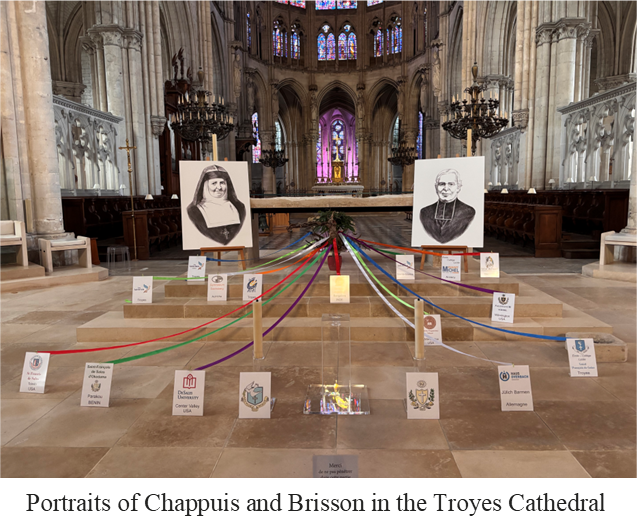
The world in which both Mother Marie de Sales Chappuis and Louis Brisson lived was turbulent to say the least. In their combined lifetimes, they witnessed six regime changes in France and each epoch of governance and leadership related differently to the Church. The reality of the nineteenth century made a tremendous impact on how they lived.
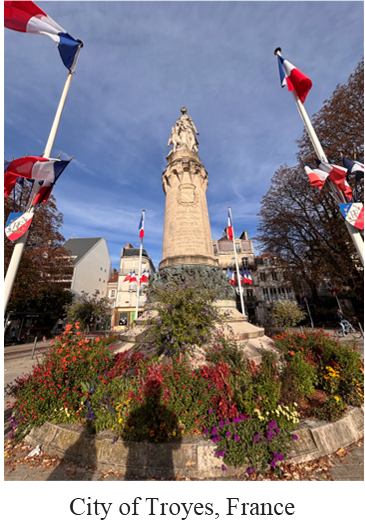
Both Brisson and the Good Mother spent much of their ministerial lives in the city of Troyes, but Brisson, in particular, spent the majority of it serving this city. From childhood onward, Brisson witnessed the rapid changes that took place in French society. While he did not live in the epicenter of the revolutions, he did experience the effects of the changing world. These experiences developed his thinking and influenced his discernment of how he was called to serve the people of Troyes. Leading up to the foundation of the Oblates, these qualities and experiences of Brisson’s life influenced his mind and heart, building upon one another.
Now, while he proceeded in his relationship to the world with caution, Brisson also had a fascination for the modern world and the sciences. He was curious about life and the advancements of his time. Across Europe, much progress and many advancements were being made in the areas of industry and science, and these developments were not frightening to him.
While there were most likely aspects of society at the time that troubled him, he was not opposed to the headway being made in technology, science, and the like. Brisson was somewhat of a Renaissance man. He was adept not only in matters of theology and science, but was also gifted in architecture, cooking, agriculture, and administration. His curiosity and excitement about the world offered him the ingenuity to be able to meet the challenges that he faced in ministry, and his devotion enabled him to bring all of these attributes to God and bring God into all of his works.
| |
This became especially pertinent in his various ministries in the city of Troyes. After his ordination in 1840, with the Industrial Revolution slowly gaining steam in France, Brisson was a firsthand witness to the joys and the tragedies of the revolution. “Industrialization brought the building of factories and increased production, but also a host of social, environmental, and moral problems.” Along with the economic struggles of France at this time, society seemed unprepared for the challenges that came with industry. People received minimal payments for the work they did, and there were significant wage gaps and challenges between men and women. By the time Brisson was thirty and had been a priest for seven years, the factories of Troyes were known to be unsafe and lacking quality sanitary conditions, yet men, women, and children were seen coming in and out of long shifts.
Labor laws had also not yet caught up with the demands of labor itself. Many people, including children, could be seen working ten to fifteen-hour shifts in these situations. For the majority of his life, Brisson witnessed these challenges for the people of Troyes. Aware of the dignity of those around him, he sought to ensure their well-being. Through his efforts with the Catholic Association of Saint Francis de Sales, he showed care for the social and spiritual well-being of the young people. He helped to develop and bring about many of the œuvres ouvrières (working clubs) to meet the needs of the young women in the city. There, he provided for their needs, offering them “affordable lodging, safety and security, clothing, food, and childcare, as well as an opportunity for work.” Knowing the religious ignorance of this generation, he sought to restore the Catholic faith and practices in these young women through spiritual support and catechetical programming.
Amid all of these experiences and realities that shaped the mind of Fr. Louis Brisson, probably the most prominent and defining influence on his person was Salesian spirituality as it was communicated to him by Mother Marie de Sales Chappuis. Since his ordination in 1840, Brisson was involved with the life and ministry of the Sisters of the Visitation and their adjacent school. For the majority of his life, he was proximal to their spiritual heritage, and he seemed to take hold of what he had learned. To the Sisters of the Visitation, Brisson was a man who truly understood the spirituality of Saint Francis de Sales and preached and practiced its virtues. Through the Good Mother's tutelage, he learned that the culmination of what it means to be Salesian was to “Live Jesus.” Salesian spirituality was that which most shaped and formed the mind of Louis Brisson.
On March 27, 1894, many years after the foundation of Oblates of Saint Francis de Sales, Brisson was remarking on the characteristics of what separates Oblate ministry and life from those of other religious communities. At this General Chapter, to the Oblates gathered, he said:
Our distinctive characteristic is charity. Saint Francis de Sales laid this down quite clearly: he thought so much of it that he decided to make it the only religious bond between the Sisters of the Visitation. The exigencies of the time forced him to put in the other three ordinary vows. But he ever upheld charity as the guardian of his congregations. It is charity and charity alone that unites the different Visitation monasteries, and this bond has always been sufficient to keep them within the exact observance of their rules. It will be the same for us, because we Oblates of Saint Francis de Sales have no principle other than charity. The existence of our congregation can neither be explained nor justified; it cannot be sustained nor will it be sustained in the future, except by charity.
Charity was the premier impetus for Louis Brisson’s life. He taught his Oblate sons that charity was the means and the goal of their service to God and the Church. It was the influence of charity that appealed to the good nature and will of others. It was his method that inspired his mission, as it was the essential quality of the charism of Salesian spirituality. Through the values and lessons he learned from Saint Francis de Sales and through the teachings of the Good Mother, charity was at the epicenter of the Salesian manner through which he engaged with the world.
|
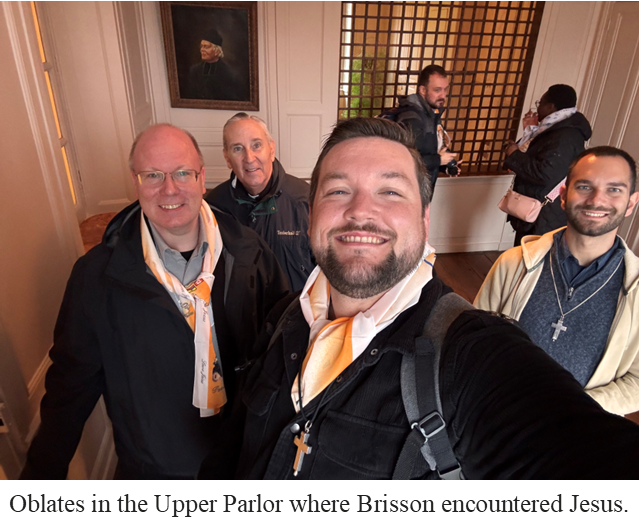
| |  | All of these characteristics and experiences began to intersect and inform his future as the Founder of two congregations. When Brisson experienced the apparition of Jesus Christ in the parlor of the Visitation Monastery in 1845, Troyes was beginning to grow as an industrial city. People were coming in from the countryside, particularly young women and children, in order to find employment in workshops and different factories. Over the next thirteen years, Brisson continues to minister in the Diocese of Troyes, teaching at the seminary, assisting in parishes, and working with the sisters and young girls in the Visitation monastery and school. In 1858, he became the president of the Catholic Association of Saint Francis de Sales and is directly involved with the oeuvres ouvrières in the city. For the next quarter of a century, Brisson serves the young people in his city. It is in the midst of his service to these young men and women, that the initiative to form the Oblate Sisters and the Oblates begins to take form.
With the help of the Good Mother, Brisson enlists two young women, one of whom was Saint Léonie Aviat, to begin to directly serve the needs of the young women. Together, they found the Oblate Sisters of Saint Francis de Sales. Then years later, at the behest of the bishop, Brisson was asked to help minister to the young boys in the city and provide for their needs and education. With the help of close connections, Brisson begins to bring men together to begin this new religious congregation of men to serve at Saint Bernard School. After a period of thirty years, with seventeen years in direct ministry to the young people of Troyes, the fruits of Brisson’s work and discernment come to fruition in the foundation of the Oblates of Saint Francis de Sales.
From his upbringing in Plancy to his seminary experience, from his Salesian education to his service to the young people of Troyes, all of these experiences coalesced to shape and inform Brisson’s discernment for how and what it would mean to found the Congregation of the Oblates
of Saint Francis de Sales. The vision and mission that the Good Mother received and longed for was established. Her hope of seeing Jesus walking the face of the earth again in the Oblates was finally being fulfilled.
| | |
A Lenten Journey of
Faith & Action
by Angela Davis & Jean Lupinacci
Service is at the heart of who we are as Christians and members of St. John Neumann. Jesus famously tells us what we do for the least, we do for him: “For I was hungry, and you gave me food, I was thirsty, and you gave me drink, a stranger and you welcomed me.” (Matthew 25:35) Our own parish mission statement resonates our commitment to live out the Gospel: “We, the faithful of St. John Neumann Catholic Church, commit ourselves to celebrating and giving witness to the presence of God in our midst by living the Gospel to its fullest.” This Lent, our Parish Lenten Mission not only calls us to prayer, but also to action! So, whether you are a young adult or a retiree, single or a family with young children, teen or middle-aged, our Parish Lenten Mission will have something for you to help you grow in faith and in actively living the Gospel.
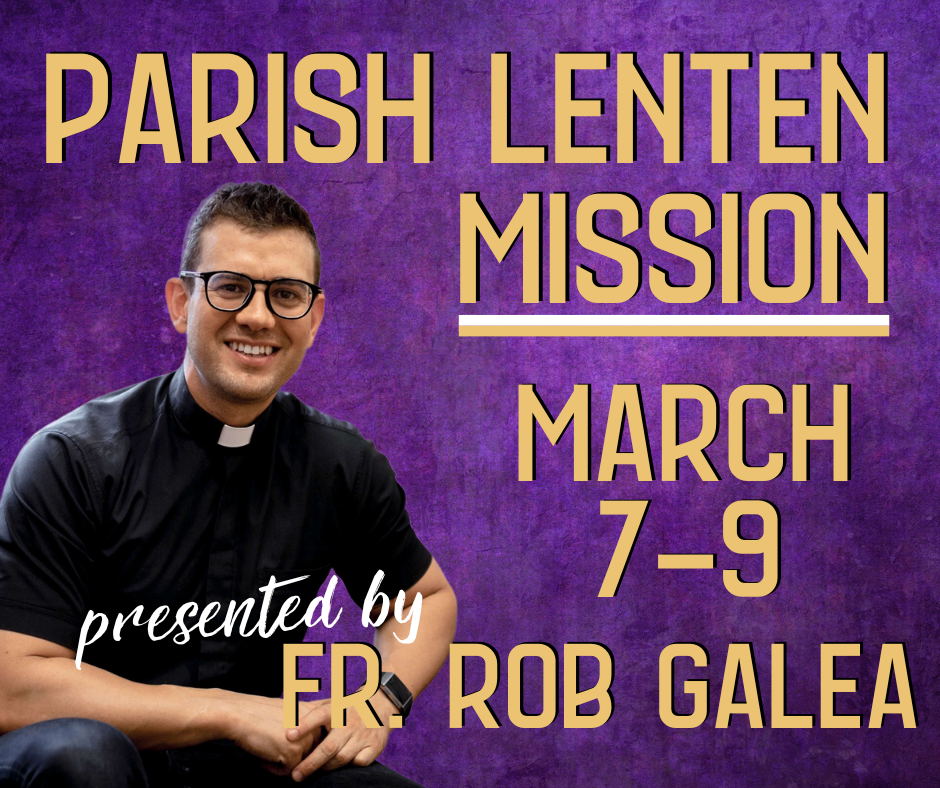
This year's Parish Lenten Mission (March 7-9) will be led by Fr. Rob Galea. Based out of Australia, Fr. Rob is an internationally known priest, speaker, musician, and influencer. Drawing from his own journey of faith, healing, and conversion, he speaks with honesty, compassion, and joy about God’s relentless mercy. Paired with his live music, his message is prayerful, contemporary, and deeply rooted in Scripture, Fr. Rob offers an experience that will inspire your growth in faith this Lent.
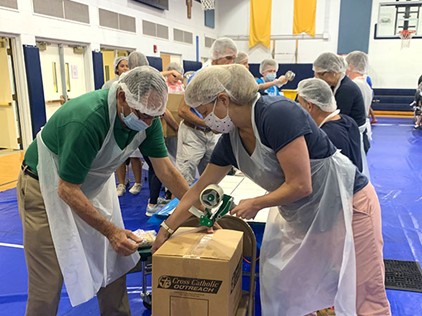
To live the Gospel during the mission, we are partnering with Cross Catholic Outreach for a hands-on service project to help answer Christ’s directive to “feed the hungry.” Cross Catholic Outreach is a highly rated non-profit ministry dedicated to “transforming the poor and their communities materially and spiritually for the glory of Jesus Christ.” As many know, our Middle School youth in the Rooted program partner with Cross Catholic Outreach each year to provide meals to those in need globally. This year, Rooted will continue their efforts by packing 50,000 meals on March 7. The following day, members of the parish are asked to continue these efforts and pack an additional 20,000 meals! These meals are provided to communities and individuals in developing countries such as Haiti and Guatemala. They are often the only food that a child will eat that day and are vital to their health and well-being.
| |
Volunteering at the Cross Catholic Outreach food packing event at our Parish Mission empowers us to protect the world’s most vulnerable kids and families from malnutrition. Volunteers work in assembly lines to pack beans, soy, rice, dehydrated vegetables, and vitamin packets. This faith-in-action service project unites community and family members, with jobs for all ages and abilities. This protein, nutrient and vitamin rich “Vitameal” can energize, strengthen, and improve the health of malnourished children and families around the world. These poorest of the poor served include those in Haiti, Guatemala, and the Dominican Republic.
| |
Our Parish Lenten Mission is an invitation to transformation. Through Fr. Rob Galea’s witness, music, and preaching, we will be reminded that God meets us where we are and calls us forward together. Through the food-packing project with Cross Catholic Outreach, we will extend that love beyond our parish walls to families around the world.
This Lent, we invite all SJN parishioners to join us in this journey of faith and action. Together, we will deepen our faith in God, our relationships with one another, and our commitment to serving the needs of our brothers and sisters around the world. May this Lent draw us all closer to Christ and send us forth as disciples of hope.
| |
As we quickly approach Lent, more details about the Parish Lenten Mission will be available including a sign-up to assist with food packing. In order to provide 70, 000 meals, we are aiming to raise $25,000. We ask you to prayerfully consider donating in support of this ministry as well as praying for those who will receive the meals we pack. You can donate here.
We also encourage you to dive deeper into the ministry of Fr. Rob Galea, ICON Ministry. You can also find his music on Spotify, Apple Music, YouTube, and social media.
| | |
Sister Dorothy Stang: Martyr of the Amazon
by Elizabeth Connell Wright
| |
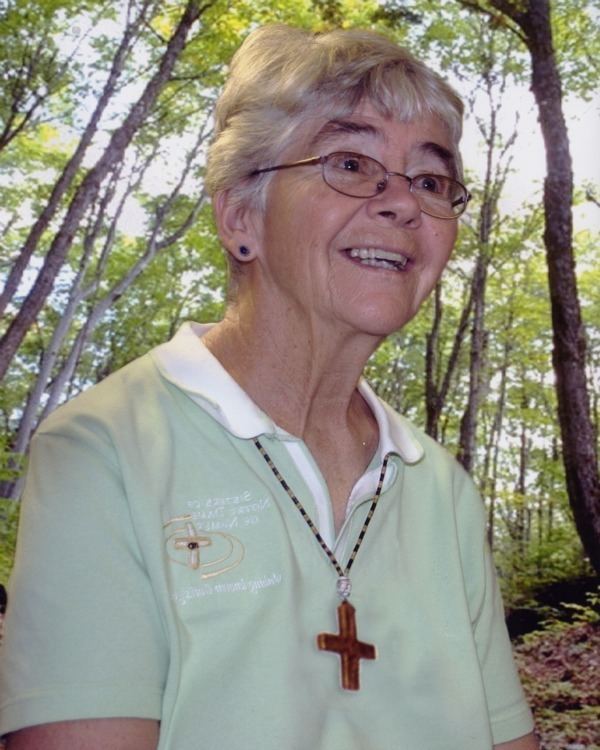
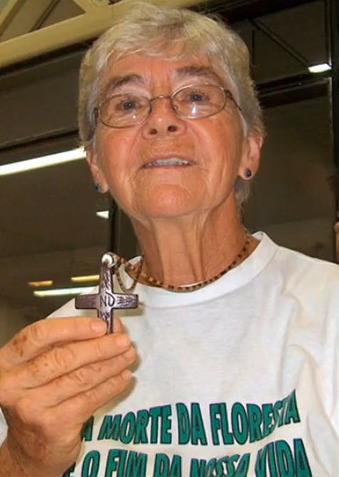
As I mentioned in the January newsletter, last year I was introduced to the beautiful work of artist Nancy Cote Marek at St. Cecilia Parish in Boston. Beyond the 24 paintings displayed in their sanctuary, Marek has many other Catholic works of art, one of which is a painting of Sister Dorothy Stang on her knees mourning a fallen tree. I am always drawn to the stories of Catholics living their faith; though often the lives of holy men and women end in tragedy, it is the inspiration that is their legacy, and Sister Dorothy Stang's life is no different.
Born in 1931 and raised in Dayton, Ohio, Dorothy – known as Dot to her family – was the first of nine children born to Henry and Edna McCloskey Stang. They were active parishioners at St. Rita Catholic Church and planted the living Gospel in their children through their example of love and compassion. They were known to always be caring for those in need. David Stang, Dorothy’s younger brother, described their parents' influence, “Our parents were people of deep faith. They truly believed they were the Body of Christ. We were taught that Christ is inside us and we need to be like Christ and be of service to the poor.” In addition to this strong modelling of faith, her time spent in the family's half-acre garden cultivated her heart for God’s creation. Sister Joan Krimm, S.N.D.deN. says “I believe her interest in sustainable farming started there in her childhood garden. Her father had a great love of the land, and Dot said she got big hands from pulling those weeds.”
Like many of us, Dorothy’s vision for her life was vastly different than God’s plan for her. Immediately after graduating from St. Julienne High School, she joined the Sisters of Notre Dame de Namurin 1948. On her application to the order she proclaimed across the top, “I want to be a missionary in China.” Sister Dorothy was sent to teach elementary school in Illinois and Arizona before a missionary opportunity presented itself: In 1966, she accepted a position in Brazil. Her mission was to continue teaching children, but the bishop instead needed the sisters to form small Catholic communities, to study the Gospel, teach and guide them in the absence of priest availability.
| |
A few years into her mission, Sister Dorothy was reunited with her childhood friend, Sister Joan Krimm in Brazil. After graduating from high school together, the two had joined the Sisters of Notre Dame de Namur to, but their assignments had veered them in different directions until their lives once again intersected in Brazil. Together, they established a new convent at Corbatá in the state of Maranhão and observed the oppression of the poor farmers in their community.
In 1972, the Brazilian government opened the Trans-Amazon Highway, a mostly unpaved road connecting the northeastern regions with the Amazon basin. The government began offering land incentives to encourage westward movement to populate the area. Sister Joan says, “Many of our people began to move to Pará because they saw a chance to own land and property. Dot thought one of us should go to support them and that’s when she moved up there alone.” It is in Pará that Sister Dorothy’s path pivoted again.
| |
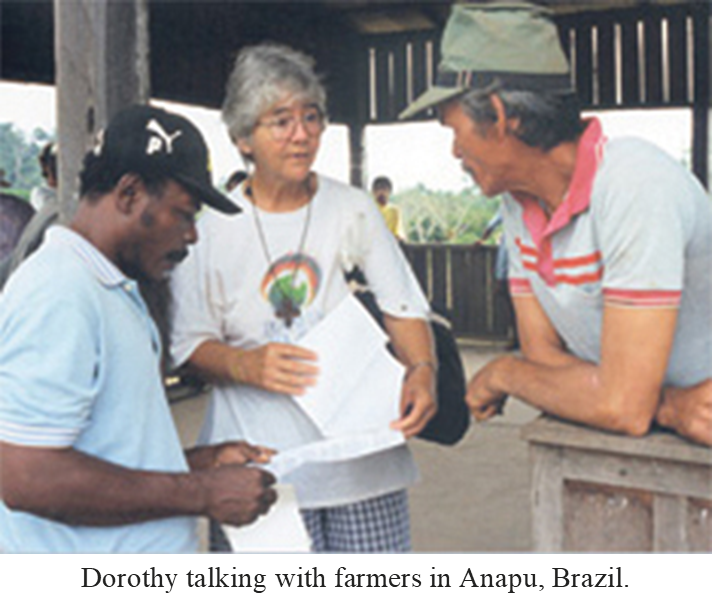
Driven by greed, corrupt ranchers and loggers vied for the limited land. The poor farmers who Sister Dorothy served were incessantly harassed with horrific tactics ranging from burning crops to murder. With their wealth and political connections, the ranchers were Goliaths compared to the five-foot-two nun, but she burned with the Holy Spirit. Dorothy learned to intervened between the farmers and lawyers to acquire land deeds. Once she obtained them for the peasant farmers, she protected them, keeping them with the Bible she always carried.
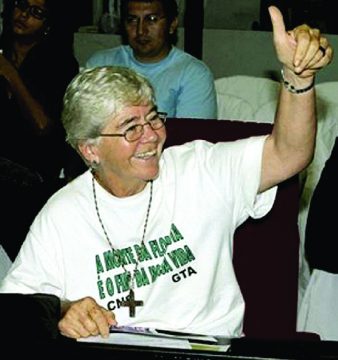
Sister Dorothy fully realized the risk of standing up to the powerful. She knew she was tangling with men who killed their enemies, but despite this she pressed on for years. She lived and walked with “her people” in Pará every day, empowering the poor and uneducated to sustainably farm and support both the land and their families. She shepherded the poor to find God in the cathedral of the rainforest. Speaking of the threat to her life, she said, “I don’t want to flee, nor do I want to abandon the battle of these farmers who live without any protection in the forest. They have the sacrosanct right to aspire to a better life on land where they can live and work with dignity while respecting the environment.” Sister Dorothy loved her neighbors as herself – even those who eventually murdered her.
| |
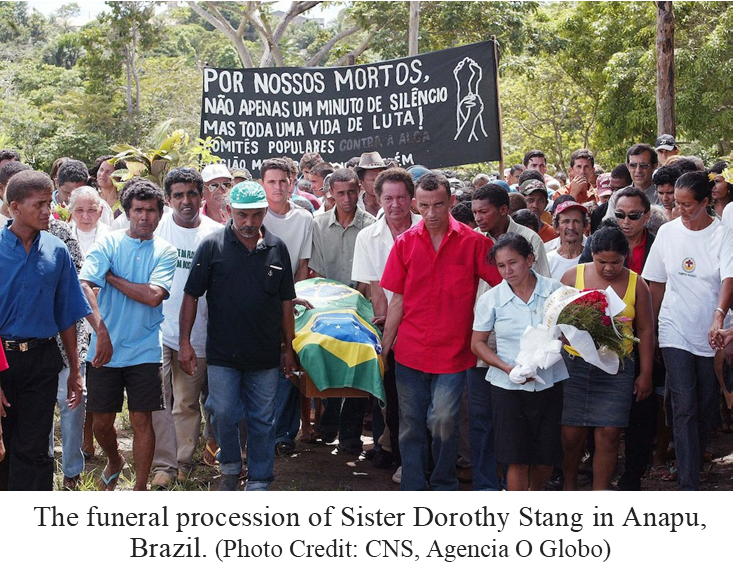
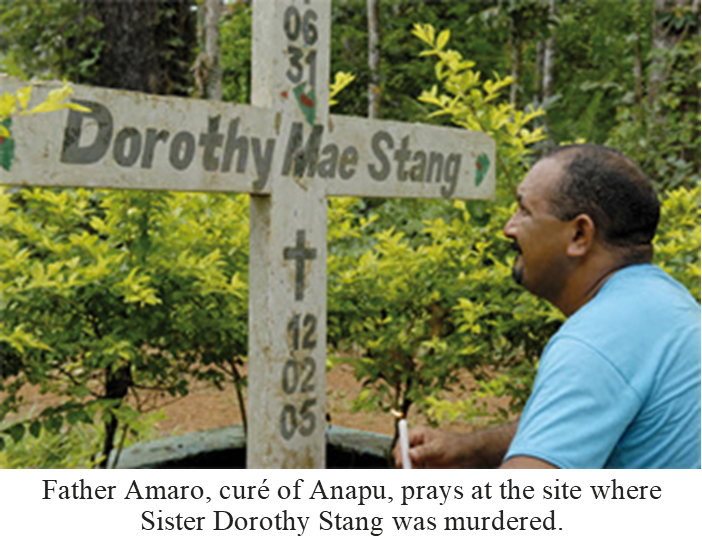
On February 12, 2005, a rainy Saturday morning, Dorothy was headed to the Boa Esperanca Sustainable Development Project to visit a farm that had been burned. On the road, she was intercepted by four hired gunmen. As they harassed her and threaten her, she didn’t try to flee or bargain for her life, she opened her ever-present Bible and began reading chapter 5 of Matthew’s Gospel, the Beatitudes. As she proclaimed the Word of God, Jesus’ Sermon on the Mount, she was shot six times. The people she had lived with and loved through the suffering and poverty didn’t flee in fear but flocked to guard her body until the police arrived later that day. At her funeral service three days later in Anapu, Brazil, it is said her people proclaimed, “We are not burying Dorothy, we are planting her.”
The assassination of Sister Dorothy Stang didn’t dissuade the people; they were fortified by the loss of Dorothy and the news of her murder echoed around the world. In response, within a week of her death, Brazilian President Luis Inacio “Lula” da Silva issued a proclamation to form a reserve of 8.15 million acres and a national park spanning 1.1 million acres in the state of Pará (NBC News, February 17, 2005)
| |
In life and in her death, Sister Dorothy cultivated love and opportunity for the poor. In December 2004, before her death, the Brazilian Bar Association named her “Humanitarian of the Year.” She was recognized as “Woman of the Year” by the state of Pará and was recognized an honorary citizen of the state of Pará, Brazil, in the months before her death. On May 23, 2005, the U.S. House and Senate passed H.Con.Res 89, “Honoring the Life and Work of Sister Dorothy Stang.” The resolution concludes:
“Whereas Sister Dorothy lived her life according to the mission of the Sisters of Notre Dame: making known God’s goodness and love of the poor through a Gospel way of life, community, and prayer, while continuing a strong educational tradition and taking a stand with the poor people especially women and children, in the most abandoned places, and committing her one and only life to work with others to create justice and peace for all.”
In 2008, she was posthumously awarded the United Nations Prize in the Field of Human Rights. When musician Evan Mack heard her story shortly after her murder, he was profoundly moved and inspired to compose an opera – though he had never written one. He spent the next few years pouring over letters she had written — both in English and Portuguese — to the Sisters of Notre Dame de Namur. In 2011, his opera, “Angel of the Amazon,” opened. Mack reflected on her life, “In a world filled with noise, right, and a lot of talking and a lot of saying, but very little doing, she showed us a way of doership. She showed us a way to roll up your sleeves and commit."
| | |
In 2021, Sister Dorothy received a unique honor: a new species of screech owl was discovered in the Amazon rainforest and was given the scientific name, “Megascops stangiae.” Megascops is, of course, the bird’s species, but stangiae is for her. Sister Judith Clemens, a friend and fellow Sister of Notre Dame de Namus, wrote of this recognition, “For me it is so fitting. It is symbolic of her life, her insistence on struggling against deforestation and the effect on both animals and humans, especially people made poor… I like to think Dorothy would find this absolutely fascinating and such a joy.” (OSV News, February 12, 2025)
On January 10, 2025, just a month before the 20th anniversary of her murder, Sister Dorothy Stang became the first American woman included in the Vatican’s New Martyrs Memorial. Pope John Paul II established a commission to investigate modern Christian martyrs in 1999, and they are now honored and remembered at Rome’s Basilica of St. Bartholomew on Tiber Island with six chapels dedicated to the martyrs. The chapels are organized by four geographical locations, plus two chapels dedicated to historical martyrs: the Nazi regime and Communism. At the Basilica is a relic containing blood-soaked soil from the site of her murder as well as a sweater that belonged to her.
| | |
Though the death of Sister Dorothy Stang was certainly senseless and tragic, it is the seed planted by her life that continues to bloom both literally and figuratively. According to Sister Jane Dwyer, who worked alongside Dorothy and continues her work there today, “Dorothy pockets were always filled with seeds. Nowadays wherever I go, I hear people say, ‘I got this cocoa plant from Dorothy. This is Dorothy’s palm!’ The poor have carried her in their hearts.” (Vatican News, February 12, 2025)
Learn more here about the life and continued legacy of Sister Dorothy Stang.
| | From the Holy See This Month | | |
The Pope's Intention for Prayer
and Action for February:
For Children with Incurable Diseases
Let us pray that children suffering from incurable diseases and their families receive the necessary medical care and support, never losing strength and hope.
| | | |
Current Mass Times
Ash Wednesday, February 18: 6:30 a.m., 9 a.m., 12:10 p.m. (Service),
6 p.m., 8 p.m. (Service in Spanish)
Saturday: 5 p.m.
Sunday: 7:30 a.m., 9:30 a.m., 11:30 a.m., 2 p.m. (Spanish), 5 p.m.
Monday-Friday: 9 a.m.
Wednesday & Friday: 12:10 p.m.
Watch a livestreamed or recorded Mass
Confession
Saturday: 10 a.m.-10:30 a.m. (English)
Sunday: 3 p.m.- 4 p.m. (Spanish)
| | | | | |