The Business Transfer Newsletter
October 2021
Selling Texas Companies Since 1974
Our monthly newsletters provide educational information about buying or selling a business, current economic conditions, and highlight some of our newest business-for-sale opportunities.
"The best library of articles about how to sell your business" 
~says The New York Times

Opinion: Texas Is The Future of America
AUSTIN, Texas — California is “America on fast-forward,” it is often said. Liberals quote the maxim with pride, pointing to the state’s diversity and its outsize share of economic output, technological innovation, venture capital and growth. Conservatives put scare quotes around it, warning about the dystopia that awaits if America becomes any more like California, with its high taxes and housing costs, challenged schools, dwindling water supply, devastating wildfires and permanent Democratic majority.

But if you’re really looking for a bellwether state that offers a glimpse into the country’s economic future and engines of growth as well as its political fault lines in the long run, it’s not California. It’s Texas.
Texas a Big Winner in the California Exodus
and Now There's More Data to Prove it

The job growth is some of the first data showing the exodus from California is real and has accelerated during the pandemic.

As the midpoint of the year passes, many business owners are re-evaluating their businesses. With uncertainties surrounding the economy and potential rises in taxes, it’s no surprise that business owners are leaning towards selling in the next year. So, is 2022 a good year to sell a business?

Supply and Demand

The strength of small businesses was tested over the past year. As many businesses begin to recover, there is a surge of buyers in the market ready to buy with cash offers.

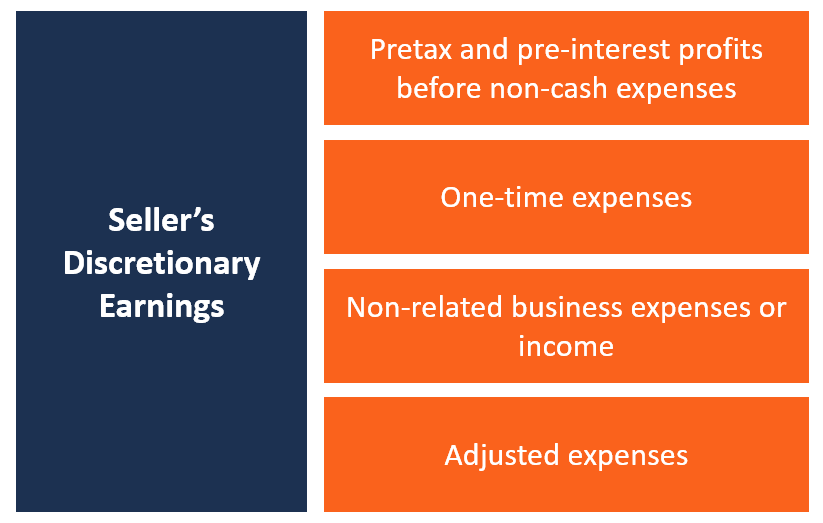
What is Seller’s Discretionary Earnings?
--------------------------------------
A Cash-Flow Based Measure of Business Earnings
in an Owner-Operated Business
KEY TAKEAWAYS: When it’s time to sell your business, your numbers must tell the right story.

Calculating SDE is a way to standardize or “normalize” a company’s earnings so it can be more accurately compared to the earnings of other companies and the industry as a whole.

If you own a small to mid-size business, it’s important to have a good understanding of Seller’s Discretionary Earnings or “SDE” and how its calculated.

By doing so, you’ll gain a better understanding of your business’ true earnings, an accurate picture of its value, and insight on things you can do to enhance its value as you move forward.

In this blog, I’ll more fully explain what SDE is, how it’s calculated, and finish by showing a real world example of how you can recast your financials to calculate your SDE.
Buying A Business – Huddle with the Experts
Acquiring a business is a team effort and finding the right business broker (intermediary) is just the start of building your squad. Here’s a very common question posed by prospective buyers:

“I’m ready to purchase a business that’s currently available for approximately $1.1 million. I feel I need a person who can help me with the due diligence, valuation and general advice. Where can I find such a person?”

The answer is: You don’t simply need one person.

Making a business acquisition is a team effort, and your business broker, also known as a business intermediary, is the quarterback. The broker drives the deal through communication with the buyer, the seller, the attorney and the accountant. We do everything to move the deal along, including coaching and some psychology.

It’s an extremely emotional process. Sometimes, the reason deals don’t get done is that emotions get in the way. A good intermediary will take the emotion out of the transaction. Feeling an emotional connection to the business you intend to purchase is important since it will be a large part of your life. However, during the due diligence process common sense must be injected into the game plan.
Master 10 Value Drivers to Sell Your Business
at the Highest Price
Takeaway: Evaluate your company through the eyes of a buyer. Master these ten value drivers and sell at the higher range of the multiples normally associated with your industry.

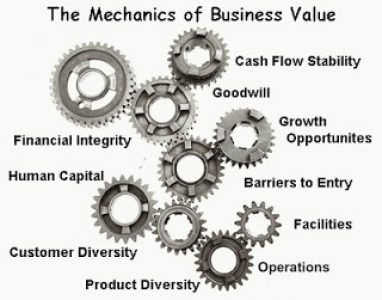
Business Value — What Drives It?
A valuation is not about determining what a company is worth in the current owner’s hands, it is about the company’s transferable value. The purpose of this article is to help you evaluate your company through the eyes of a buyer. From that perspective we will ask you to focus on ten value drivers. Each driver is a characteristic of a business that either reduces the risk associated with owning the business or enhances the prospect that the business will grow significantly in the future. Simply put, the better your performance in these areas, the greater the selling price of your business. The likely result is that you will sell at the higher range of the multiples normally associated with your industry.
Quick Links
12141 Wickchester Lane, Suite 100
Houston, TX 77079
713-680-1200
‌