ConTex Conversations

September 2024

 
To celebrate the achievements of our doctoral fellows, we periodically feature conversations with various members of the ConTex family. They talk to us about their research, goals, and enthusiasm for binational research.


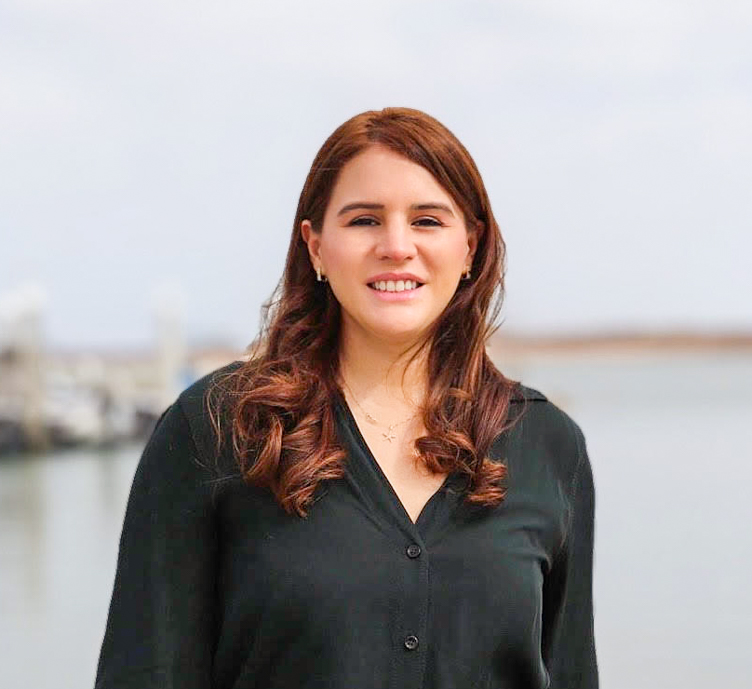
Mariana Rivera Higueras

Hometown:

Xalapa, Veracruz 


Degree Program:

Ph.D. in Marine Science


Institution:

The University of Texas at Austin


Advisor:

Dr. Simon Brandl


Tell us about your research project and why it is important to you?  


Coral reefs are being threatened by both climate change and anthropogenic impacts. We know that these ecosystems harbor great biodiversity and that we depend on them in different ways. In my research work I focus on understanding how biodiversity is maintained, originates and declines in coral reefs. For this I use the cryptobenthic fish community as an ecological model. Cryptobenthic fishes are the smallest vertebrates on the reef; they are very abundant, have fast evolutionary clocks, and are strongly associated with different components of the reef substrate. For all these reasons, the cryptobenthic fish community is an ideal and accessible model for predicting reef composition over time and how this composition impacts biodiversity.  


Mexico is one of the most biodiverse countries in the world. For me, understanding how biodiversity originates and diminishes is a step towards the conservation of our biological and cultural heritage. On the other hand, my PhD project is the first standardized research focused on the cryptobenthic fish community in the Veracruz reefs of the Gulf of Mexico, where several endemisms have been described.    


Have you presented or published your research anywhere? Tell us about the experience.  


This year I made a presentation at the Benthic Ecology Meeting in Charleston, South Carolina. I presented the results of the field work I conducted in the Veracruz reefs. The experience was very rewarding as I was able to share the first ecological findings related to the specialization of cryptobenthic fish species in different reef microhabitats in the Gulf of Mexico. My presentation was very well received and I was able to establish connections with different researchers and graduate students.   


What would you say is something interesting about your area of study that most people don't know? 


Marine biology is a highly romanticized career. It is actually a beautiful career, but it involves a broad knowledge of statistics, mathematics, and other sciences because the main objective of those of us who study it is to decipher mathematically how life in the oceans works.  


Tell us about your academic or professional collaborations with Mexico.  


The research project I am doing has been possible thanks to the cooperation between CICESE and UNAM. I have collaborated mainly with Dr. Omar Valencia, a pioneer in the study of cryptobenthic fishes in the Pacific Ocean. In addition, Dr. Eloísa Torres, who works in the fish collection of the Institute of Biology at UNAM, joined our field sampling.  


One of my priorities is to share my knowledge about the Veracruz reefs and the techniques we use to study them with new generations of researchers. Thanks to active communication with the Institute of Ecology and Fisheries of the University of Veracruz, we were able to integrate marine biology student Montserrat Pouchoulen into the field work. She performed excellently and will co-author the articles we will publish using the data we collected in Veracruz.    


What attracted you to Texas and The University of Texas at Austin?  


I was primarily attracted to the prestige of The University of Texas at Austin and the quality of the teaching and science that is generated at the Marine Science Institute. The existence of the ConTex program also motivated me to apply to UT Austin.  


Moreover, I wanted to conduct my PhD research under the mentorship of Dr. Simon Brandl, who is a world-class expert in reef ecology and is known for his productivity and high-level research.     


What have been some good things you didn't expect from Texas or UT Austin? 


The warm environment at The University of Texas Marine Science Institute has been a pleasant experience for both my personal life and my academic development. I appreciate that Dr. Brandl's lab encourages collaboration among colleagues and the sharing of knowledge.    


What have been the biggest challenges of studying at UT Austin and living in the United States?  


The biggest challenge for me was getting to a place where I didn't know anyone. I was completely out of my comfort zone. I had to create a social support system to stay strong emotionally and excel academically. Fortunately I made close friendships in the community, at the University and at the Marine Science Institute.      


How has the support of ConTex and Conahcyt impacted you?  


I started as a ConTex-Conahcyt fellow a year after I entered the PhD program. That first year I lived very tight financially and stressed to reduce expenses. Since I received the support my quality of life improved and that has impacted my productivity and the quality of my work. I am grateful for the support that has been possible thanks to the collaboration between institutions because it has had a transcendent impact on my life.   


What kind of work do you hope to do in the future, and how do you hope your research will benefit people in the U.S. and Mexico? 


I will promote my results in both the United States and Mexico. I hope to call on the community to promote the conservation of our marine ecosystems. My research project is an example that there is still much to discover in our oceans. I will continue to work to decipher how biodiversity originates and is conserved.     


What advice would you give to other Mexican students considering studying in Texas?  


From a professional perspective, I would tell you that leaving our roots is a big sacrifice, but it is an investment in the future. Opening up to new experiences broadens our vision and focus, so it is worth the time to adapt. On the other hand, I would tell them that it is essential to perfect their English at a technical level, especially in the field of science. I would recommend that you take advantage of the many courses and programs that UT Austin offers to international students to improve your English proficiency.  


From a personal perspective, I would tell them that it is outside of the country when we value our origins and being Mexican the most. Experiencing a new culture and a different language pushes us to mature, to be tolerant and understanding of other ways of thinking. A positive aspect of studying in Texas is that there is a large Latino community, so homesickness is compensated. This is probably one of the happiest times of my life and I would repeat this experience a thousand times more.     


Conversaciones ConTex

Septiembre de 2024

 
Para celebrar los logros de nuestros becarios de doctorado, periódicamente publicamos conversaciones con diferentes miembros de la familia ConTex. Ellos nos hablan de sus proyectos de investigación, de sus metas y de su entusiasmo por la investigación binacional.
 

Mariana Rivera Higueras

Lugar de Nacimiento: Xalapa, Veracruz


Programa de Estudios: Doctorado en Ciencias Marinas 


Institución:

La Universidad de Texas en Austin


Asesor:

Dr. Simon Brandl


Cuéntanos acerca de tu proyecto de investigación y por qué es importante para ti.


Los arrecifes coralinos están siendo amenazados tanto por cambios climáticos como por impactos antropogénicos. Sabemos que estos ecosistemas resguardan una gran biodiversidad y que dependemos de ellos de diferentes maneras. En mi trabajo de investigación me concentro en entender cómo se mantiene, origina y disminuye la biodiversidad en los arrecifes coralinos. Para ello utilizo a la comunidad de peces criptobénticos como modelo ecológico. Los peces criptobénticos son los vertebrados más pequeños en el arrecife; son muy abundantes, tienen rápidos relojes evolutivos y están fuertemente asociados con diferentes componentes del sustrato arrecifal. Por todas estas razones, la comunidad de peces criptobénticos es un modelo ideal y accesible para predecir la composición arrecifal en el tiempo y la manera cómo esta composición impacta a la biodiversidad. 


México es uno de los países con mayor biodiversidad en el mundo. Para mí, entender cómo se origina y disminuye la biodiversidad constituye un paso hacía la conservación de nuestro patrimonio biológico y cultural. Por otra parte, mi proyecto de doctorado es la primera investigación estandarizada enfocada en la comunidad de peces criptobénticos en los arrecifes veracruzanos del Golfo de México, en los cuales se han descrito varios endemismos.  


¿Has presentado o publicado tu investigación en algún lugar? Cuéntanos sobre la experiencia.  


Este año hice una presentación en la Benthic Ecology Meeting en Charleston, Carolina del Sur. Presenté los resultados del trabajo de campo que realicé en los arrecifes veracruzanos. La experiencia fue muy gratificante pues pude compartir los primeros hallazgos ecológicos relacionados con la especialización de especies de peces criptobénticos en diferentes microhábitats arrecifales en el Golfo de México. Mi presentación fue muy bien recibida y logré establecer conexiones con diferentes investigadores y estudiantes de posgrado.  


¿Qué dirías que es algo interesante sobre tu área de estudio que la mayoría de la gente no sabe?  


La carrera de biología marina es una carrera muy romantizada. En realidad es una carrera hermosa, pero involucra un amplio conocimiento de estadística, matemáticas y otras ciencias pues el principal objetivo de quienes la estudiamos es descifrar matemáticamente cómo funciona la vida en los océanos. 


Cuéntanos sobre tus colaboraciones académicas o profesionales con México.  


El proyecto de investigación que estoy realizando ha sido posible gracias a la cooperación entre el CICESE y la UNAM. He colaborado principalmente con el Dr. Omar Valencia, pionero en el estudio de peces criptobénticos en el Océano Pacifico. Además, a nuestro muestreo en campo se incorporó la doctora Eloísa Torres, quien trabaja en la colección de peces del Instituto de Biología de la UNAM.  


Una de mis prioridades es compartir con nuevas generaciones de investigadores mi conocimiento sobre los arrecifes veracruzanos y las técnicas que utilizamos para estudiarlos. Gracias a la activa comunicación con el Instituto de Ecología y Pesquerías de la Universidad Veracruzana pudimos integrar al trabajo de campo a la estudiante de biología marina Montserrat Pouchoulen, quien tuvo un excelente desempeño y será coautora de los artículos que publiquemos usando los datos que recolectamos en Veracruz.    


¿Qué te atrajo a Texas y a la Universidad de Texas en Austin?  


Principalmente me atrajo el prestigio de la Universidad de Texas en Austin y la calidad de la enseñanza y la ciencia que se genera en el Instituto de Ciencias Marinas. La existencia del programa ConTex también me motivó a hacer solicitud en UT Austin.  


Por otra parte, quise realizar mi investigación de doctorado bajo la asesoría del Dr. Simón Brandl, quien es experto a nivel mundial en ecología de arrecifes y es conocido por su productividad e investigación de alto nivel.    


¿Cuáles han sido algunas cosas buenas que no esperabas de Texas o de UT Austin?  


El ambiente cálido del Instituto de Ciencias Marinas de la Universidad de Texas ha sido una grata experiencia tanto para mi vida personal como para mi desarrollo académico. Agradezco que en el laboratorio del Dr. Brandl se incentive la colaboración entre colegas y el compartir del conocimiento.   


¿Cuáles han sido los mayores desafíos de estudiar en UT Austin y vivir en los Estados Unidos?  


El mayor desafío para mí fue llegar a un lugar en donde no conocía a nadie. Me salí completamente de mi zona de confort. Tuve que crear un sistema de soporte social para mantenerme fuerte emocionalmente y superarme académicamente. Afortunadamente hice amistades estrechas en la comunidad, en la Universidad y en el Instituto de Ciencias Marinas.     


¿De qué manera te ha impactado el apoyo de ConTex y Conahcyt?  


Empecé como becaria ConTex-Conahcyt un año después de mi ingreso al doctorado. Ese primer año viví muy ajustada económicamente y estresada por reducir gastos. Desde que recibí el apoyo mi calidad de vida mejoró y eso ha impactado mi productividad y la calidad de mi trabajo. Agradezco el apoyo que ha sido posible gracias a la colaboración entre Instituciones pues ha tenido un impacto trascendente en mi vida. 


¿Qué tipo de trabajo esperas hacer en el futuro? ¿De qué manera esperas que tu investigación beneficie a las personas en los Estados Unidos y México?  


Voy a promover mis resultados tanto en Estados Unidos como en México. Espero hacer un llamado a la comunidad para fomentar la conservación de nuestros ecosistemas marinos. Mi proyecto de investigación es un ejemplo de que aún hay mucho por descubrir en nuestros océanos. Continuaré trabajando para descifrar cómo se origina y conserva la biodiversidad.     


¿Qué consejo le darías a otros estudiantes mexicanos que estén considerando estudiar en Texas?  


Desde una perspectiva profesional, les diría que dejar nuestras raíces es un gran sacrificio, pero es una inversión a futuro. Abrirse a nuevas experiencias amplía nuestra visión y enfoque, por lo que vale la pena pasar por el tiempo de adaptación. Por otra parte, les diría que es básico perfeccionar el manejo del inglés hasta un nivel técnico, especialmente en el ámbito de las ciencias. Les recomendaría que aprovechen los múltiples cursos y programas que ofrece UT Austin a los estudiantes internacionales para mejorar su dominio del inglés.  


Desde una perspectiva personal, les diría que es fuera del país cuando más valoramos nuestros orígenes y ser mexicanos. Experimentar una nueva cultura y un idioma diferente nos impulsa a madurar, a ser tolerantes y comprensivos de otras formas de pensar. Un aspecto positivo de estudiar en Texas es que hay una gran comunidad de latinos, por lo que la nostalgia del hogar se compensa. Probablemente esta etapa sea una de las más felices de mi vida y repetiría esta experiencia mil veces más.      


Visit Our Website
Facebook  Twitter