The Ohio Water Resources Center Newsletter
Issue 5 | Volume 8 | May 2026
| | |
Last month, we discussed the circumstances behind the 2014 Flint water crisis and examined how policies — such as the EPA’s lead and copper rules — were revised in the wake of the crisis to better protect communities. The updated rules reflect an expanded scientific understanding of corrosion in water systems, demonstrating the importance of regularly updating policy based on ongoing research.
However, in Flint, a legacy of public distrust remains, particularly regarding state and federal agencies. While it was the contributions of many independent scientists that identified elevated lead levels in the water, community members often received conflicting information from local officials. The crisis demonstrates another important part of the scientific process: effective communication.
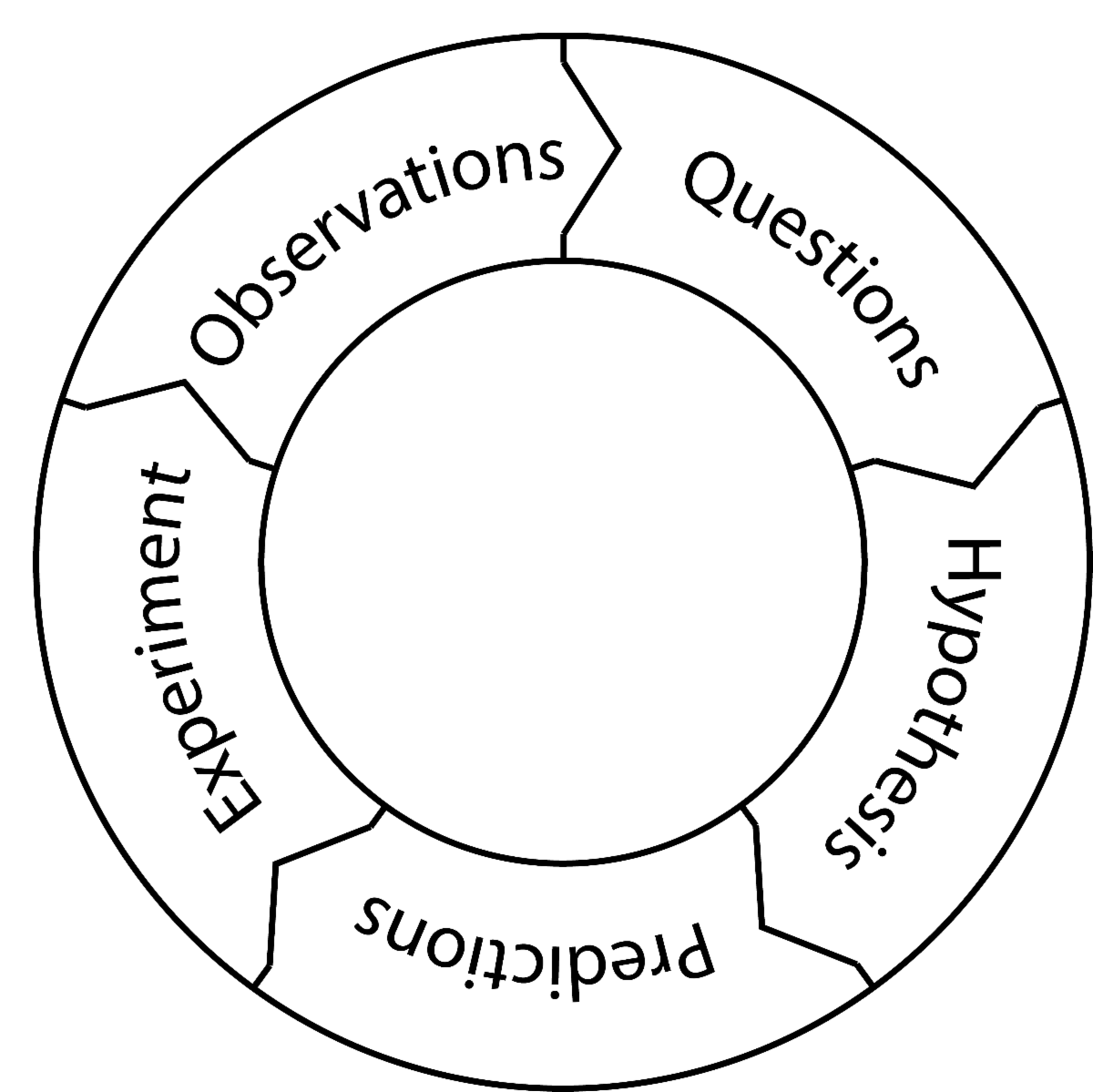
In general, the dynamic nature of science does not translate well into public messaging. While the scientific process is based on repeated tests and always includes room for uncertainty or alternative explanations, people tend to prefer absolutes. The absence of a consensus can be misinterpreted as evidence of wrongdoing or low-quality science, rather than a typical part of investigating a phenomenon. In some cases, this uncertainty can be manipulated to deliberately create doubt. These conflicting messages can lead the public to lose trust in the scientific enterprise as a whole.
For scientists, effectively communicating results may also include educating audiences about how science — at its base — is conducted. This increased awareness can aid both community members and policymakers in understanding results and preventing misinformation.
| | Using metagenomics to track antimicrobial resistance contamination in surface water | |
|
Wastewater effluent — known to contain antibiotic-resistant bacteria (ARB) and genes — can contaminate surface waters and pose risks to human and animal health. Even after treatment, ARB may persist in effluent discharged into rivers and streams, where they can spread, establish environmental reservoirs, and potentially cycle back into human and animal populations. Although wastewater effluent is recognized as a contributor to ARB in Ohio waterways, current monitoring approaches lack the sensitivity and resolution needed to quantify impacts and track the movement of resistance elements across aquatic ecosystems
Drs. Greg Ballash and Thomas Wittum of The Ohio State University Department of Veterinary Preventative Medicine recently completed a project — funded by the Ohio WRC via an Ohio Water Development Authority subaward — focused on characterizing antibiotic resistance in surface water and evaluating the influence of wastewater effluent. The project investigated the capacity of a new technology – targeted metagenomics – to improve the understanding of how Ohio surface waters are affected by ARB and genes discharged in treated wastewater.
Targeted metagenomics amplifies and sequences specific microbial genes or taxa; This approach allows researchers to identify specific bacteria and genes that carry resistance within the environmental sample. Findings indicate that this method offers substantially greater sensitivity than traditional ARB monitoring techniques. Future research will quantify the overlap between wastewater-associated resistomes — the complete collection of ARB and associated genes in an environment — and those detected in surface water. Collectively, these data will be used to develop prevention and mitigation strategies to reduce antimicrobial resistance contamination in Ohio’s waters.
| | | |
Disparate groundwater responses to wildfire | |
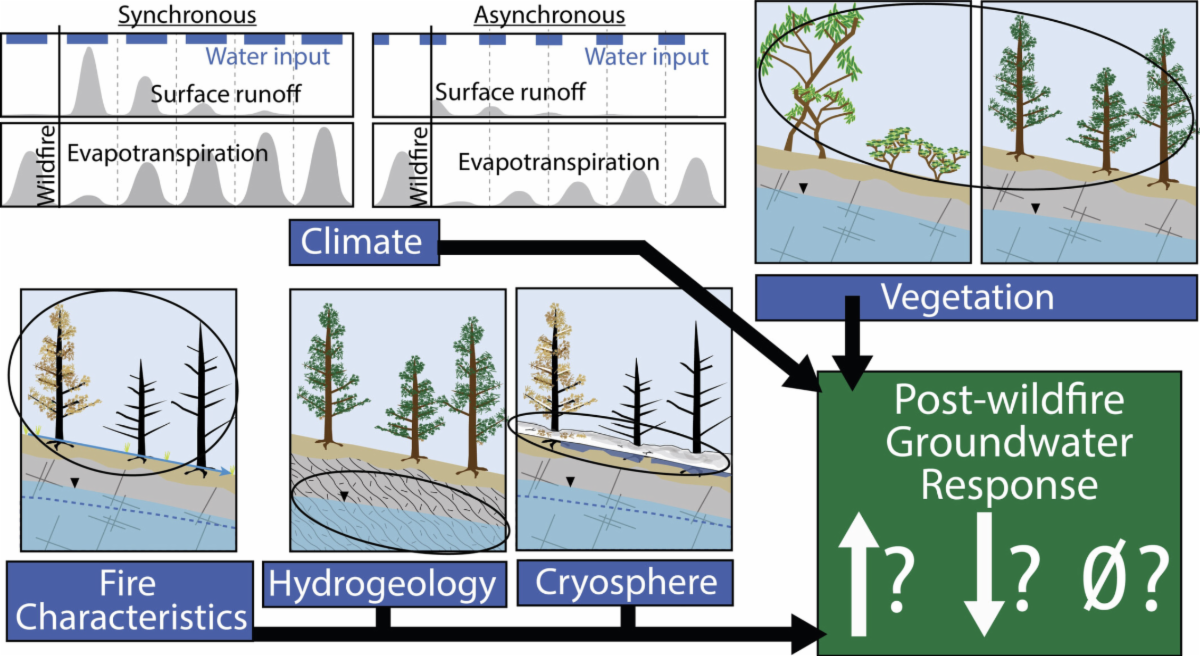
A recent review article from USGS hydrologists synthesized investigations of groundwater responses to wildfires across various hydroclimatic zones. Groundwater is increasingly recognized as playing a vital role in mediating the overall hydrologic response to wildfire; however, groundwater responses vary due to post-fire changes in recharge, groundwater storage, and baseflow. Previous studies have found increases, decreases, and negligible changes in groundwater storage after wildfires. As fire regimes shift and temperatures rise, identifying the factors that dictate the groundwater-wildfire response will be critical to managing water resources in communities.
The researchers assessed groundwater responses within five critical categories: climate, vegetation, hydrogeology, fire characteristics, and the cryosphere, examining both short-term (within 2 years) and intermediate (2–10 years post-fire) effects. They found where water input and evaporative demand cycles were out of sync, that post-wildfire groundwater responses tend to be positive, meaning an increase in storage. However, groundwater responses are typically negative in areas with quick-recovering vegetation and low fire severity. Overall, there is considerable spatiotemporal variability in groundwater responses, and the research highlights a need for more investigations, particularly those focused on characterizing pre-fire regional and local conditions.
| | | |
U.S. EPA: Interim guidance on PFAS destruction and disposal updates
The U.S. EPA has published an update to interim guidelines regarding the destruction and disposal of PFAS and PFAS-containing products. The updated, nonregulatory guidance provides information on the current state of science and associated uncertainties for three large-scale capacity technologies: thermal destruction, landfills, and underground injection.
Ohio EPA: Interested party review on WQS antidegradation rule
The Division of Surface Water is seeking input on changes to the Water Quality Standards (WQS) antidegradation rule. WQS are state regulations or rules that protect lakes, rivers, streams and other surface water bodies from pollution. The main changes put forward in the rule draft are updates to the lists of high-quality waters. There will be a virtual Q&A session on May 12, 2026, at 11 a.m. Register here. Comments can also be submitted via Smart Comment until May 29, 2026.
Ohio EPA: Cuyahoga River drainage basin BUD
The Department of Surface Water has proposed amendments to the Cuyahoga River drainage basin Beneficial Use Designation (BUD). There will be an online and in-person public hearing on May 20, 2026, at 10:30 a.m. The in-person hearing will be held at Suite 700, 50 W. Town Street, Columbus, Ohio 43215. Online participants must register here. Comments can be submitted via Smart Comment and are due May 20, 2026.
U.S. EPA: Public input on FCA guidance
The Clean Water Act Financial Capability Assessment (FCA) is non-regulatory guidance used to balance local water bill affordability with wastewater infrastructure improvements for a given community. The guidance provides information on how to assess a community’s financial capability as part of negotiating implementation schedules under both permits and enforcement agreements. The U.S. EPA is seeking input on current issues related to financial capability for communities, particularly for smaller rural water systems. To submit a comment by May 26, 2026, please click here and follow the page’s instructions.
Ohio EPA: Rules governing laboratory certification
The Division of Drinking and Ground Waters has proposed amendments to the procedure for laboratory verification. The Ohio EPA will hold an in-person and online public hearing on May 28, 2026, at 10:30 a.m. Stakeholders will be able to comment in-person at the EPA Summer Conference Room at the Lazarus Government Center, 50 West Town Street, Suite 700, Columbus, Ohio 43215. Online and in-person participants must register here.
Ohio EPA: Interested party review for draft 2026 Integrated Report
The Ohio EPA’s draft 2026 Integrated Report indicates the general condition of Ohio’s waters and a prioritized list of waters with impaired beneficial uses and may require Total Maximum Daily Load (TMDL) development to meet water quality standards. The draft is open to public comment until June 7, 2026. Comments can be emailed to EPATMDL@epa.ohio.gov.
| | |
Large Marine Debris Removal Project Grants Supported by a 2024 award from the National Oceanic and Atmospheric Administration’s (NOAA) Marine Debris Program, the Ocean Conservancy seeks applications to support the removal of large marine debris from coastal United States waters and the Great Lakes. Funds will provide support to local entities — including higher education institutions — to conduct at-sea or shoreline removals of ghost gear or large marine debris, as well as efforts to prevent re-accumulation. Applications are due May 31, 2026. More details on the program and application submission can be found here.
H2Ohio: SWCD Conservation Ditch Pilot Program
As part of the H2Ohio initiative, the Ohio Department of Agriculture (ODA) announced funds available for the 2025 conservation ditch program. All Ohio county engineers and Soil and Water Conservation Districts (SWCDs) are eligible to apply for funding to construct two-stage and self-forming ditches. Applications are due by June 1, 2026. More information can be found here.
| |  | |
Abstracts requested: 2026 State of the Western Lake Erie Basin Conference
June 22-23, 2026 • Adrian, MI
Michigan's 2026 State of the Western Lake Erie Basin (WLEB) Conference will focus on tri-state (Ohio, Michigan, Indiana) progress, ongoing project updates, and community resilience in reducing nutrient pollution in the Western Basin of Lake Erie. Poster submissions are open here and are due by May 18, 2026.
Pre-nominations: WRRSP
The Ohio EPA’s Water Resource Restoration Sponsor Program (WRRSP) is now accepting pre-nomination requests before project proposals open. The WRRSP provides funding for the implementation of projects that specifically target the protection or restoration of high-quality streams and wetlands. Streams targeted for protection must be in attainment of at least the Clean Water Act goal of Warmwater Habitat (WWH) while wetlands must meet category 3 criteria. Similarly, streams must be restored to at least WWH and wetlands to Category 3, respectively. Pre-nomination requests are due by July 15, 2026, and are required to submit a proposal. More details can be found here.
| | | |
River Rally
May 11-14, 2026 • San Antonio, TX
The River Rally, hosted by the River Network, will be celebrating its 26th year of gathering advocates, community leaders, and water professionals together to discuss and share expertise on issues relating to water, climate, and justice. For more information, click here.
Webinar: New phosphorus or old phosphorus?
June 17, 2026 • Virtual
The Nature Conservancy will host an online webinar on the importance of managing both fertilizer-derived phosphorus and legacy phosphorus. The presentation will include examples from field and small watershed studies in the Western Lake Erie Basin. Register here.
One Water Technical Conference and Expo
August 17-20, 2026 • Cincinnati, OH
One Water Ohio is a joint effort between Ohio Water Environment Association and the Ohio Section of the American Water Works Association to hold training events for Ohio's water professionals. This year’s four-day conference will take place in Cincinnati. Register here before July 22, 2026, to avoid late fees.
| | |
Get in Touch
Email: OhioWRC@osu.edu
Website: https://wrc.osu.edu
Address: 473 Hitchcock Hall
2070 Neil Avenue
Columbus, OH 43210
| | | | | | |