October Markets Newsletter (50,000+ subscribers!)
Introduction/Markets Column by Ashley Memory
|
|
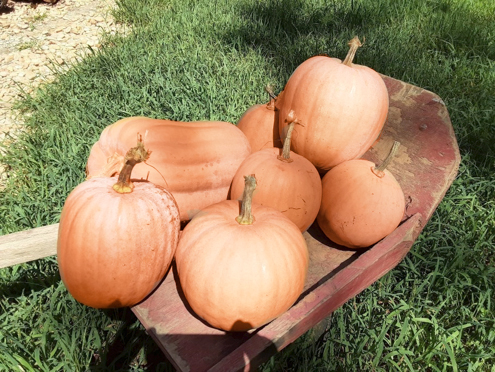
The month of October offers a veritable cornucopia of new sensory delights—the smell of apple cider, the rustle of falling leaves, and the velvety texture of pumpkin pie with its blend of cinnamon, ginger, and a dash of cloves. The welcome drop in humidity and heat means we’re spending even more time outside, and for me, this means harvesting 7 pumpkins! |
|
The change in season is important to the earth, as we plough over our gardens and return those nutrients to the soil. Autumn restores writers, too, and is often a time of reflection. Am I meeting the goals I set for myself? Am I growing as a writer and getting better? The new season is a great time to take a fresh look at our writing, and do all we can to strengthen our work. One of the best ways to get better is by inviting another writer (or more) to read our work and offer feedback.
I’ve been fortunate enough to be part of many writing circles throughout the years, and I’ve benefitted from the wisdom of my writing buddies in countless ways. I’ve met many of my fellow writers at conferences, by word of mouth, and most recently, through an online writing class offered through WOW. As I mentioned before, this is how I met my cherished “Mem-Warriors.” One of the things I love most about my group is that all three of us live in different regions of the U.S., which brings perspective and depth to their feedback. Thanks to the convenience of the internet, we’re not separated by the thousands of miles between us—we’re available to each other through email and Google Dropbox. |
|
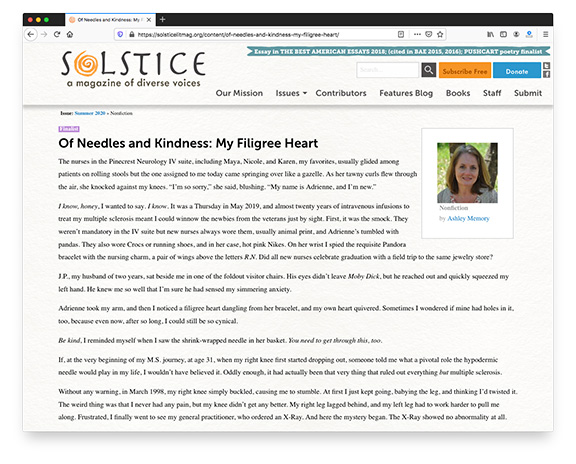
The first draft of writing is particularly precious and sharing with others is often scary. My writing group is over a year old, and I still get a little nervous before I click the “Send” button on my email! But the trust we’ve built in our time together, the wisdom we’ve collected and shared, and the support we offer each other is one of the best investments I’ve ever made in my writing life. Case in point, my beloved Mem-Warriors helped significantly on a recent essay from my memoir. They kindly reviewed multiple drafts, offering both constructive feedback and positive affirmations throughout my journey. To my great delight, Solstice Literary Magazine named my essay “ Of Needles and Kindness: My Filigree Heart” as a finalist in the Michael Steinberg Nonfiction Prize and they kindly published it in their Summer 2020 Contest issue. As I said to my Mem-Warriors, this was a collective victory for all three of us, and I am forever grateful. |
You may have already experienced the value of feedback. Regardless of whether you share your work with other writers or whether you’re just now considering it, the tips below will help you embrace the gift of a “second opinion.” Below I’ll discuss how to R.E.A.C.T. to these pearls of wisdom, and after the market section, we’ll go over how to return the favor and G.I.V.E. back to your fellow writers. |
R. Remember that when you send your work to another writer, you’re taking the initiative by asking for help. Pat yourself on the back! It takes courage to recognize that you’ll get better this way. We tend to reward ourselves when we finish a big project, but we also need to celebrate the moment we decide our draft is ready for circulation.
E. Express gratitude. The feedback you receive from others is truly a gift, especially in these crazy times, where there are more demands on our time than ever before. Look at it like this. A fellow writer could be working on their own projects; instead, they’re helping you. Thank them now, and thank them again later, especially if they’re generous enough to look at another draft.
A. Aspirate. You guessed it; this is just a fancy word for “Breathe.” Once you receive comments on your work, thank the sender, but feel free to inhale and exhale before doing anything. Ahh.…As you do, coalesce this feedback with your own intuition. Does it resonate with your own feelings about your work? What about the advice of others?
C. Consider the advice you receive. You may not always agree with what your peers say, and you may not ultimately choose to act on every point, but you should actively consider every bit of wisdom you receive. In doing so, this step helps me see things I didn’t before.
T. Take action. The worst thing you can do is thank your reviewers and not do anything else with your work. I’m not talking about just acting on the advice you receive. Not all of it may work for you. But the worst thing you can do is to let your piece of writing forever languish in limbo. Yes, it may take some more work but remember not to let it stall too long.
|
On that note, are you ready to take action? Below you’ll find a “harvest” of fall markets, which offer some of the most creative and rewarding outlets we’ve ever curated for you! From the opportunity to submit your writing for an art walk to enhance Atlantic City to a Halloween call for “flash monsters,” and there’s even a contest offering a residency in a fifteenth-century Italian castle! To all my sister Cinderellas with too many pumpkins and not enough crystal carriages, this fellowship is for you!
Be sure and circle back to us at the end of the market section for tips on how to help your fellow writers and G.I.V.E. back when they ask you for feedback on their work.
|
Before we get to the markets, we’d like to introduce a new sponsor who wants to give WOW subscribers a very generous gift! LitNuts was created to bring the “Best of the Indies” to booklovers. You can subscribe for free to learn about terrific books from independent publishers and be eligible to win prizes from Amazon, Apple, B&N, Kobo and more. LitNuts is a new site, but WOW has worked with the owners, Kathleen Meyer and her father, Mike O'Mary, for years through their small press, Dream of Things. And now for their generous gift: LitNuts is giving WOW authors a FREE BOOK AD with the discount code “WOW!” during their launch. Authors, this is a great way to get free exposure for your book and reach new readers—you can’t afford to miss this opportunity! |
And more opportunities abound! Authors can track how their book performs on Amazon by signing up for free at Best Sellers Rank. It tracks book sales, review counts, ratings, and much more (hourly, daily, or weekly), collecting the information into easy-to-read performance reports. For example, if you’re an author who’s trying out new advertising, participating in a reading, or wrote a new blurb and would like to see if your campaign is performing, you could use Best Sellers Rank to track your stats. Check it out their free service, and visit this link starting September 30 for an interview with the founder, a fellow author, on WOW’s blog, and we’ll be providing a giveaway for a premium book-tracking package and a $25 Amazon Gift Card. Giveaway runs for two weeks. |
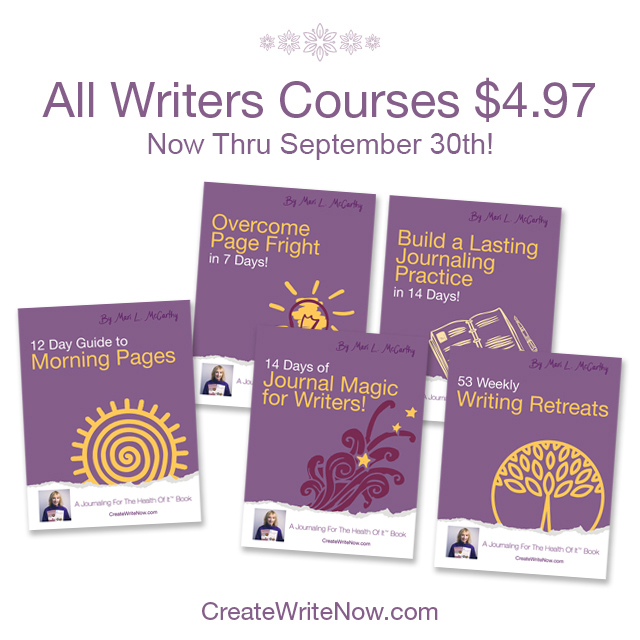
As always, our favorite sponsor, Mari L. McCarthy of CreateWriteNow, is offering her Courses for Writers to WOW subscribers for only $4.97 until September 30th! We covered self-care last month, but giving back to yourself is a year-round opportunity to celebrate you! One of the best ways to do that is by journaling. Take my word for it, because I am a happy customer myself! Mari’s courses provide one-of-a-kind guided journaling exercises designed to help you unlock personal insights. Do yourself a favor and find out how journaling can be used to set and reach your goals toward happiness and fulfillment. |
We believe that you’ll also be inspired by reading Success Stories from WOW writers below! Celebrating a fellow writer’s accomplishments is another opportunity to react and give back. Visit their links, read their work, and if you feel connected to their writing, let them know! You never know where you’ll find your next critique partner or discover a new market.
We also have some quick tips from Muffin blogger, Cathy C. Hall, on how to survive a bad critique (and no, it doesn’t include curling up in the fetal position while wolfing down a carton of ice cream), and we share Sheila Bender’s Three-Step Critique Method that she uses in WOW Workshops.
|
Now, let’s harvest some fresh markets, and react (by submitting)!
|
Ashley Memory, markets columnist,
|
|
Pitches & Opps
Freelance Book Reviewers for Kirkus
Kirkus Media is looking for experienced book reviewers of English and Spanish-language titles to review for Kirkus Indie, the book review magazine's section dedicated to self-published authors. Reviews are about 350 words due 10 days after the book is assigned. Kirkus currently reviews nearly all genres for books of all lengths, in digital, hardcover and paperback format. To apply, please submit your resume, writing samples and a list of reviewing specialties to Kirkus Indie Editor David Rapp at Drapp@kirkus.com.
Elite Daily Remote Writing Jobs
Linkwell Health
Editor Nancy Fitzgerald is looking for freelance health/wellness writers. "Do you have superior writing skills and a proven track record? Expertise in condition management & social determinants of health? Get in touch!" Pay is $400 for short articles. Send resume + 3 samples to freelance@linkwellhealth.com
Remote Healthline Wellness Editor
Writer/Editor Alanna Nunez says, "My team is growing! I'm looking for a wellness market editor to focus on all things product. It's remote! Come work with me and the awesome Healthline wellness team!" Apply here.
Cosmopolitan - true crime stories
Features editor Elizabeth Kiefer is seeking juicy narratives, untold true crime stories, obsessive investigations, and [insert TBD amazing pitch!] for Cosmo features. No personal essays/first person. $2 and up per word. Pitch via email to elizabeth.kiefer@hearst.com
HelloGiggles - dry skin, skincare routines
“A positive online community for female-identifying readers.” Their senior beauty & fashion editor is seeking “people with melasma, psoriasis, or dry skin to write about their skincare routines for HelloGiggles in October/November.” Payment averages $0.05 per word. Send pitches to Pia Velasco, pia.velasco@meredith.com.
Broccoli Magazine
A print mag for cannabis lovers created by an all-women team and published 3 times a year. Editor Stephanie Madewell is “looking for short weedy fairy tales, cannabis stories from outside North American, first-person essays on the intersection of weed and disability, and conversations/profiles of interesting creative folks.” They usually pay $0.40 to $0.50 per word. For shorter pieces, they pay flat rates of $75 to $100. Send your pitches to editors@broccolimag.com. To receive calls for pitches from their editorial team, sign up here.
Autostraddle
An online sphere for LBQ women. For Latinx Heritage Month, the editors are looking for personal essays, cultural criticism, reported pieces, and more on the theme of death and rebirth. Pay is $100 - $300. For details, visit this page.
Vice
New senior features editor, Leah Feiger, is seeking pitches and tips! "We are going to be commissioning ambitious international features and investigations on gender, inequality, development, colonialism, religion, security, health, misconduct, extremism, climate change, and more." .50 a word and up. Pitches to leah.feiger@vice.com
Well+Good
A site that covers fitness, cutting-edge nutrition, natural beauty, travel, and more. Managing editor Samantha Leal says, “Are you someone that will be particularly impacted by this year’s election? Do you want to write about why that is and how it impacts your voting? (Think: caregiver, hospital workers, DACA recipient, etc.).” Rates start at $200. Send pitches to samantha.leal@wellandgood.com. For more, visit their contact page.
Faithfully Magazine
A news and culture publication that amplifies Christian communities of color. They are looking for lifestyle and beauty writers for critical takes on products. They pay $50 - $100 per piece. For guidelines, visit this page.
Repeller is “a unique media brand with an approach to storytelling that transforms online interaction into something less fleeting and more genuine.” Senior editor Sarah Barnes wants writers to pitch “stories including but not limited to: Cardi B entering her power and leaving what’s his name behind, Kim K’s shapewear line, Indigenous perspectives on CA wildfires, apocalyptic visions, etc.” Their base rate is $250. They pay up to $300 for reported pieces. Pieces are around 1,000 words. Send your pitches to sarah@repeller.com. To contact them visit this page.
Adoptive Families
A digital magazine and information resource for parents before, during, and after adoption. They provide adoption parenting advice and real families’ stories. They accept both personal essays and reported articles; for reported articles, they prefer queries. The November 2020 themes are Celebrate adoption + Foster adoption; for December, they are Rituals & Celebrations + Annual gift guide. Writers’ guidelines and here themes.
People Digital
Lifestyles editor Alex Apatoff Besen says, "I’ll have a few pieces of relationship/health content to assign in coming months, about $500/article. Any freelancers interested?" Send your resume and link to portfolio or some relevant clips at alexapatoffpeople@gmail.com
Very Well Health
They are looking for freelancers to pitch health news stories! "We are not a breaking news site, instead, we add context and/or actionable steps in response to health news." Pays $200 - $300 per story. If interested email writeforus@verywell.com with “news writer position” in subject line. |
|
The University of Arkansas Press. 2020 Miller Williams Poetry Prize
Deadline: September 30
Fee: $28. Submit manuscripts between 60-90 pages. Every year, the University of Arkansas Press accepts submissions for the Miller Williams Poetry Series and from the books selected awards the $5,000 Miller Williams Poetry Prize in the following summer.
Atlantic City Poetry Submissions
Deadline: September 30
The goal is to place poetry that speaks to the Black Lives Matter movement or other social justice issues/movements around Atlantic City’s Ducktown neighborhood in a visual way—whether embedded in an object, painted as part of a mural, or something else creative. The visuals will include QR codes to lead visitors on a self-guided tour of the exhibit: The AC Poetry Walk, which will be displayed for one year. Submit up to 3 poems; can be previously published as long as you retain the rights. From your 3 poems, 1 will be submitted to the artists. The artists will then select a few poems from our pool of poets to be adapted into visual art projects. We will notify you whether or not your work has been chosen by the artists at some point this fall. No fee.
The Tom Howard/Margaret Reid Poetry Contest
Deadline: October 1
Tom Howard Prize: $3K for a poem in any style or genre; Margaret Reid Prize: $3K for a poem that rhymes or has a traditional style. Top two winners receive two-year gift certificates from Duotrope ($100 value); also 10 Honorable Mentions receive $200 each. Top 12 entries published online. Fee: $15.
The Journal/Wheeler Poetry Prize
Deadline: October 3
Each year, The Journal selects one full-length manuscript of at least 48 pages of poetry for publication by Mad Creek Books, an imprint of The Ohio State University Press. In addition to publication under a standard book contract, the winning author receives the Charles B. Wheeler prize of $2,500.
The London Magazine Poetry Prize 2020
Deadline: October 12
Submit up to 3 previously unpublished poems and no longer than 40 lines. We have no criteria as to theme, form or style but we are looking for fresh, diverse and innovative new work. First Prize: £500; Second, £300; Third: £200 Entry fee: £10 per poem; subsequent entries: £5 per poem; student entry: £5 per poem.
Palette Poetry. The 2020 Brush and Lyre Prize — $3,500 Awarded for Artfully Communicated Poetry
Deadline: October 18
We are so thrilled to offer poets space to stretch their creativity into new and exciting projects. This unique multimedia contest will accept work that incorporates poetry into new media formats, including but not limited to: music, video, art, photography, sculpture, and performance—use the communication technique that you feel most creatively gets across the experience of your poetry. All winners will be published on Palette Poetry. Submissions must include at least one significant multimedia aspect, such as video, photography, sculpture, audio, painting, or performance. Collaborations are welcome. Fee: $20. https://palettepoetry.submittable.com/submit/173108/the-2020-brush-and-lyre-prize-3500-awarded-for-artfully-communicated-poetry
The Lexi Rudnitsky First Book Prize is a collaboration between Persea Books and The Lexi Rudnitsky Poetry Project
Deadline: October 31
This annual competition sponsors the publication of a poetry collection by a woman who has yet to publish a full-length poetry book. The winner receives an advance of $1,000 and publication of her collection by Persea. In addition, the winner receives the option of an all-expenses-paid residency at the Civitella Ranieri Center, a renowned artists retreat housed in a fifteenth-century castle in Umbertide, Italy. Fee: $30.
Finishing Line Press: 2020 Open Chapbook Competition
Deadline: October 31
A prize of $1,000 and publication for a chapbook-length poetry collection in perfect-bound print edition. Ingram Group distribution. Open to ALL; international entries are welcome. Multiple submissions are accepted. The top-ten finalists will be offered publication. All entries will be considered for publication. Submit up to 16-38 pages of poetry, PLUS bio, acknowledgments, SASE and cover letter. Fee: $15.
Vassar Miller Prize in Poetry
Deadline: October 31
The University of North Texas Press announces the 2021 Vassar Miller Prize in Poetry. The winner of this annual award will receive $1,000 and publication by UNT Press. Submit 50-80 pages. Fee: $25.
|
|
This issue is sponsored by: |
|
CreateWriteNow's Journaling Courses for Writers |
|
Our partner, Mari L. McCarthy, founder and chief empowerment officer at CreateWriteNow, is offering all writers' courses for only $4.97 through July 31! For some of the courses, that's over 80% off! Dive into courses like Journal Magic for Writers, 53 Weekly Writing Retreats, 12 day Guide to Morning Pages, and Overcoming Page Fright. All led by inspiring instructor, Mari L. McCarthy.
|
|
LitNuts was created to bring the “Best of the Indies” to booklovers. Subscribers (it’s free!) learn about great books from independent publishers at reasonable prices. Authors get an affordable way to share their work with engaged readers. LitNuts is a woman-owned business founded by Kathleen Meyer and her father, Mike O'Mary. Kathleen is an avid reader with 10 years of marketing experience, including with Dream of Things, a small press founded by Mike.
|
|
Featured: Writing Contest & Residency for Women Over 40 |
|
The Daisy Pettles Writing Contest for Women is now accepting submissions for the 2021 writing residency and grant awards
The competition is open to older women writers, aged 40+, published OR unpublished.
Both fiction and non-fiction writers are eligible. Only poetry is excluded.
Grand prize is $1,000 PLUS a month-long free residency in the Daisy Pettles' Writer's House, a vintage 1920s arts & crafts bungalow in Bedford, Indiana (close to Indiana University-Bloomington). Winners choice which month they want to do the residency. In the event of COVID travel restrictions the residency may be waived but the cash prizes will still be awarded. First runner-up is $200, a certificate, and the residency if the grand prize winner cannot accept. Second runner-up is $75 and certificate.
Application deadline for a 2021 residency is 12/12/20.
Application Fee: $0-25-45, with sliding income waivers. All funds help support the writing house for older women.
|
|
The Saturday Evening Post
No deadline
Their print magazine is currently closed to submissions until January 1, but they're publishing stories up to 5,000 words on their website every Friday for Fiction Fridays. No fee. Pays $25 per story.
The Dark Magazine
No deadline
They publish horror and dark fantasy, though not graphic, violent horror. The editors ask writers to try them with fiction that falls out of regular categories and welcome experimental works. Length: 2,000-6,000 words. Pay: $0.06/word.
Of Mistletoe and Snow: Love Stories for the Holiday Season
Deadline: September 30
For this fiction anthology their guidelines say, “These stories should tell a tale of love and lovers during the holiday season. This love might be lost, rekindled, or unrequited. Maybe it is the love of a couple celebrating their 50th Christmas together. Perhaps it is the tale of new love taking bloom when the world is dark and frozen. These stories can be contemporary, urban, fantasy, sci-fi, or romance, but they must be written for YA audiences.” Length: 6,000-9,000 words. Pay: $75
Krampus Tales: A Killer Anthology
Deadline: September 30
They want horror stories in which “the holidays have lost their cheer. Evergreen boughs hang brown and brittle. Sweets taste bitter. The little ones are restless and will not sleep. There’s something stirring in the dark, but only the bravest writers will explore what horrors stalk across the rooftops. It could be a tempestuous ghost seeking its stolen past. Maybe it’s a malevolent shadow come for its sworn promises. Krampus might be lying in wait for his chance to punish the wicked children. The only way to find out is to brave the dark and tell the story of what you find.” Length: 6,000-9,000 words. Pay: $75.
PodCastle
Deadline: September 30
They publish fantasy stories in an audio format and online. They are open to all the sub-genres of fantasy, from magical realism to urban fantasy to slipstream to high fantasy, and everything in between. Fantastical or non-real content should be meaningful to the story. Length: Up to 6,000 words. Pay: $0.08/word; $20-100 for reprints.
minor literature[s]: Fiction and flash fiction
Deadline: September 30
Up to 4,000 words. What we want: outstanding writing that challenges, provokes, enthralls and fascinates us and our readers. We embrace difference and welcome, most of all, voices from the margins – people or characters who aren't part of dominant narratives – voices of resistance and protest, outsiders, and those who might live at an angle to the world. Bear in mind these can be your characters – they don't have to be you. We're afraid we don't currently take science fiction, fantasy or horror. No fee.
Orca: A Literary Journal. Fiction
Deadline: September 30
Unpublished fiction only: 1 short story up to 8,000 words or up to 3 flash fictions of less than 1,000 words each in one document. Fee: $3.
Saints & Sinners Fiction Contest 2021 (LGBTQ Literary Festival)
Deadline: October 1
The winner will be selected from this year’s submissions of original, unpublished short stories between 3,000-7,000 words with LGBT content on the broad theme of “Saints and Sinners.” One grand prize of $500 and two second place prizes of $100 will be awarded. In addition, the top stories will be published in an anthology from Bold Strokes Books. There will also be a book release party and reading held during the 18th annual Saints and Sinners Literary Conference in New Orleans in 2021. Fee: $20.
Bethune & Son Fourth Annual Texas Short Story Contest. Fiction.
Deadline: October 2
Up to 5,000 words. Every entry must follow the theme of “Gulf Coast,” discuss or reference the theme of the Texas Gulf Coast in some way, shape or form, and must clearly add to the narrative of Texas life (i.e. stories about the Louisiana or Mexico gulf coast will not count). Your plot does not need to revolve around the theme, but should strongly incorporate it into your story in any way you best see fit (e.g. setting, character background, dialogue, etc.) First place: $1,000 cash; publication. Other prizes include store credit and publication. No fee.
The Fabulist
Deadline: October 10
Seeking short fantastical and genre fiction of up to 3,000 words. We would love to see ambitious works of science fiction and fantasy — we don’t get nearly enough of either. We also adore recombinations of magic realism, myth, folklore, fairy-stories, horror, satire and comedy, romance, mystery, allegory, and even occasional flavors of the absurd and surreal. Please don't feel constrained if your work doesn't land neatly in any given category. No fee.
WordFire Press: Unmasked
Deadline: October 31
They want short stories of unmasking, to include a mix of science fiction, fantasy, horror, alien, magical, witchcraft, AI, and romance elements – see guidelines for further details, and potential ideas for stories. Stories must be appropriate for a PG-13 audience. Length: Up to 5,000 words. Pay: $0.06/word.
Pithead Chapel Larry Brown Short Story Award
Deadline October 31
Seeks stories up to 4,000 words. Judge: Jill McCorkle. The winners will receive the following prizes: 1st $500; 2nd $50; 3rd $50, 4th and 5th will receive a copy of the book Tiny Love: The Complete Stories by Larry Brown. Each prize winner will be published in the January 2021 issue of Pithead Chapel. Fee: $10.
The Brooklyn Review. Fiction Open Call.
Deadline: October 31
We are looking for new, innovative, and exciting work. Check out our site for examples of work we love. Please submit a single story of up to 7,000 words. Fee: $4.
The Ocotillo Review Volume 5.1 Short Fiction
Deadline: November 1
Fee: $3. Please submit only one story per document between 1,000 – 4,200 words.
|
|
Quick Tips for Surviving a Bad Manuscript Critique |
|
I attended a conference and it was a pretty swell event, if you don’t count the last fifteen minutes—when I received my professional manuscript critique. |
|
That’s the way it goes with manuscript critiques. Sometimes, they’re very good; other times, they’re just plain rotten. And that can be for the very same manuscript. But I’ve learned how to survive the bad evaluation and go on my merry writing way. And you can, too.
Give Yourself Time
You will want to scream and yell and rip your pages to shreds. Or you will want to bury every shameful word you’ve ever written in a deep, dark hole. Perhaps you will want to bury the critiquer in a deep, dark hole. But what you must do instead is give yourself some time so that the raw emotion swirling in your soul can recede.
I know it’s tempting to wallow in misery, or worse, rant and rave, especially to friends and fellow writers. But resist the urge to vent loudly (particularly if you are within shouting distance of other professionals). Find a quiet spot and collect yourself so that you can move on.
Good, Old Perspective
It’s tough when you receive tough criticism. It’s tougher, really, than a curt “not for me” rejection. Because with a critique (which you paid for!), you are forced to sit through the excruciating exercise of someone telling you exactly why your work stinks. What you need is a little perspective.
Here’s what I do. I give myself a pep talk. I think of a time I’ve been challenged and how I survived, and I start to feel a bit empowered. And then I count all the wonderful blessings of my life, and I start to feel grateful. It’s not long before good, old perspective kicks in. The world will keep spinning, friends and family will still love me, and I’ve still got a pretty nice roof over my head—even if my manuscript is the pits. I’m ready to move on to the truth.
Facing the Truth
In the midst of curling into a fetal ball, you may not be ready for the truth of your evaluation. But after time, and a healthy dose of perspective, you can take a look at the notes thoughtfully provided by your critiquer. You can relive that less-than-delightful one-on-one experience and maybe even recall some of what was said.
First, look for the positives. I guarantee you that there will be a note or two of praise in your critique. Second, cling to those words as you peruse the pages and perhaps you’ll have the courage to accept the flaws of your work. You can fix flaws.
Or you can chuck that manuscript and start on something new. Or you can even ignore the entire evaluation. But don’t let one bad critique defeat you. Get back to work and write. After all, tomorrow is another day.
*
(This post was originally published on The Muffin and edited for space.)
|
|
Children’s author, freelance writer, blogger, speaker, and dog wrangler. Way harder than it looks. If you'd like to read more of her writing, check out her posts on The Muffin or her own blog. |
|
The New York Times: Modern Love and Tiny Love. Now accepting submissions through December.
“We seek true stories on finding love, losing love and trying to keep love alive. We welcome essays that explore subjects such as adoption, polyamory, technology, race and friendship — anything that could reasonably fit under the heading “Modern Love.” Ideally, essays should spring from some central dilemma you have faced. It is helpful, but not essential, for the situation to reflect what is happening in the world now.” Word length for Modern Love, 1,500-1,700; Tiny Love, 100 words.
Lascaux Prize in Nonfiction (previously published allowed)
Deadline: September 30
Length should not exceed 10,000 words. Winner receives $1,000, a bronze medallion, and publication online in The Lascaux Review. Two copies of the journal will be supplied to every writer appearing in it. Fee: $15.
Boulevard Nonfiction Contest for Emerging Writers
Deadline: September 30
Awards $1,000 in Boulevard to the winning essay up to 8K words by a writer who has not yet published a book of fiction, poetry, or creative nonfiction with a nationally distributed press. Especially interested in nonfiction works that are researched and/or reported such as literary journalism, hybrid essays, etc. All entries will be considered for publication and for payment at our regular rates. Fee: $16.
Ruminate Magazine. Readers Ruminate: Mend
Deadline: October 6
Each issue of Ruminate includes personal notes from our readers on a topic—we love hearing from our readers! We're looking for short nonfiction, 300 words or less, that tells us your honest experiences in rich image and detail. No poetry please. You can approach the topic from any angle. No fee.
Madonna Anthology
Deadline: October 15
Are you a fan of pop-singer Madonna? We’re seeking original stories about the impact she’s had on individual lives. Submissions should be 1500-3500 words. Feel free to supplement with photos with Madonna, photos dressed like Madonna, or other related materials. We pay $25 for selected submissions. Contributing authors will receive a free copy of the published book. A portion of proceeds will go to the non-profit organization founded by Madonna “Raising Malawi”. Work must not have previously appeared in print. No fee. Send your submission to: anthologysubmit@gmail.com
Crab Creek Review Fast Lane – 2020 Fall Creative Nonfiction Classic: Free for Black Writers
Open October 15
Send one piece, up to 2,000 words, or up to three micro-essays. We want to read from a diverse pool of writers, and we want to read exceptional essays. Think Cheryl Strayed, Philip Lopate, Amitava Kumar, Roxane Gay, Ariel Levy, and others. We do not publish literary criticism, scholarly articles or straight reportage. Double-spaced, 12pt standard font. One submission per reading period.
VanderMey Nonfiction Prize 2020
Deadline: October 30
5,500 words or less. $1,500 and publication in Ruminate will be awarded to the winner. The runner-up will receive $300 and publication. Fee: $20.
River Teeth Literary Nonfiction Book Prize
Deadline: October 31
The River Teeth Book Prize is an annual contest to identify the best book-length manuscript of literary nonfiction. All manuscripts are screened by the co-editors of River Teeth, and this year's final decision will be made by guest judge and award-winning author Megan Stielstra. The contest winner will receive $1,000 and publication by The University of New Mexico Press. We encourage underrepresented voices to submit their work for consideration, including but not limited to: BIPOC, LGBTQ+, and disabled writers. All U.S. entrants will receive a one-year subscription to River Teeth with their submission fee (provided they supply a mailing address). Fee: $27.
Brick
Deadline: October 31
Accepts unsolicited manuscripts of non-fiction only. Submissions must be previously unpublished. While Brick does not set a word limit, we strongly suggest submissions not exceed 5,000 words. No fee.
Reed Magazine. Gabriele Rico Challenge for Creative Nonfiction 2020: Theme for Issue 154: “Cliché.”
Deadline: November 1
Send us your fresh and innovative take on it! The Gabriele Rico Challenge for Nonfiction recognizes outstanding works of nonfiction, awarding $1,333 to the author of the winning entry. We are looking for creative nonfiction, such as personal essays or narratives, not scholarly papers or book reviews. All works should be stand-alone essays, not chapters of a longer work, 5,000-words max. Fee: $20.
|
|
C & R Press Awards - Poetry book, Novel, or Short Story Collection
Deadline: September 30
C & R Press will award three $1,000 prizes for a poetry book, a novel or short story collection, and a creative non-fiction or memoir book. The winners in each genre, a runner-up, and a short list will be announced in January 2020. We consider publishing runners-up and other manuscripts. Winning books and potential runners-up will receive publication in fall 2020. Each prize winner will also receive a marketing campaign to promote the release of the book valued at $1,000. Fee: $30.
The Missouri Review. 30th Annual Jeffrey E. Smith Editors’ Prize. Fiction, Nonfiction, and Poetry
Deadline: October 1
Awards $5,000 in each category. Fee: $25. Submit one piece of fiction or nonfiction up to 8,500 words or any number of poems up to 10 pages. Please double-space fiction and nonfiction entries.
Painted Bride Quarterly. Theme: Touch
Deadline: October 1
Locked down and distanced, we remember that touch is our “most urgent sense” (as Diane Ackerman put it in A Natural History of the Senses). We’re looking for poems, essays, short stories, and flash fiction that have to do with touch--or its shadows and sisters (isolation, loneliness, etc). Painted Bride Quarterly accepts up to 3 poems, fiction up to 5000 words, and essays and reviews up to 3000 words, in any genre or school (occasional exceptions are made.) We will be paying all authors $20 per accepted piece, no matter the genre, (i.e. if we publish two poems, you will receive $40.). Fee: $3. https://pbq.submittable.com/submit/168192/issue-102-touch
Still Point Art Gallery Quarterly. Theme: Food and Memory
Deadline: October 2
Still Point Arts Quarterly is now accepting writing submissions (fiction, creative non-fiction, essays, poetry; 5000 words maximum) on the theme. Accepted work will be published in the Winter 2020 issue. No fee.
Metonym Journal - fiction or creative nonfiction
Deadline: October 2
Submissions must be previously unpublished work. Simultaneous submissions will be considered as long as we are notified immediately if the piece is accepted elsewhere. Seeking 1-6 poems on the same submission, each under two pages long, and fiction or creative non-fiction up to 2,000 words. No fee.
Tennessee Williams Fiction & One Act Play Contest 2020-2021
Deadline: October 2
Fiction Contest: Awards $1,500 and airfare up to $500 and French Quarter accommodations to attend the Tennessee Williams & New Orleans Literary Festival. Unlimited entries allowed; one manuscript per submission up to 7,000 words.
One-Act Play Contest: Awards $1,500, access to festival and professional staged reading at next Festival. Plays should run no more than one hour in length (one act or approx. 60 pages.) Fee for each: $25. Also accepting poetry and flash fiction for separate contests with a deadline of October 16.
The Ogham Stone - fiction, poetry, creative non-fiction, translation, and memoir from Irish and international authors
Deadline: October 4
We intend to publish a mix of fiction, poetry, creative non-fiction, translation, and memoir from Irish and international authors. As a general theme, we are suggesting the quotation, ‘Only Connect’ from E.M. Forester’s novel Howard’s End as a prompt for works submitted. Please note, we will be happy to consider work that doesn’t necessarily comply with the general theme suggested. Individuals may submit up to 2 pieces of prose or 3 poems. Prose must not exceed 2,500 words in length. Poetry should be submitted in the format in which you wish it to appear on the page; individual poems should not exceed 50 lines.
Rigorous: A Journal by Black, Indigenous, & People of Color. Multimedia
Deadline: October 5
We are open to spoken word presentations, songs, and music videos. Feel free to submit an audio or audiovisual file of such performances. Please submit up to 10 files, with a maximum of 3000 words. When you do so, additionally submit a Word or Writer file with the full text of your submission. No fee.
The Closed Eye Open. Poetry, Fiction, and Nonfiction
Deadline: October 14
The Closed Eye Open is an art & literature website that was started as an exploration of consciousness. Our main goal is to feature a wide-range of art forms that connect in some way with this pursuit. We welcome everyone who has interest in this topic, from established writers & artists, to those in academic disciplines, to those who simply are fascinated with how the mind works. Poetry: Submit 1-6 poems (send in a single file, .doc/.docx preferred). Fee: $3.50. Fiction and nonfiction: 1-3 pieces of short fiction or flash fiction (10 page/3,000-word maximum as a total length of submission) or 1-3 pieces of creative non-fiction/essay (10 page/3,000 word maximum as a total length of submission). Fee: $3.50.
Jet Fuel Review - poetry, fiction, creative nonfiction
Deadline: October 15
Submit one entry per reading period, either 3 - 5 unpublished poems less than 100 lines each; fiction up to 3,000 words (short stories or flash fiction); or creative nonfiction pieces up to 3,000 words. We welcome the many permutations of creative nonfiction from lyrical essays to personal narratives to hybridized works. No fee.
Pangyrus - fiction, poetry, journalism, essays and memoirs, reviews and criticism, comics and visual arts
Deadline: October 15
Fiction: 3,800 words max. Creative Nonfiction: We favor two kinds of submissions: short, focused essays between 600 and 1,500 words, and longer, more reported features of up to 3,500 words. Poetry: 3 poems max, contained within a single document. Only one submission per reading period. Fee: $3.
Griffith Review 71: Animal, Vegetable, Mineral, and More - poetry, fiction, creative nonfiction, memoir, reportage, visual essays
Deadline: October 15
What is our relationship with resources, both tangible and intangible, physical and personal? The animal, vegetable, mineral of what we grow, eat, mine, burn, transform and manufacture: all place increasing stress on the world’s ecosystems. Griffith Review seeks the best new writing and ideas around resources and sustainability across all forms and genres: essays, reportage, memoir, fiction, creative non-fiction, visual essays and poetry. No fee.
Vermont College of Fine Arts Hunger Mountain. Issue #25 Theme: Art Saves - poetry, manifestos, fiction, essays
Deadline: October 15
Art can save a life, a relationship, a nation, a Sunday afternoon, one’s sanity—& art can save a space: for joy, for understanding, for all that is within us & beyond us. Send us your manifestos & rhetoric, your stories & poems, your essays & forays into justifying art as an answer to—& escape from?—these trying times: pandemics, fires, catastrophe, fascism. Please submit prose of no more than 8,000 words, or up to three flash pieces all in one document; for poetry, 1-5 poems all in one file.
Inkwell Journal. Issue #36—Resilience - poetry, fiction, creative nonfiction/memoir, graphic narrative, visual art, cross-form work
Deadline: October 15
Resilience: The capability of a strained body to recover its form; or an ability to recover from or adjust to misfortune or change. Submit poetry, fiction, creative nonfiction/memoir, visual art, graphic narrative, and cross-form work. We are interested in both established and new voices, including voices that have been historically underrepresented. We have no set maximum length or minimum length, though most of the prose we publish is 3,000 to 6,000 words. Submit up to 3 poems, 10 pages max. One submission only. No fee. https://inkwelljournal.submittable.com/submit
New Letters. $1,000 Editor’s Choice Award - essays, poems, collages, micro-memoirs, hybrid
Deadline: October 18
We’re looking for work that experiments, that crosses the traditional boundaries of genre and form. Enter your hybrid work—your lyric essays, prose poems, short-shorts, collages, micro-memoirs . . . whatever you’re doing that’s experimental, that defies easy categorization. Up to 8,000 words. Fee: $20. All entries are considered for publication, even if not the winner. https://newlettersmagazine.submittable.com/submit/118210/1-000-editors-choice-award
Little Patuxent Review. Poetry, fiction, and creative nonfiction
Deadline: October 24
The editors of LPR welcome vibrant creative writing that demonstrates a strong sense of craft, a clear voice, and an ability to captivate the reader. The editors and readers of LPR have a variety of aesthetics and welcome a broad range of work, from the experimental to the conventional. Send work that will engage the imagination. Submit up to 3 poems, 100-line max. Fiction: One story up to 5,000 words. Essay and Creative Nonfiction up to 3,500 words. No fee.
Penumbra Literary and Art Magazine: Black Women’s Voices and Experiences
Deadline: October 25
Accepting poetry, fiction, nonfiction and hybrid literature. For each category, you may submit one piece per submission; five submissions max accepted. No fee.
The Abstract Elephant Magazine LLC. Issue No. 2 Theme: Ideologies, Belief Systems, & The Human Condition - poetry, fiction, nonfiction, photo essay
Deadline October 26
Accepting poetry, fiction, nonfiction, photo essay and more. The Abstract Elephant Magazine is an interdisciplinary, digital publication dedicated to understanding the issues of the human condition through the arts, the sciences, and philosophy. When you hear the word ideology, images of political partisanship commonly come to mind for most Western country inhabitants. No fee.
Dutch Kills Press. Theme: 2020: Good Writing from a Bad Year - poetry, fiction, nonfiction, illustrations
Deadline: October 31
Dumpster fires. Demon Sperm. Murder hornets. And of course a global pandemic. 2020 has been a year, and it's not over yet. To make sense of it, Dutch Kills Press is putting together an e-book anthology — 2020: Good Writing from a Bad Year. Short fiction and nonfiction up to 3,500 words; poetry 2 or 3, or perhaps one longer poem, and poetry. Illustrators are invited to submit cover art. Your submission could directly describe or interpret 2020, or it could relate more obliquely. Don't obsess about it. You already have enough stress. If it's just something good you wrote this year, submit it. Fee: $5. Payment: $100
Raleigh Review. Flash Fiction Contest (up to 2 works of 1,000 words each) and 2021 Geri Digiorno Prize (Multigenre Poetry &/or Flash Nonfiction &/or Visual Art.)
Deadline: October 31
Submit 2 poems and a work of visual art (Possible Cover Inclusion); 2 poems and a work of flash nonfiction (1000-word max on the flash nonfiction); or 1 poem and 1 work of visual art and 1 work of flash nonfiction. Fee: $13. Also open to poetry and flash fiction submissions; Fee: $3.
Black Fork Review - fiction and nonfiction
Deadline: October 31
The online literary journal of Ashland University. Seeks nonfiction and fiction up to 7,500 words; up to 5 poems (10-page max). No fee.
Carousel invites poetry and fiction submissions from Black and Indigenous authors on the theme of Afrofuturism + Indigenous Futurism
Deadline: October 31
Submit 3-5 poems (10-pages max) or one short story up to 3,500 words. As we watch with triumph the revitalization of Indigenous ways of knowing and the brilliance of Black liberation, it is authors like Ytasha Womack and Cherie Dimaline who remind us of the importance of continuing to manifest futures for peoples who have long been treated as fixtures of the past. No fee.
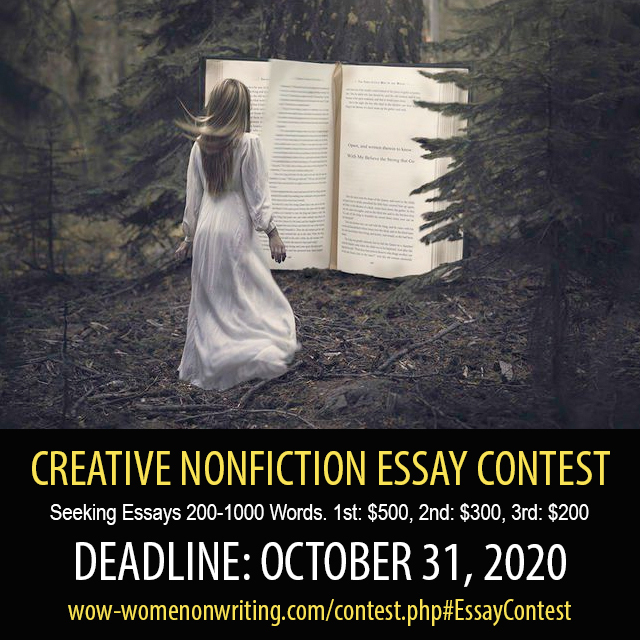
WOW! Women on Writing Quarterly Flash Fiction and Creative Nonfiction Contests - Deadlines: October 31 (Creative Nonfiction) and November 30 (Fiction). Our favorite writing community offers quarterly contests judged blindly with multiple cash prizes and more for 20 winners, up to $1,350 (fiction) and $1,175 plus a gift certificate to CreateWriteNow (nonfiction), an affordable critique option, and a 300-entry limit on each contest. What’s not to love? Fee: $10 (Flash Fiction) and $12 (Nonfiction).
|
|
In celebration of Halloween, submit to The Molotov Cocktail: Flash Monster 2020. Deadline: October 12. “Follow these guidelines, and your best nightmare could come true. All submissions must absolutely be under 1,000 words, and we tend to look more kindly on 750 or fewer. This is a FLASH MONSTER contest, so you must include some sort of literal or figurative monster”. Fee: $8.
October is Italian-American Heritage Month! Celebrate the work of Italian writer Italo Calvino by submitting a short story to University of Louisville Creative Writing’s Calvino Prize 2020. Deadline: October 15. Submit up to 25 industry standard (double-spaced, 12-point font, pages numbered) pages of a novel, novella, short story, or short collection. Final Judge: Joyce Carol Oates. Work previously published is eligible and simultaneous submissions are accepted. An excerpt from a larger work is allowed; however, remember that the selection will be judged on its own merit and so should be able to stand on its own. Fee: $25.
October is also Financial Planning Month! Submit your short story to The Debt Collector: A Sinister Collection of Short Stories. Deadline: October 31. “Zimbell House is holding open submissions for short stories from the point of view of the afterlife’s bounty hunter. Your story must include: which side the debt collector works for, what the debt to be collected is, the consequences at stake, how the afterlife system works, and most importantly, be from the point of view of the debt collector.” Minimum word of 4,500; maximum word count is 19,500.
|
|
Compiled by Margo L. Dill
In the middle of the pandemic, protests against systematic racism, wildfires, and virtual schooling, we need as much positivity as we can get. So, we asked on social media for you all to share your success stories with us. (You can find us on Facebook, Twitter, and Instagram.) If you’re not on social media, you can always send these to me, Margo, at margo@wow-womenonwriting.com and put SUCCESS STORY in the subject line. |
|
I’m excited to share my success that I had a book come out during the summer which was a prequel to my first middle grade novel. The title is Anna and the Baking Championship, and it’s historical fiction set just before the Siege of Vicksburg.
If you haven’t been writing, don’t worry! Some people are thriving during the quiet time at home, and some people are riddled with anxiety and having a hard time creatively. We can cheer on our community who turned in success stories below and get inspired by their celebrations!
Email:
Ann Kelly said, “ Rubbertop Review put out a call for quarantine-related CNF essays in the spring, and my essay ‘ See’ was included in their print journal. Plum Recruit published my flash nonfiction piece ‘What Matters’ and paired it with my reading, which was a great experience. The mystery sidewalk chalk artist in my neighborhood continues to color our world and for that I am grateful.” https://plumrecruitmag.com/hybrids/what-matters-ann-kathryn-kelly
Instagram:
cindysea429 said, “Pushcart nomination for ‘July, Exhaling’, an essay that I submitted to @cjclammer's [Chelsey Clammer's] editing class, that appeared in Under the Sun's 2020 issue.”
modernmillenialmom said, “Hi there! I submitted my master’s thesis on influencer marketing: six interviews; thirty-five-plus hours of transcribing, analyzing and coding; 155+ pages later, and I’m done!”
marthaengber said, “My novel, Winter Light, will be published Oct. 6 by Nine Leaves Press!” http://MarthaEngber.com
davinastone_ said, “This year I have had my fifth short story published in a romance anthology. My first novel, The Alice Equation, about getting love wrong until you finally figure out how to get it right is due to be published January 2021.” http://davinastone.com
marisa_fink said, “Honestly, I'm just excited that I've started submitting. Putting my work out there is a huge step.”
sandeesnaps said, “I just published a new domestic thriller about a middle-aged woman who discovers that sibling rivalry never ends. It's called Birds Don't Cry. I'm looking for reviewers. Anyone can contact me if they'd like a review copy.”
deborah_l_burns said, “The memoir of my unconventional mother, Saturday’s Child, published last year and in final edits on my next!”
carolcovengrannick, “My first book, a middle grade novel in verse, REENI'S TURN, just debuted from @Fitzroy Books. It's the story of an introverted, shy tween's struggle with performance anxiety, body acceptance, and identity, and unfolds in the context of the diet culture's negative impact on young children. Ages 9 and up.”
karendraper_author said, “My debut book, a memoir, The Place of Us, published with WiDo Publishing, has received 34 - 5 ⭐️ reviews. Getting back to marketing it since the pandemic.”
cheriepostill said, “Finished my first nonfiction book to help writers succeed big time with beta readers.”
christina_rauh_fishburne said, “Three publications and an excerpt posted this month!”
Facebook:
Jo Mularczyk Author said, “Students are working with my co-author programs through Littlescribe. I've had a short story published in U.S. children's magazine Cricket. One of my poems has been published in Bloomsbury UK's Fire Burn, Cauldron Bubble alongside poems by Shakespeare, Tennyson and Lewis Caroll (feeling a little starstruck!).”
Leanna Falconer said, “This month, I had a short story titled ‘Lucien Greyshire and the Ghost from Applebee's’ included in Weirdbook Magazine issue 43 and a piece of flash fiction, ‘Neighborhood Watch,’ in Shallow Waters Flash Fiction Anthology, issue 6.”
Leila Akinyi said, “My article was published on Hear Her Speak. One of my articles was featured on MMM of Family blog, and two were featured on Something to Wine About website. I also submitted my fifth article to be featured on Diva Hustle Magazine.”
Georgia Hubley said, “It's great to have my entry recognized, even though my submission didn't place in the top three for prize money. Happy to say I just received notification my nonfiction story, "Poor Little Rich Girl," received an honorable mention from the judges of the 2020 Arkansas White County Conference's Creative Writers Contest, theme: ‘Those Were the Days -- The best memory of your childhood.’ Fingers crossed for next year's contest.”
Judith Sornberger said, “I just had an essay, 'Vintage Oak: an Inheritance,’ published in Still Point Arts Quarterly (Fall 2020). My poetry collection Angel Chimes: Poems of Advent and Christmas will be published by Shanti Arts this year in time for the holiday season.”
|
|
Sheila Bender's Three-Step Response Method for Critique Groups |
|
To be used effectively, the three steps in my response method require that you don't speak while your responders are talking, no matter how much you want to say something. You must let the readers respond to what is on the page, otherwise you are having them respond to what you say rather than what you wrote, and it is your words that must ultimately go out into the world without you, not your talking.
Step One: Velcro Words
After you read a draft, your listeners first repeat the words and phrases that stuck with them. They do not tell you why the words stuck with them. They do not even say, "I liked..." They merely repeat your words back as closely as they remember them. It will feel wonderful for you. All of us write to be heard, and there is no better way to affirm that you've been heard than to hear your own words from someone else's mouth. Not telling why the words stuck keeps the focus on your writing.
Step Two: Feelings
To warm up for this step, listeners can list as many emotions as they can think of. The more emotions they list, the more versatile and articulate they will become in responding to writing: gentle, harsh, lost, discovered, nostalgic, sentimental, fearful, reconciled, panicked, bored, surprised, thankful, in mourning, grief-stricken, at odds, defeated, successful, glib, surrendered, frustrated, warm, joyful, happy, dislocated, well-grounded, clear, cloudy, disappointed and resistant are but a small number of names for feelings.
After they feel confident that they can name many feelings, listeners might hear your draft again and then name feelings elicited by the subject and tone of your writing, feelings that are in keeping with the subject and subtext they hear in the draft. Frequently their responses include opposites: sadness and joy, displeasure at loss and surprise at opening up to new gain, and innocence and learning, for example. This kind of contradiction enriches the writing as it holds the yin and yang of experience and satisfies the listeners.
If someone writes about being stuck with twin two-year-olds in a long line of cars at U.S.-Canadian customs by using the simile that he felt like Mt. St. Helens right before she erupted, workshop members might report registering feelings of bottled up anger or unbearable frustration.
After listeners report the feelings they believe are in keeping with the writing's intentions, they report whatever discomfort occurs inside them because of phrasing and details that veer from the writing's seeming subject and subtext. For instance, if the writer with the two-year-olds in his car included a detail like, "My stomach felt like a pond under a clear blue sky" when he was writing about feeling like Mt. St. Helens, readers might report that the clear blue sky evoked calmness that surprised them in the context of what they registered as frustration. The writer decides if the metaphor is accurate or not. Maybe in the drafting process, the writer had felt frustrated but when he was with the kids, he had enjoyed being away from adult responsibilities. The writer might take the writing in a new direction based on listeners' reports of emotional confusion.
Listener responses about the feelings engendered by your draft will help you figure out how your writing is making contact with others. If listeners or readers report contradictory responses, you may realize there are simple ways to clear up the inadvertent confusion by making very small changes in wording. Or, as in the Mt. St. Helens example, you may realize that your feelings are quite different than you thought they were and begin an extensive rewrite.
Listener and reader responses help all writers keep from spinning their wheels or meandering from their real subjects. If listeners are confused, if they feel ripped off, if they feel batted around in different directions, the words are causing that confusion, that theft, that assault. If such emotional journeys do not serve the author's real subject, the author must change the words. It's a "self-correcting" exercise, like learning to cut with scissors; no one teaches children to cut on the lines—they keep at it and one day their eye-hand coordination develops to the point where they can do it. Something like this is true in the drafting process for writing. Receiving feeling-level responses helps you design your writing along the true lines of its emotional story.
Step Three: Curiosity
Finally, listeners tell the writer what they want to know more about and where in the writing they want to know it. These specifics indicate where more writing is required. When others want to know more, writers get insight into their real subject and where and how they may have skirted it. They often realize that what they skipped because they thought it might bore a reader is exactly what the reader wants to know, or that they inadvertently skipped something just because they know their subject so well.
Receiving response in these three steps (Velcro words, feelings, and curiosity) will open up possibilities for your revisions, leaving you not only empowered to continue developing a piece of writing but eager to do so. The three-step response method encourages writing that is authentic, lively, and very much worth getting right.
*
|
|
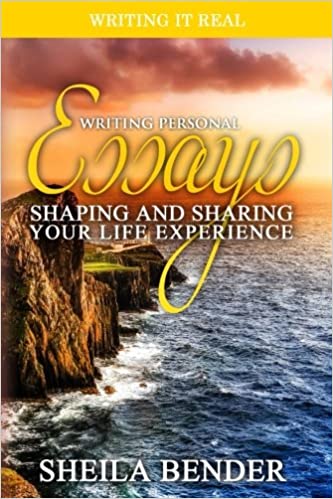
Sheila Bender, founder of Writing It Real, is the author of many books on writing, including the popular Writing Personal Essays: Shaping and Sharing Your Life Experience and Creative Writing DeMystified. Her memoir is entitled A New Theology: Turning to Poetry in a Time of Grief. Her book of poems is Behind Us the Way Grows Wider. As a writer, teacher and editor, she believes that writing so others understand our hearts and minds helps us understand ourselves, heal grief and sadness and grow.
|
|
WOW Workshops Starting Soon |
|
It's "back to school" here at WOW! We have some great online courses to help deepen your skills and workshop your writing. Visit the classroom page for more listings. |
|
Writing Middle Grade and Young Adult Fiction
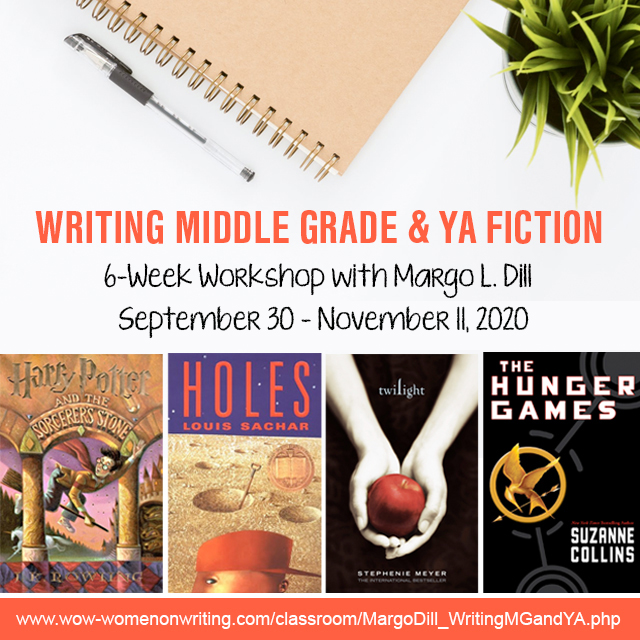
If you’re currently writing or want to write a middle-grade or young adult novel, this is the course for you! In this course, you will learn what makes a middle grade or young adult novel successful, how to plot one, how to relate to the audience, and popular novels that kids and teens love.
6-week workshop with Margo L. Dill starting September 30
|
|
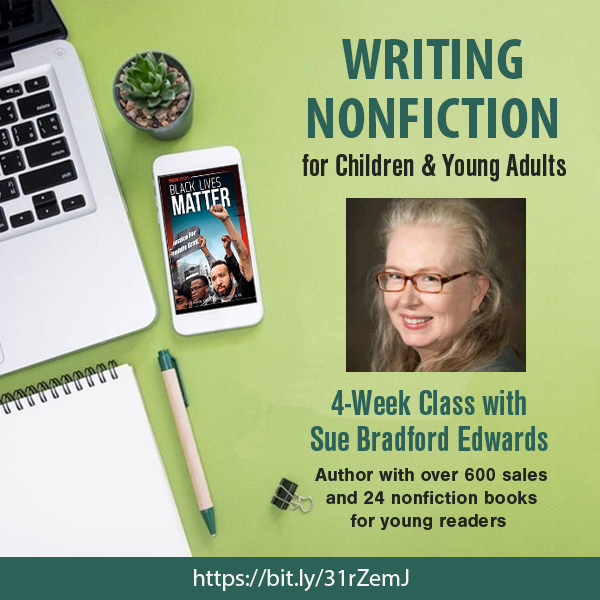
Writing Nonfiction for Children and Young Adults
Biographies, science, history, how-to, and more. Nonfiction is published in book form, online and in both magazines and e-zines. In this course, you will learn how to organize your material, write and revise not only the manuscript you workshop in class but future projects as well.
4-week course with Sue Bradford Edwards starting October 5
|
|
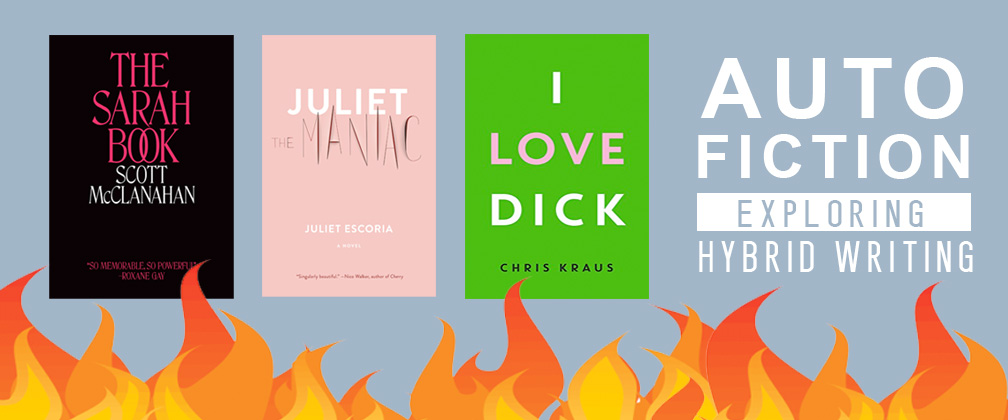
Autofiction: Exploring Hybrid Writing
It’s not memoir, fiction or personal essay, but might have elements of all three. Autofiction is a genre for writers who want to write about their experiences and personal insights without being held back by the “facts.” Explore techniques of writers who have reconstructed events from their own lives using methods borrowed from other genres to create new forms.
6-weeks of Zoom classes with Gila Green starting October 11
|
|
Writing Short, Writing Deep: Prose Poetry, Short Memoir, Epistolary, Flash Nonfiction, Flash Fiction, and More
Participants will read from samples of “lyric memoirs” and “lyric novels” built from smaller pieces as well as selections from authors who write moving vignettes, prose poems, flash fiction and flash nonfiction. Over six weeks, you’ll produce six pieces and create many more ideas for future short writing.
6-week workshop with Sheila Bender starting October 12
|
|
Transform Your Memories into Memoir in 5 Weeks
In this class, we’ll push ourselves to first identify then transform memories into a scene that will be the backbone of your memoir. We’ll focus on the following aspects of craft including structure, characterization, and plot. From experience I’ve discovered the way towards clarity is to have thoughtful discussions, coupled by exercises and gentle thoughtful feedback.
5-week workshop with Dorit Sasson starting October 14
|
|
Fundamentals of Graphic Novel Creation
This class will explore the joys of crafting both verbal and pictorial elements to start your own graphic novel as well as tips for 6-pagers and online comics. While we’ll begin doodling our introductory visions for our characters, no previous drawing classes or artistic skills required. We’ll explore and create the groundwork for creating a memorable protagonist and a cast of other characters, setting, plots, and more that you can continue to develop well beyond the course.
4-week workshop with Melanie Faith starting October 30
|
|
Services Before Submitting |
|
Online Clips for Freelance Writers: Websites vs. Portfolios
Published writers should always have a selection of clips easily accessible to provide to potential publishers and editors. By looking at case studies of writers who use either websites or online portfolio platforms (or both), participants will have a clear understanding of the benefits and drawbacks of both options. The workshop will also cover how to make your online portfolio cohesive with your social media profiles via simple branding tactics.
Video Class & Zoom Consultation with
Bernadette Geyer
|
|
Submissions Consultation
With over 150 publications in the past five years, Chelsey Clammer knows the literary journal world well. She is knowledgeable about paying markets, journal aesthetics, and what different literary journals are specifically looking for in a submission.
Submit up to 12 pages (4,500 words) of your writing for Chelsey to read, assess, provide 5 or more suggestions for where to submit the piece, and to format your document according to each journal’s guidelines. If you don’t have one long piece, you may send multiple, shorter pieces, though a maximum of 3 pieces. Return time is one week.
|
|
Manuscript Draft Editing Package (For Novels, Short Story Collections, and Memoirs)
Are you lost on how to turn your draft into a published book? Do you need someone to read your manuscript and give you suggestions? Margo L. Dill will: Read through your draft (up to 100,000 words); Create a bullet point list of what works in the draft and what doesn’t; Write at least a one-page letter on suggestions for revision and what to do next; Schedule a 30-min Skype or phone call meeting to discuss suggestions and answer questions on Margo’s feedback. This package also comes with a page of technical edits.
|
|
As we all prepare to meet various deadlines, you might be asked to review a piece of writing for a friend. You may already be an expert at giving helpful advice that encourages and inspires, but if you’re new to the art of reviewing, the tips below might help you “G.I.V.E” golden feedback!
G. Grant the kind of feedback you would most like to receive—positive affirmations for what’s working and helpful suggestions in areas which could be improved. Instead of using phrases such as “You should do such and such,” try framing your suggestions with the word: “Consider…” Simply put, “G” also stands for “Golden Rule,” and we all know what that means.
I. Invite the writer to respond to your comments and discuss it with you in person or through Zoom. Giving feedback electronically can be an impersonal experience, and we may unintentionally say something that wounds. By discussing things in more detail, you can make sure that your feedback strikes all the right notes.
V. Validate. Make sure to choose places in the writing that are victories, and praise the writer. Even if you feel that the piece needs a lot more work, you are sure to see other places that shine, starting with the courage it takes to write about a topic in the first place! Find something in the work that taught you something, because we all can improve. Give credit where credit is due.
E. Empower the writer to continue working on this piece. Remind them later, especially if months pass by and you haven’t heard the writer mention it. Offer suggestions for markets or contests. Sometimes my fellow writers think of markets that never even occur to me!
What comes around goes around. The better you get at encouraging others and helping them spot opportunities for improvement, the better you get at doing the same thing for yourself.
~ Ashley Memory
|
|
|
|
|
|
|