WEATHERING CHANGE:
Local Solutions for Strong Communities
2019-20 Webinar Series
Small Town Resilience: Lessons From Maine
Thursday, February 27, 2020 - 12:00 - 1:15 PM ET
From ocean acidification and warming, to broadband internet, renewable energy and sea level rise, small communities in Maine are making great strides in their future resilience. Join members of the Governor’s Office of Policy Innovation & the Future and the Island Institute, a community development organization that has worked to sustain Maine's island and coastal communities for more than 37 years . They will share an update on the work of the Maine Climate Council and stories of resilience from along Maine’s rural coast.
Webinar Presenters:
Brian Ambrette is a Senior Climate Resilience Coordinator with the Governor’s Office of Policy Innovation and the Future. Brian has a decade and a half of community, conservation, and nonprofit experience in New England and the Mid-Atlantic. He holds a Master of Environmental Management degree from Yale University’s School of Forestry & Environmental Studies and bachelors degree from Middlebury College in Vermont.
Suzanne Arnold, Ph.D. , is the Marine Scientist at the Island Institute. She joined the Institute in 2012 and works on the impacts of climate change and ocean acidification on marine resources and fisheries-dependent communities. Susie earned a master's degree in Marine Policy and a doctoral degree in Marine Biology from the University of Maine. Susie has extensive experience and expertise in directing projects that have successfully extended scientific literacy and supported communities in increasing their resiliency.
Stephenie MacLagan combines environmental science, natural resource economics, and policy in working with island and coastal communities to strengthen diverse economies, future resiliency, and environmental connections. Stephenie obtained her M.S. in Resource Economics and Policy from the University of Maine, where she studied soft-shell clam management while working at the Senator George J. Mitchell Center for Sustainability Solutions. She earned her B.S. in Environmental Policy from Unity College.

This webinar series is generously sponsored by:
Help us continue the conversation about climate resilience and equity, in Maine and throughout the northeast. Join us May 11-12, 2020 in Portland, Maine for the:
2020 Local Solutions: Eastern Climate Preparedness Conference
The 2020 Local Solutions conference will empower participants to take action steps that center climate equity.

Climate equity ensures that all people have the opportunity to influence and benefit from climate resilience-building solutions.

Each participant will leave with a list of equity-oriented action steps they will pursue upon returning to their community. The two keynotes and each convening session will provide guidance about how to implement climate resilience with an equity frame.
Want to learn more about Climate Equity issues prior to the conference?
Join us for the next online class in our Climate Change Resilience Series:
Register for our next 4-week online course:
Climate Justice & Equitable Adaptation

April 5 to May 1, 2020
Registration Deadline: March 31, 2020

Climate change disproportionately affects communities of color and communities facing poverty. This module will focus on understanding how the intersections of social injustice and climate change can intensify the effect of climate impacts in communities that have been historically marginalized.

Instructor:
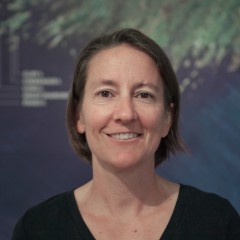
Sarika Tandon
Navigating the U.S. Presidential Candidate Climate Plans Webinar
Monday, March 2, 2020 - 12:00-1:00 PM ET
Antioch University Environmental Studies graduate students have assessed all U.S. presidential candidates’ climate plans against 20 benchmarks, including priorities ranging from modernizing the transportation sector, to ending subsidies for fossil fuel companies, to holding the fossil fuel  industry financially accountable. Their research findings are summarized in a table as a tool for voters to see how their favorite candidate measures up against the climate crisis. 

Join us on Monday, March 2, noon-1pm, Eastern, for a discussion of the top candidates’ positions on the following benchmarks: 

  • Low and no-carbon energy production
  • Best practices for agriculture
  • Natural ecosystem restoration
  • Minimizing carbon emissions in current and future infrastructure improvements
  • Funding for climate research
  • Environmental/Climate Justice issues
This webinar will explore what policies need to be emphasized, and what support needs to be leveraged, to strengthen our greater collective capacity to effectively respond to the growing challenges of the present climate crisis.
Please help us share this information with all who may be interested by forwarding this email to your networks.