On March 10, 2022, a multidisciplinary evidentiary CAC meeting was held with the collaboration of multiple MACs. To date, NGS, Noridian, WPS, and Palmetto have posted their proposed LCDs. CGS has announced an open CAC meeting, but we are awaiting for their LCD to be posted. First Coast and Novitas did not participate in the evidence development. Consequently, we are not sure if they will be posting a proposed LCD or not.
There are various dates for comment periods, with Palmetto having the first comment period closing date of Oct. 15, 2022. Please look over the LCD.
The policy does not show any major requirement changes, but it does tighten all the requirements, like facet joint injections. However, there is one problematic change related to sacroiliac joint radiofrequency neurotomy. In this proposed policy, this is considered as investigational and not covered.
ASIPP will be sending the comment letter within the comment period. If you would like to comment, please make sure that you comment prior to the deadline.
Again, the comment period on the proposed LCD for Sacroiliac Joint Injections and Procedures (DL39402) through Palmetto ends on October 15, 2022. Other Medicare Contractors’ comment closing dates are soon after.
Here is the link to submit comments to Palmetto and view the LCD. Click here.
We will continue to update you on the future comment dates and public meetings.
|
|
Important News!
United Healthcare’s new policy reverses the previous policy with a limit of three (3) epidural injections to the ASIPP recommendation of four (4) procedures per year.
As you know, ASIPP has resolutely advocated for a change in the policy on epidural injection limits of three (3) per year through evidence-based presentations and communication. We first sent a letter on June 21, and they responded on June 27. Since then, we have continued with multiple other correspondences. Consequently, they published the new policy effective November 1, 2022, which now provides coverage for four (4) procedures.
As a reminder, after much effort and many correspondences on the part of ASIPP, percutaneous adhesiolysis is now covered in all states, following the reversal of noncoverage policies of Noridian and Palmetto.
We are still awaiting the response from Centene in reference to continuation of the epidural injections when indicated beyond one year. We will keep you posted on the developments. See Letter to Centene.
|
|
Need to catch up on earning your
CME Credits before 2022 is over?
Here is an excellent opportunity offered by ASIPP to earn
19 AMA PRA Category 1 CreditsTM in Chicago, November 11-13
|
|
Great news! Representatives Larry Bucshon (R-Ind.) and Ami Bera (D-Calif.), are introducing a bill that would prevent a 4.4 percent Medicare physician fee payment cut from taking effect on January 1, 2023, through the introduction of the Medicare Access and CHIP Reauthorization Act of 2015 and associated payment mechanism.
This is the bill we have been requesting from members of the Congress to introduce for some time for the last few months. ASIPP has supported this and ASIPP members have sent over 5,000 letters to Members of the Congress to date.
Representatives Bucshon and Bera are supported in this endeavor by six additional representatives, Kim Schrier M.D. (WA-08), Michael Burgess, M.D. (TX-26), Earl Blumenauer (OR-03), Brad Wenstrup, D.P.M. (OH-02), Bradley Schneider (IL-10), and Mariannette Miller-Meeks, M.D. (IA-02). Together they sent a Request for Information: Medicare Payment System Reform letter to members of Congress. See RFI Letter
|
|
Randomized trial tests email warnings to reduce high-risk drug interactions
Email alerts to practitioners from pharmacists did not reduce concurrent prescribing of opioids and benzodiazepines, a randomized trial showed.
In a group of over 2,000 patients who recently received co-prescriptions, there were no differences in the number of prescribed days for opioids, benzodiazepines, or both between the email alert group and the usual-care group over 90 days, reported Adam Sacarny, PhD, of Columbia University Mailman School of Public Health in New York City, and colleagues:
- Opioids: adjusted difference 1.1 days (P=0.81)
- Benzodiazepines: adjusted difference -0.6 days (P=0.30)
- Both: adjusted difference -0.1 days (P=0.41)
These findings suggest that different evidence-based interventions should be considered when attempting to encourage adherence to the co-prescribing guidelines for patient care, the authors wrote in JAMA Health Forum.
|
|
REMAINING PART I EXAM DATES THIS YEAR:
- October 22
- November 19
- December 17
|
|
Numerous major U.S. health insurance companies have made as much as $25 billion in profits by fraudulently billing the U.S. government for nonexistent healthcare charges, according to a New York Times report.
By 2023, nearly half of the estimated 64 million people on Medicare — the government’s national health insurance program for people over 65 and young people with disabilities — will have a Medicare Advantage (MA) plan. The MA plans, managed by private insurance companies, receive payments from the U.S. government for managing people’s care.
Whistleblowers, federal officials, and an inspector general accused some of the biggest insurers of fraudulently overbilling the government by falsely reporting patient ailments. The accused companies include UnitedHealth, Humana, CVS Health, Kaiser Permanente, Cigna, and others. Most of the programs’ large insurers have also been accused of fraud in court.
|
|
Confronting the reality of AI's role in healthcare
"Mark my words. AI [artificial intelligence] is more dangerous than nukes."
-- Elon Musk
The other day, as soon as I walked into work, already running my usual 10 minutes late, I was hustling from my office to the clinic when I saw one of our physician assistants in the hallway. She is otherwise known for her calm composure, so it seemed odd that she was visibly distressed. The reason was that she had forgotten her laptop at home and could not find a loaner. I tried to save her day by offering her my laptop to work on. That would mean I would have a computer to work on in the clerical area, but I would have to see patients the entire day without having a computer in the room with them.
The PA resisted, but I insisted. We both went our separate ways to move on with our days.
I had not seen patients like this in quite some time now. By "like this," I mean without a computer in the room. It should not be a big deal, but I realized that a computer has now become an entity that is always a part of our patient encounters. If you don't have a stethoscope, you can get by, but you can't without a computer.
It's as if a third "being" is present in the room -- the first two being the doctor and the patient. We interact with patients briefly, but constantly work at the computer, from looking up their records, labs, and scans to placing orders and scheduling instructions.
|
|
Large meta-analysis offers some insights
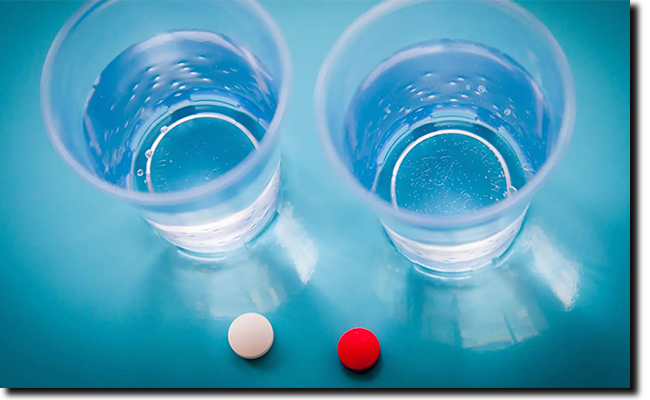
One of the enduring enigmas in medicine is why patients with osteoarthritis (OA), whose joints are clearly diseased enough to cause substantial pain, nevertheless find relief with sugar pills. Now a meta-analysis from China has unraveled some of the factors associated with placebo responses in clinical studies of oral drugs.
Analyzing data from 130 trials involving 12,673 OA patients, not only were placebo responses strongest in those with the most severe symptoms at baseline (as expected from previous studies), but the magnitude of response also increased with a study's sample size and the potency of the active agent being evaluated.
This was true not only for pain but also for ratings of stiffness and functional ability, according to Lujin Li, PhD, of Shanghai University of Traditional Chinese Medicine, and colleagues, reporting in JAMA Network Open.
|
|
Need to catch up on earning your
CME Credits before 2022 is over?
Here is an excellent opportunity offered by ASIPP to earn
15 AMA PRA Category 1 CreditsTM in Newport Beach, October 14-16
We have limited space left for the offsite lab on Saturday.
|
|
Register today for the CALSIPP Annual Meeting and join us for an Evening Cruise on the Bay!
Saturday, October 15 | 7:30 pm
|
|
Enjoy an entertaining three-hour yacht cruise around Newport Bay on a two-level contemporary yacht. Take in the beautiful sights from the outdoor viewing areas on the large bow, aft deck, or by strolling the walk-around decks.
Limited tickets are available, so do not wait! Tickets are $100 per registered meeting attendee or guest and must be selected on the registration form.
Register for the meeting and select the Cruise Add On.
|
|
A piece in The Economist this week about masks, and how at least half of the people in Japan are planning to continue to use masks indefinitely (where there was never a mandate), prompts a deeper look into what has been the secret of Japan’s extraordinary success in the pandemic. Over time it has the least cumulative deaths per capita of any major country in the world. That’s without a Zero-Covid policy or any national lockdowns, which is why I have not included China as a comparator.
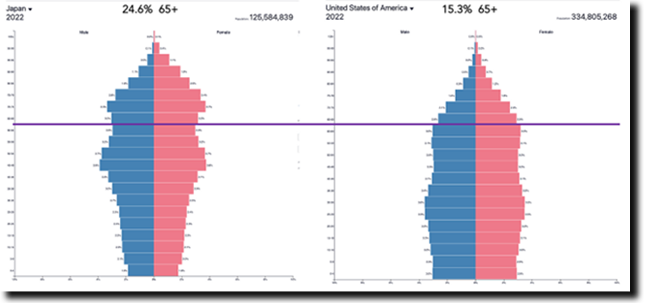
Before we get into that data, let’s take a look at the age pyramids for Japan and the United States. The #1 risk factor for death from Covid is advanced age, and you can see that in Japan that ~25% of the population is age 65 and older, whereas in the United States that proportion is substantially reduced at 15%. Sure there are differences in co-morbidities like obesity and diabetes, but there is also the tradeoff of a much higher population density in Japan.
Besides masks, which were distributed early on by the government to the population in Japan, there was the “Avoid the 3Cs” cluster-busting strategy, widely disseminated in Spring 2020, leveraging Pareto’s 80-20 principle, long before there were any vaccines available. For a good portion of the pandemic, the Ministry of Foreign Affairs of Japan maintained a strict policy for border control, while hard to quantify, may certainly have contributed to its success.
|
|
|
|
Please plan to join us at the
2023 ASIPP Annual Meeting
March 16-18 National Harbor, Maryland
Register Early
More details will be posted on our website at asipp.org.
Registration begins November 2022.
|
|
For meeting or exhibitor/sponsor information:
|
|
Numerous major U.S. health insurance companies have made as much as $25 billion in profits by fraudulently billing the U.S. government for nonexistent healthcare charges, according to a New York Times report.
By 2023, nearly half of the estimated 64 million people on Medicare — the government’s national health insurance program for people over 65 and young people with disabilities — will have a Medicare Advantage (MA) plan. The MA plans, managed by private insurance companies, receive payments from the U.S. government for managing people’s care.
Whistleblowers, federal officials, and an inspector general accused some of the biggest insurers of fraudulently overbilling the government by falsely reporting patient ailments. The accused companies include UnitedHealth, Humana, CVS Health, Kaiser Permanente, Cigna, and others. Most of the programs’ large insurers have also been accused of fraud in court.
|
|
- ASIPP Members Only Site Information - |
|
-
To log in for the first time you will need to click “forgot password” at the bottom of the login window.
- Check your email and then log in as directed.
-
If you have problems logging into your account, click here.
|
|
Pain Medicine Case Reports (PMCR) and Editor-in-Chief Alaa Abd-Elsayed, MD, PhD would like to invite you to submit case reports and case series to the PMCR journal. Your article will be published free of charge.
Open access journals are freely available online for immediate worldwide open access to the full text of published articles. There is no subscription fee for open access journals. Open access journals are no different from traditional subscription-based journals: they undergo the same peer-review and quality control as any other scholarly journal.
Interested in becoming a member of the PMCR Editorial Board?
Editorial board members are asked to review 2-6 manuscripts per year. Please submit your most up-to-date CV to sgold@asipp.org for consideration.
For more information or to submit your articles, click here.
|
|
| CASE REPORT |
Martin Pico, MD, and Michael Flamm, DO
Abstract
BACKGROUND: Postamputation pain is a common condition affecting veterans with amputations. Recognition and treatment of skin conditions play a significant role in treating residual limb pain. Hyperhidrosis or excessive sweating is the most common skin problem reported by amputees and can cause infections, act as triggers for other pain generators such as neuromas, and impede the proper use of a prosthetic.
CASE REPORT: We discuss a case of a 38-year-old man with a left transtibial amputation who presented with refractory neuropathic pain aggravated by persistent hyperhidrosis. Botulinum toxin A was injected both into suspected neuroma sites and areas of hyperhidrosis with a significant decrease in pain and sweating.
CONCLUSION: Botulinum toxin A can be successfully used in the treatment of neuropathic residual limb pain exacerbated by hyperhidrosis.
KEY WORDS: Botulinum toxin A, hyperhidrosis, neuroma, neuropathic pain, postamputation pain, transtibial amputation
|
|
| RANDOMIZED CONTROLLED TRIAL |
Susie Yoon, MD, PhD, Hyo Bin Lee, MD, Kwon Joong Na, MD, Samina Park, MD, Jaehyon Bahk, MD, PhD, and Ho-Jin Lee, MD
Abstract
BACKGROUND: Although nefopam has been reported to have opioid-sparing and analgesic effects in postsurgical patients, its effectiveness in video-assisted thoracoscopic surgery (VATS) is unknown.
OBJECTIVES: This study aimed to investigate the opioid-sparing and analgesic effects of perioperative nefopam infusion for lung resection.
STUDY DESIGN: Double-blinded randomized controlled trial.
SETTING: Operating room, postoperative recovery room, and ward at a single tertiary university hospital.
METHODS: Ninety patients scheduled for elective VATS for lung resection were randomized to either the nefopam (group N) or control group (group C). Group N received 20 mg nefopam over 30 minutes immediately after the induction of anesthesia. Nefopam was administered continuously for 24 hours postoperative, using a dual-channel elastomeric infusion pump combined with fentanyl-based intravenous patient-controlled analgesia. Group C received the same volume of normal saline as nefopam solution administered in the same manner. The primary outcome measure was fentanyl consumption for the first postoperative 24 hours. The secondary outcome measures were the cumulative fentanyl consumption during the first postoperative 48 hours, pain intensity at rest and during coughing evaluated using an 11-point numeric rating scale, quality of recovery at postoperative time points 24 hours and 48 hours, and the occurrence of analgesic-related side effects during the first postoperative 24 hours and postoperative 24 to 48 hour period. Variables related to chronic postsurgical pain (CPSP) were also investigated by telephone interviews with patients at 3 months postoperative. This prospective randomized trial was approved by the appropriate institutional review board and was registered in the ClinicalTrials.gov registry.
RESULTS: A total of 83 patients were enrolled. Group N showed significantly lower fentanyl consumption during the first postoperative 24 hours and 48 hours (24 hours: median difference: -270 µg [95%CI, -400 to -150 µg], P < 0.001); 48 hours: median difference: -365 µg [95% CI: -610 to -140 µg], P < 0.001). Group N also showed a significantly lower pain score during coughing at 24 hours postoperative (median difference, -1 [corrected 95% CI: -2.5 to 0], adjusted P = 0.040). However, there were no significant between-group differences in the postoperative quality of recovery, occurrence of analgesic-related side effects, length of hospital stay, and occurrence of CPSP.
LIMITATIONS: Despite the significant opioid-sparing effect of perioperative nefopam infusion, it would have been difficult to observe significant improvements in other postoperative outcomes owing to the modest sample size.
CONCLUSION: Perioperative nefopam infusion using a dual-channel elastomeric infusion pump has a significant opioid-sparing effect in patients undergoing VATS for lung resection. Therefore, it could be a feasible option for multimodal analgesia in these patients.
KEY WORDS: Analgesia, analgesics, opioid, lung neoplasms, nefopam, perioperative care, postoperative pain, thoracic surgery, video-assisted
|
|
| RANDOMIZED TRIAL |
Sang Hoon Lee, MD, Hyun Hee Choi, MS, and Min Cheol Chang, MD
Abstract
Background: For managing symptoms of adhesive capsulitis (AC), corticosteroid injection is typically conducted under the guidance of ultrasound via posterior glenohumeral recess (PGHR). It has been reported that pathologies such as inflammation and edema are most commonly observed in the coracohumeral ligament (CHL) and anterior and inferior joint capsules. We compared the therapeutic effects of corticosteroid injection into the CHL and inferior glenohumeral capsule (IGHC) with those of corticosteroid injection into PGHR in patients with AC.
Methods: One hundred twenty consecutive patients with AC were included in this study and randomly allocated to either the CHL + IGHC group (n = 60) or the PGHR group (n = 60). Patients in both groups received 3 injections at 2 week intervals. After the first injection, if the patient's shoulder pain showed satisfactory improvement, further injections were not administered. The therapeutic effect was measured at 2 and 4 months after the first injection. Pain intensity was evaluated using the visual analog scale (VAS). Additionally, the passive range of motion (ROM) of the shoulder joint (abduction, external rotation, and internal rotation) was measured.
Results: VAS scores and ROM of abduction, external rotation, and internal rotation improved at follow-up evaluation in both groups (P < 0.05) (CHL and IGHC: VAS, pre-treatment = 6.5 ± 0.5, 2 months = 2.1 ± 0.8, 4 months = 1.4 ± 0.6; ROM-abduction, pre-treatment = 131.3° ± 16.4°, 2 months = 162.4° ± 8.2°, 4 months = 176.2° ± 5.6°; ROM-external rotation, pre-treatment = 31.6° ± 16.9°, 2 months = 67.2° ± 11.1°, 4 months = 81.3° ± 12.1°, ROM-internal rotation, pre-treatment = 6.2 ± 2.2, 2 months = 4.0 ± 2.2, 4 months = 2.7 ± 1.2; PGHR: VAS, pre-treatment = 6.5 ± 0.5°, 2 months = 3.9 ± 1.1, 4 months = 2.1 ± 1.1; ROM-abduction, pre-treatment = 132.1° ± 9.5°, 2 months = 145.5° ± 11.7°, 4 months = 167.4° ± 11.2°; ROM-external rotation, pre-treatment = 32.4° ± 13.4°, 2 months = 49.3° ± 13.2°, 4 months = 72.7° ± 18.0°, ROM-internal rotation, pre-treatment = 6.3 ± 1.4, 2 months = 5.4 ± 0.8, 4 months = 3.6 ± 1.0). However, the improvements were greater in patients who received corticosteroid injection into the CHL and IGHC compared to that into the PGHR at 2 and 4 months after the initiation of the treatment (P < 0.05).
Limitations: Long-term therapeutic outcomes were not investigated, and the therapeutic effect of corticosteroid injection into the CHL and IGHC was not compared with placebo injection.
Conclusion: Corticosteroid injection into the CHL and IGHC might be a better treatment alternative for patients with AC.
Keywords: corticosteroid; injection; pain; shoulder; Adhesive capsulitis.
|
|
ASIPP is now in collaboration with Curi Medical Liability Program
Since this malpractice insurance program officially launched in November 2018, ASIPP has signed up hundreds of providers with an average savings of 30%. This is professional liability insurance tailored to our specialty and will stand up for us and defend our practices.
Curi is a full-service advisory firm that serves physicians and their practices. Their valued advice is grounded in your priorities and elevated in your outcomes. They are driven by a deep understanding of your specific circumstances in medicine, business, and life. To read a few important points to keep in mind about the program, including discounts, administrative defense, cyber coverage, aggressive claims handling, and complimentary risk management CME activities, visit our website.
|
|
ASIPP® has formed a partnership with Henry Schein and PedsPal, a national GPO that has a successful history of negotiating better prices on medical supplies and creating value-added services for independent physicians. Working with MedAssets, PedsPal provides excellent pricing on products like contrast media that alleviate some of the financial pressures you experience today.
|
|
ASIPP® is now offering our members the benefit of a unique revenue cycle management/ billing service.
We have received a tremendous amount of interest in the ASIPP® billing and coding program.
Click here to learn more about the negotiated rate for practices and more!
|
|
|
up-to-date news related to you, your practice, and your patients!
|
|
|
|
|
|
|