NACD’s 67th Annual Stewardship Week kicked off Sunday, April 24! Don’t forget to share your events as you celebrate this year’s theme, Healthy Soil, Healthy Life, in your district.
Email us at stewardship@nacdnet.org and utilize our hashtags on social media to show off your celebrations: #DistrictsSupportSoilHealth and #NACDStewardshipWeek!
|
GET OUTSIDE WITH NCF-ENVIROTHON iNATURALIST |
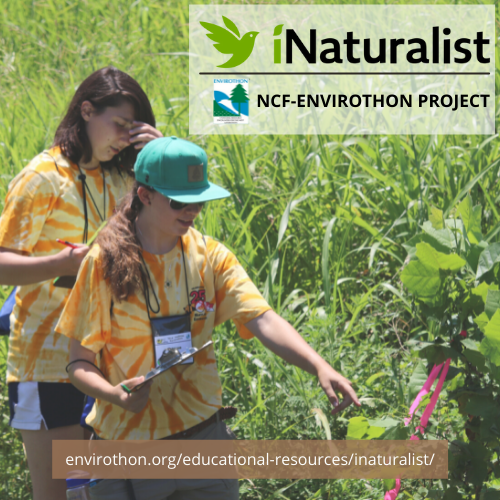
Conservation districts looking for innovative ways to engage technologically savvy students this Stewardship Week are encouraged to check out the NCF-Envirothon iNaturalist Project. iNaturalist, one of the largest citizen science projects in the world, is an online educational social network and community-based platform that allows students to collaborate with each other, educators, and natural resource specialists as they explore nature. Initially developed for use as a training tool for Envirothon students, conservation districts and individuals are invited to join the project. |
With both web-based and mobile applications, including iPhone and Android apps, iNaturalist offers a unique platform for ecological exploration and education. It can be easily incorporated into Stewardship Week activities, as well as Envirothon trainings, in person or at a distance. With a focus on getting students outdoors and face-to-face with local ecology, iNaturalist is a great way to get students and adults excited about learning.
The Envirothon iNaturalist project can be used independently or as part of a structured education program. NCF-Envirothon is working to develop activities that can be used by Envirothon teams and conservation districts that correspond with Envirothon’s main natural resource areas of study: aquatic ecology, forestry, soils, and wildlife. Currently, a Forestry Ecosystem Exploration activity is available that includes an educator and advisor guide with a full lesson plan and educational correlations to multiple standards, a student guide, and worksheets for observations and data collecting.
iNaturalist is a fantastic way to keep the enthusiasm for conservation that is sparked during Stewardship Week going all year round.
More information about this project, as well as instructions on how to get started, can be found on the iNaturalist page of the NCF-Envirothon website. |
NACD ATTENDS 76TH ANNUAL LACD MEETING |
The Louisiana Association of Conservation (LACD) held its 76th Annual Meeting in Baton Rouge, Louisiana from April 19-21. More than 200 producers, district directors, employees, and NRCS staff were in attendance from across the state. NACD South Central Region Representative Wesley Gibson attended the conference to introduce himself as the new Region Representative and give a presentation to attendees along with NACD President Michael Crowder. The two discussed the history of NACD, gave legislative updates, and an overview of the grants, partnerships, and opportunities available to Louisiana Soil and Water Conservation Districts through NACD.
The agenda included topics such as NOAA analysis from Hurricane Ida, PL-566 funding opportunities, a detailed overview of soil health management systems, the potential of BioChar from sugarcane bagasse, and an intro to the Water Education Today program. During the meeting, several awards were also presented to attendees, including Louisiana’s Master Farmers and the Guy Caire Award accepted by Blaise Pezold with the Cresent SWCD.
|
FUNDING HELPS OREGON SWCD CONDUCT FUELS TREATMENT |
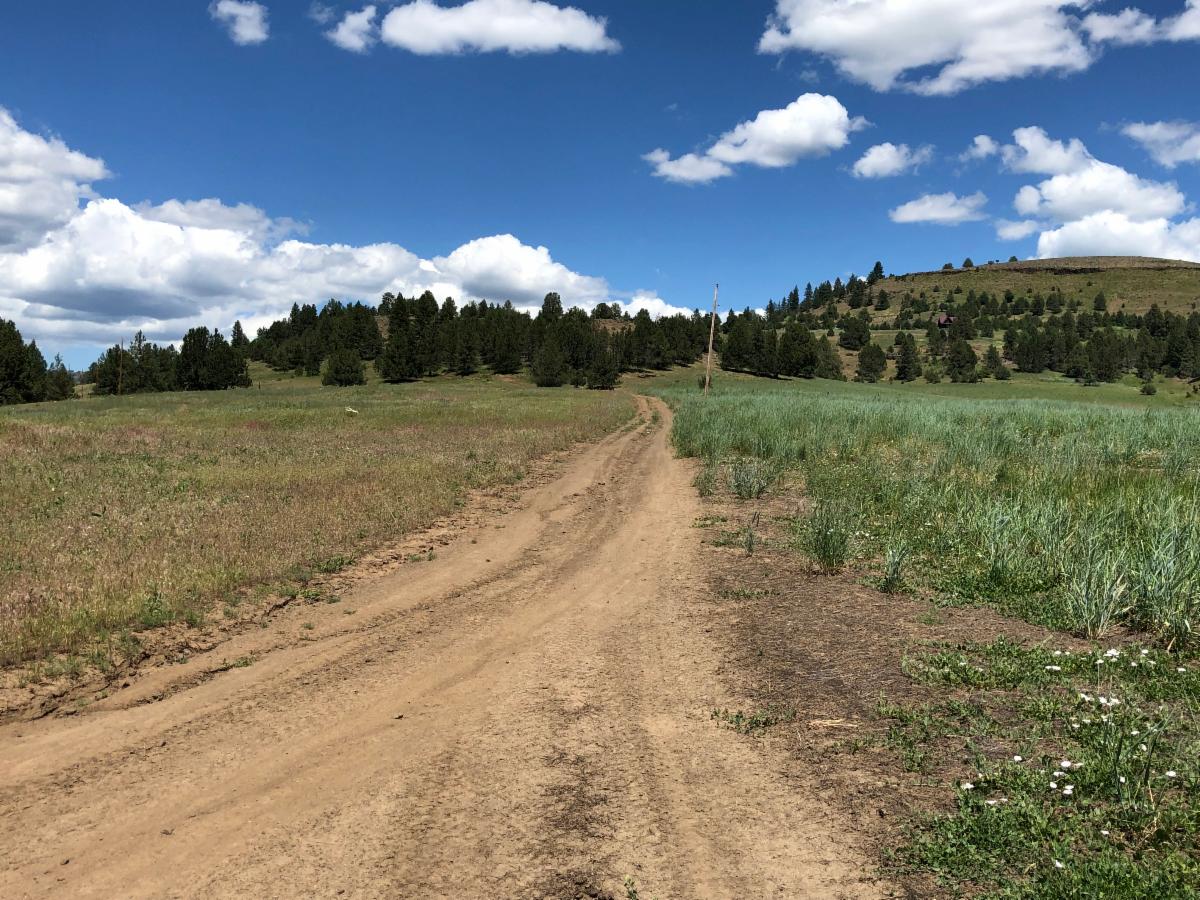
Oregon’s Grant Soil and Water Conservation District (SWCD) is using a $1.6 million state grant to assess and treat about 23,000 acres of range and forest lands in an effort to reduce wildfire risk in the John Day watershed.
“Overall, the fires we’re seeing in the West are getting to be more catastrophic, and I think it’s because we have more vegetation growing in the forest each year coupled with dryer conditions,” said SWCD District Manager Kyle Sullivan.
“We’ve been watching invasive, annual grasses encroach for the better part of the past couple of decades – it’s the elephant in the room,” said Sullivan. “We see the problem, but until now, we didn’t really have any truly viable solutions.”
|
The grant through the Oregon Department of Forestry’s (ODF) Landscape Resiliency Program will help the district reduce fine fuels such as cheatgrass, medusa head rye, and African wire grass, which has been increasing in the area.
“We’ve treated some of the other heavier fuels so it’s a natural progression for us, and we thought it would be a good time to complement the work we’re already doing,” Sullivan said of the Upper John Day Resiliency Project. “It’s a large area to work in, so we’re starting in the headwaters and are going to keep working down the valley.”
The district has been working through a regional partnership which includes private landowners, NRCS, ODF, Malheur National Forest, Bayer Corporation, Blue Mountain Forest Partners, Oregon Watershed Enhancement Board, and Oregon State University to treat dense conifer stands and juniper the past couple of years. In July and August, the district plans to move in behind those practices and add the fine fuels treatment for an overall result, which will include wildlife habitat benefits.
|
|
Kansas CDs Embracing a New Platform: Podcasts |
Kansas Conservation Districts are getting the word out about natural resource conservation in a whole new way. In a podcast through Great Plains Regeneration and the High Plains Journal, underwritten by the Kansas Department of Agriculture, Division of Conservation (DOC), host Jessica Gnad interviewed two of the state’s greatest conservation leaders: Rod Voorhees and Daryl Donohue.
Gnad noted that in her conversations with producers it is important to know the context in which you are farming; not every practice is relevant to your area or circumstances. Vorhees agreed, mentioning that the Kansas Conservation Partnership works together to create policies and programs that are administered through local conservation districts. The grassroots leadership in each county identifies their specific resource concerns and have built an eight-decade relationship of trust with their county producers.
Donohue pointed out that conservation districts are also the best place for the average person to gain information. He thinks of conservation districts as “continuing education for producers” and the workshops often become think tanks for like-minded farmers and ranchers trying to solve the same problem from different perspectives.
|
Register Now for the NCF-Envirothon! |
Register now for the 2022 NCF-Envirothon competition!
The event, hosted by the National Conservation Foundation (NCF) and the Ohio Federation of Soil and Water Conservation Districts, will be held from July 24-30, 2022 at Miami University in Oxford, Ohio. The current issue is Waste to Resources" and Ohio's ecology and natural resources will be highlighted.
|
Funding Opportunity for the Community School Garden Grant Initiative |
The Emerson Collective is accepting grant applications for the Community School Garden Grant Initiative. Nonprofit organizations (501c3) and schools may for up to $15,000 (over two years) to create or expand school or community gardens for nature connection & health. The application is a short form, plus a narrative of no more than 2 pages and 1 page project budget. Apply by April 30.
|
Check Out NACD's Marketplace |
Further support NACD's Stewardship and Education efforts by shopping on the NACD Marketplace. Find all you conservation gear including apparel, awards, school supplies, farm equipment, and more.
|
Promote your conservation district or state association's tree sale, annual meeting, webinar, field day, or other events on NACD's Calendar of Events!
|
|