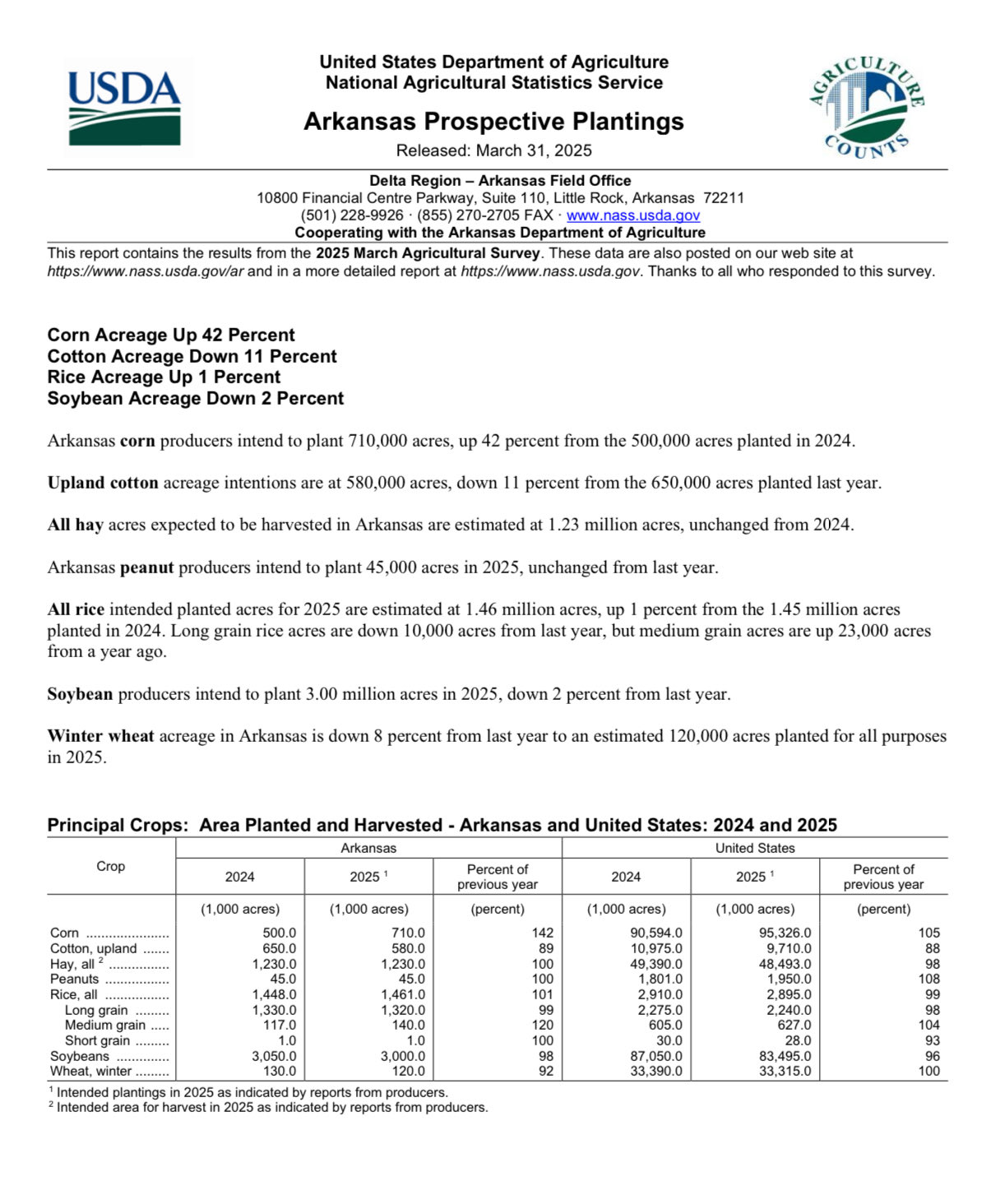
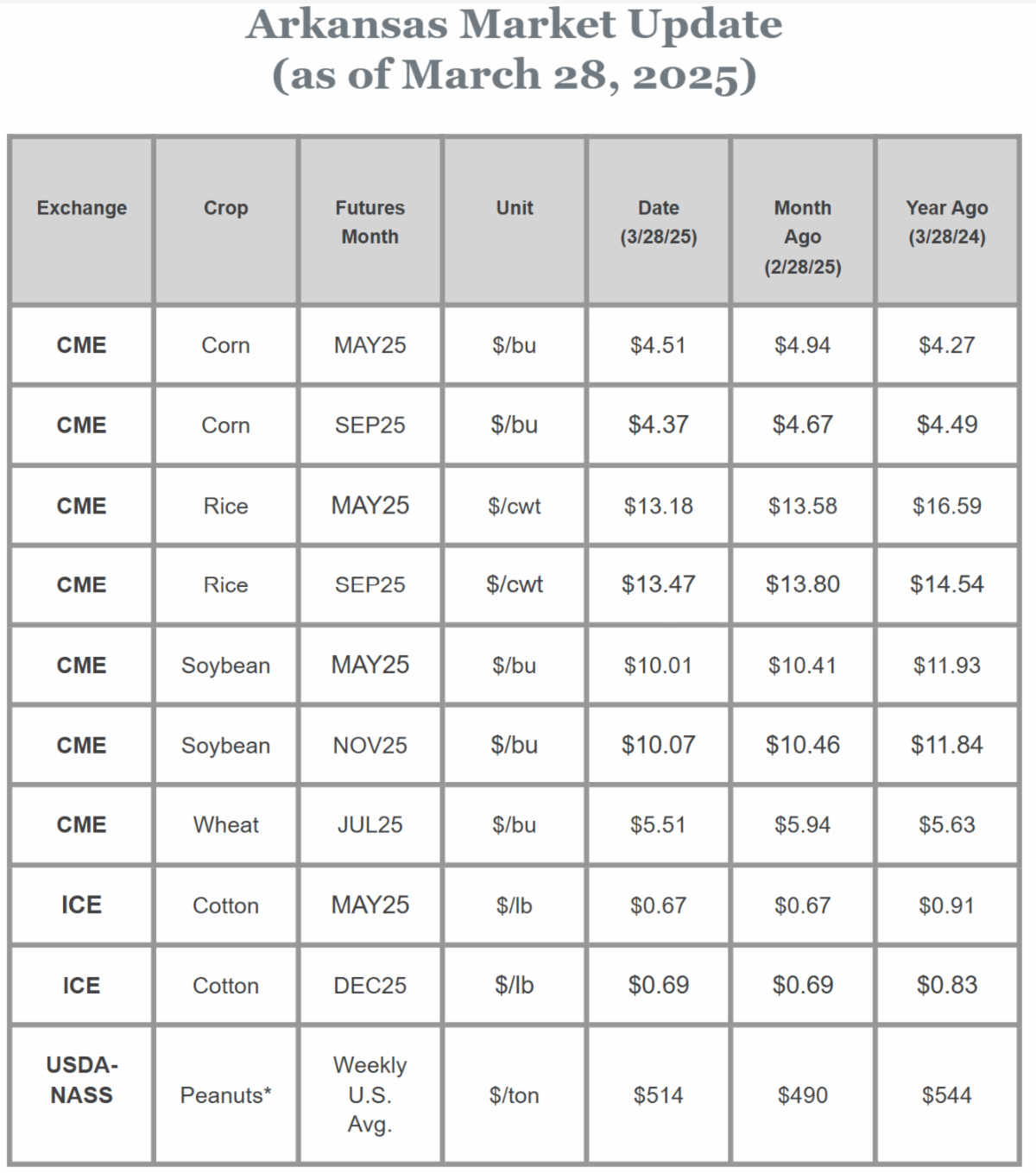
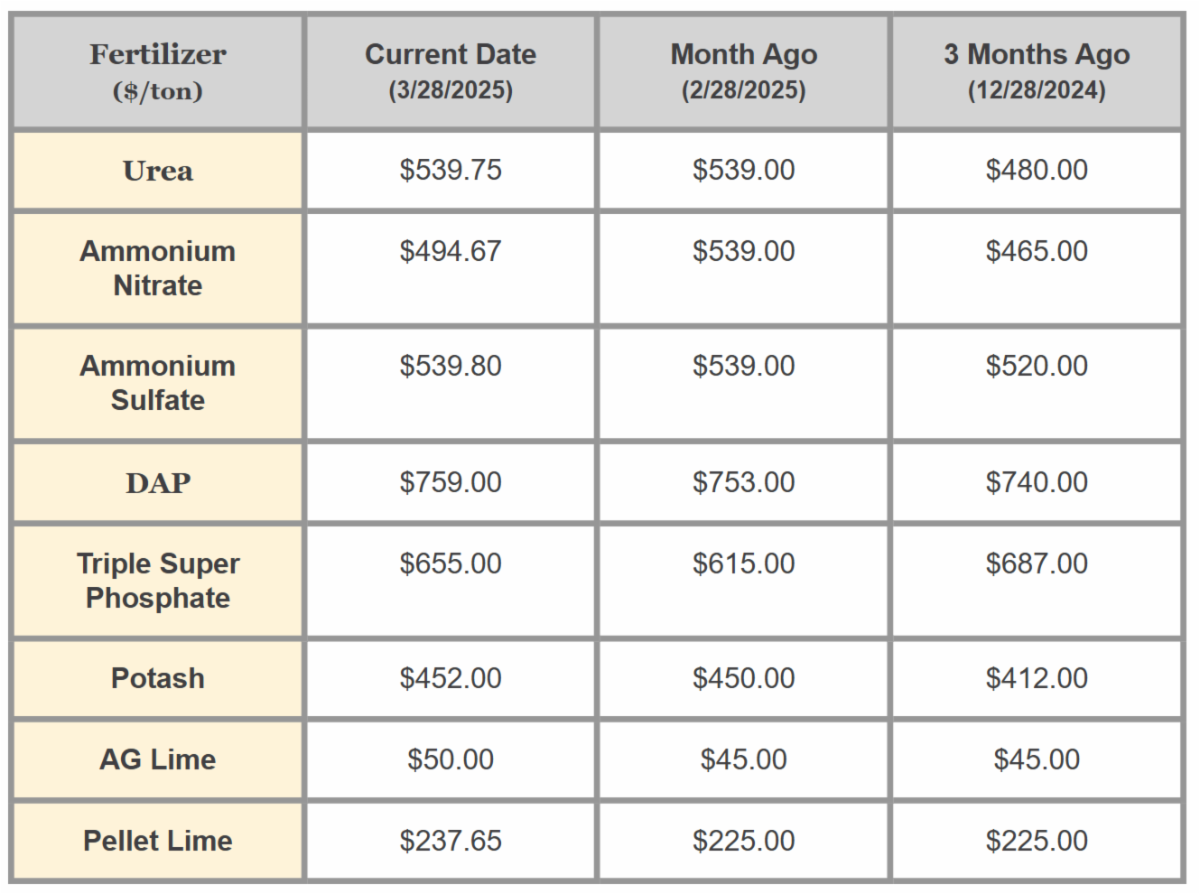
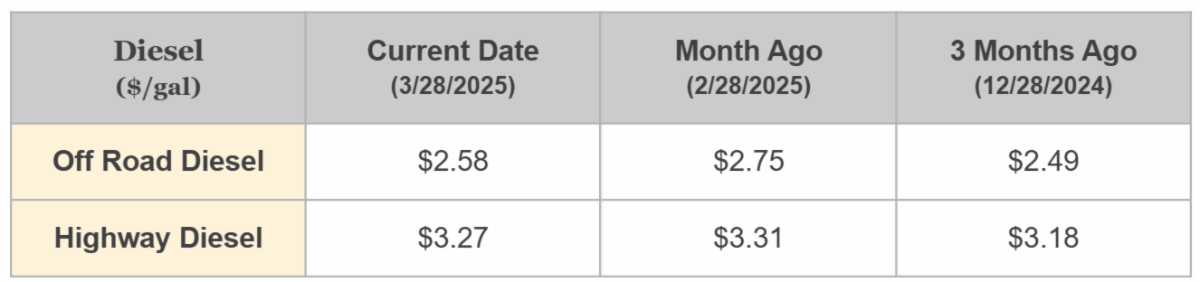
Faulkner County Agriculture Update
April 4, 2025
| | |
Weather
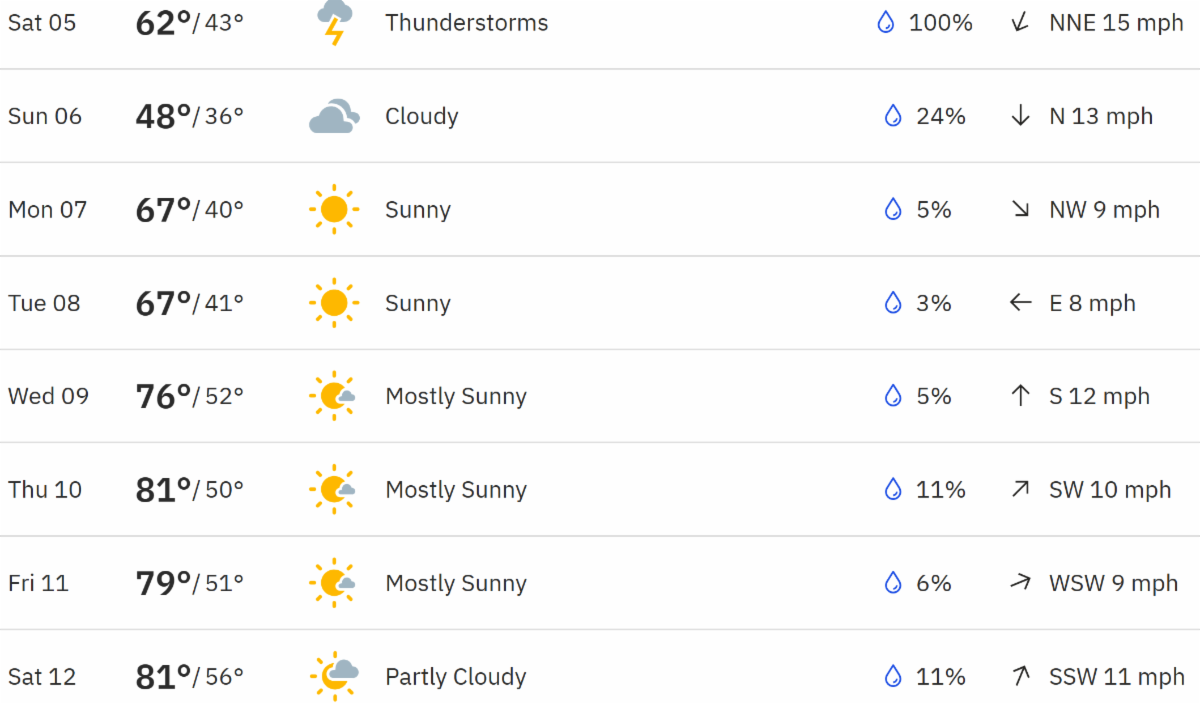
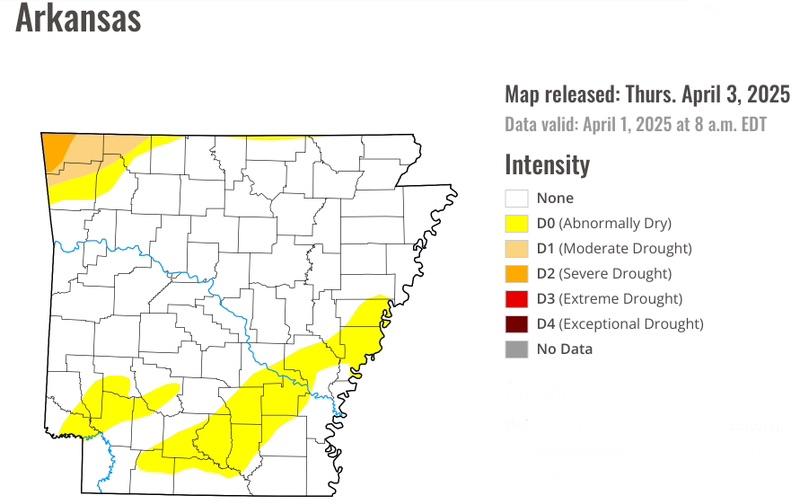
After so many weeks of nice weather and missing rains, we have finally found the rain. We have had a couple of days of massive rains with two more days to go. Hopefully next week will be much nicer, but if you look we will get cooler. It looks like we will get down to 36 degrees on Sunday and Monday, but then it warms right back up. I am always concerned with a freeze this time of year, but fingers crossed we will miss that this year.
With the storms predicted this afternoon, I have included a fact sheet on tornado safety in this update. If you click on the image of the fact sheet, it will link you to the full fact sheet.
Stay safe!
| | |
Arkansas and Mississippi River
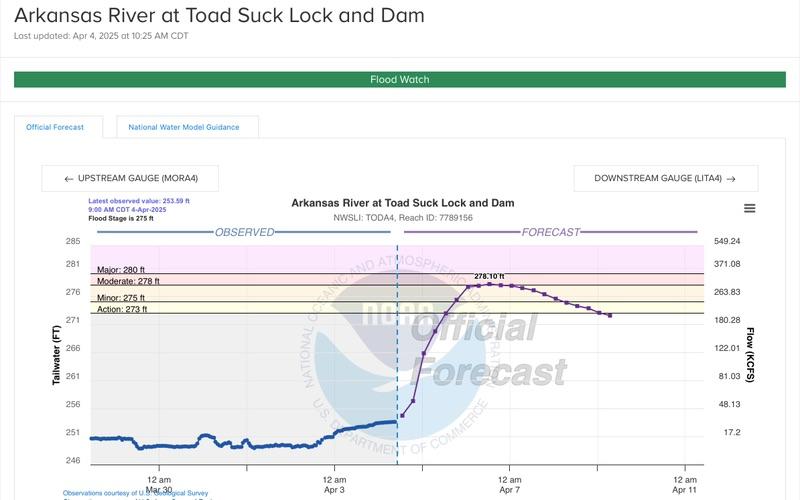
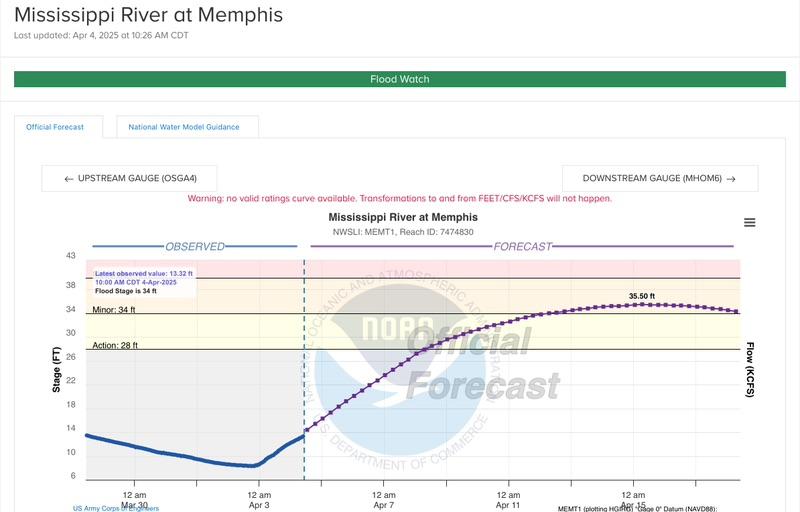
The Arkansas River has made a liar out of me more than once in my life and this time is no exception. As low as the levels were running and with less rain predicted out west, I didn't see it rising to flood stage, but the prediction is that we will see minor to moderate flooding from Saturday until Tuesday. This will get some of the farm land along the river, but another issue is when the water gets to a certain level they will close the gates from water draining out of the bottoms into the river. This makes certain areas basically a big bowl, and if we get all of that rain tomorrow with those gates closed, we could have a flooding event on both sides of the levee. Cadron Creek will also experience flooding that is usually associated with big rains in Faulkner County, and with the river rising, it won't have anywhere to go so this could extend that flooding event.
| | |
Emergency Commodity Assistance Program (ECAP) Sign-Up is Live
Dr. Hunter D. Biram, Assistant Professor and Extension Agricultural Economist, University of Arkansas
The application period has opened for farmers seeking financial relief through the Emergency Commodity Assistance Program (ECAP). Pre-filled ECAP applications were to be mailed to all producers with a reported eligible commodity as of March 10, 2025. Farmers can fill out their applications in person at a local U.S. Department of Agriculture Farm Service Agency (FSA) office or complete an application online at https://www.fsa.usda.gov/ecap. Applications must be filed with FSA by August 15, 2025.
The program was authorized under the American Relief Act in December 2024 to help farmers mitigate the effects of higher input costs and falling commodity prices. FSA will issue up to $10 billion in direct payments to eligible producers of eligible commodities across the United States. Arkansas farmers are expected to receive nearly $300 million under ECAP, according to a report by the Rural & Farm Finance Policy Analysis Center.
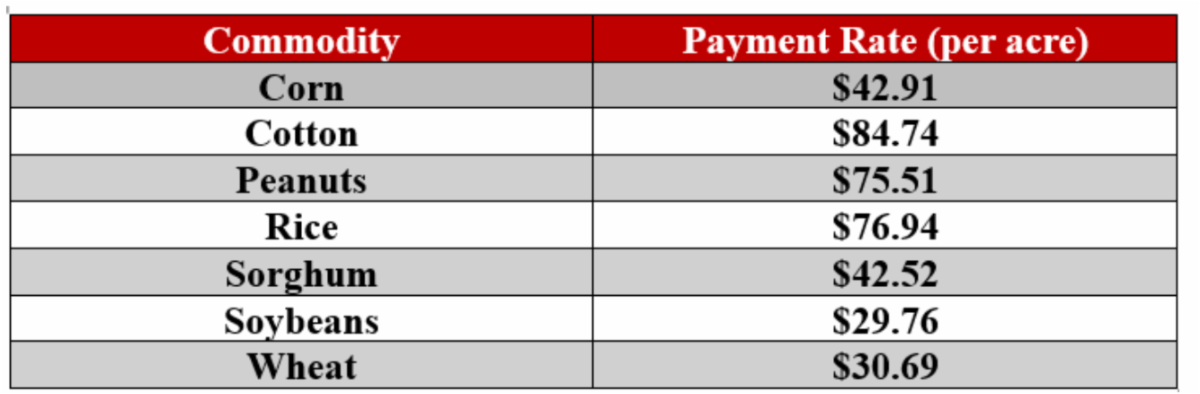
The per acre payment rate is based on national economic data on costs and returns from USDA with farm-specific total payment based on the sum of all planted acres and 50% of failed acres measured by those prevented from planting determined by the FSA. A farmer will receive the full payment if he or she owns or cash rents the land which the payment is based on. If a farmer is under a crop share rental agreement, they will receive a payment that is based on their share of the crop share agreement. Farm-specific acreage amounts will come straight from a producer’s FSA-578 Report of Acreage Form. If a producer has not previously filed an FSA-578 form, they have until August 15, 2025 to do so. Producers filing an FSA-578 for the first time must have the following forms on file with FSA: AD-2047, CCC-901, CCC-902, CCC-943, AD-1026, and an SF-2881. Acreage prevented from planting must be reported on the CCC-576 even if the deadlines applicable to other FSA programs have passed. A table of payment rates is given below:
| |
Table 1. ECAP Payment Rates for Crops Predominantly Grown in Arkansas
Importantly, a farmer will not get the full payment initially. ECAP payments will be prorated by 85 percent to ensure that payments do not exceed the available funding. FSA may issue an additional payment if additional funding remains available after the initial payments are issued. Payments may not exceed $125,000 per person or legal entity if less than 75% of the average gross farm income of the person or legal entity for the 2020-2022 tax years is derived from farming, ranching, or silviculture activities. The payment limit increases to $250,000 if more than 75% of the average gross farm income is derived from farming, ranching, or silviculture activities. These payment limitations are separate from the payment limitations which apply to other programs, such as Agriculture Risk Coverage (ARC) or Price Loss Coverage (PLC). FSA notes that the payment limit determination is based on “gross income” defined by the IRS rather than “average adjusted gross income” as typically used, to reduce confusion for producers, accountants, and attorneys.
| | |
Wheat
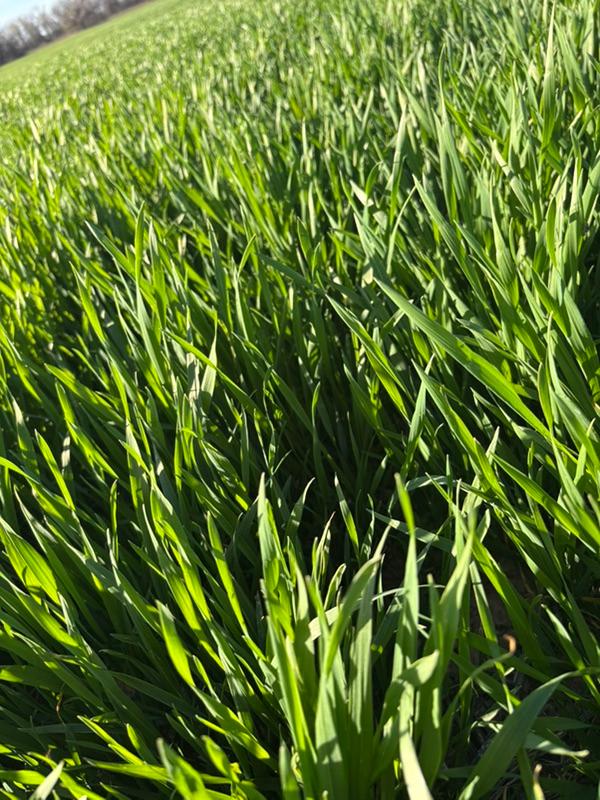
Wheat needed a little rain, but we didn't need the flood. At 278, the river will get over some of our wheat, and with the flood gates closed, it may cover more inside the levee. Cooler temperatures are going to help, but even with that, wheat isn't going to take a flood long. The water needs to get on and get off asap. Maybe a couple of days completely covered is all we can stand. I sure hope it doesn't flood because we have a heck of a wheat crop going right now.
| | |
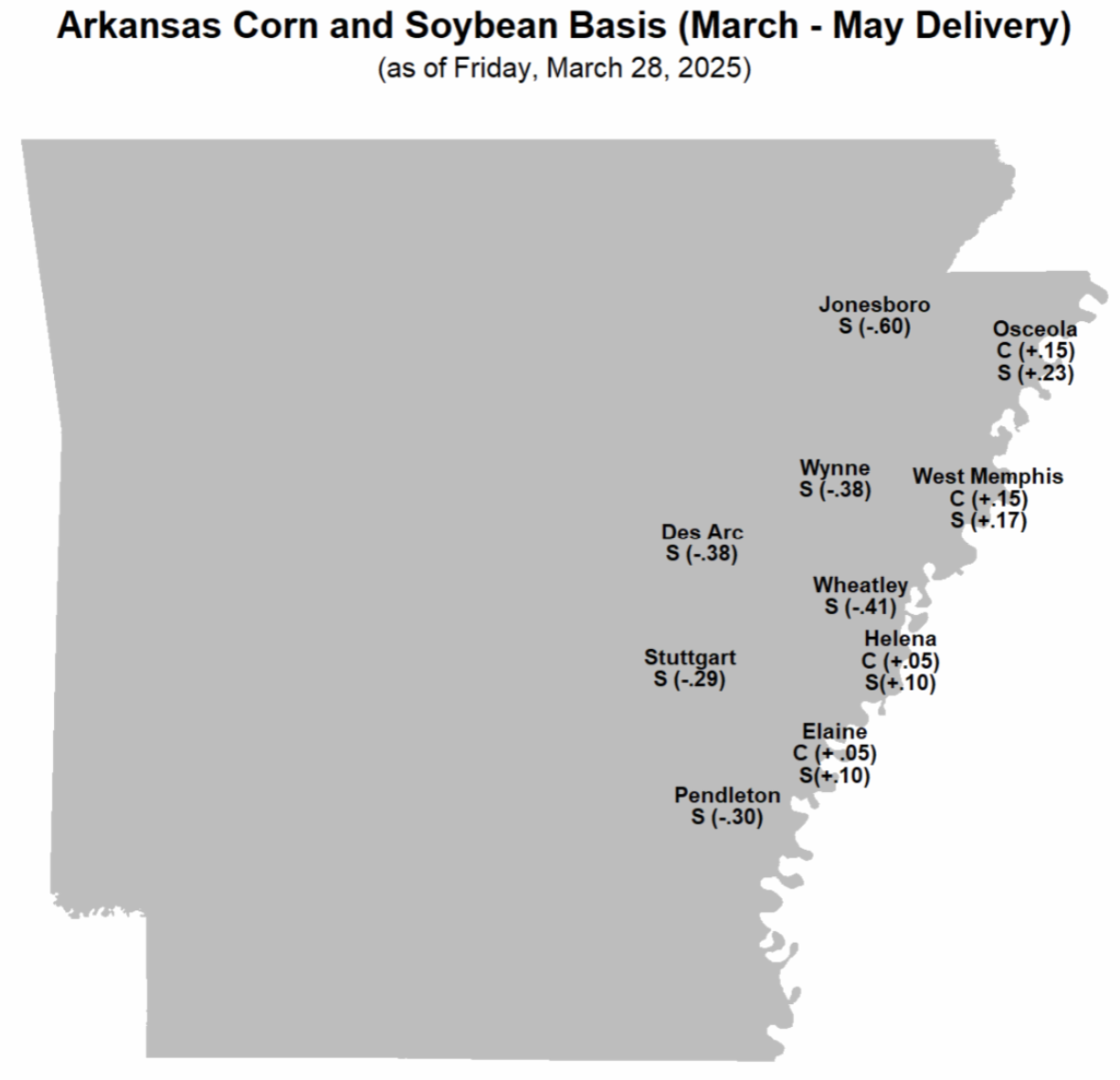
Corn
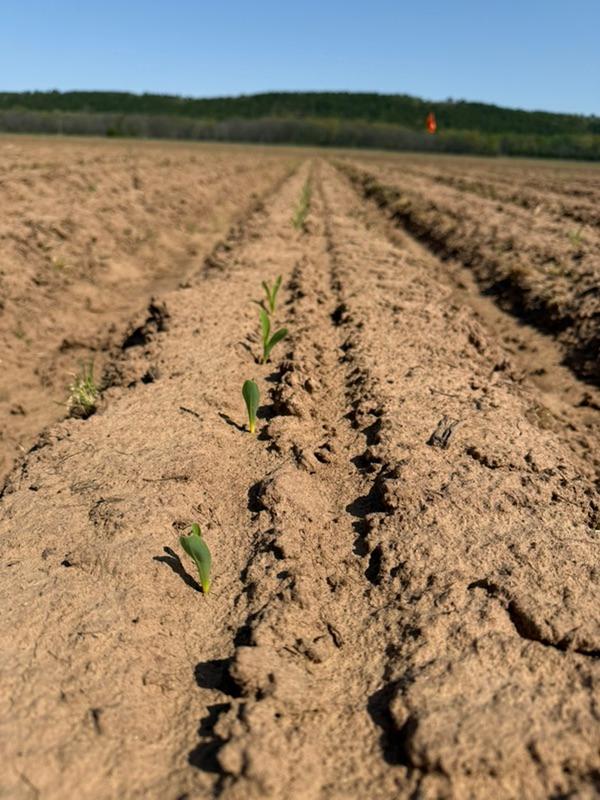
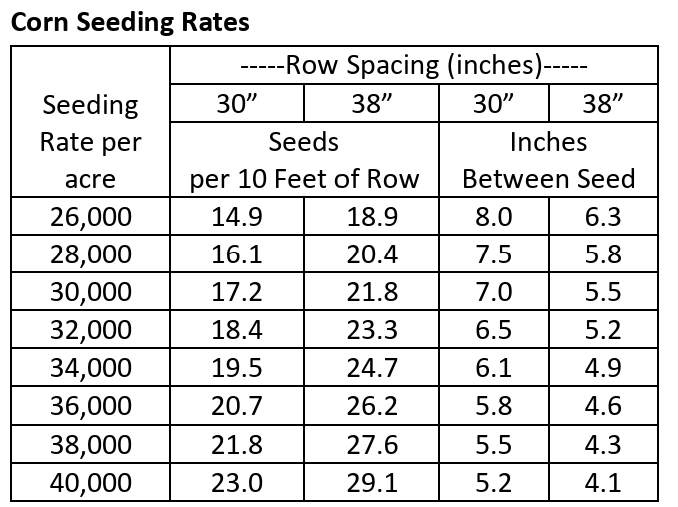
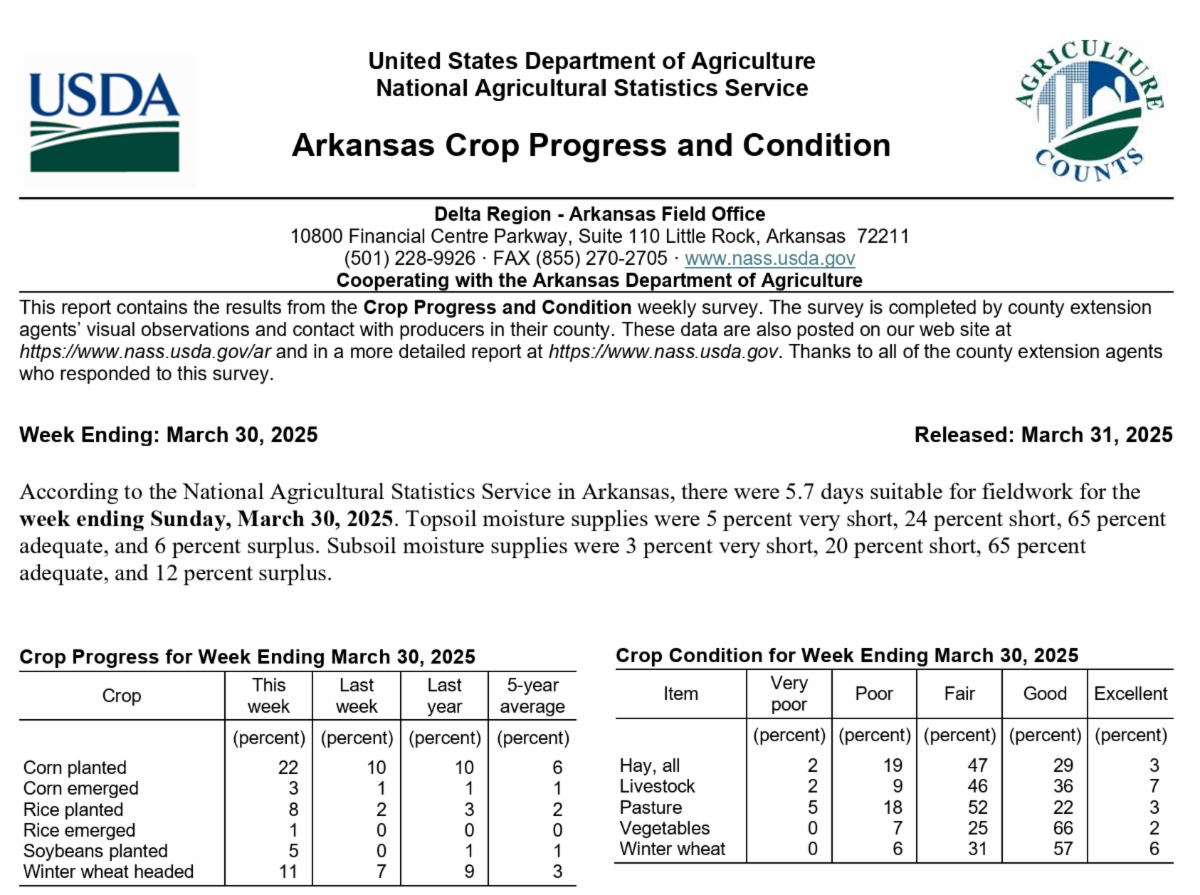
Some of the corn was trying to pop out of the ground last week, and some corn was still needing a rain. Right now my fear is we are looking at uneven emergence that could lead to a mess. The key to good corn is everything coming out of the ground at the same time and all growing uniformly. If we have an erratic stand this early in the game it might be better to punt, destroy that crop and replant. If you are going to destroy that crop, make sure you spray it with atrazine and paraquat. Just running some kind of equipment over the rows may not totally take out all the corn and this could lead to that corn acting more like a weed. Let me know if anyone needs to evaluate their stand and I will be glad to look at it.
Arkansas Corn DD50 Program - Arkansas Corn DD50
The 2025 Arkansas Corn Quick Facts is available by clicking the following link.
| | Beef, Small Ruminants, & Forages | | |
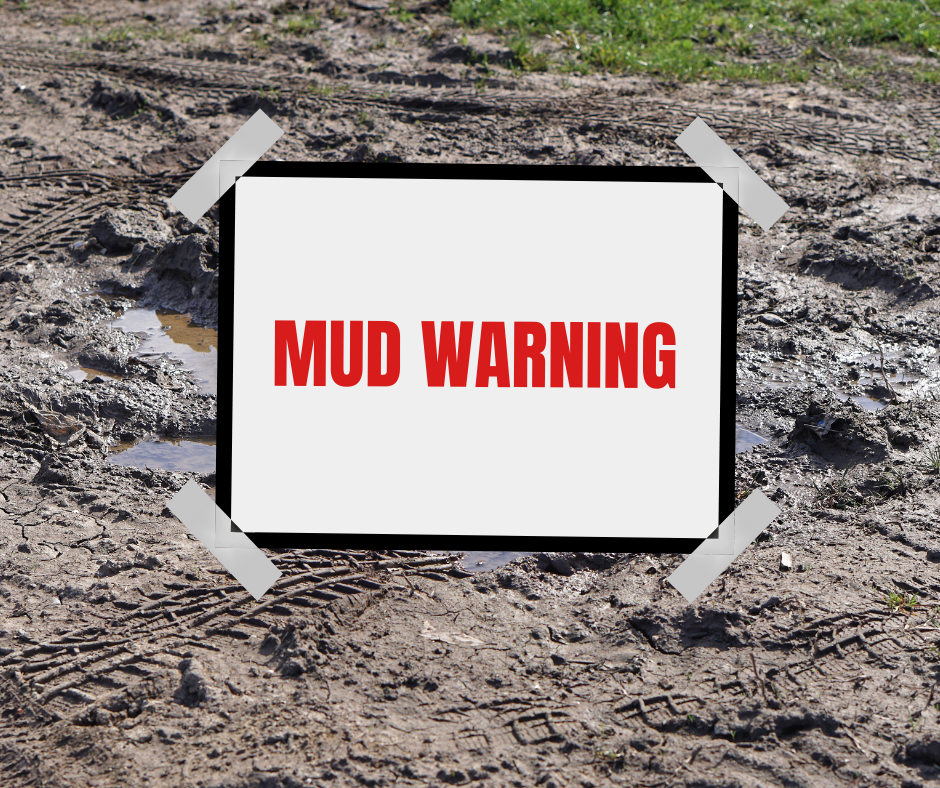
Mud Warning
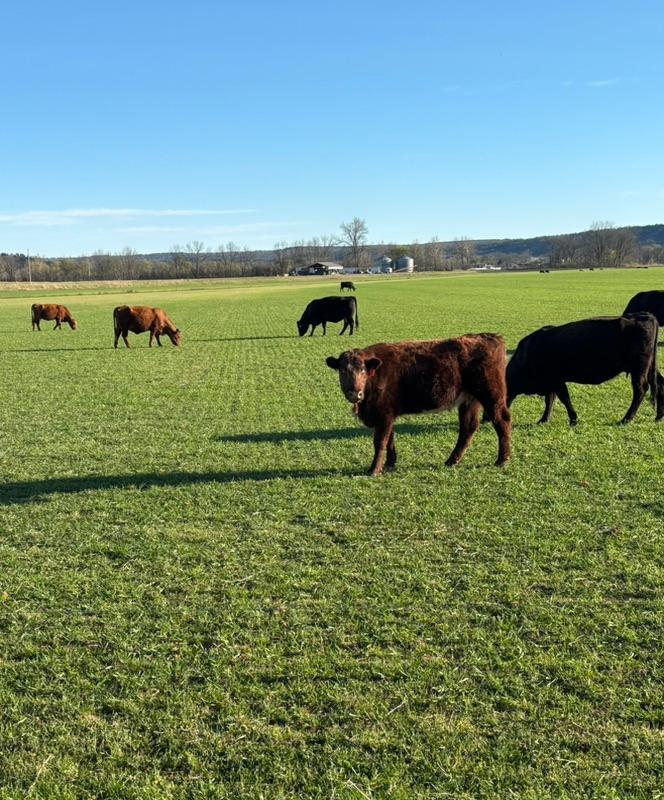
Spring storm season is here and especially this week we are about to experience a lot of rain in a small window- so mud and water in the pasture will be a problem! Muddy pastures can create big challenges for your cattle. Wet, saturated ground doesn’t just make it harder for cattle to move—it can also lead to serious health issues. Here’s what you should watch out for:
- Hoof Health – Mud can soften hooves, increasing the risk of hoof rot and other infections. Regular hoof care and providing dry areas can help prevent this.
- Bacterial Risks – Muddy areas are breeding grounds for harmful bacteria that can lead to infections or even injuries.
- Pasture Health- High traffic areas can result in compaction of the soil (hoof, vehicle traffic etc.) Flood waters can also bring debris in the field and damage to the fenceline. Make sure to check after the storm has passed.
Pro Tips: Provide shelter, consider rotating pastures, and ensure cattle have access to dry, clean areas to keep them safe and healthy during the muddy season. Think about what your driving through the pasture- most equipment tires are designed to reduce compaction compared to our traditional vehicle tires.
Keeping your herd comfortable and healthy this season is key to maintaining productivity and minimizing risks!
| | |
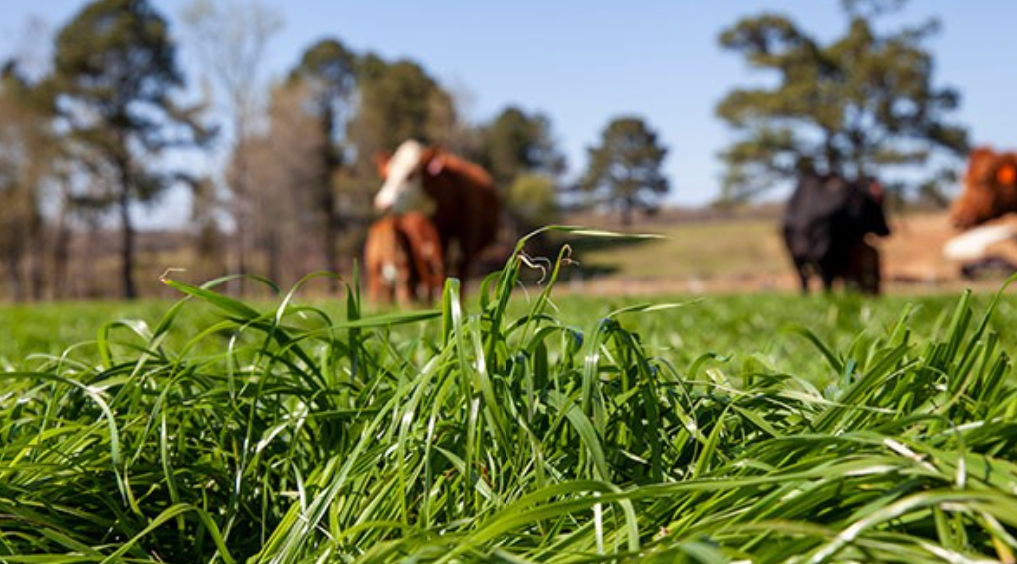
Timing turn-out on spring pastures
Dr. Jonathan O.C. Kubesch and Kenny J. Simon
Spring turn-out into thick pasture is one of the strongest aesthetic contributions that grazing systems make. The public often imagines cattle grazing peacefully in a lush, verdant landscape. Midwestern, Appalachian, and Scandinavian cultures celebrate when cattle move out of the barn and into the fields.
For the farmer, this transition from feeding hay is often welcome. However, producers on annual ryegrass, tall fescue, or warm-season fields will recognize that spring turn-out can easily go awry. Early turn-out is more of a concern than late turn-out; who snubs their nose at a field of green grass? Correct timing of turnout is important for both the pasture and the livestock.
Pasture perspective
Both cool- and warm-season plants are mobilizing carbohydrates—energy—as they come into the spring season. Bermudagrass and bahiagrass will be moving more slowly, but the annual ryegrass and tall fescue will be in the best temperature range for active growth. The primary objective of a grazing system is to efficiently convert sunlight into an animal product, and keeping the pasture in active vegetative growth is crucial.
Additionally, allowing the pasture to rebuild energy stores prior to first grazing is critical to building the roots and shoots that will carry through any drought periods moving into summer. Work out of West Virginia found that the timing of spring turn-out influenced the production and resiliency of tall fescue pastures. The study found that turning out before the fescue was 6-8 inches tall reduced the length of the grazing season. In a hotter climate like Arkansas, when possible, allow tall fescue pastures to get 8-10 inches tall and allow warm-season pastures to get 6-8 inches tall prior to putting animals into the field. Annual ryegrass will be running ahead of some in the state and should be prioritized for earliest grazing.
Animal perspective
The herd or flock goes into the pasture for their main diet. On a nutritional basis most pasture species are very nutritious in early spring or might even be so nutritious that the forage goes straight through the animal. Early turn-out can also be challenging because animal intake might be limited. If the amount of forage standing in a field is low, then animals might not be able to completely meet their daily dry matter intake needs. Research pegs this point as when the pasture is between 1000 and 1800 lb acre. This limit translates to 4-6 inches in most pasture settings.
Another concern with early turn-out is the creation of mud. Pugging, or kneading moist soil into a moonscape, harms the pasture, and the muddy conditions increase the nutritional demands on herd and flock. Energy is being directed away from growth and lactation towards dealing with cold, wet conditions. Calving onto bare stands offers a less stable surface for checking, tagging, and setting calves out to a great start.
Farmer perspective
Turning out into satisfactory infrastructure is critical. Starting up a grazing rotation after feeding hay in a stationary place can be a challenging adjustment. Temporary fencing might need to be laid out for the season, fertility adjustments and weed control might need to be made, and some fields might need extra rest or renovation prior to that first grazing event. Turn-out should begin when these considerations have been factored into the balance of plant and animal constraints on the grazing system. Extra time to correct fertility issues or weed control prior to starting a grazing rotation will make it easier to leave fields temporarily fenced for much of the season. Setting up and tearing down temporary fence for a single pass of a fertilizer buggy can be infuriating. Avoiding having to bring animals back off the pasture in spring is paramount.
Summary
The urge to kick the hay habit in the spring is understandable, even laudable. But from both the pasture and the animal’s perspectives, timing turn-out correctly allows the pasture to get ready for the growing season and the animals to adequately fill their stomachs. Making management simple for pastures is crucial to pushing grazing systems for more productivity. The plants will value producer patience, but the animals will benefit most.
| | |
Weed of the Week
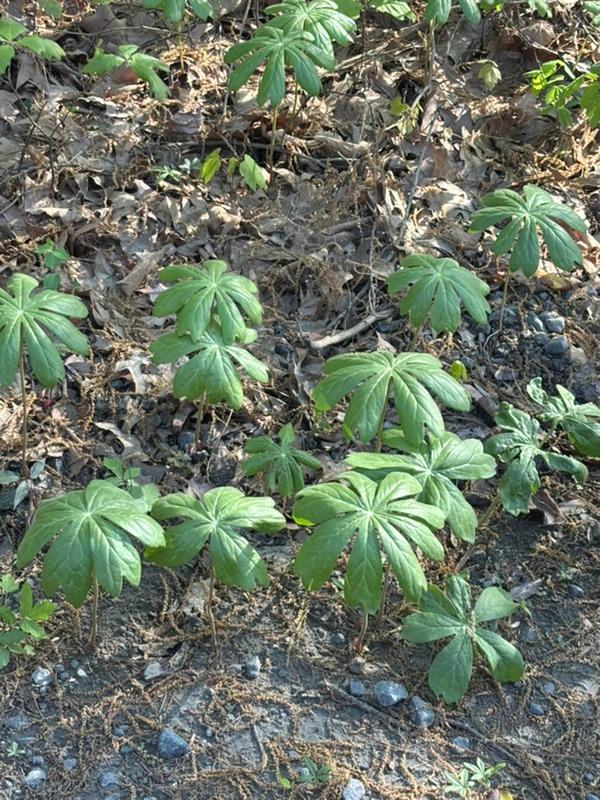
The weed of the week isn't really a weed but a cool plant that I look forward to every year, the Mayapple.
The emergence of mayapple to me says spring is here! There are certain areas where they come up every year and I even have some where my yard meets the woods. These plants grow in shady areas and will put out one big bloom that is really cool to me. Check out the roadsides and areas where it is shady and look for mayapples!
| | |
Livestock Market Report
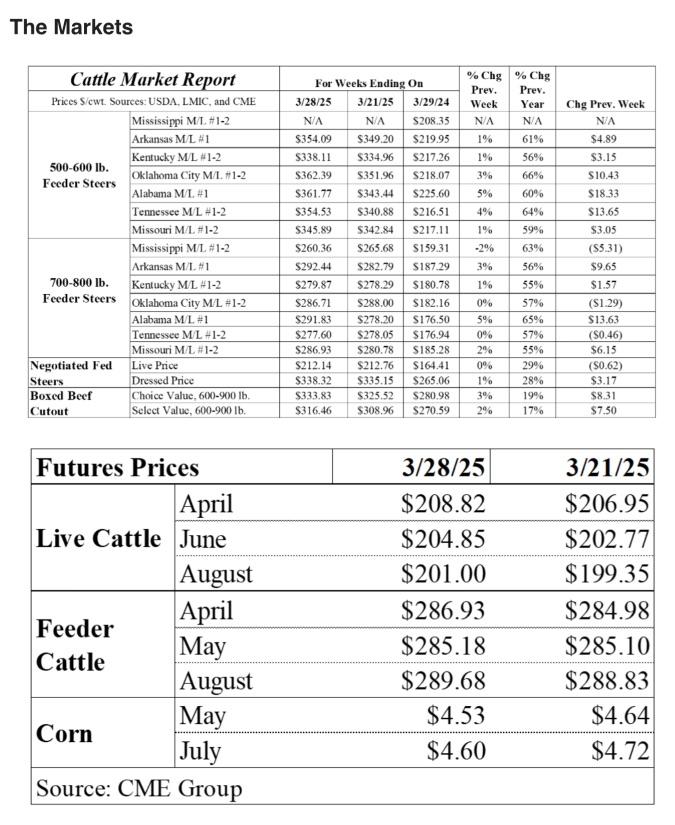
The weekly livestock market report is available on the Arkansas Department of Agriculture website.
| | |
Pesticide Applicator Trainings
This is the Pesticide Applicator Training Schedule for Faulkner, Perry and Conway County.
Cost for the certification training is $20 that is payable at the training. It is a good idea to call and register for the class or if you have any questions, feel free to call and ask. Office numbers are located below. Anyone can go to any of these trainings. You don't have to just go in your county.
Faulkner County call and talk to Mindy Beard at the office at 501-329-8344 or email at rbeard@uada.edu
Perry County - 501-889-2661
Conway County - 501-977-2146
You can also get certified online. It also costs $20. The link to the online training is listed below.
| | |
Sign up for Text Alerts
You can now sign up for text alerts from me throughout the year. I have two areas you can sign up for which includes Faulkner Livestock or Faulkner Ag (Row Crop Updates). To sign up you can follow one of these links or use the QR Codes below.
| | Pursuant to 7 CFR § 15.3, the University of Arkansas System Division of Agriculture offers all its Extension and Research programs and services (including employment) without regard to race, color, sex, national origin, religion, age, disability, marital or veteran status, genetic information, sexual preference, pregnancy or any other legally protected status, and is an equal opportunity institution. | | | | |