Contemporary Scripture Reflections for Spiritual Seekers

Dr. Elizabeth-Anne Stewart, BCC, PCC

www.elizabeth-annestewart.com

SUNDAY BIBLETALK

Twenty-sixth Sunday in Ordinary Time

September 27th, 2026


"My sheep hear my voice," says the Lord;

"I know them, and they follow me." Jn 10:27


A Poetic Rendition of Sunday's Gospel, from St. Francis of Assisi's Lectio Divina Group

9/24/2026

With special thanks to Joyce Franklin & Vicky Stadden


"I will NOT," he said,

stamping his feet, scowling,

"I will NOT go!"

"I know my boy," said the father to himself. "But let's see what his brother has to say!"

"Yeah, I'll go, Dad," said the second, his pride and joy.

"Of course, I'll go!"

But his dad waited and waited.

Meanwhile, Son Number One, the spare heir,

looked into his heart, obeyed his father's wishes,

and off to the vineyard he went.

Conversely, Son Number Two, the golden child,

did his own thing,

without a second thought.

"I really know my sons now," said the father.

"Actions speak louder than words."

+++

AUTHOR'S PAGE

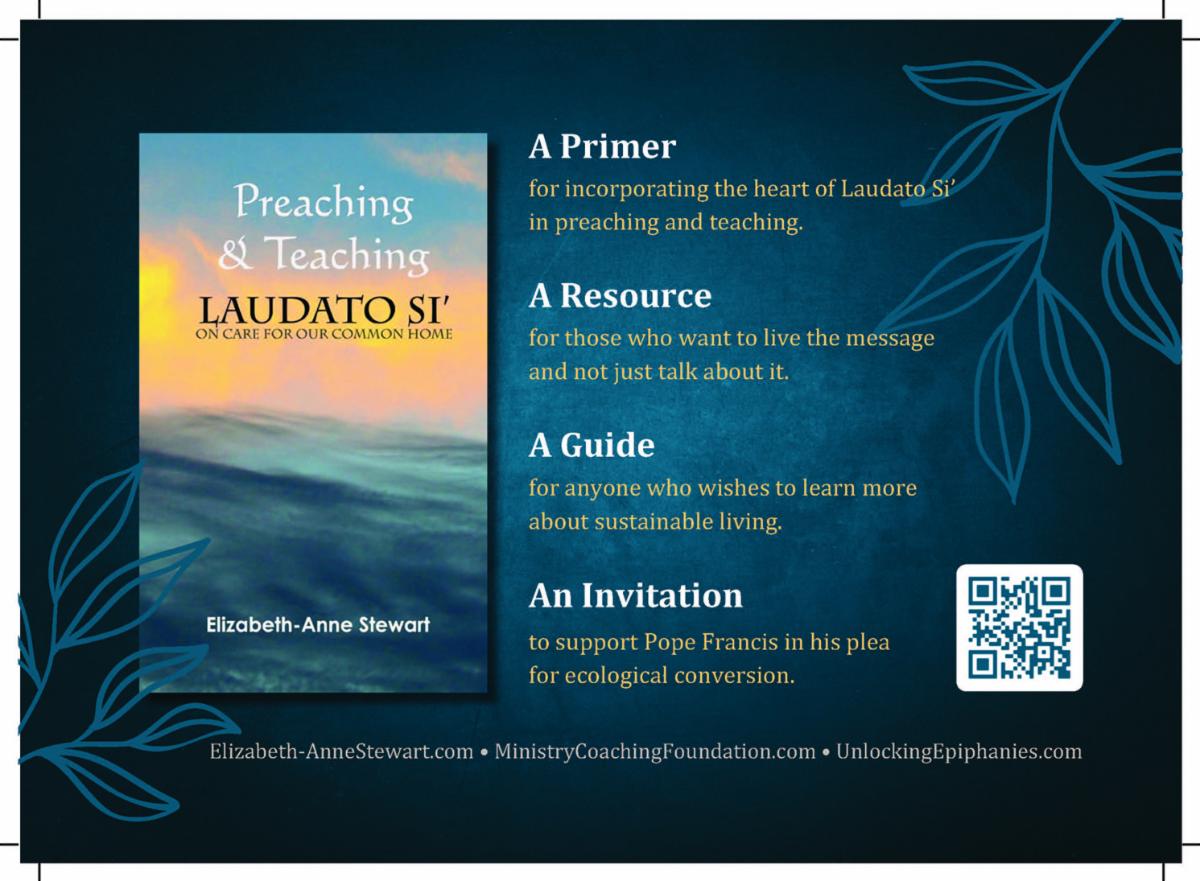
Available on Amazon

A resource for promoting ecological conversion.

+++


UPCOMING WORKSHOPS/ RETREATS


St. Paul VI Parish

Liturgy Workshops

St. Mary's Church, 105 Herrick Rd, Riverside, IL

October 6, 13, and 19, 2026

6:30-8:30 p.m.

+++


Joliet Library

"Epiphanies in the Garden"

October 10, 1:30-4:00 p.m.

+++


St. Mary of the Annunciation Women's Retreat

Sienna Center, Racine, WI. October 24-25, 2026 


The Hero Journey

On Zoom, Mondays, Jan 11-Feb 1, 2027; 6:30-8:00 p.m. ET/ 5:30-7:00 p.m. CT

Embrace the Call, overcome challenges, and discover your deeper purpose.

+++

RESOURCES

Spiritual Self-Assessment:

https://assess.coach/eastewart/


Ministry Team Assessment: https://assess.coach/embracingpossibility

+++

"Let us pray that nations move toward effective disarmament, particularly nuclear disarmament, and that world leaders choose the path of dialogue and diplomacy instead of violence.”

Pope Leo XIV

Greetings, SBT Readers!


Q. When is a vineyard not a vineyard?

A. When Jesus is telling a parable.


When we read Scripture only at a literal level, we miss its deeper meaning and settle for simplistic interpretations. Such is the case with the Parable of the Two Sons: one refuses to go to the vineyard but changes his mind, while the other agrees to go but never shows up. For medieval theologians, the Literal Level of scripture was merely the starting point. For example, this particular parable seems to point to the difference between obedience and wilfulness, with the vineyard representing the workplace. Going deeper, however, we reach the Allegorical Level where hidden meanings emerge. Allegorically speaking, the same vineyard represents the Kingdom of God; seen in this light, the two sons represent those who accept the invitation to be guests/ Kingdom workers and those who refuse it. Then comes the Moral Level, where the challenge is to understand the vineyard's ethical demands: what is it asking of us? Finally, the Anagogical Level invites us to contemplate the Final Coming, with the vineyard symbolizing our ultimate destiny. These four levels of scripture help us ascend from toiling among the grapevines to beholding the Beatific Vision -- that is, to seeing God with spiritual sight. To miss out on any level is to rob the text of its meaning, for as this medieval mnemonic reminds us:

Littera gesta docet, quid credas allegoria, moralia quid agas, quo tendas anagogia.

(The letter teaches what happened, the allegory what you believe, the moral what you should do, the anagogy where you are going).


Many Blessings,

Elizabeth


www.elizabeth-annestewart.com


COMING SOON: Mini-workshops on Mondays!

LINK TO SCRIPTURE READINGS

Jesus said to the chief priests and the elders:

"What is your opinion?

A man had two sons. He said to the first,

'Son, go out and work in the vineyard today.'

He replied, 'I will not,'

but then changed his mind and went.

The man went to the other son and gave the same order.

He replied, 'Yes, sir,' but did not go.

Which of the two did his father's will?"

They answered, "The first."

Jesus said to them, "Amen, I say to you,

tax collectors and prostitutes are entering

the kingdom of God before you.

When John came to show you the way of righteousness,

you did not believe him; but tax collectors and prostitutes did. Yet even after you saw this, you did not change your minds and believe him."

Matthew 21:28-32


The Parable of the Two Sons lacks the color, detail, and emotional content of some of Jesus' other parables. While the two brothers in the Parable of the Prodigal Son are distinct individuals with their own faults and foibles, and while their father's grief, longing, and joy are tangible, there is no such engaging content in this Sunday's parable. Instead, there is a father who commands his sons to go to work in the vineyard, and two sons-- one of whom refuses to obey and then changes his mind, while the one who agrees to follow orders fails to follow through. We neither know what work the father expects the sons to perform, nor why they respond as they do. The first son is initially willful and defiant, but has a change of heart; in contrast, the second son is seemingly compliant but follows his own inclinations instead.


The question Jesus poses to the religious leaders and to us is simple: "Which of the two did his father's will?" But his commentary doesn't end here: "Amen, I say to you, tax collectors and prostitutes are entering the kingdom of God before you." Immediately, his meaning expands beyond wilfulness v. obedience, suddenly incriminating the religious leaders who think they have answered his question correctly. Like repentant tax collectors, prostitutes and other people on the margins, the first son is righteous in God's eyes; meanwhile, the wilful second son proves to be a hypocrite unworthy of the Kingdom of God. In effect, the simple narrative reverses the status of those who assume they are worthy of God's favor, raising up the very outcasts they despise.


So where do we stand? Like the religious leaders, we know the correct answer to Jesus' question; without any difficulty, we can name the first son as the one who proves worthy of the father's trust. But do we resemble the religious leaders by being hypocrites? Because we observe all the necessary rituals, practices, and prayers, do we assume we have found favor in God's eyes? Is our mercy towards others as great as our self-justification? Do we incriminate ourselves by our judgment of others and by excluding them from circles of acceptance? Sadly, while we may be virtuous in our own eyes, it is the repentant sinner who truly delights God.


+++


QUESTIONS FOR REFLECTION


  • Why do you think the first son initially says "No!" to his father in today's Gospel?
  • What patterns of turning towards God and turning away again do you note in your life?
  • How can the Church best imitate the humility of Jesus?
  • Why is the old image of the Church Triumphant inappropriate for our era?

This video explains my approach to this ministry, while my website provides further details as well. Sessions can either be in person or on Zoom; I am also available to facilitate in-person or "virtual" retreats for groups and individuals.

Spiritual Direction

Dr. Elizabeth-Anne Stewart | www.elizabeth-annestewart.com | e.a.stewart@sbcglobal.net

C. All Photos by Elizabeth-Anne Stewart, www.artfulphotographer.com