US Biochar Initiative Newsletter
December 2020
|
|
USBI UPDATE – TOM MILES, EXECUTIVE DIRECTOR
Highlights from National Biochar Week
More than 600 people attended last week's virtual National Biochar Week which was produced by USBI and the National Center for Resource Development and presented free thanks to our generous sponsors. Viewers saw 46 presentations during more than 15 hours of inspiration. Presentations will be available on the USBI website. Fol- lowing are some highlights regarding biochar markets, approaches, costs, benefits and recommendations.
Biochar in Carbon Markets. Humboldt Sawmill and Carbo Culture in California are the first US companies to sell biochar carbon dioxide removal credits in international markets. Three more companies are in the works. Charlotta Liukas described how Carbon Culture qualified to sell through Puro.earth. Humboldt Sawmill and Pacific Biochar sell through CarbonFuture.earth. These new markets are partly the result of several years of preparation by USBI and the International Biochar Initiative. IBI Chair Kathleen Draper described how revenues from these markets could offset biochar production costs with current prices equivalent at $193 - $234 per dry ton of biochar. She announced that US- based Veera (VCS) has issued a Request for Proposals to develop a biochar carbon methodology which would enable producers to reach large markets.
Biochar Market Opportunities. Speakers described short and long-term market opportunities for biochar in the new carbon negative economy. They identified markets in water treatment, biosolids from wastewater treatment, watershed cleanup, stormwater, waste and manure management, and urban green infrastructure. Speakers also discussed markets for urban soil reclamation, agricultural and wood processing, energy and fuels, integrated conversion of agricultural and forest residues, and green building.
Climate and environmental drivers were examined - especially the importance of healthy soils for carbon sequestration, and the integration of carbon production with waste management to eliminate harmful and pervasive toxic pollutants such as nutrients, pathogens and PFAS. Biochars can offset major environmental problems like acidification and eutrophication from food production. Benefits of biochar conversion were described in terms of improved environment, economy, climate, and social and environmental justice. Millions of tons of wastes and residues were identified for conversion to biochar and energy in the short term with more than 1 billion tons in the long term. Attendees were inspired by Bioforcetech’s creative “OurCarbon™” vision for biobased carbon products. Key industry needs were identified including infrastructure and production, resources and standardization, end use and marketing or sales. Market experts described the need to fund USBI to educate, promote and coordinate industry efforts and to resolve industry problems such as definitions, grades and standards.
Federal Assistance is Available. Dr. Greg Moller, University of Idaho stated that biochar should be incorporated in the Climate21 project proposals to the Biden transition team to provide financial assistance. Dr. Brandon Smith, Director of the Soil Health Program at the Natural Resource Conservation Service described a new and updated Soil Carbon Amendment conservation practice (808) which has now been adopted in 20 states. The practice can assist qualified farms who apply biochar and compost to improve soil health and increase soil carbon. Dr. Carlos Rodriguez Franco and panelists from the US Forest Service described opportunities to use biochar to improve forest health, abandoned mine land soils, and in agriculture through the Wood Innovation Programs and interagency collaboration. Fred Petok described the financing opportunities available through the USDA Rural Development program. Ecostrat introduced an innovative concept for developing biochar businesses in economic opportunity zones.
Building the Industry
Long term large scale demonstrations of known technologies and in beneficial applications are needed to build biochar markets and businesses. Biochars can offset costs of carbon, offset costs of disposal, and incentivize waste management, recycling, and reuse in the carbon cycle.
Biochars were described as co-products of wood utilization systems. Dr. Nate Anderson described the potential integration of biochars with biomass to bioproducts. Dr. Jingxin Wang and John Vance described the newly launched Mid-Atlantic Sustainable Biomass for Value-added Products Consortium (MASBio) which includes biochar and biocarbon products.
Agricultural applications included a decision tool for biochar use, use of biochar in small scale mixed farms, animal agriculture, no-till applications, and sugar cane and rice production. Biochars were shown to be complementary to other residue conversion system like composting and anaerobic digestion.
Technologies presented included small scale gasifiers, flame cap kilns, small industrial and modular pyrolysis systems, advanced carbon recovery, large scale industrial production, and advanced technologies to convert biomass to cheap sustainable aviation fuels. Post processing methods were described to match biochar qualities to uses.
Many thanks for participating in our first National Biochar Week. We look forward to seeing newly inspired attendees building biochar markets and expanding production in the new year!
|
|
NATIONAL BIOCHAR WEEK PARTNERS AND SPONSORS |
|
BIOCHAR INDUSTRY PARTNER PROFILES
Biochar promises so much -- improved soil fertility, carbon sequestration, and better waste management but biochar is not just a noun. It is also a verb -- a conversion process that requires integration into larger systems of material flows through the environment and our economies. We cannot make biochar without biomass and we cannot develop biochar markets without important end users. This month we highlight three important biochar industry partners who are doing a great deal to help grow biochar systems and markets.
|
|
Biomass Magazine is a bi-monthly trade publication tailored to serve companies and organizations engaged in producing or utilizing biomass power and heat, advanced biofuels, biogas, wood pellets and biobased chemicals and products including biochar.
In addition to policy, regulation, project finance, technology and plant management, the publication's core editorial focus is on biomass logistics - generating, cultivating, collecting, transporting, processing, marketing, procuring and utilizing sustainable biomass. The magazine also manages a trade network.
Biomass Magazine’s international readership includes owners and managers of biomass power, CHP, district heating facilities, pellet manufacturing plant owners and managers, professionals working in captive feedstock industries ranging from food processing and waste management to agriculture forest products manufacturing.
USBI has been a member of Biomass Magazine’s trade network for many years and has participated in several of the Biomass Conferences sponsored by BBI International, publisher of Biomass Magazine. Don’t miss the next Biomass Conference coming up in March. Also, you can get a FREE subscription to Biomass Magazine here.
|
|
MASBio The Mid-Atlantic Sustainable Bio-mass for Value-Added Products Consortium (MASBio) is a multi-disciplinary, regional group of universities, industry, landowners, entrepreneurs, government agencies, and policy makers from the mid-Atlantic region. The MASBio consortium aims to provide market-based land management strategies including biobased products like biochar. Long term, the goal is to support a robust and sustainable rural economy estimated to produce up to $367 million in potential market impact.
MASBio will use a multi-feedstock approach to achieve a consistent and continuous feedstock flow necessary for commercial scaling. Focusing primarily on short rotation, woody crops and switchgrass (crops grown specifically for bio-based products) feedstock supply will be supplemented by logging residues and wood chips. Market development will also be a key focus of the project.
Products of interest include bioadhesives, biochemical, resins for 3D printing, and nanomaterials as well as activated carbon and biochar. The use of biochar is of special interest in water filtration and soil amendment treatments. In addition to commercial development, some of the resources like biochar can be utilized to create a virtuous cycle where they are applied to the land to improve soil and water quality.
Eastern Biochar is an outreach and education partner working in collaboration with MASBio. This regional biochar group focuses on commercially scalable opportunities for biochar and increasing research on its benefits. The group spearheaded last month's National Biochar Week which featured over 70 presentations, providing an unprecedented virtual platform for biochar discussions at the national level.
|
|
US Composting Council Like biochar, compost converts trash to treasure through a manufacturing process. The USCC has done a phenomenal job over the past several decades to create and promote this vital industry. It monitors regulations at the state and national levels, and works with the USEPA on issues like persistent herbicides. The Council provides conferences, committees and online discussion groups to encourage networking, mentoring, and training for industry excellence.
The organization has also brought much needed clarity to the composting industry with their STA (Seal of Testing Assurance) program for testing and certifying quality compost. As USBI has learned more about the benefits that biochar can bring to the composting process, the composting industry has welcomed biochar presentations at USCC conferences and events. USBI hopes to broaden and deepen this relationship as we share common goals of soil building through better organic waste management. See the Events Calendar below for information on the USCC's upcoming January 2021 conference.
|
|
Kelpie Wilson, USBI Outreach and Education Committee Chair
This month, we continue to expand the Biochar Learning Center database on the USBI website bringing you the most current and useful articles, websites, videos and other resources.
New December Resources
Sustainability Seminar Series: The Ingenuity of Biochar for Soil and Water Health Healthy food and water are matters of national urgency, security and resilience, especially during the COVID 19 pandemic. This seminar from the Schaefer School of Engineering and Science at Stevens Institute of technology features presentations from biochar experts, Dr. Isobel Lima and Dominique Lueckenhoff on the role of biochar in sustainable systems for environmental management and human health protection.
Scaling Biochar This webinar series organized by the Sonoma Biochar Initiative and the California Biochar Association took place over two mornings on October 13 and 14. The site has links to recordings of more than twenty presentations by the most well-known and knowledgeable pioneers in the biochar field, each covering different aspects of the amazing biochar story in brief, 20-minute presentations.
Weight Or Volume for Handling Biochar and Biomass? Biomass and biochar products are often described in scientific literature by weight but handled and sold in the commercial space by volume. This article clarifies the different ways that density connects these two concepts and can be used to convert between these metrics.
Using Fire to Cool the Earth - with Albert Bates: Reversing Climate Change In this podcast, lawyer, teacher, and USBI board member Albert Bates explains that, if we turned our agricultural waste alone into biochar, we could reduce the number gigatons of C02 we emit each year (37) by one or two gigatons. But that’s not all! This long-time director of the Tennessee Global Village Institute for Appropriate Technology also discusses multiple pathways for using biochar to get us back down to a safe level of 350 ppm of atmospheric CO2 within decades.
|
|
WHAT IF THERE WERE NO USBI?
If you were one of the 600 professionals who attended last week's free National Biochar Week (NBW), then you know the importance of supporting USBI, a major sponsor. USBI played a key role in connecting you to over 30 experts who addressed nearly every facet of the biochar industry.
While we wish it were otherwise, relying on volunteers to organize events of this caliber is not sustainable. Please make a generous donation to ensure this valuable resource remains viable and benefit from this year's CARES ACT tax relief.
(For those who missed the NBW event, recordings will be available.)
|
|
USBI WELCOMES NEW MEMBERS TO THE USBI NORTH AMERICAN BIOCHAR INDUSTRY DIRECTORY
The businesses below are newly listed in the USBI Directory which means they are looking to partner with you! Visit the directory here to read more about them.
- The Natural Resources Research Institute (NRRI)
- Restoration Bioproducts LLC
- GECA Environnement
- Prospect Environmental Services PLLC
|
|
|
BIOCHAR EVENTS CALENDAR
January 26-27 US Composting Council Virtual COMPOST2021
With three focused tracks and 20+ speakers, this two-day event will be the go-to compost event of the year. Register here.
March 15-17: International Biomass Conference and Expo
|
|
THERE'S STILL TIME TO TAKE THE LEARNER SURVEY and win a free
directory listing!
Thanks to everyone who took our Biochar Learner Survey last month. We've received some great ideas but we want to hear more! So bring it on and help make our Learning Center the best in the industry!
Join your fellow biochar proponents and showcase your business or activities.
|
|
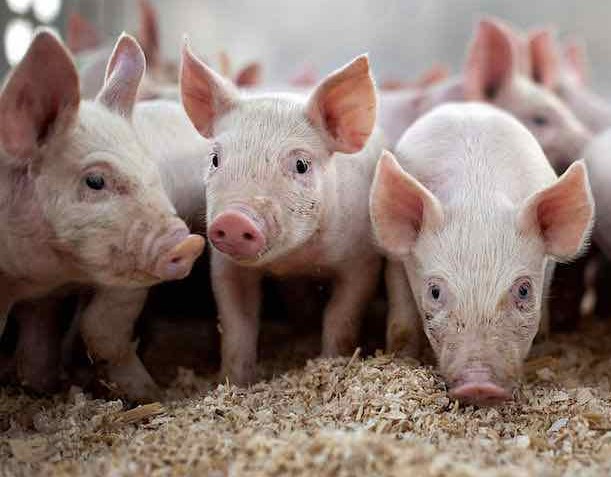
➤ Biochar also gets credit for sweeter-smelling swine in this article. Iowa State University researchers have shown that biochar can be used to mitigate many odors and potentially toxic volatile organic compounds emitted from swine manure. “The results of this study and related research shows the potential to use biochar treatments to improve air quality inside barns, thus improving worker and animal safety, especially during manure agitation,” says Jacek Koziel, professor of agricultural and biosystems engineering at Iowa State University.
|
|
|
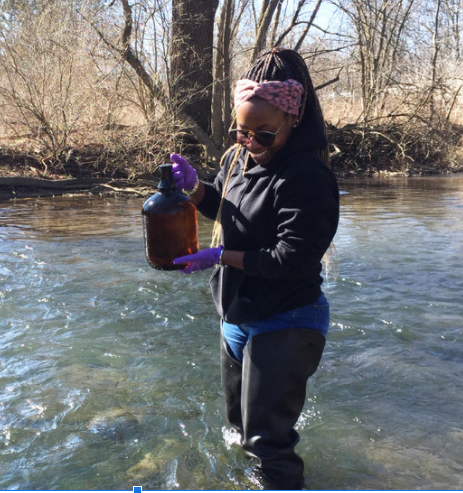
At left/above, lead researcher Marlena Ndoun, a doctoral student in Penn State’s Department of Agricultural and Biological Engineering, samples water in central Pennsylvania's Spring Creek for emerging contaminants.
|
|
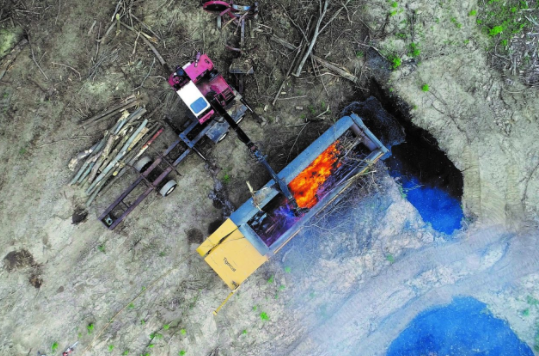
➤ Tigercat’s Carbonator is cleaning up after a forest fire in Oregon. This is the first time federal land managers have incorporated making biochar as part of a wildfire cleanup project. “We have so much of this slash, we just wanted to find other ways to manage it,” said Phil Monsanto, silviculturist (forest trees cultivator) for the US Forest Service.
➤ Carbonators are roaming the country looking for slash to turn into biochar! Brothers Landscaping & Contracting of Craryville, NY has purchased a Tigercat to use in their business converting waste wood to useful products like firewood, fence posts, and now biochar. A current project clearing land for a distillery will produce biochar to enhance the soil on a farm that grows grapes and apple trees for the distillery.
|
|
--------------------- promotional section ---------------------
|
|
|
|
|
|
|