Rail & Labor News from RWU
| | Weekly Digest #5 - February 3, 2026 | | Welcome to the RWU Rail & Labor News! This news bulletin is produced and emailed out each Tuesday morning. We hope you find each week's news and information useful. If so, please share with co-workers, friends, and colleagues. If you like, you can sign them up to get all the news from RWU HERE. Or forward them the link. Got a hot tip? Please forward the article and a link to raillabornews@gmail.com. Note: If you read over this news bulletin each week, you will be sure to never miss the important news of what is going on in the railroad world from a worker's perspective! | | THIS WEEK'S RAIL AND LABOR NEWS | | Editor's Note: Seven thousand pages cannot bury a simple truth: this merger is about power, and power is being gathered away from working people. The public asks for clarity and is met with impatience, as though democracy were an inconvenience and not a right. We have lived this cycle before.. mergers anointed as progress, followed by vanished jobs, longer hours, and communities bled in the name of efficiency. To dismiss rejection as “procedural” is to sneer at accountability and dare the public to look away. If this scheme truly served the common good, it would welcome sunlight instead of hiding from it. Until labor is protected in fact, not in press releases, resistance is not radicalism.. it is the highest duty of working people. | |
|
Trains Magazine / January 28th
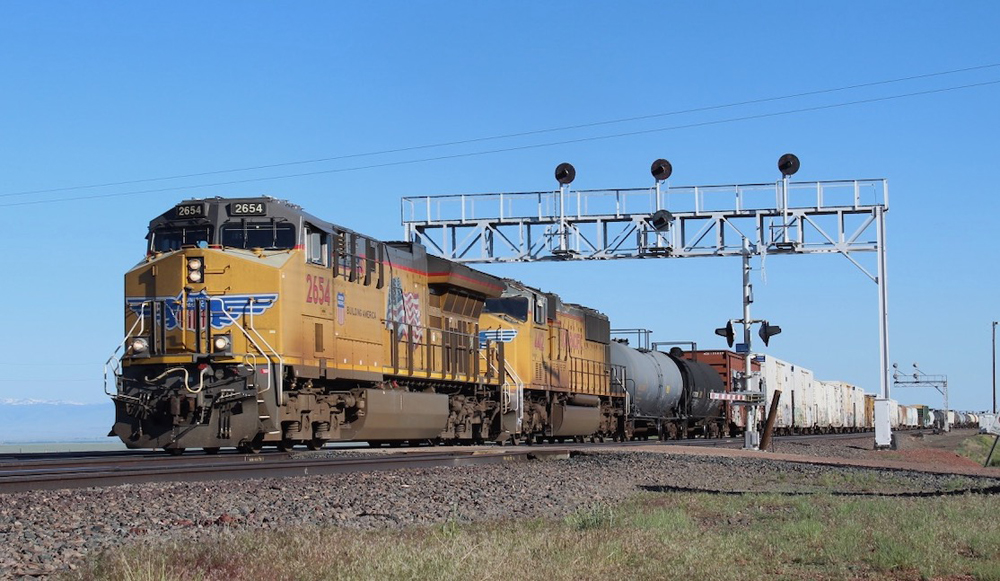
Union Pacific expects to file its revised Norfolk Southern merger application in March, CEO Jim Vena said on the railroad’s earnings call on Tuesday.
The Surface Transportation Board on Jan. 16 rejected the railroads’ 6,692-page merger application as incomplete. The application, filed on Dec. 19, didn’t include enough information on post-merger market share, failed to provide the full merger agreement, and improperly addressed control of the Terminal Railroad Association of St. Louis, the board said.
“We are disappointed that the STB determined we needed to provide more information after providing close to 7,000 pages and working with them and listening to them if they needed more information,” Vena said. “But this [is a] procedural step that we’ve seen in previous acquisitions, which were ultimately approved. Let’s be clear: This does not reflect the value our combined railroad will provide America and our customers. We are confident that we will demonstrate our merger enhances competition and is in the best interest of the public.”
| |
| |
I am writing a book on the corporatization and financialization of rail, the human/communal costs and why we need publicly and democratically controlled rail. Today the railroads are run by businessmen who are more accountable to Wall Street prioritizing profits over communities, workers, environment, and even consumers. What are the short-term profits over long-term rail infrastructure investment, worker and community safety, and even sustainability? I am interested in collecting the human stories of this move towards financialized rail and how wall street is reshaping the railroad industry. All answers/accounts will be anonymized in order to protect those who share their stories. If you are interested in speaking with me, please reach out to nfabricant@towson.edu and/or send me your answers to any or all of the following. Also, if there are questions I am not asking workers that you think are vital, please let me know. Thank you in advance for your time, energy, and insights.
In solidarity, Nicole Fabricant
| | Editor's Note: Great to see an article that makes the case for public transit, and not just to hobble along as we have for decades with underfunded, undercapitalized antiquated infrastructure and limited operations. Rather, the author advocates a full-on revolution that would result in hundreds of millions of auto trips being eliminated as Americans flock to trains and buses. | |
The Urban Condition / January 26th
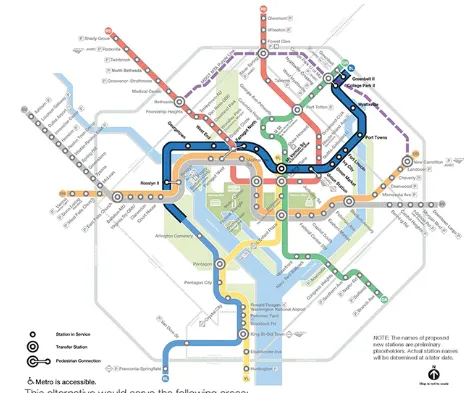
America needs a transit “moonshot” on the scale of the Interstate Highway Act. That’s the message of a new report by the advocacy group Transportation for America. It calls for a dedicated stream of federal transit funding two and a half times greater than what the U.S. currently spends in order to give cities “world-class” transit.
The report comes as members of Congress begin to discuss the next five year surface transportation reauthorization bill to replace the Infrastructure Investment and Jobs Act of 2021. It lays out a path to getting transit service levels per capita on par with other developed countries by building new transit lines and running more transit vehicles. But the report stops short of recommending where those new transit lines should go (beyond overall miles per metro area), which network design principles should guide that buildout, and what sorts of technologies should power and control those transit vehicles.
There are some good reasons why this report keeps its recommendations so general. America does, in fact, need a lot more transit in cities big and small. But I also think the report invites a more granular exploration of what America’s transit moonshot could actually look like on the ground.
|
| Editor's Note: We are reprinting this article because we missed it back in October and because it is so important for our readers to see the corruption behind the proposed UP-NS merger. Not only has Trump fired STB member Robert Primus illegally, but it appears that his statement of support for the UP-NS merger might be tied to this "donation" from UP CEO Jim Vena. Bribery is explicitly prohibited on pg 24 of The How Matters (UP's ethics handbook). | |
Nebraska Public Media / October 24th
Union Pacific railroad, which is headquartered in Omaha, is among 37 donors to the White House’s new ballroom construction. A White House official released this week the project’s full donor list so far, which consisted of massive corporations like Amazon, Meta, Google and owners of other private companies.
Union Pacific has not responded to questions about the donation. The White House has not detailed how much the private donors have given toward the project.
President Donald Trump announced the lavish ballroom plans over the summer, saying the project would cost around $200 million. The news release on the project stated President Trump “and other patriot donors” would pay for the renovations. But costs for the construction have grown to $300 million, which the White House says will still be paid for by donors.
| | Editor's Note: A nation that can summon billions for war and bailouts suddenly pleads poverty when it comes time to maintain the arteries that carry its working people. To halt this project is not prudence.. it is neglect dressed up as bookkeeping. Every pause is paid for by labor, by riders, and by crews forced to rely on infrastructure long past its rightful life. These tunnels are not luxuries; they are lifelines. When funding falters here, it is not the public interest that failed.. it is the political will to serve it. | |
|
Progressive Railroading / January 28th
The Gateway Development Commission (GDC) yesterday announced that construction of the Hudson Tunnel project will pause if disbursements of federal funds do not resume in the coming days.
GDC notified the contractors working on the project that funding for construction will run out Feb. 6. GDC’s contractors will spend the next two weeks winding down work at the active construction sites in New York, New Jersey and at the Hudson River. At that time, construction will stop until additional funding becomes available, commission officials said in a press release.
The $16 billion Hudson Tunnel project is a key component of the Gateway program to improve rail transportation in the Northeast Corridor. It calls for construction of a new two-track rail tunnel beneath the Hudson River and rehabilitation of the existing century-old North River Tunnels that connect New Jersey and New York City. The tunnels are crucial for Amtrak and New Jersey Transit trains to transport passengers between New York and New Jersey daily.
| |
| Editor's Note: In case you missed this one back in November, it is well worth reading. And read it again if you already saw it. Then ask yourself, just how corrupt and scandalous does this whole UP-NS merger deal look?! | |
1011 Now / November 7th
Union Pacific Railroad is the lone Nebraska-based company publicly known to have donated to the new White House ballroom championed by President Donald Trump. It’s also a Nebraska-based company that will soon need a federal regulator to approve a massive merger that, if green-lit, would give the company control of more than 40% of rail freight traffic in the United States.
Trump recently fired the most anti-merger board member of that federal regulator, the Surface Transportation Board, as he tries to exert unprecedented influence over ostensibly independent federal agencies.
Union Pacific is far from the only White House ballroom donor that may have reason to curry presidential favor. Many of the publicly known donors are massive companies or billionaires. A recent report by Public Citizen, a consumer rights advocacy group, says that 14 out of 24 known corporate donors to the ballroom are facing federal enforcement action or have had enforcement suspended this year by the Trump administration.
| | Editor's Note: Once again, we are told to be grateful that catastrophe merely almost happened. A red signal passed, a switch run through, freight trains bearing down.. and still the response is a renewed call rather than a mandate. Working crews are expected to navigate aging systems, visual tricks, and human limits while institutions debate improvements as though time were abundant. Safety cannot remain a recommendation issued after luck intervenes. Every near-miss is a warning written in advance of tragedy, and labor reads it clearly. If control systems save lives, then delay is not caution, it is complicity. | |
|
Trains Magazine / January 27th
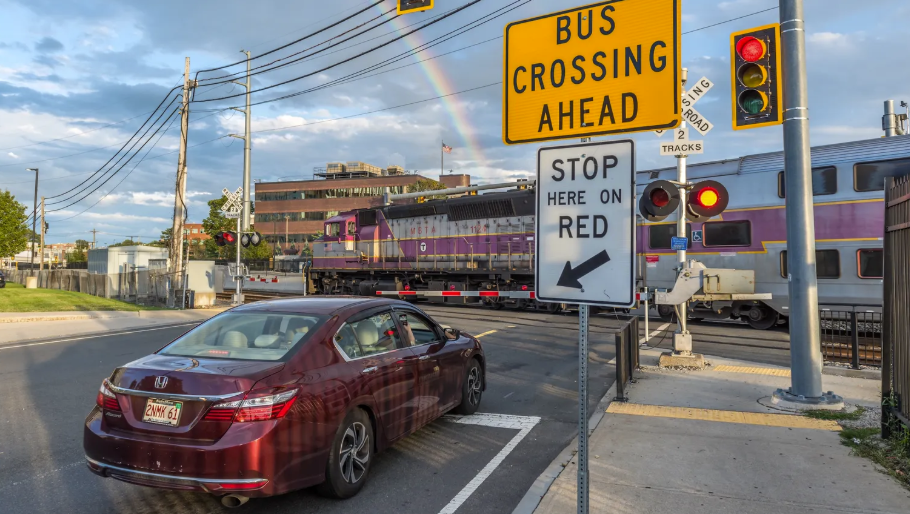
The Transportation Safety Board of Canada is renewing its call for enhanced train control systems and other measures to reduce the risk of accidents following release of its investigation report on a 2024 incident in which an unoccupied VIA Rail Canada train passed a red signal. No collision or injuries resulted.
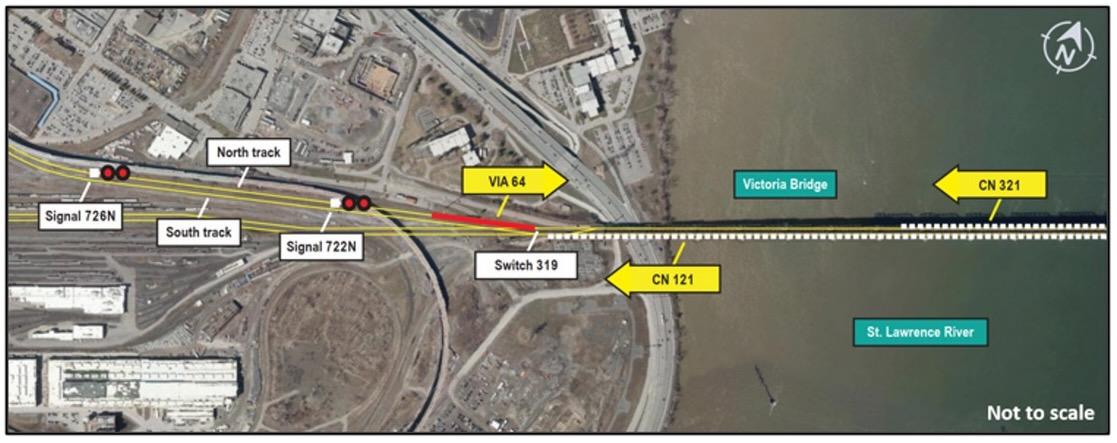
The Dec. 29, 2024, incident involved a train en route to VIA’s maintenance facility after passengers and onboard crew disembarked at Montreal’s Central Station. During a backup move, VIA train No. 64 stopped at a red signal, then proceeded after the crew member in the tail-end car saw a yellow signal. This was likely caused by reflection on the signal lens, as the signal was still showing a red indication, which the train passed. The train continued its back-up move, but the crew member saw that a switch was not lined for the train; the locomotive engineer made a full brake application, but the truck on the last car of the train ran through the switch.
Two freight trains were operating in the area; the crew of one, CN 121, saw the VIA train run through the switch, and radioed the second train, CN 321, which was approaching at approximately 4 mph. That train stopped about 1,700 feet short of the passenger train.
| |
| Editor's Note: RWU allies The Labor Network for Sustainability will sponsor this annual day of action once again in February to bring awareness of the need for expanded and improved public transit to benefit riders, workers, the environment, and communities across the country. | |
Labor Network for Sustainability / Event on February 4th
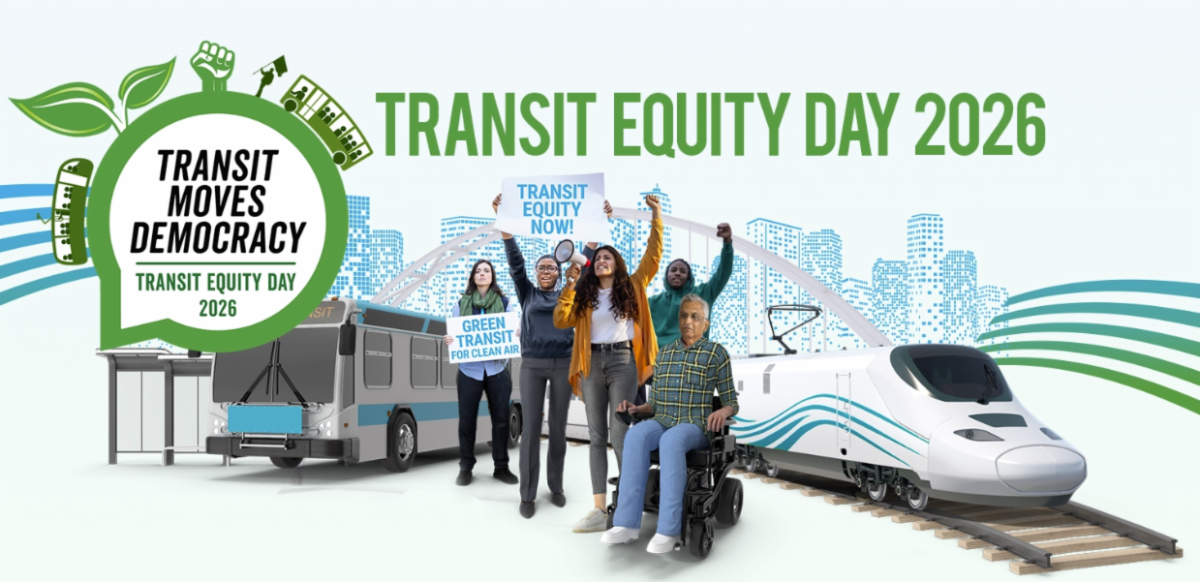
On the week of Wednesday, February 4th, 2026, join the Labor Network for Sustainability & Transit Equity Network for Transit Equity Day 2026: Transit Moves Democracy–a national day of action and storytelling that lifts up workers, riders, and communities fighting for just, accessible, and fully funded public transit.
For this year’s Transit Equity Day, our theme is: Transit Moves Democracy. Join the Labor Network for Sustainability as we center worker and community voices as leaders in the fight for just and equitable transit–highlighting the shared interests of riders, communities, workers, and the planet for fully-funded, robust, accessible, and electrified transit systems.
With increased violence and threats to our public life at the federal level, public transportation does not stand solely as a service. Public transit resists authoritarian strategies that cut routes, privatize systems, and bust unions as a way of weakening workers and disenfranchising communities. Transit connects communities when fascists want us to be increasingly more disconnected. Every bus line defended is a vote defended. Every contract fought is for democracy protection. Transit Equity is climate justice in practice, and public transit is frontline climate infrastructure.
| | Editor's Note: Remember when the CP and KCS told the nation a few years back prior to combining, how their merger would boost traffic and increase car loadings once the two were combined? Well, profits are up ... but car loadings are flat. Does anyone really think the UP-NS merger will result in a different story? Just because the carrier claims that all of these wonderful results for shippers and the public will take place does not make it true. It is all window dressing. They said the same about PSR and car loadings went DOWN, not up. Do not believe a word they say. | |
Trains Magazine / January 29th
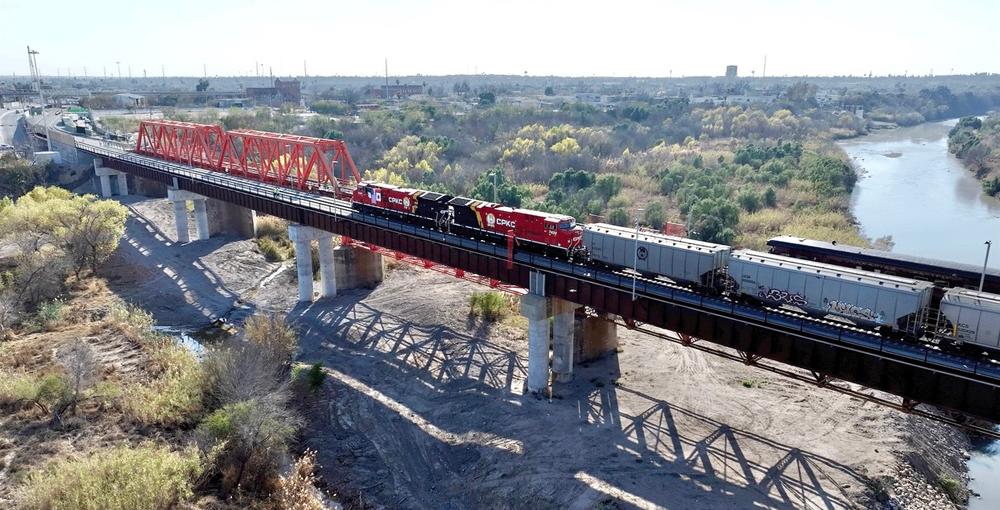
Canadian Pacific Kansas City on Wednesday reported higher fourth-quarter profits despite flat volume.
“Our story is about continuing to do what we do best: Controlling what we can control, and executing our PSR model, which remains key to setting CPKC apart and allows us to shine in times of uncertainty,” CEO Keith Creel said on the railway’s earnings call, referring to the Precision Scheduled Railroading operating model. “We saw that in the results in the last quarter. We’ll continue to see that in 2026.”
For the quarter, operating income grew 3%, to $1.19 billion U.S., as revenue increased 1%, to $2.89 billion U.S. Earnings per share, adjusted for the impact of one-time items, increased 3%, to 98 U.S. cents.
| |
The Lever / January 30th
On a balmy evening last September, Michael Fowler stumbled out to the south rail line in East Palestine, Ohio, and sat down in the middle of the tracks. His dog, a white Chihuahua, was beside him. The sun was setting. He waited perilously for the next oncoming train.
He wouldn’t have to wait long. Dozens of times a day, freight trains blare through East Palestine, cleaving the small Ohio town in two. The stretch of tracks on which Fowler sat was just a few hundred yards west of the site where two and a half years earlier, a Norfolk Southern train carrying tank cars full of toxic chemicals derailed and burned. The accident sent dark plumes of smoke over the town, leached toxins into local creeks and soil, and ignited a national reckoning around rail safety, one that has since delivered few reforms.
Fowler, 54, was upset with Norfolk Southern, an East Palestine police officer later reported in a sworn affidavit. He had not received the money he was promised from the $85 billion rail company — his cut of the $600 million settlement that Norfolk Southern had agreed to pay to resolve residents’ class-action lawsuit over the derailment. Eighteen months after the settlement’s announcement, still no check had arrived.
| | Editor's Note: Bigger, heavier trucks on the nation's highways would mean an even larger subsidy from the American taxpayer to fund these behemoths. This is certainly one time that RWU and the AAR see eye-to-eye on an issue. That said, what is the AAR doing to lure truckloads off the highways and onto the rails? Trucking companies Operating Ratio (OR) hovers around 90% while Class One carriers have an OR in the 60% range. Note to AAR: Perhaps your Class One affiliate should do their part and invest some of those profits in infrastructure designed to lure freight traffic off the highways - double-tracking, updated signaling, lengthened sidings, electrification, and all the rest. | |
Progressive Railroading / January 30th
As lawmakers prepare legislation setting transportation priorities for the next several years, a coalition of 20 national organizations is asking Congress to oppose measures that would allow larger tractor trailers on the nation’s roads, highways and bridges.
Increasing truck weight limits would accelerate damage to road infrastructure, according to the coalition, which includes the Association of American Railroads, American Short Line and Regional Railroad Association, GoRail, the National Railroad Construction and Maintenance Association, Railway Engineering-Maintenance Suppliers Association, the Railway Supply Institute, SMART-TD and the Coalition Against Bigger Trucks (CABT).
“As the 119th Congress continues its work on surface transportation reauthorization, we urge you to oppose any legislation that would increase maximum truck weight or length limits on federal highways,” said the group in a Jan. 28 letter to the leaders of the House and Senate committees responsible for transportation legislation.
| | Editor's Note: When even rival executives admit the emperor has no clothes, the charade is over. This merger is paraded as progress while failing the most basic test: it does not increase competition, it concentrates power. Workers know what follows such consolidations.. jobs erased, schedules stretched, safety treated as a rounding error. To disguise overlap as “end-to-end” is not strategy; it is deception sharpened for regulators. The public is asked to accept faith where facts are missing, patience where harm is predictable. Until this scheme proves it serves workers and the public rather than stockholders alone, it deserves resistance, not refinement. | |
|
Trains Magazine / January 30th
Union Pacific and Norfolk Southern have “a long way to go” to address issues with their merger application, Canadian National CEO Tracy Robinson said during the company’s quarterly earnings call today (Friday, Jan. 30).
“It is not at all clear that the transaction as proposed addresses many of the questions around the negative impact on competition, as well as the bigger issue of increasing rail competition,” Robinson said as part of her opening remarks. “The concessions required to achieve this will be significant. This should be the focus as UP and NS prepare their refiling. And we’re eager to see how they’ll address these issues in their revised application. I’d say they’ve got a long way to go.”
Responding to a subsequent question, she said the initial application falls “considerably short” in addressing how it increases rail competition, and “portrays the merger as a complete end-to-end in spite of pretty obvious areas of overlap.
| |
| Editor's Note: The ledger boasts hundreds of billions, yet the nation still trembles at the question of will. Laws are written to expire, not because the need ends, but because courage does. While parties posture and presidents wait to sign, the workers who move this country are told to stand by, again. Rail and transit are treated as spoils in a partisan game, not as the backbone of public life. Money without commitment is a promise made to be broken. Until this nation funds transportation as a permanent duty to its people, the figures are hollow and the delay is a betrayal. | |
|
Smart Cities Dive / January 29th
The current five-year period of transportation funding from the Infrastructure Investment and Jobs Act provided a historic $673.8 billion to transportation programs over five years: nearly $380 billion for highways, $116 billion for transit, $102.5 billion for rail and the rest apportioned among aviation, water, pipeline and other programs, according to the Bureau of Transportation Statistics.
That law expires Sept. 30. Congress is working on the next multiyear legislation, known as surface transportation authorization. In today’s highly politicized environment, it’s questionable whether Republicans and Democrats can reach an agreement on a bill that will get President Donald Trump’s signature.
Here are five questions we asked lawmakers, state officials and transportation experts to learn what direction the next multiyear transportation bill might take.
| |
| NEWS FROM AROUND THE LABOR MOVEMENT | | Each week, RWU includes a few articles about advances and developments in the larger labor movement that are of interest to railroad workers. Got an artcile to submit for possible inclusion next week? Email it along to raillabornews@gmail.com. Thank you! | | Editor's Note: The labor movement has called for General Strikes on a number of occasions throughout U.S. history. The first was a national strike led by rail workers in 1877. Another was called for the establishment of the 8-hour day in 1886. In 1922 a half million railroad shopmen went on strike nationwide. And city-wide strikes were called in a number of cities including Seattle (1919); San Francisco (led by Longshoremen), and somewhat coincidentally, in Minneapolis (led by Teamsters), both in 1934. | |
Labor Notes / January 27th
Icicles hung from the beards of men in union beanies. The lobbies of large commercial buildings in downtown Minneapolis opened to the public for respite filled with people rubbing each other’s sore feet, peeling the sticky adhesive off foot warmers to place them under their socks, and jamming their feet into thickly insulated boots.
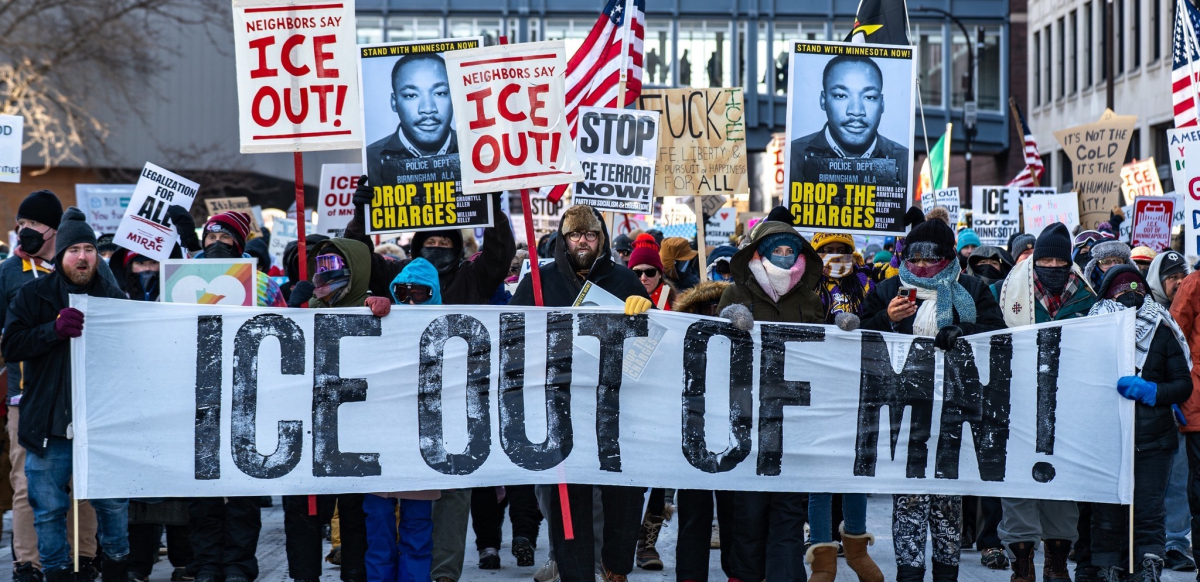
On January 23, what looked like more than 50,000 people marched in downtown Minneapolis in a protest dubbed “ICE Out of Minnesota: Day of Truth and Freedom.” They braved temperatures as low as -20°F, with their glasses fogging over, the frost crusting into a thin film. They were demanding that Immigration and Customs Enforcement and its thousands of masked agents wielding war-style weaponry leave the metropolitan area. They also demanded the prosecution of the agent who killed legal observer Renee Good, and that Congress reject additional funding for ICE.
The first major event began around 10 a.m., a protest at Minneapolis–Saint Paul International Airport organized by clergy and community groups. They called on Delta Airlines and Signature Aviation to stop facilitating deportation flights through the airport.
| | Editor's Note: In 1981, then President Ronald Reagan broke the Air Traffic Controllers union, in an act that shocked and horrified organized labor. In comparison to Trump's assault on federal employees and their unions, in retrospect Reagan's this was child's play. It is time for the Labor Movement to lay down the gauntlet. If you mess with us, you mess with all of us! An injury to one is an injury to all! | |
The New York Times / January 27th
Two days into the government shutdown in October, Ellen Mei, who administered SNAP benefits at the United States Department of Agriculture, appeared on MSNBC. Mei, who was also president of her union chapter, warned viewers that millions of Americans might struggle to access food assistance, a problem exacerbated by staff reductions earlier in the year. She was promptly notified she would be fired. She told me she is fighting the decision with the help of a union lawyer, in part to rally her co-workers. “I don’t know if morale can go that much lower,” she said. “Especially after we lost half the people in our office. There’s so little hope left. I’m trying to show that we’re not taking this.”
Since the start of his second term, Trump has cut the federal work force by more than 300,000 people. In March, he signed an executive order stripping more than a million federal workers of their collective-bargaining rights. The order invoked a provision of the 1978 Civil Service Reform Act that exempts the government from extending bargaining rights to workers at agencies whose “primary function” is national security. It affected more than 30 agencies and agency subdivisions, including the Food and Drug Administration and the U.S.D.A. — but not, paradoxically, many workers actively involved in national security, such as Border Patrol agents, whose union endorsed Trump in the 2024 election.
| | Editor's Note: Tens of thousands of health care workers are on strike on both east and west coasts now. Carefully watch to see which politicians actually support these brave workers in their struggles. | | |
LA Times / January 26th
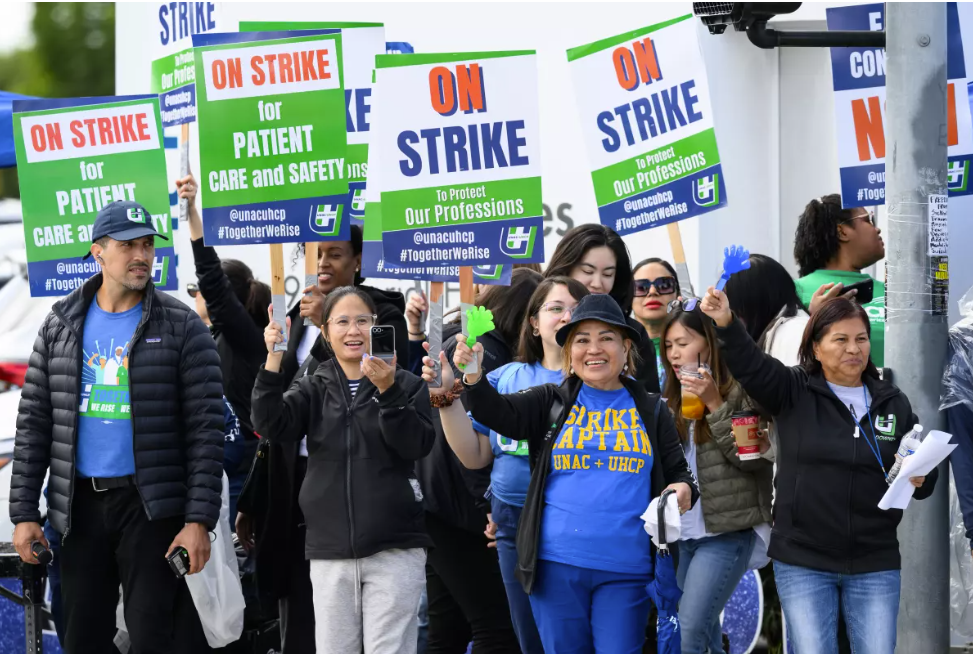
Tens of thousands of Kaiser Permanente healthcare workers in California and Hawaii walked off the job early Monday in the latest work stoppage to roil the nation’s largest not-for-profit medical provider.
Up to 31,000 registered nurses, nurse anesthetists, pharmacists, midwives, physician assistants, rehab therapists, speech language pathologists, dietitians and other specialty healthcare professionals are involved in the open-ended strike.
The workers previously held a five-day walkout with marches and picket lines in rainy weather in October.
| | WEEKLY DERAILMENT DEPARTMENT | | Each Tuesday in this news bulletin, RWU does our best to present a picture of what has been happening over the course of the previous week in terms of derailments in North America, and investigation determinations of previous accidents. NOTE: This list is by no means comprehensive. Smaller and less consequential mishaps are generally not reported here. If the wreck results in injury or fatality, or is especially damaging/extreme, a full article will appear as a feature in the dozen or so rail articles above. Know of a train wreck? Please feel free to forward a link to raillabornews@gmail.com for possible inclusion next week. Thanks! |
| | | |