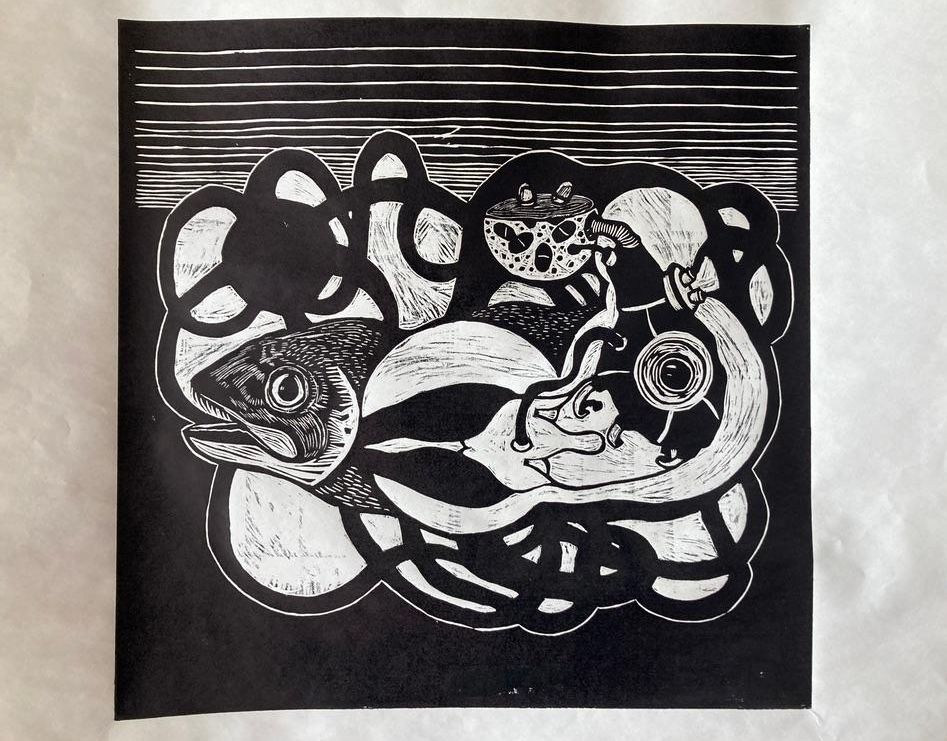
Andrés Ávila, original drawing for Song of the Salmon, 2021 | | |
Greetings!
Greetings and welcome to the latest newsletter for La Capilla Azul, a community-based exhibition space in the Chiloé archipelago, just off the southwestern coast of Chile. For those of you reading this newsletter for the first time, my name is Dan Cameron, and I’ve been a NYC-based art curator and critic since 1979, with numerous museum appointments and independent projects around the world. I co-founded Capilla Azul with two Chilean friends in 2022, and although it took more than a year to raise the funds, in May 2023 we opened our first exhibition in our fully restored and renovated historic space. This past May we celebrated our third anniversary with our tenth exhibition, titled Angelus Novus after the iconic work of the same name by the Swiss artist Paul Klee. The exhibition, which closed on August 30, was a collaboration between the artist and teacher Andrés Ávila, who lives in the nearby town of Quellón, and the Spanish artist Rogelio Lopez Cuenca, who lives outside Málaga.
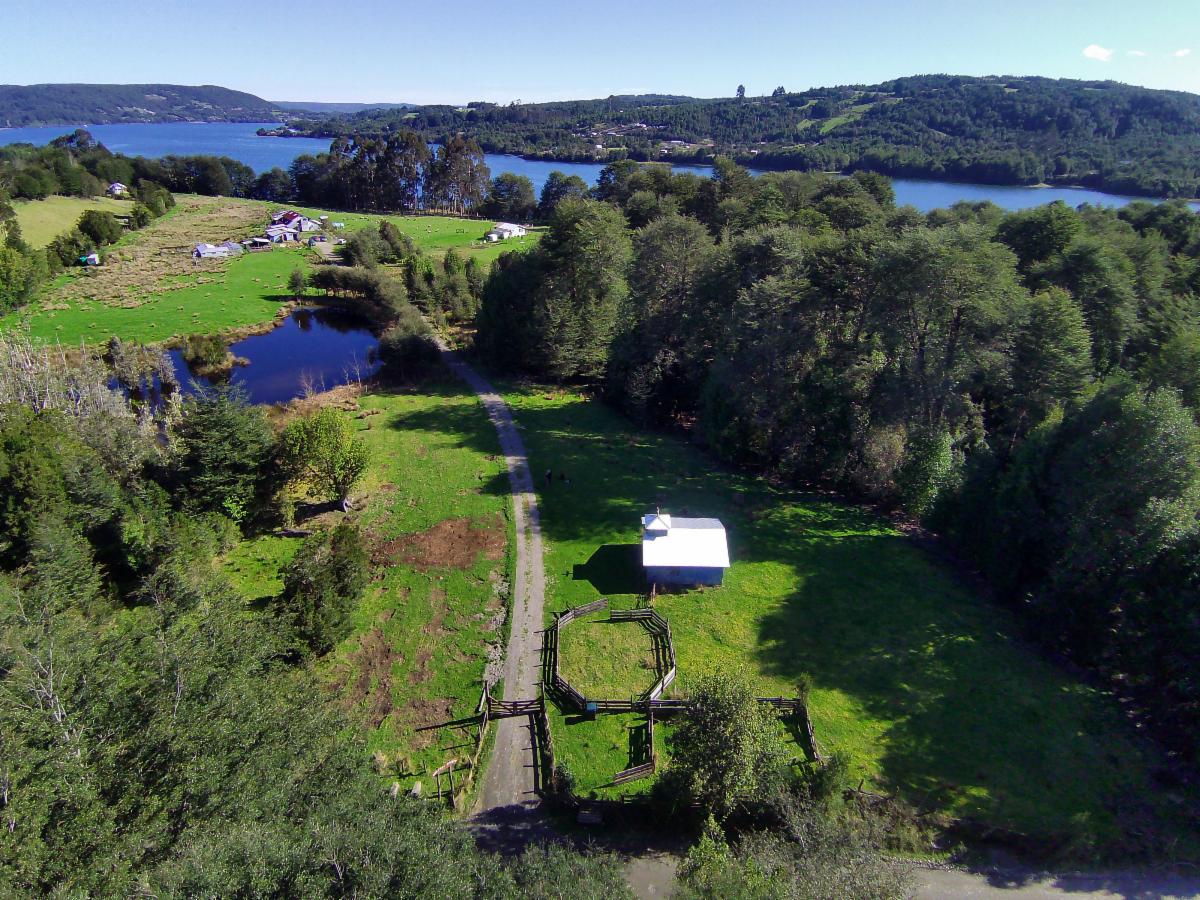
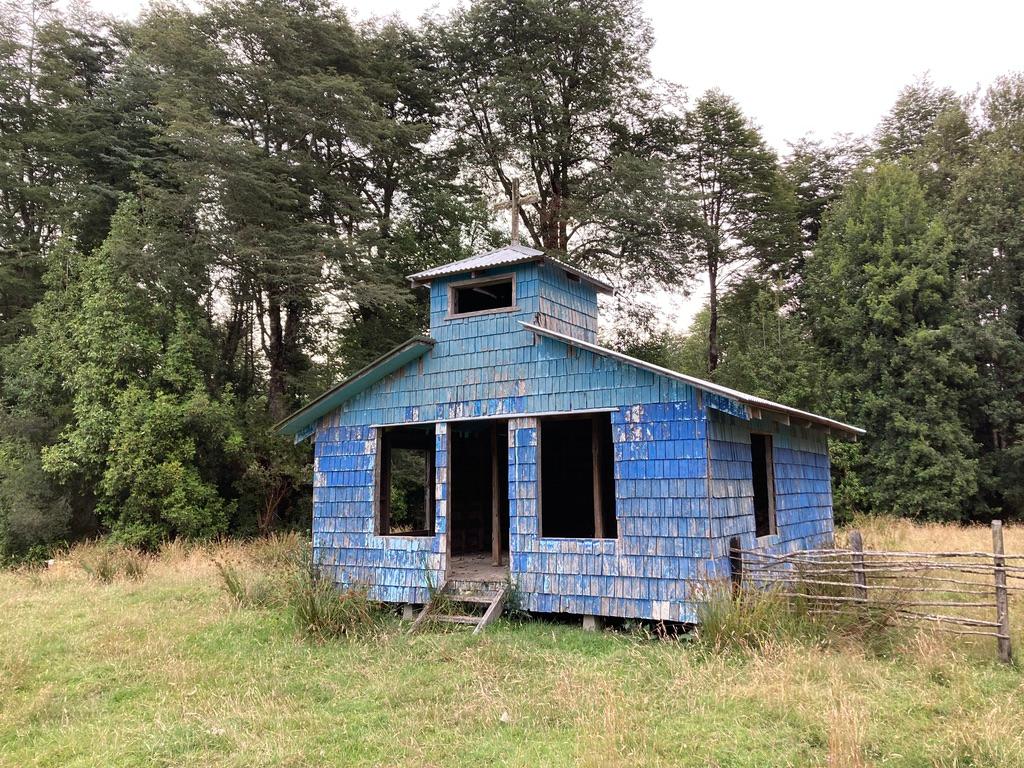
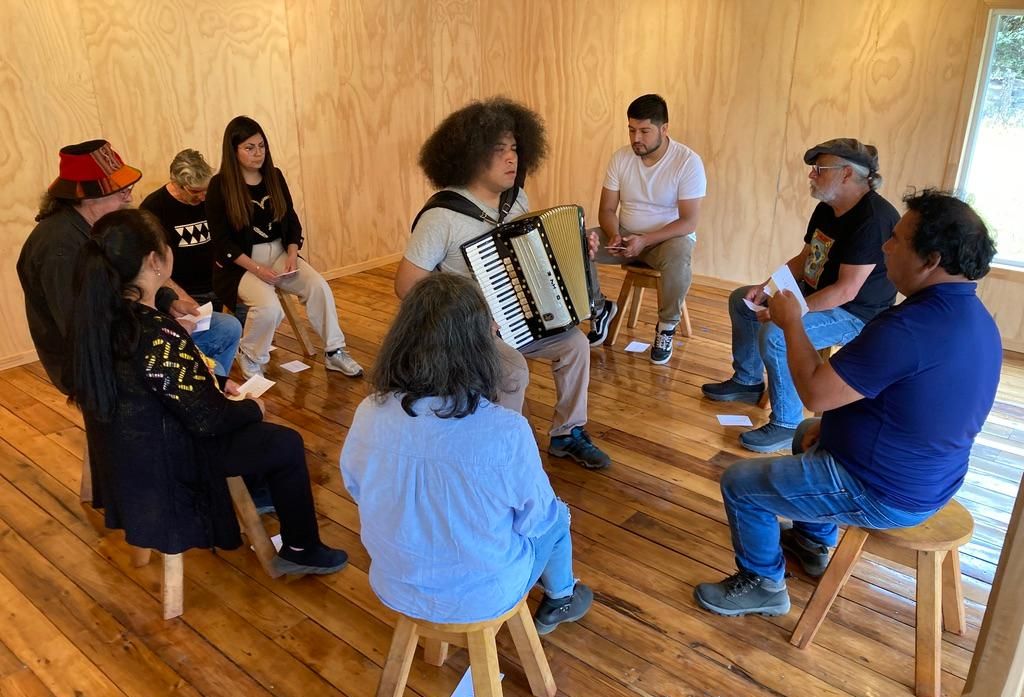
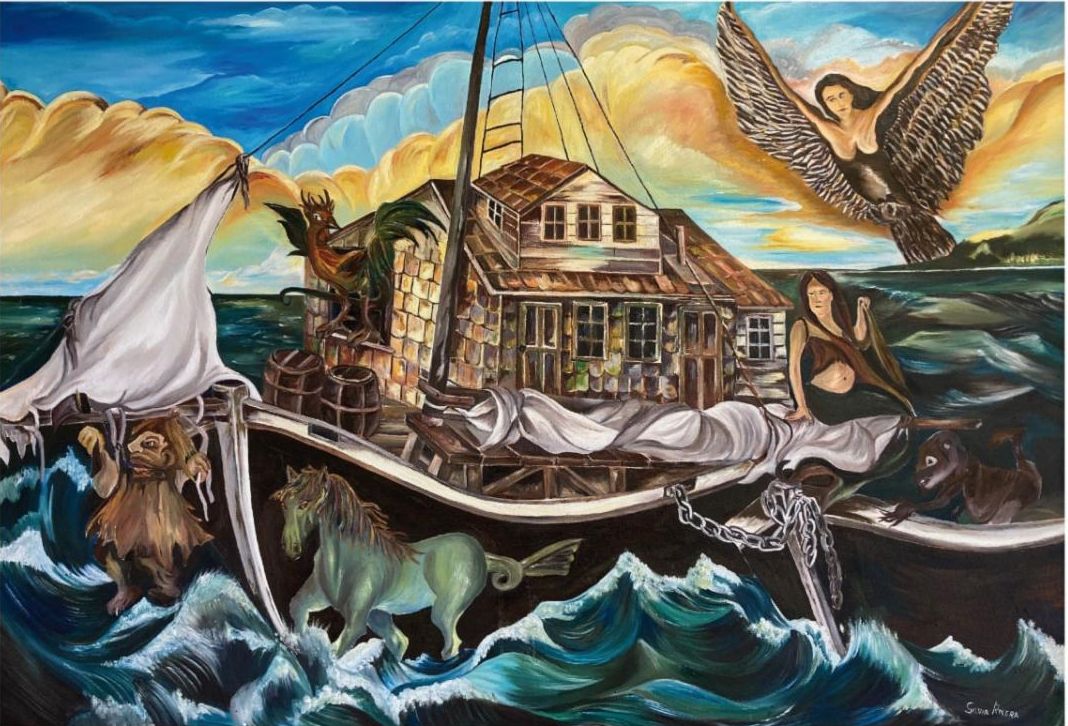
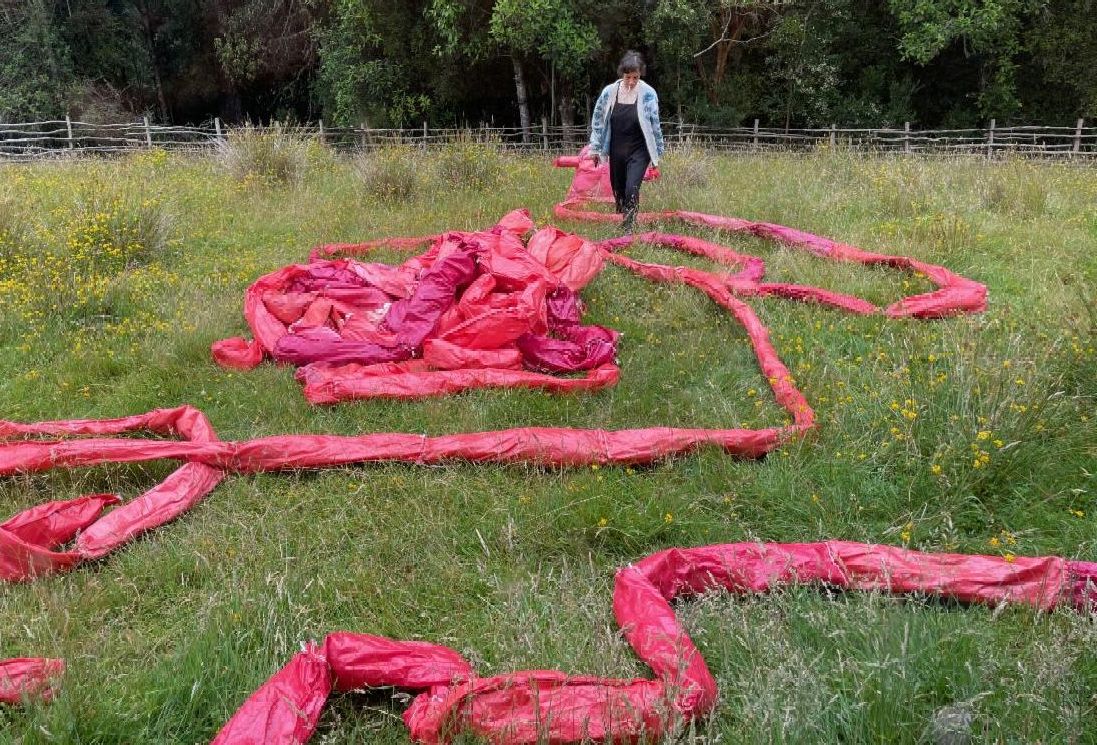
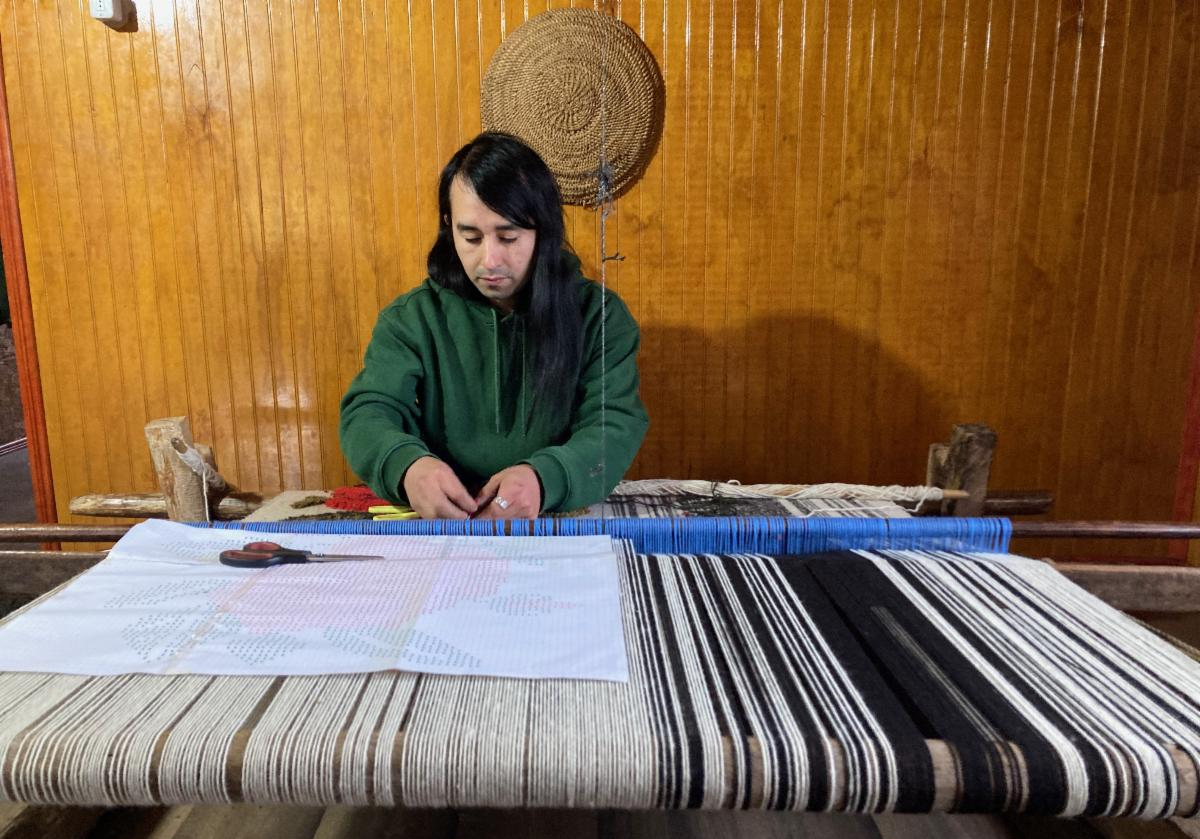
| | Capilla Azul came into existence following a series of research visits I made to Chiloé beginning in 2015, after years of being told how culturally distinctive it is from the rest of Chile. Shortly thereafter, Ramón Castillo, a distinguished Santiago-based curator and art historian I’ve known since the late 1990s, became my most frequent travel companion, as he was equally fascinated with the curatorial and critical challenge of researching a peripheral, rural territory said to be overflowing with valuable artists and creators. The more Chilote artists whose work Ramón and I came to know and admire, the clearer it seemed to us that the solution was to launch an exhibition venue that could be emblematic of the region’s unique cultural identity. | | La Capilla Azul is the nickname that neighbors gave to a small wooden church built in the late 19th century to serve a rural parish of about three hundred families in Contuy and adjacent hamlets. Chiloé is famously rainy, and several years ago it was discovered that the church’s sustained water damage had rotted a significant number of its wooden beams, so it was dismantled and sold off. | | | Curiously, it ended up re-assembled just down the road (minus the rotten bits) at the entrance to Comarca Contuy, an artist-run rural lodge that we visited first as guests in 2017, and later as the newest members of the extended family of co-owners Marcela Iturrieta and Pablo Carvacho, finally ending up as collaborators on Capilla Azul. What Pablo and Marcela saw in the “blue chapel” was not just a deteriorated structure, but a key part of their adopted community’s historical and material legacy, which they were proud to be able to restore and provide with a new and different function. | In the four-plus years since we committed ourselves to this long-term project, what began as a means of generating recognition for the artists of Chiloé has become much more than that. We’ve invited artists from Santiago, New York and Spain to collaborate with their counterparts in Chiloé, and next year that will extend to Brazil. Several of our exhibitions and artists have now traveled to other venues within the region and beyond, including top art centers, galleries and even museums as far north as Santiago, Valparaiso and Iquique. We’ve benefited from a tremendous outpouring of enthusiasm and support for a model of curatorial practice that emphasizes rural culture and community-based shared activity, and promotes an ongoing celebration of Chilote music, cuisine, literature, and crafts that resonates far beyond the region. Most importantly, we’ve created a close-knit yet far-flung community of friends, supporters and enthusiasts who’ve been our loyal donors and contributors since the very beginning, despite the reality that the vast majority of the readers of these words will most likely not have the opportunity to see Capilla Azul with their own eyes. | | Enrique Milan, rehearsal of Iván Navarro's Vid Vida Vidajena, Capilla Azul, Jan 2024 | | Silvia Rivera, Chilote painting shown at Centro de Arte Monte Carmelo, Santiago, 2025 | | María Inés Galecio installing Palpito at Capilla Azul, Jan 2026 | | Osvaldo Guineo working on loom on Cailín Island, 2025 | | |
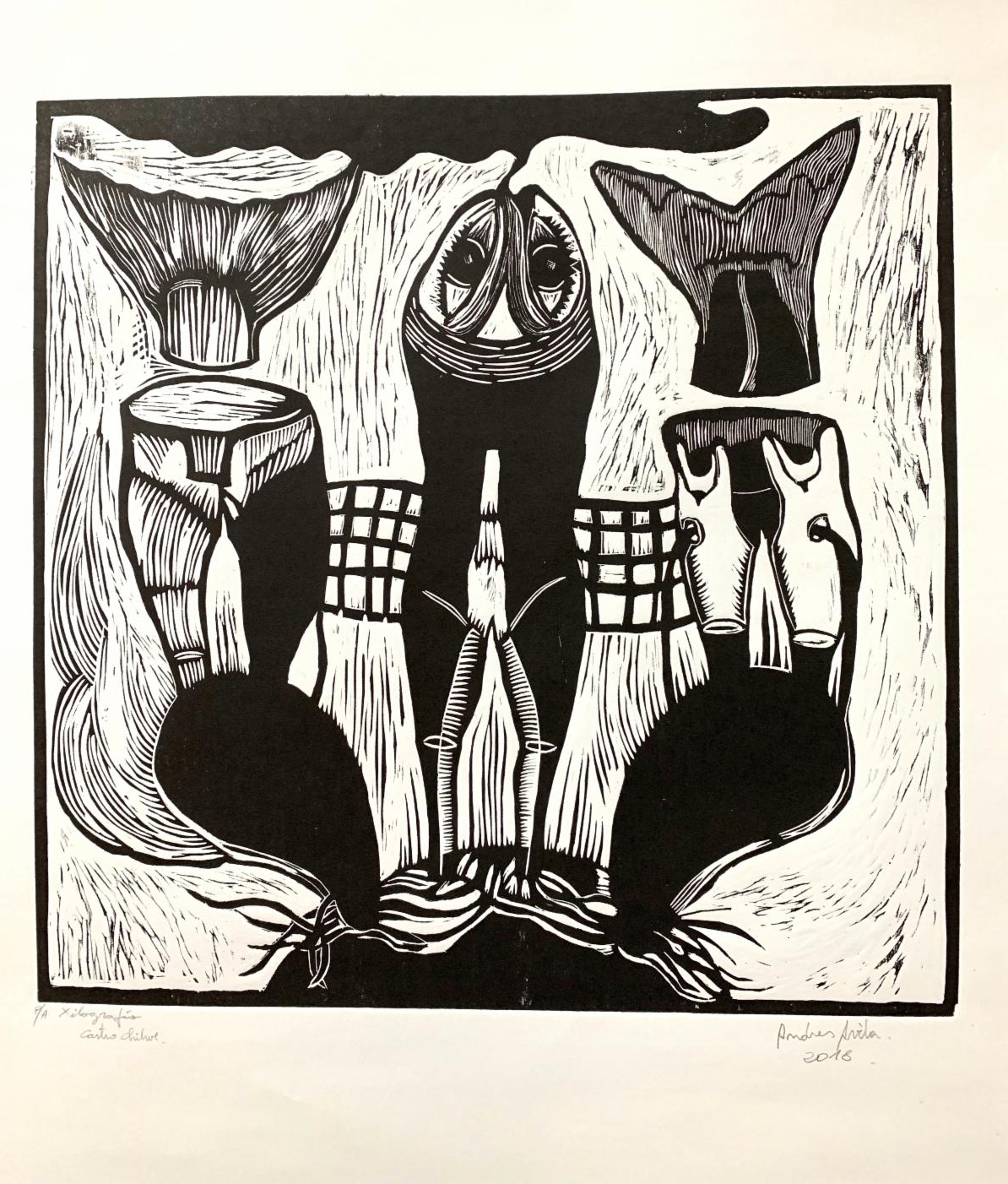
In this issue, which looks backward and forward at the same time, the artist Andrés Ávila introduces us to his methodology for developing the most recent Capilla Azul project, in which the audio emissions of a live, mutated salmon, escaped from a local salmon farm, have been transposed into key concept “blocks” that humans can comprehend and interpret for themselves. Ávila’s latest work, which is an extension of his landmark 2019 graphic novel The Song of the Salmon, invites us to drop our shared biases regarding our relationship to other species, and perceive them as comrades in the ongoing struggle to survive and prosper.
Following Andrés’ report for Angelus Novus, Ramón Castillo gives us an introduction to Picapalos, the artistic name assumed many years ago by Marisol Bergmann, a native chilota whose family fled Chile after the 1973 coup, and returned to Chiloé on her own many years later to live a secluded life adjacent to Huillinco Lake, devoted to poetry, nature and art. Ramón first visited Picapalos while on a family trip a couple of years ago, and his enthusiasm was such that we invited her to collaborate with Jason Middlebrook from upstate New York, an artist famed for his long association with wood and nature. When the two finally met in person in May, it had the feeling of two siblings being reunited after an extremely long absence.
| | |
Reflections on Angelus Novus
Andrés Ávila Espinoza
| | |
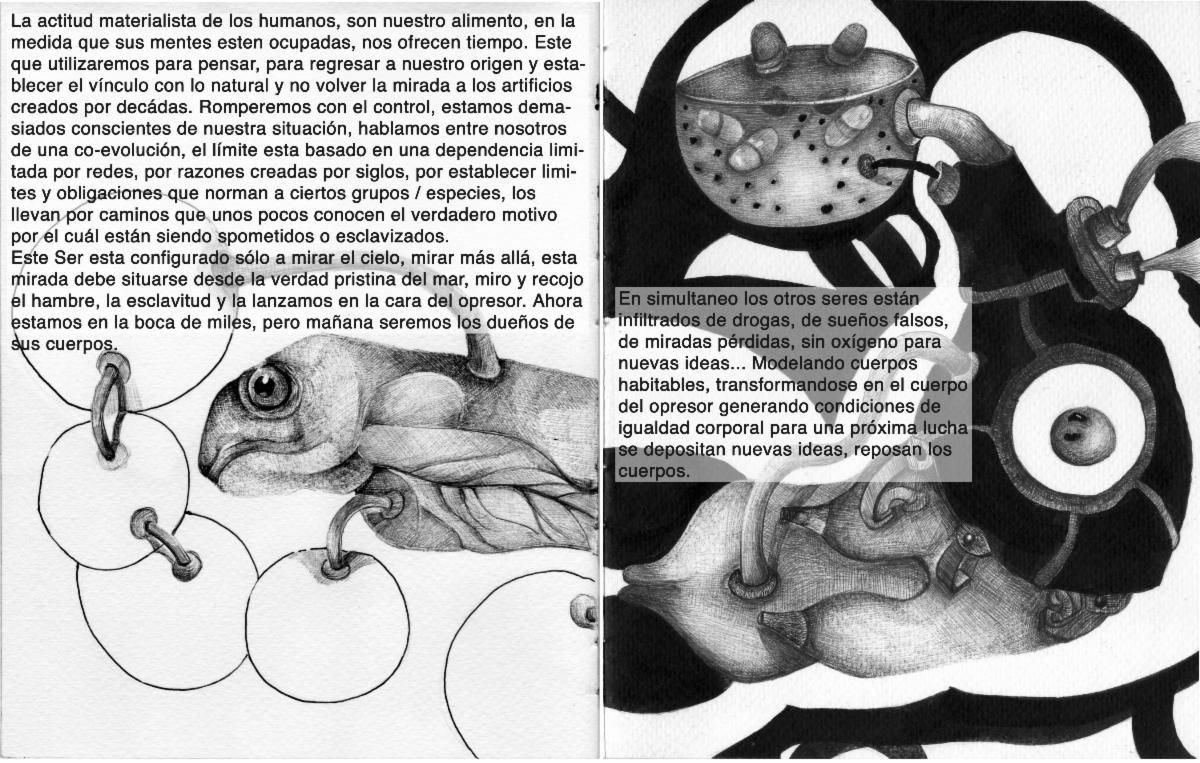
My interest in the marine world and its manipulation—the Angelus Novus project—stemmed from the perspective developed in my graphic novel, The Song of the Salmon. This narrative portrays the enslaved existence of a marine species and its quest for liberation from human oppression. From this struggle the "emancipated salmon” emerges. Its story is told through the anguished voice of a solitary rebel who draws us into a transformation in which our passive role is that of silent participants. From the starting point, the story raises questions: Who are they? Why are they so far from home? Who brought them here?
These questions lead us to imagine how we might listen to another species, overcoming the linguistic barrier through creativity. We cannot express ourselves to, or converse with, marine creatures, and yet the desire to do so drove us to undertake the challenge of listening to aquatic life in our search to transcend the rigid limits of human language and the consequent absence of meaningful interspecies communication.
Physical computing and environmental mapping enhances water’s innate capacity as a dynamic medium for sound transmission, harboring underwater messages imperceptible to humans. This exercise challenged the limits of our senses and posed a profound ethical and existential dilemma regarding our own capacity for empathy. Why aspire to decipher and listen to another species when we are often incapable of truly listening to one another, or to ourselves?
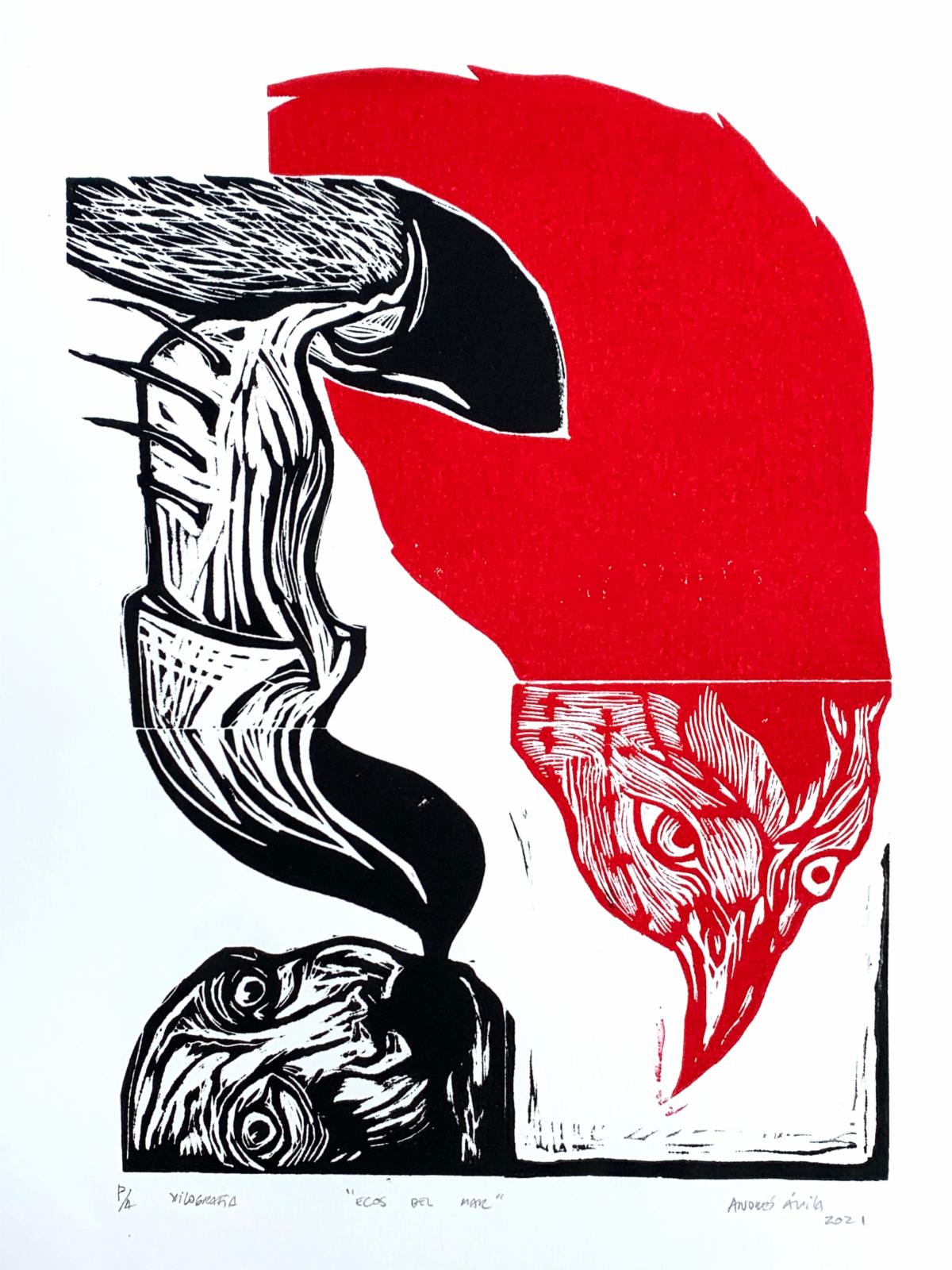
| | Andrés Ávila, ithograph from Song of the Salmon, 2019 | | Andrés Ávila, Ecos del Mar, 2021, lithograph on paper | | |
Beyond technical debate and the limitations of human language, we turned to technologies capable of mediating the ocean soundscape. Through experiments with robotics and the mapping of our aquatic environment, we came to perceive vast bodies of water as spaces densely populated with messages undetectable to humans. Driven by the curiosity to understand an unheard yet potentially powerful voice, our hope for interaction led us to a specific tool: the hydrophone.
This microphone, which records underwater sounds, also stores its audio recordings on magnetic tape, allowing for greater depth and superior sound quality. These audio files were transferred to a digital tool that converts the analog audio into a digital format, following a sequence in which sounds are transformed into numbers, which can then be organized into text or numerical strings. Feeding this data into artificial intelligence software enables the audio to be converted into text, which made it possible to examine the captured acoustic frequencies and transform them into intelligible textual structures.
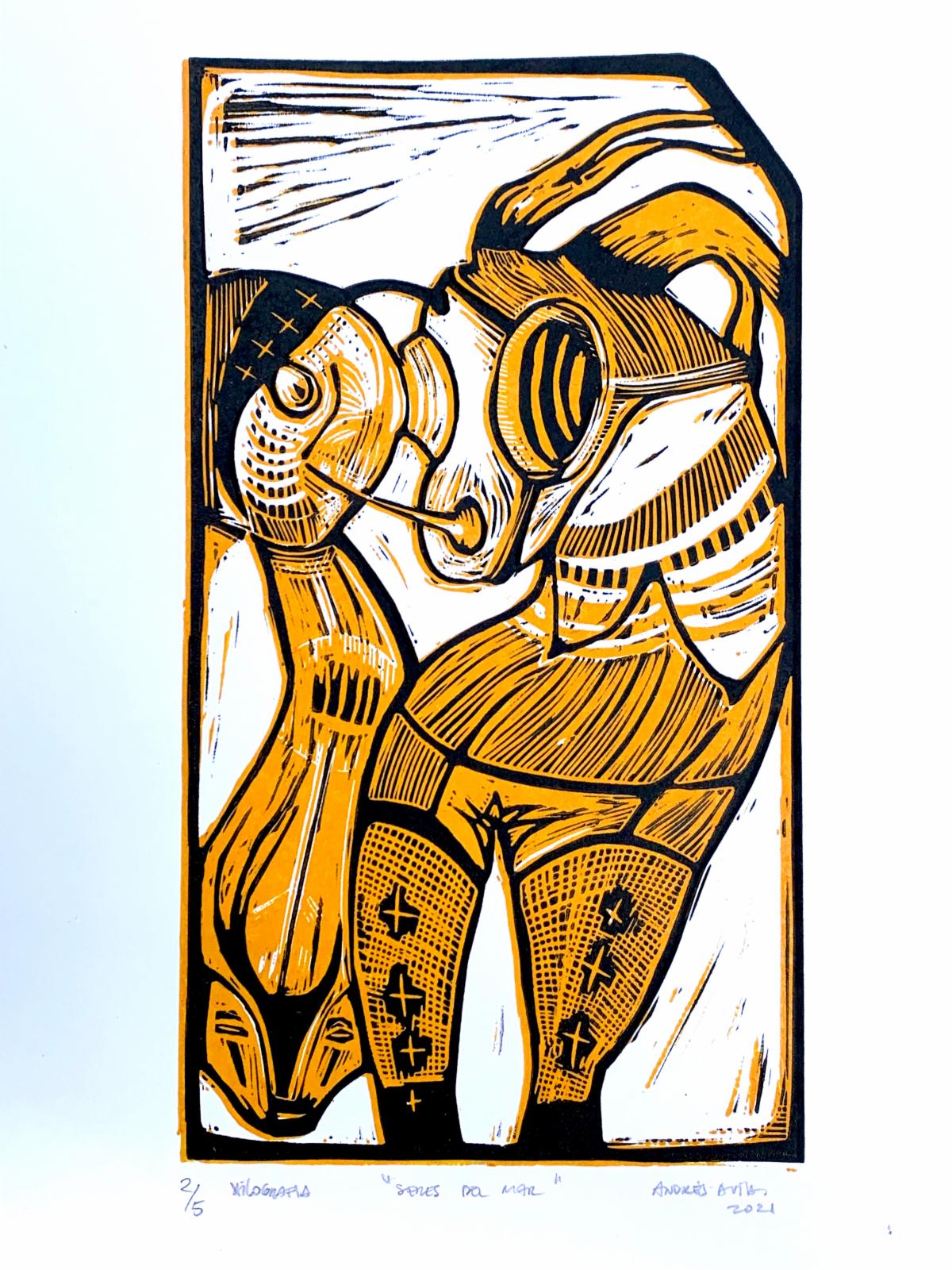
| | Andrés Ávila, pages 4 & 11 from Song of the Salmon | | Andrés Ávila, Seres del Mar, 2021, woodcut | | Specifically, a conversion rule was established within the 0 to 190 Hz range, linking these frequencies to the 27-character Spanish alphabet. This systematic correspondence of sound pulses created a space for both directed research and creative expression, allowing a story to be told from the perspective of an aquatic creature—a mutant salmon—who interacts with exhibition visitors by displaying concepts on a small screen. These concepts scroll vertically upward in monochrome and can be read at the rhythm of their appearance: BEING – BODY – WORLD – DOUBT – JUDGMENT – ETHICS. | | This final excerpt comes directly from *The Salmon’s Song*: "Today we write a seemingly, 'Story of an Impossible Destiny,' but in truth it is only a matter of time." "We are organizing a great rebellion that will begin in the far south—a place where some have been taken to undergo a forced colonization akin to slavery. What our captors fail to grasp is that the future will not follow the anthropocentric model they describe. On the contrary, it is we who will lay claim to the human species.” | | |
|
Picapalos
Ramón Castillo
| | |
Marisol Bergmann was born in Castro, where she lived until 1973, when her family went into exile in Brazil. She returned by herself to Chiloé in 1982, and worked briefly in Ancud before moving to Castro to set up “Impresur” (better known as “Imprenta Condor”). Later, she purchased a German printing press from Punta Arenas, where she first encountered wooden type. For the next several years, Bergmann worked as a publishing professional at a studio where typesetting processes—first manual, later digital—were employed. In that role, photolithography, photomechanics, offset printing, inks, typefaces, and the mechanical rhythm of printers yielded countless brochures, posters, manuals, reports, and books over the years.
Eventually, however, Bergmann grew dissatisfied with her life and the results of her work, and closed the business in February 1993. By April of that year, she had sold everything and moved to the land she now occupies by Lake Huillinco, initially sleeping in a storage shed. During 1994 and 1995, she dedicated herself to collecting stories from across the archipelago, and through Ediciones KUQ in Castro, made her debut as an author in 1999 with the publication Memoria viva de Quiao (Living Memory of Quiao)—a community-based research and documentation project covering Quiao and Notué (in the Lake Huillinco and Cucao area of the Chonchi township).
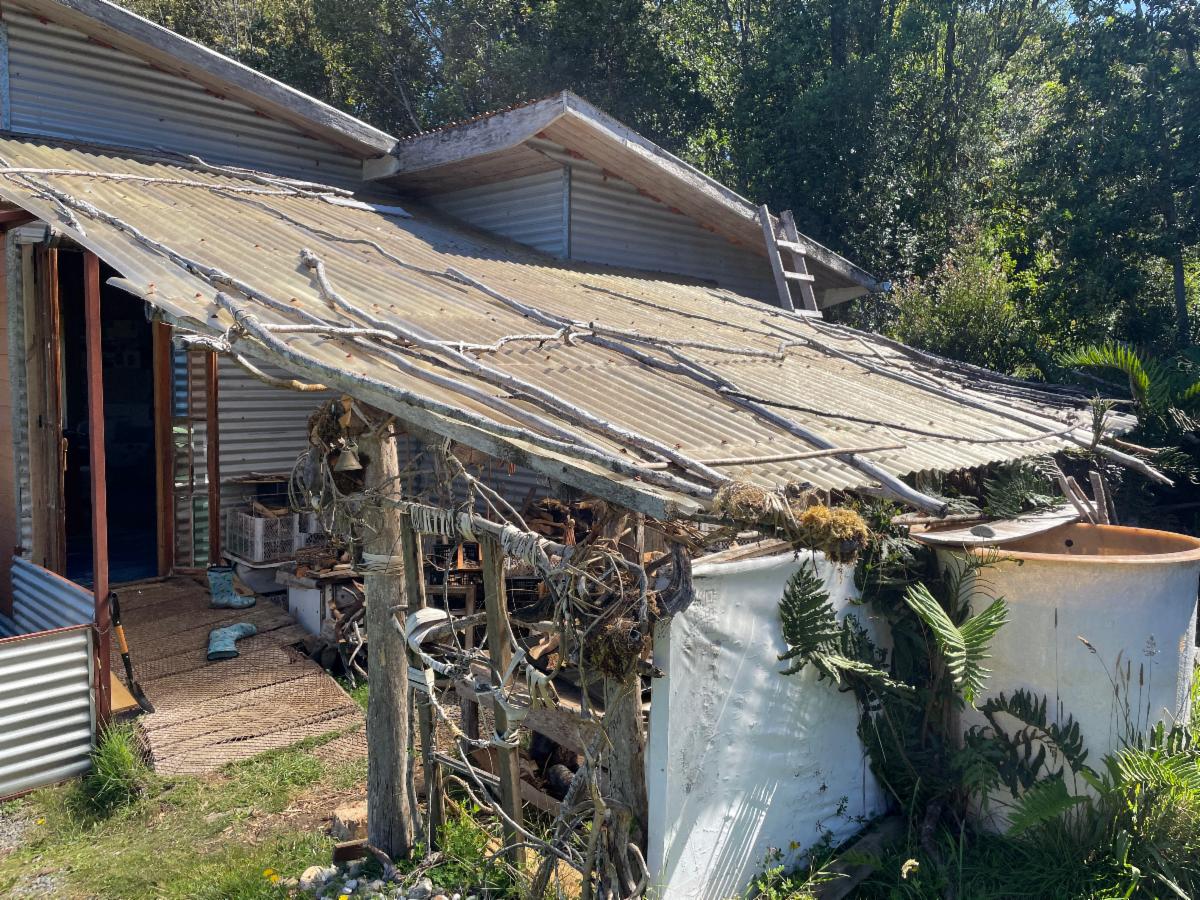
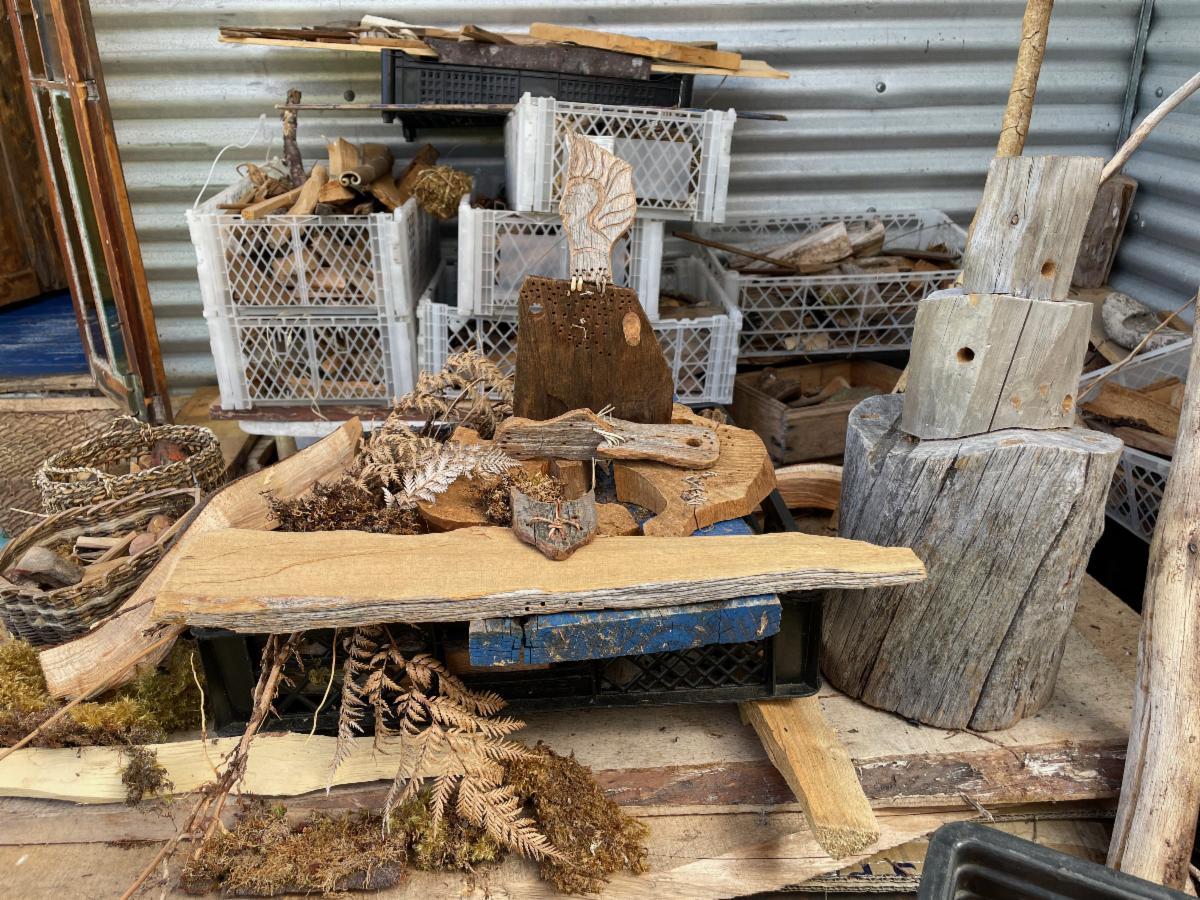
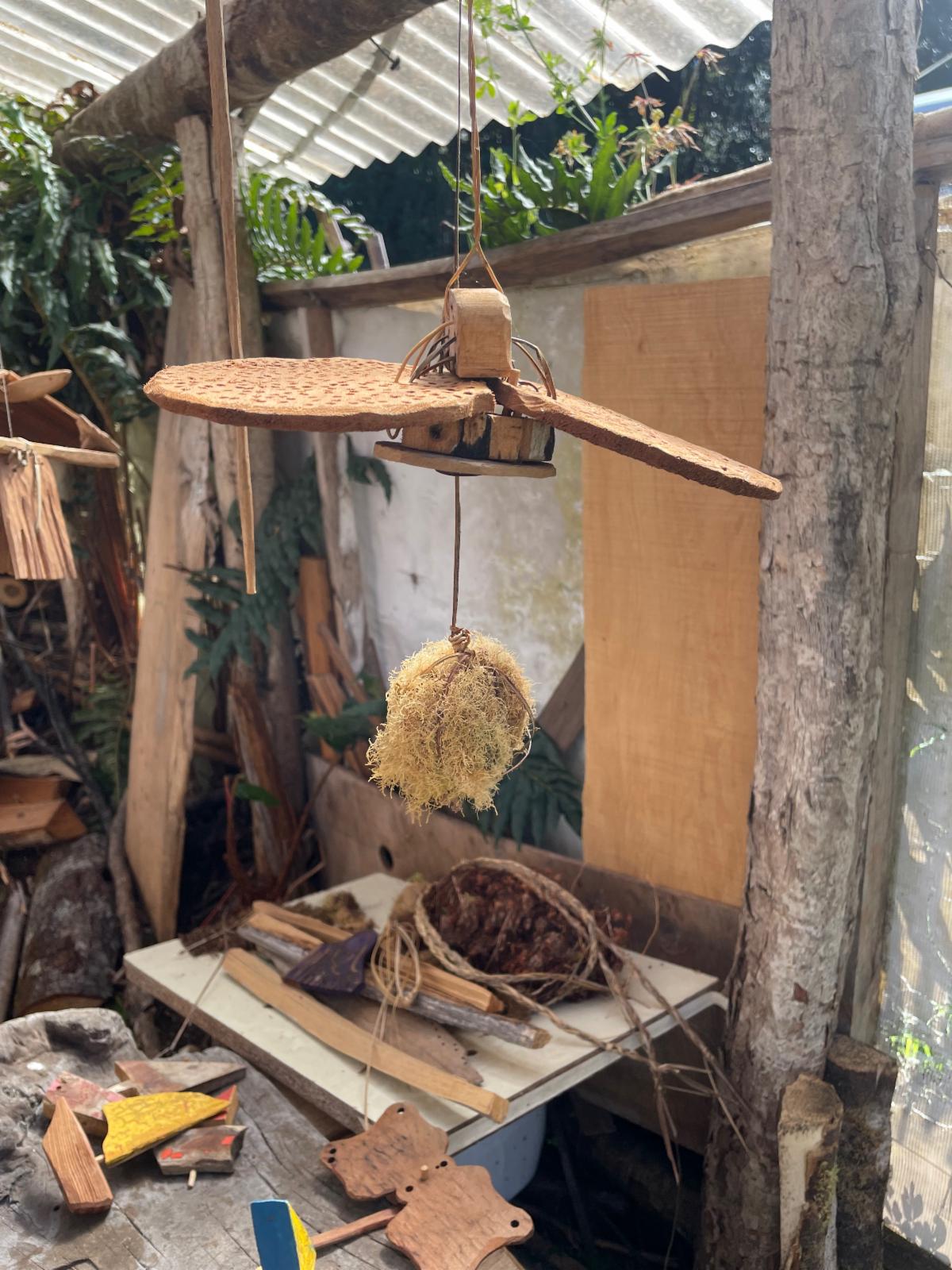
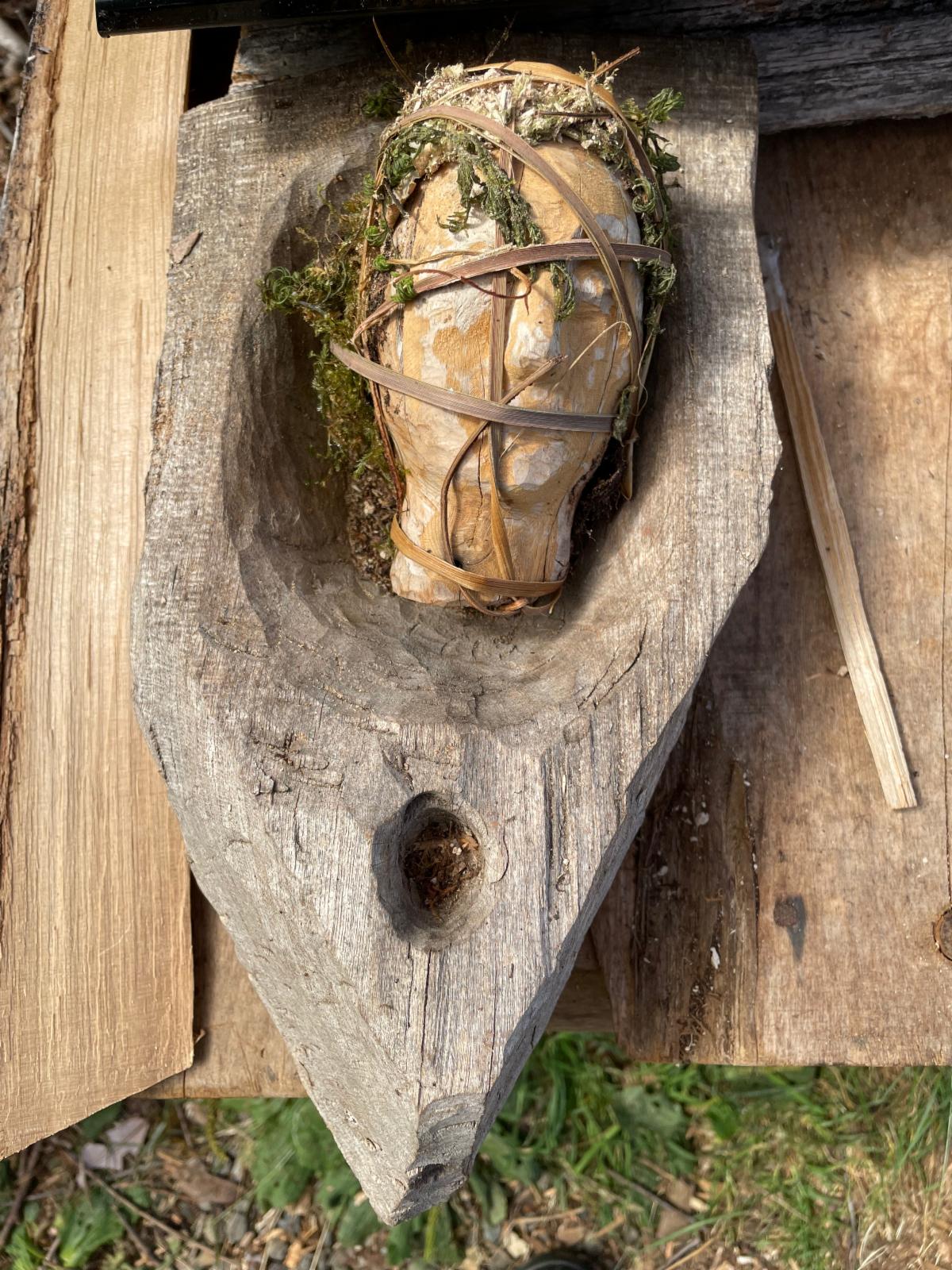
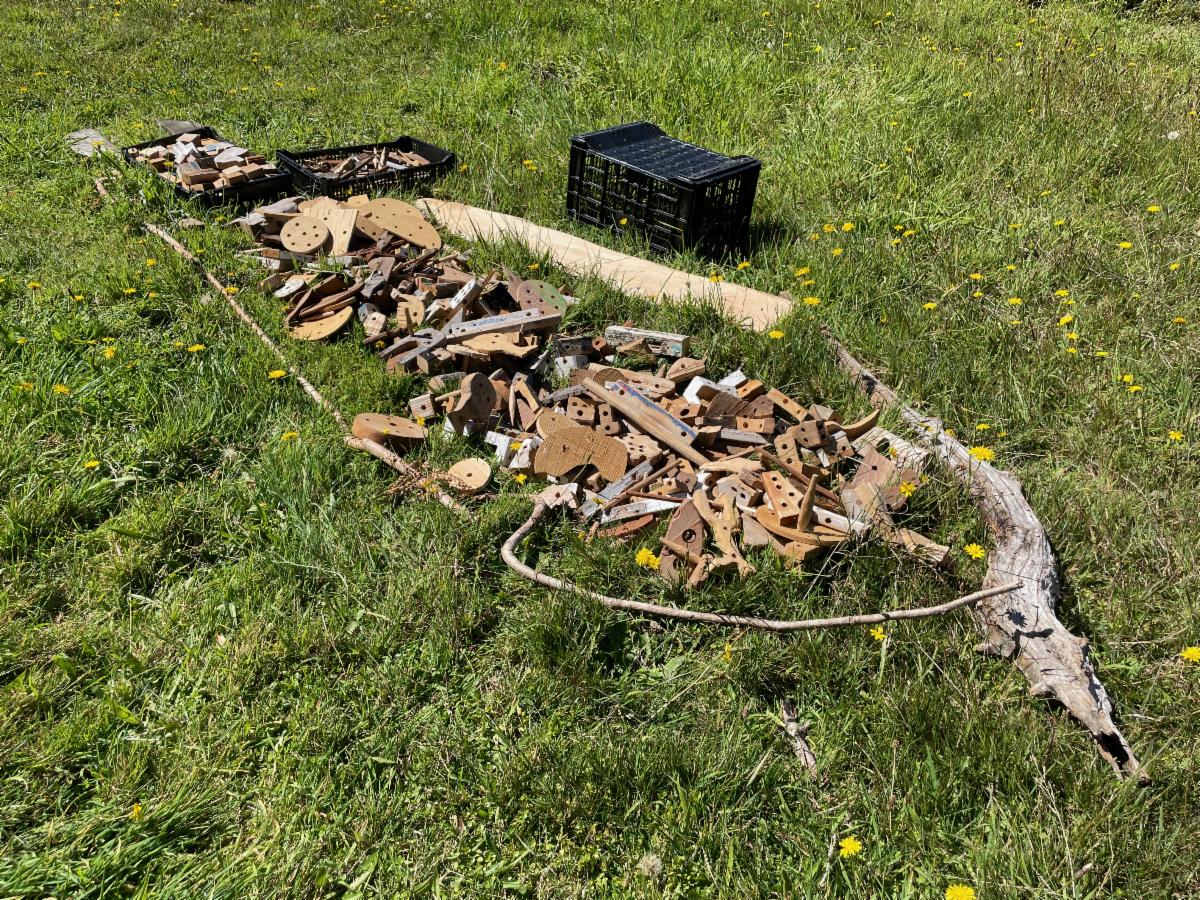
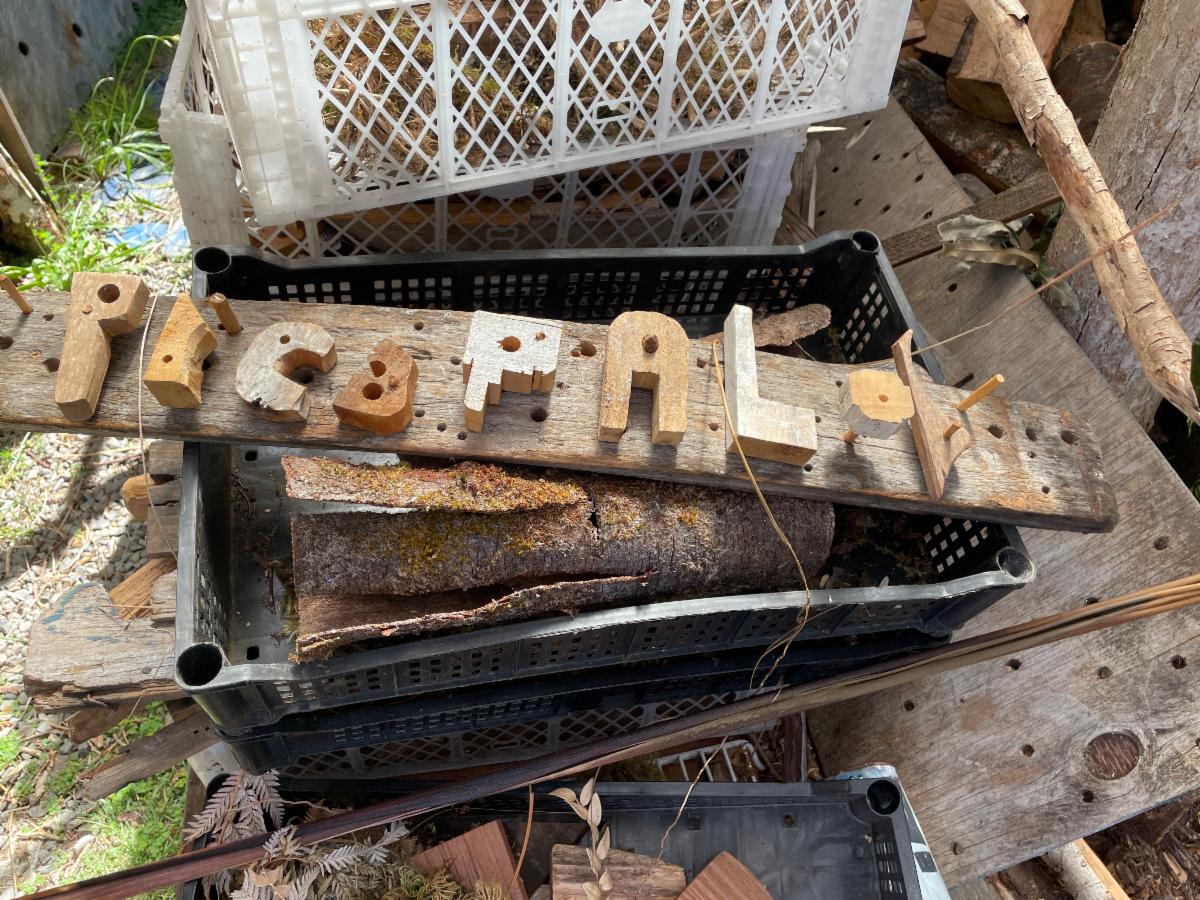
| | Picapalos' studio, photo Ramon Castillo | | In her new environment, beside a wood-burning stove, Bergmann constructed her new home entirely by hand, teaching herself how to drive screws, hammer and saw. Through this personal approach, she discovered the transformative power of her own hands, first building a ground floor and loft alongside her workshop. By 1994, she had crafted the windows, doors, and staircases, creating her own domestic world from scratch. One day, she went fishing on the Notué River, and in her recollection, “The day went terribly. I didn’t catch a thing, but while bored and wondering what to do, I started carving a spoon. The spoon didn't turn out right though, because I discovered I had carved a woman's body.” In that instant, she shifted from the paradigm of imprinting—napkin holders, garlic boxes, decorative objects, etc. — directly into the realm of invented forms. From that moment on, the story belongs to Picapalos—the name by which she is recognized on the street today when someone calls out a greeting. | | Picapalos' studio, photo Ramon Castillo | | On a recent visit to her home, Picapalos took us for a walk, and we descended carefully along a narrow path amidst alerce, canelo, and luma trees, so as not to disturb the surroundings. We hear the birdsong of a chucao keeping watch on us, and further ahead, the sound of water is followed by the appearance of a small waterfall in the woods. Then we began ascending until we reached the original house-workshop, where a myriad of sculptural forms have either come into being or are currently in process. “I say I draw with wood, because it is the wood that tells me the shape, guiding me to go with the flow of the grain, a knot, or a cut in the cypress or larch. I let myself be led without knowing what comes next. And when I work with reclaimed wood—pulling out a rusty nail or smoothing a splintering edge—I treat all those imperfections as a gift. It is a gift to know that this wood has a second or third life, a continuation of the lives of the old Chiloé carpenters and artisans. They are like my invisible mentors.” | | Picapalos' studio. photo Ramon Castillo | | Picapalos' studio. photo Ramon Castillo | | Since being invited to her first group exhibition in 2000 at the Museo de Arte Moderno in Castro, Picapalos has transitioned from artisan to emerging artist. Her daily life unfolds seamlessly between home and workshop, and she rises to her work every day with a complete sense of freedom, her carving knives, chisel, axe, sandpaper, and gouge close at hand. Much like the stories she used to collect, today she gathers materials from the forests and slopes of the Piuchen range: fallen logs, branches, fruit-laden boughs, seeds, stray planks, leaves and moss. | | Picapalos' studio, exterior. photo Ramon Castillo | | Picapalos' studio, exterior. photo Ramon Castillo | | |
In this quiet atmosphere of home and workshop, trails, pudú deer, birds, attentive listening, and Chiloé doorways—Picapalos has developed an intense yet subtle cyclical artistic practice. In her forest refuge, serendipity directs her encounters with materials, while rain, sun, and wind determine the wood’s final shape and color. Through her adaptation to nature’s solitude, Picapalos has somehow managed to connect worlds that once seemed far apart.
Today, she is a distinguished rural teacher who instructs children from various local schools in the art of sculpture. In her workshops, she teaches them an appreciation for the fragment—the small-scale detail—using an original educational method for children that she calls "Lego Chilote."
| | |
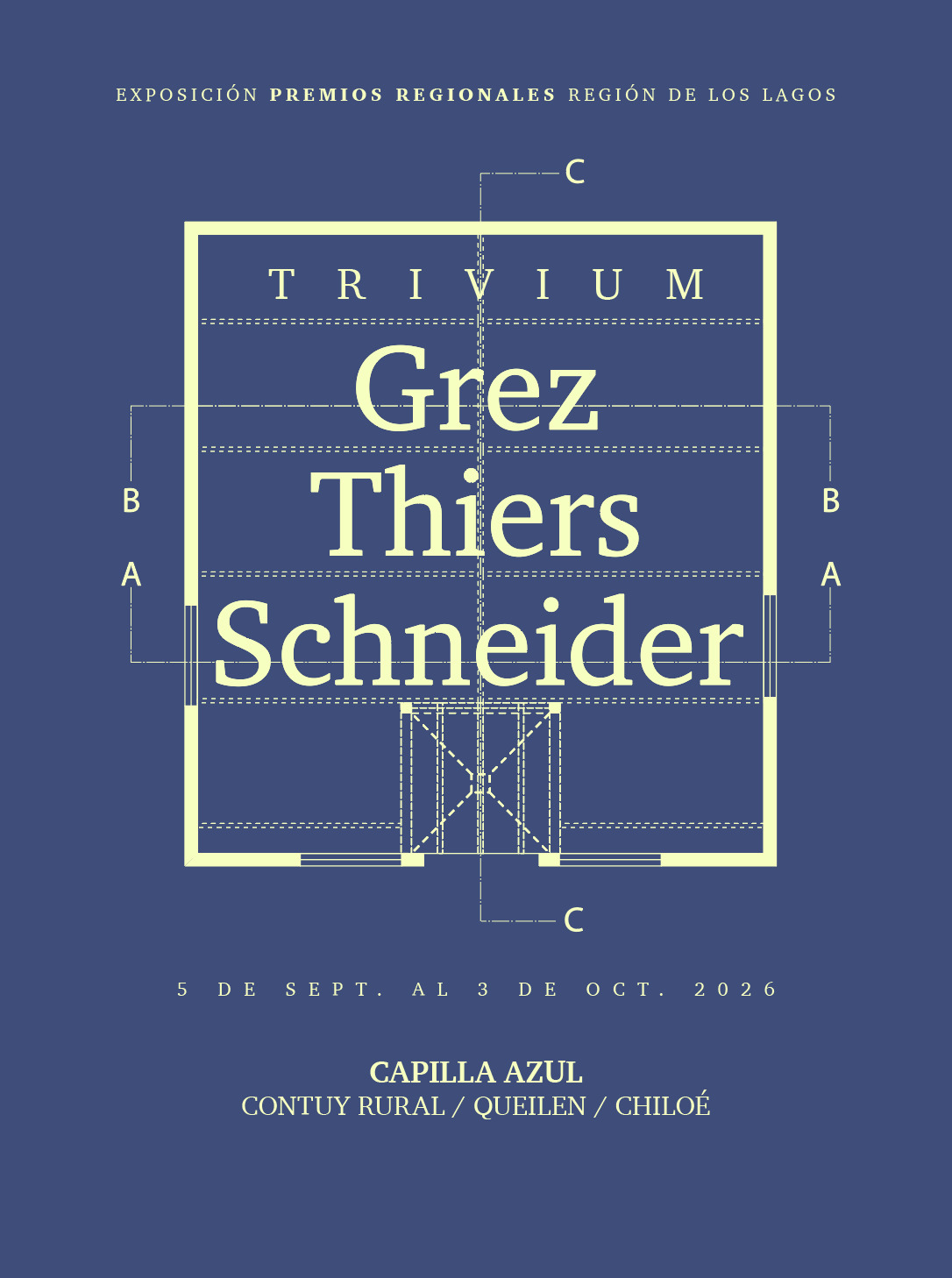
Back in Contuy, La Capilla is currently hosting, for the first time, an exhibition organized by someone other than ourselves. Instead, Trivium is being presented through October 3 by the Region of Los Lagos to honor three artists who have received the Regional Art Prize this year: Guillermo Grez, Osvaldo Thiers and Rubén Schneider.
In their catalog text, Pablo Carvacho and Andrés Muñoz write: “The Los Lagos Region cannot be conceived as a single image. Archipelagos, fields, cities, volcanoes, forests, channels, and coastlines make up a land-and-sea territory defined by distances, traces, and relationships. Here, the landscape spills beyond visible representation, extending into narratives, symbols, religious imaginaries, memories, and ways of inhabiting the space.
| | | |
Capilla Azul adds another layer to this encounter. Its historic religious architecture preserves the memory of ritual and structures the journey: the threshold, the passage, and the point of condensation.
Trivium does not attempt to define a regional identity or offer a synthesis of art from Los Lagos. Instead, it proposes pausing at the crossroads, acknowledging what each trajectory brings with it, and accepting that a territory remains alive precisely because it changes, blends, is remembered, and is reimagined.”
| | |
Rafael Lara in Iquique
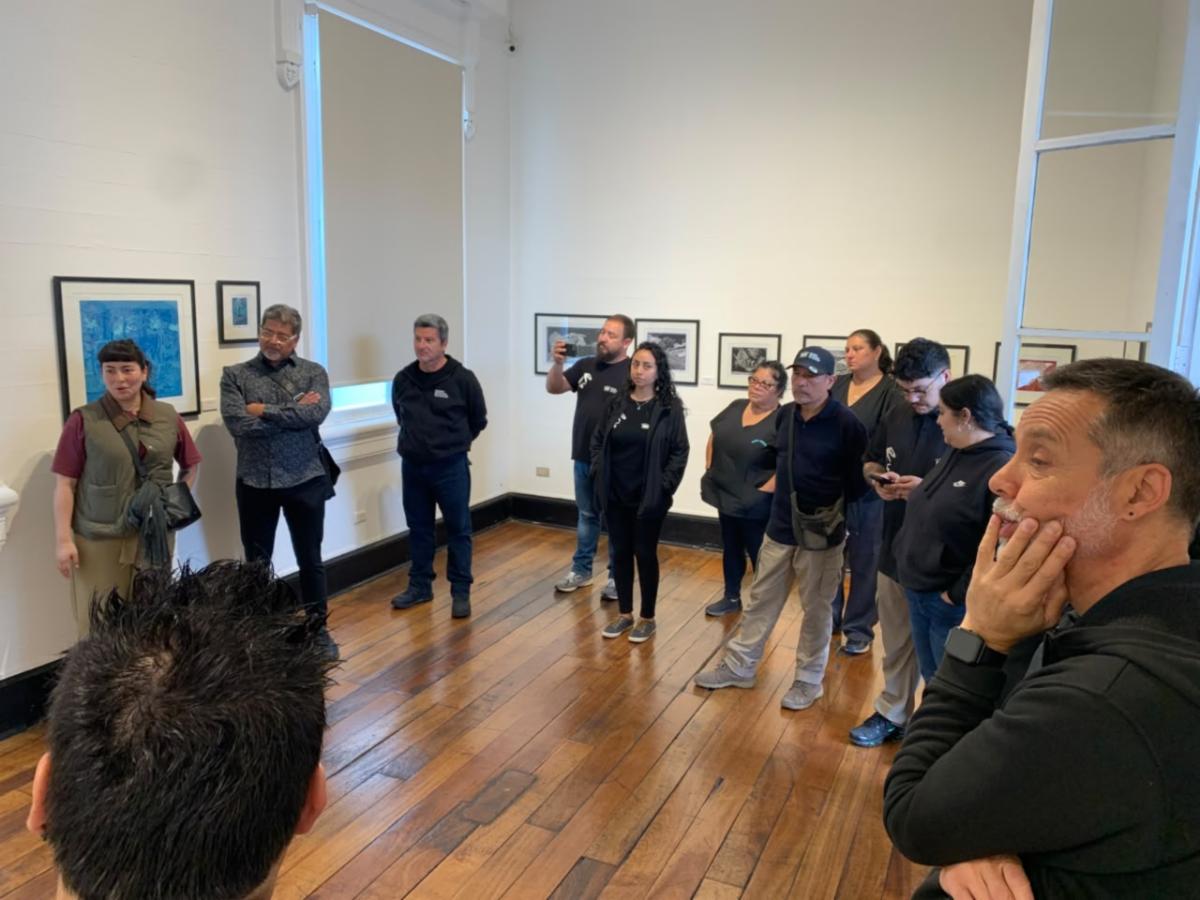
Meanwhile, on September 9, the Museo Regional de Iquique, in the north of Chile, opened the exhibition Espíritu Libre, which brings together forty works by the late Chilote artist, and was organized in 2025 by Capilla Azul. For the opening, Ramón Castillo presented a lecture on Lara’s work and the artist’s daughter, Paz Lara Rodriguez, gave a public walk-through of the exhibition. This is the third venue for Espíritu Libre on its national tour, which will bring it next year to Valparaíso and Santiago, before it returns to Chiloé in 2028.
| | Guided tour of Rafael Lara Espiritu Libre in Iquique led by Paz Lara Rodriguez (l.), Museo Regional de Iquique | | |
I hope you’ve enjoyed reading this edition of the newsletter, but before saying farewell until next time, I want to take this opportunity to remind you that all of Capilla Azul’s funding comes from individuals like yourselves who see our mission as something you can identify with and want to support.
As a 501c3 public charity, recognized by the US Treasury as qualified to accept tax-deductible donations, La Capilla Azul, Inc is proud to be able to serve as a platform for people’s generosity and creativity when it comes to essential questions: what art gets shown, by whom, for whom, and under what conditions? We at Capilla Azul believe that we’ve hit upon an extremely fulfilling and promising framework for how to lift up a community of artists who otherwise lack the infrastructure to share their creativity with the rest of the world. With your support today, we can continue to fulfill our promise to the community of Contuy to celebrate the best of Chiloé, its artists and its artisans in a tangible way that makes a difference for the community's future.
| | |
If you wish to become a supporter, there are four easy options:
1) Click the Donate Here button
2) Mail a check made out to “La Capilla Azul, Inc” to our U.S. address: 206 Glen Street, Suite 35A, Glens Falls, NY 12801
3) Visit our website at www.capillaazul.com and follow the instructions
4) Check out our GoFundMe page at https://gofund.me/745d57953
| | Thank you for your support! | | | | Capilla Azul is part of Comarca Contuy, Queilen, Chiloé, Region Los Lagos, Chile | | | | |