Speaking up for Missouri...."The Great Rivers State" | | This Week's Water News: Meat plant discharges blood into Polk County creek, Missouri River Relief celebrates 25 years, Mississippi River mayors consider AI data center guardrails, MDC seeks comments on paddlefish regulation changes, agricultural liming is a carbon sink in the Mississippi River basin, MDC announces new duck zone boundaries and season dates, drought impacts Colorado's largest reservoir, what happens if Missouri's reservoirs hit dead pool, a list of the best smallmouth bass lakes in America, 30-year Stockton Lake deal finalized in southwest Missouri, thriving new cutthroat trout populations in Montana following restoration, and artists honor Mississippi River with glass sculptures | | |
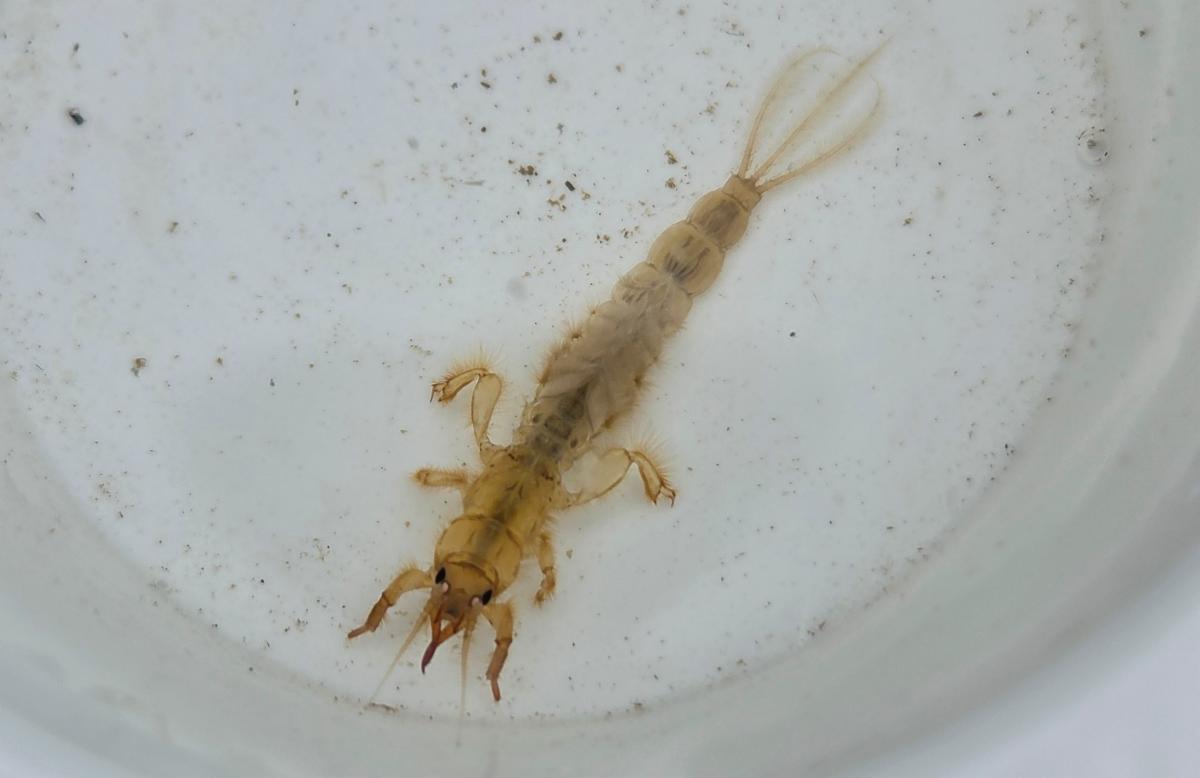
This week's macroinvertebrate
Common burrower mayfly, order Ephemeroptera, family Ephemeridae
| | |
In North America, there are several families of mayflies. The mayfly pictured above belongs to the family Ephemeridae, or common burrower mayflies. This family is distributed throughout North America, but there are a few different kinds, as this family consists of four genera and 15 species. Common burrower mayfly nymphs are usually abundant in lakes, ponds, large rivers, and reservoirs. Some appear in medium size streams, but they are not as numerous as the common burrower species that take up residence in larger bodies of water. All species of Ephemeridae live in soft sediment, but each has a distinct preference for substrate composition. Emergence of Ephemeridae species tends to be synchronized, as all members of the population emerge within a span of a day or two days. This results in mass-emergences, which cause annoyance in the people that experience them. These emergences occur in the regions of the upper Mississippi River and some of the Great Lakes.
These common burrower mayflies are, as you may have guessed, burrowers! These mayflies construct U-shaped tunnels with holes at both ends, digging similarly to moles to create their tunnels. The ends of the front legs are flattened for digging, and the jaws have two stout, pointed tusks that project forward. These tusks are visible when viewing the mayfly from above, projecting out in front of the face. Common burrower mayflies primarily feed by ingesting sediment non-selectively. They may also bring small particles of organic matter into their burrows to feed by creating a current with their gills.
If you find this macroinvertebrate while conducting Missouri Stream Team sampling, it belongs to the Group One Taxa!
Source:
Voshell, J. Reese, Jr. A Guide to Common Freshwater Invertebrates of North America. The McDonald and Woodward Publishing Company, 2011.
| | Lifejackets save lives! Wear a lifejacket on the rivers and lakes! | |
- October 24, 9 AM to 11 AM - Land-Based Cleanup: George Appel Memorial Park, St. Louis, MO
- October 24, 9 AM to 11 AM - Riverfront Cleanup: Mississippi Shore at River City Casino, St. Louis, MO
- October 24, 9 AM to 11 AM - Land-Based Cleanup: Carondelet Park, St. Louis
- October 24, 9 AM to 11 AM - Riverfront Cleanup: Living Lands & Water Barge on the Mississippi Barge on the Mississippi Riverfront, St. Louis, MO
- October 24, 9 AM to 11 AM - Land-Based Cleanup: The Crossing at Grant's Trail, St. Louis, MO
- October 24 - Online onboarding session with Missouri Stream Teams, 1-2 PM
- October 24 - Family Fly Fishing Festival at Bennett Springs State Park with Southwest Missouri Fly Fishers Stream Team 57, 9 AM - Noon
- October 24 - Litter Team Cleanup at Flat Branch Park, Columbia, 9 AM - 11 AM
- October 24 - Environmental Days of Action - Kinloch, St. Louis, 9 AM - Noon
- October 24 - Plant New Shrubs at Mallard Lake, Creve Coeur, 8:30 AM - Noon
- October 25, 10 AM to 6 PM - Prairie & Plein Air 2026, Berger MO
- October 25, 12:30 PM to 3 PM - Swedenborg Nature Habitat Volunteer Work Day: Native Planting and Honeysuckle Removal, St. Louis
- October 27, 2:30 to 4:30 PM - 319 Lower Meramec Hamilton Creek HUC 12 Subwatershed Stakeholder Committee Meeting, Wildwood City Hall. RSVP by end of TODAY, October 23rd.
- October 27 - No Trash Tuesday Challenge, St. Joseph
- October 28 - Native Landscape Training, free webinar, 9 AM - 10 AM
- October 28, 9 AM - 12 PM, Honeysuckle Removal at Greensfelder Park, Wildwood, MO
- October 29, 6 PM to 7 PM - Sweet Name, Sour Story: Invasive Honeysuckle Impacts on Forested Pond Ecosystems, Webinar
- October 29, 9 AM to 12 PM, Honeysuckle Hack at Castlewood State Park, Ballwin, MO
- October 31, 9 AM to Noon, Friends of Kaw Point Park Monthly Clean-Up
- November 1, 12:30 PM to 2:30 PM - Liberty Tree Planting and Dedication, Columbia, MO
- November 4, 9 AM to 12 PM - Join the Route 66 Restoration Team, Eureka, MO
- November 6, 9 AM - 12 PM - Work Day at O'Fallon Park, St. Louis, MO
-
November 7 from 8:00 AM to 12:00 PM - Pesticide Collection Event, Clinton, MO
-
November 7, 9 AM - Noon - Wild Waterway Rescue, KC Zoo and Aquarium, Swopes Park
-
November 7, Noon - 4 PM - SEA LIFE Wild Waterway Rescue
-
November 7, 1 PM to 5 PM - Volunteer Invasive Species Removal, Arrow Rock, MO
-
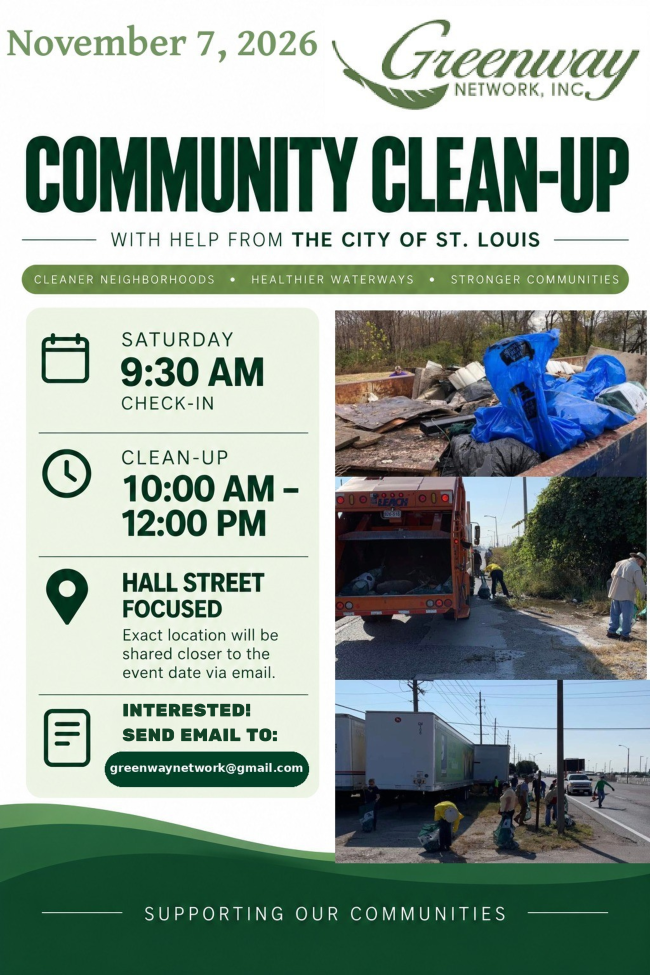
November 7, 9:30 AM to 12 PM - Community Clean-Up, St. Louis, MO
-
November 7, Honeysuckle Workshop & Hack at Spanish Lake Park, St. Louis, MO
-
November 7, 8:30 AM to 12 PM - November Pollinator Garden Maintenance, St. Louis, MO
-
November 7, 9 AM to 12 PM - Tree Planting at Unit 8, Chesterfield, MO
-
November 7, 9 AM to 12 PM - November Honeysuckle Hack at St. Vincent Park, St. Louis
-
November 11, 6 PM to 8 PM - Big Muddy Speakers Series: Plastic Pollution, Gulf Hypoxia and Water Quality, St. Charles, MO
-
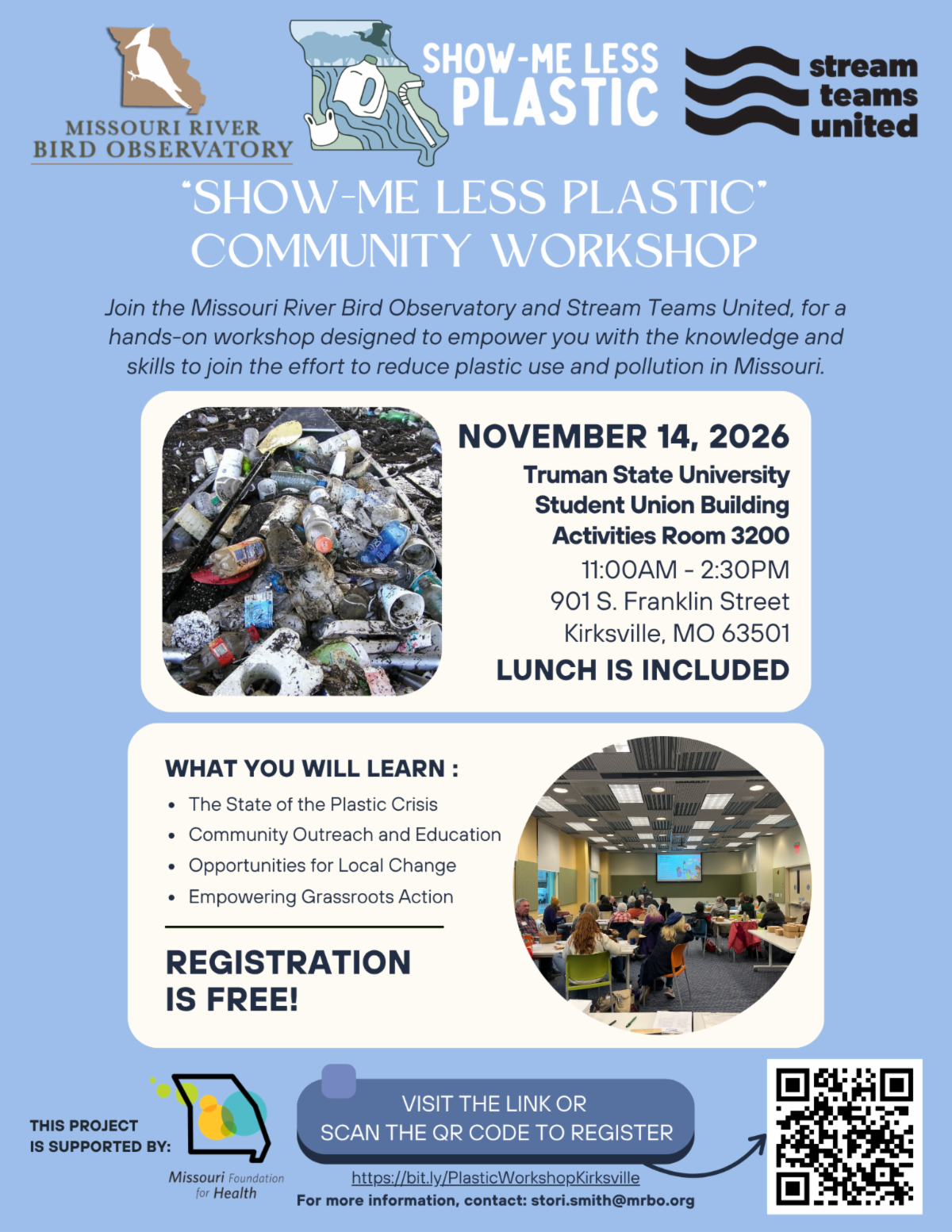
November 14, Plastic Community Educator Training workshop, Kirksville, MO
-
November 18, 4 PM to 5 PM, Grow Native! Webinar: The Pollinators Behind Your Thanksgiving Plate
-
November 19, 6-8 PM - Al-Pint Night fundraiser for the Miramiguoa Master Naturalists, Alpine Shop in Kirkwood, MO
| | Our 2026 Strategic Planning Input Survey is open through October! Share your ideas, comments, and feedback on river education, stewardship, and advocacy, and the growth and development of Stream Teams United. | | Advocacy Updates and Opportunities | | |
October 23, 2026 - Comment period closes for 10 CSR 20-6.011 related to DNR fees. The Missouri DNR has filed a proposed rescission and re-adoption of 10 CSR 20-6.011 fees. Comments can be made here or in writing at Missouri Department of Natural Resources, Water Protection Program, Attn: Susan Mills, P.O. Box 176, Jefferson City, MO 65102.
November 20, 2026 - Comment period closes for Proposed Operating Permit for Project Green Domestic Wastewater Treatment Plant in Montgomery County. Public comments can be submitted to: Department of Natural Resources, Water Protection Program, ATTN: Project Green Domestic Wastewater Treatment Plant Public Notice Comments, P.O. Box 176, Jefferson City, MO 65102-0176. All comments must be received or postmarked by November 20, 2026. Email comments will be accepted at publicnoticenpdes@dnr.mo.gov. A virtual meeting will be held on November 18th at 4:00PM, and an in-person meeting will be held on November 20, 2026, from 5:30-7:30 p.m., at the Montgomery City Elementary Gym, 817 N Harper St, Montgomery City, MO.
Now through September 2027 - The Missouri Department of Natural Resources is collecting data for the 18th Clean Watershed Needs Survey (CWNS). The CWNS is led by U.S. EPA to document economic impact of the nation’s wastewater, stormwater, and nonpoint source infrastructure needs for the next 20 years. The department encourages communities, sewer and water districts, counties, and nonprofits with Clean Water State Revolving Fund (CWSRF) eligible needs to begin developing and gathering documentation in support of the upcoming CWNS.
|
- October 27 from 8:30AM to 4:30PM - Lead and Copper Rule Improvements Training, Macon, MO
- October 28 at 6:00PM - Jefferson City Landfill Draft Solid Waste Disposal Area Construction Permit Public Hearing, Jefferson City, MO
- November 2 at 1:00PM - Sand and Gravel Washing Master General Permit Reissuance Public Meeting
- November 4 from 8:30AM to 4:30PM - Lead and Copper Rule Improvements Training, Chesterfield, MO
- November 4 at 1:00PM - Solid Waste Advisory Board Meeting
- November 13 at 10:00AM - Well Installation Board Meeting
- November 17 from 8:30AM to 4:30PM - Lead and Copper Rule Improvements Training, Lee's Summit, MO
- November 17 at 10:00AM - Missouri Clean Water Commission Meeting
- November 17 at 1:00PM - Plastics and Robber Manufacturing Master General Permit Reissuance Public Meeting
- November 18 at 10:00AM - Water Protection Forum
- November 18 at 4:00PM - Project Green Domestic Wastewater Treatment Plant Draft Missouri State Operating Permit Public Meeting
- November 20 at 5:30PM - Project Green Domestic Wastewater Treatment Plant Draft Missouri State Operating Permit Public Meeting, Montgomery City, MO
-
November 24 at 10:00AM - Hazardous Waste Forum and Solid Waste Forum
| | Support Stream Teams United as you drive. Don't have a Stream Team license plate? Anytime of the year is the perfect time to order one! Show your love for Missouri's streams as you drive, and support our stream advocacy efforts in Missouri! | | | | |